If you want stronger creatures, rare traits, and optimized teams, understanding the Palworld breeding guide is essential. Breeding isn’t just a side activity, it’s one of the most powerful systems in the game.
In fact, the Palworld breeding guide is the foundation for creating stronger lineages and unlocking better passive skills. The Palworld breeding guide helps you understand how pal breeding works, how traits are inherited, and how to combine different species efficiently.
So what is the Palworld breeding guide exactly? It’s a structured explanation of the breeding mechanics that determine how offspring are created, how genetics influence traits, and how specific Palworld breeding combinations produce new results.
Whether you’re chasing optimized workers or combat-ready creatures, mastering pal breeding dramatically improves your progression.
Let’s break everything down step by step.
Palworld Breeding Guide and Breeding Mechanics Explained
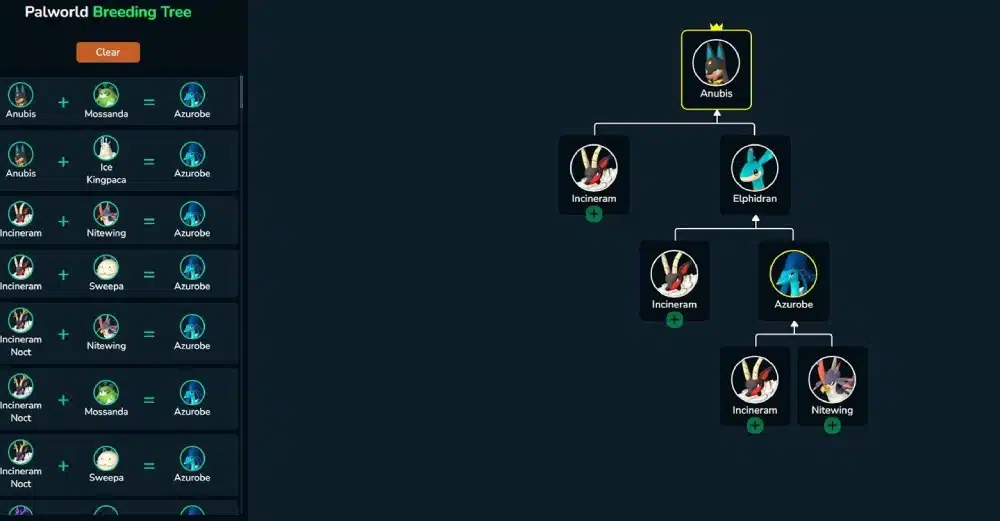
Before you start mixing creatures randomly, it’s important to understand how breeding mechanics actually function.
How Pal Breeding Works
To begin pal breeding, you need:
- A Breeding Farm structure;
- Two compatible pals;
- Cake (required breeding item);
- Time for incubation.
Once placed in the Breeding Farm, the two pals produce an egg. That egg contains an offspring influenced by the parents’ genetics.
Breeding mechanics determine:
- Offspring species;
- Passive skills inheritance;
- Work suitability traits;
- Combat strengths.
However, breeding is not purely random. The species outcome is determined by hidden combination values assigned to each pal.
That’s where Palworld breeding combinations become crucial.
Understanding Genetics and Trait Inheritance
The genetics guide aspect of the Palworld breeding guide is what separates beginners from advanced players.
Each pal can carry passive traits such as:
- Attack boosts;
- Work speed bonuses;
- Movement speed improvements;
- Defense enhancements.
When breeding, offspring may inherit a mix of those traits.
Here’s what typically happens:
- Each parent contributes potential passive skills;
- Some traits transfer directly;
- Some traits combine or override;
- Random mutations may occur.
Because of this, optimized breeding requires planning.
Instead of randomly pairing pals, experienced players use structured Palworld breeding combinations to aim for specific outcomes.
Palworld Breeding Guide: Best Palworld Breeding Combinations
Now let’s move into the part most players are looking for, combinations.
Different parent pairings result in different offspring. Some combinations create rare species, while others improve trait stacking.
Below is a simplified example table to illustrate how breeding combinations work:
| Parent A | Parent B | Possible Offspring | Strategic Value |
| Fire Pal | Electric Pal | Hybrid Variant | Balanced combat |
| Worker Pal | Speed Pal | Utility Variant | Work efficiency |
| Tank Pal | Attack Pal | Offensive Hybrid | PvE damage focus |
| Rare Pal | Common Pal | Enhanced Variant | Trait stacking |
As you can see, Palworld breeding combinations are not just cosmetic. They influence long-term strategy.
The key takeaway here is that breeding outcomes are influenced by internal pairing values, not just elemental type.
Targeting the Best Pals for Combat
If your goal is combat dominance, you’ll want to focus on stacking offensive passives.
Look for traits that:
- Increase attack percentage;
- Improve critical damage;
- Boost elemental output;
- Enhance survivability.
Combining these through strategic pal breeding increases the chances of creating some of the best pals for PvE or boss encounters.
However, stacking too many similar traits may reduce versatility.
Balance matters.
Targeting the Best Pals for Base Efficiency
Not all breeding is about combat.
If you want optimized base workers, prioritize:
- Work speed;
- Transport efficiency;
- Farming skill levels;
- Crafting bonuses.
In this case, your genetics guide approach shifts toward productivity instead of power.
Breeding mechanics allow you to refine work-focused lineages over time, creating highly efficient production systems.
Palworld Breeding Guide and Optimization Strategy
Once you understand the fundamentals of the Palworld breeding guide, the real progression begins: optimization.
At this stage, breeding stops being experimental and becomes strategic. Instead of hoping for lucky outcomes, you start controlling the process using logic, planning, and a deeper understanding of breeding mechanics.
Optimization in pal breeding is about refining lineages over multiple generations. It’s not just about producing a stronger creature once, it’s about gradually improving your entire roster through calculated decisions.
Let’s look at how to approach this properly.
Building a Structured Breeding Process
Many beginners rely on random pairings, but experienced players treat pal breeding like a long-term project. The key is having a repeatable system.
Here’s a structured approach you can follow:
- Identify your target outcome (combat-focused or worker-focused);
- Analyze the passive traits of your current pals;
- Select two pals with complementary abilities;
- Use known Palworld breeding combinations to predict outcomes;
- Hatch the egg and evaluate the offspring;
- Replace the weaker parent with the improved offspring;
- Repeat the cycle until you approach optimal traits.
This iterative method increases your chances of developing the best pals for your strategy.
Because breeding mechanics rely on probability and inheritance patterns, you won’t always get perfect results immediately. However, over multiple generations, trait stacking becomes more consistent.
In this sense, the Palworld breeding guide works like a practical genetics guide. You are selectively combining traits to refine a lineage, just like controlled evolution inside the game.
Patience becomes part of the process. The more disciplined your breeding cycle is, the stronger your long-term results will be.
Avoiding Common Optimization Mistakes
Even players who understand pal breeding often make mistakes that slow progression.
Here are the most common errors:
- Ignoring passive trait stacking and focusing only on species;
- Mixing incompatible species without checking Palworld breeding combinations;
- Forgetting to track parent traits over generations;
- Overlooking incubation timing and efficiency;
- Replacing high-potential pals too early.
One of the biggest mistakes is focusing only on rarity. A rare species without optimized passives may be weaker than a carefully bred common pal with stacked bonuses.
Another issue is failing to specialize. If you want combat superiority, prioritize offensive passives. If you want base efficiency, prioritize work-related traits. Mixing goals often leads to diluted results.
Remember, optimization is a long-term investment. The Palworld breeding guide is not about instant results, it’s about structured improvement.
Consistency always beats randomness. And when you apply strategic planning to your breeding farm, you’ll gradually create lineages that outperform anything obtained through chance alone.
Palworld Breeding Guide and Multiplayer Performance
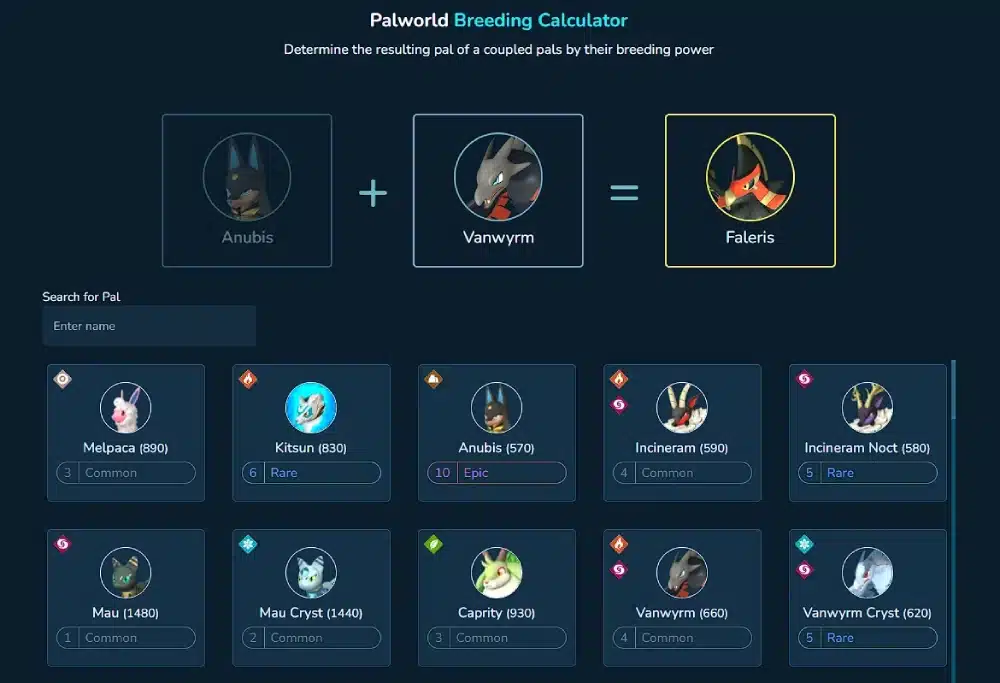
When you move from solo progression to multiplayer servers, the Palworld breeding guide becomes even more relevant.
In cooperative and competitive environments, efficiency and optimization are no longer optional, they directly impact your survival, resource control, and boss encounters.
Breeding in multiplayer isn’t just about creating stronger creatures. It’s about building a competitive advantage through optimized lineages and smart use of breeding mechanics.
However, there’s another factor that players often overlook: connection stability.
Let’s break both sides down.
Why Optimized Pal Breeding Matters in Multiplayer
In multiplayer sessions, the competition for resources is higher and encounters are more demanding. Players who understand Palworld breeding combinations can develop superior creatures faster, which translates into real gameplay advantages.
When facing high-level bosses or defending territory, having the best pals with stacked passives can mean:
- Higher sustained damage output;
- Faster base production cycles;
- Improved gathering efficiency;
- Stronger defensive durability;
- Better synergy in co-op fights.
Additionally, when working in teams, role specialization becomes critical. One player may focus on combat-ready pals while another builds productivity-focused lineages using a structured genetics guide approach.
Strategic pal breeding in multiplayer allows teams to divide responsibilities and scale more efficiently than random progression would allow.
In short, breeding becomes part of your long-term competitive identity on the server.
Connection Stability and Online Synchronization
Now here’s something many players underestimate.
Even the most optimized lineage can feel underwhelming if multiplayer synchronization is unstable.
In online sessions, several systems depend on real-time updates:
- Egg incubation timers;
- Base production cycles;
- Combat hit detection;
- Co-op boss mechanics;
- Resource synchronization.
If latency spikes occur, you may experience:
- Delays in egg hatching updates;
- Desynced combat interactions;
- Delayed damage registration;
- Interrupted cooperative actions.
Although breeding mechanics themselves are server-based, the responsiveness of your session depends on stable routing and minimized latency.
This is where the difference between optimization and stability becomes clear.
Optimized Palworld breeding combinations give you stronger creatures. Stable routing ensures those creatures perform consistently during online battles.
Multiplayer environments amplify both strengths and weaknesses. If your connection suffers from spikes or unstable synchronization, even the best pals won’t perform at their full potential.
That’s why serious multiplayer players focus on two pillars:
- Strategic breeding optimization;
- Stable, low-latency connection quality.
When both elements align, your base runs smoothly, your bosses fall faster, and your multiplayer experience feels consistent.
Breeding builds power. Connection stability ensures that power translates into performance.
FAQ
Pal breeding requires two compatible pals, a Breeding Farm, and cake. Offspring traits are influenced by genetics and parent combinations.
The best Palworld breeding combinations depend on your goal, combat-focused hybrids or work-efficiency variants.
Not always. Breeding mechanics allow partial inheritance and occasional mutations.
Use structured breeding, stack complementary passives, and iterate across generations.
Yes. Optimized genetics significantly improve both combat and productivity.
Palworld Breeding Guide: Master Genetics and Build the Best Pals
To summarize, the Palworld breeding guide is your roadmap to mastering genetics and creating elite creatures. The Palworld breeding guide teaches you how breeding mechanics, Palworld breeding combinations, and passive trait inheritance interact.
When used strategically, pal breeding allows you to craft the best pals for both combat and productivity.
However, smooth online gameplay also depends on stable routing.
ExitLag does not function as a VPN and does not change your IP. Instead, it optimizes your connection route by selecting the most stable path to the server in real time.
That means fewer latency spikes and more stable multiplayer sessions, especially when managing bases or fighting bosses.
If you’re investing time into optimizing genetics, make sure your connection keeps up.
Try ExitLag and experience smoother Palworld multiplayer sessions today!
Got questions or want to connect with other players? Join the conversation at the ExitLag Forum!