

The pandaria world of warcraft expansion marked one of the most important turning points in Blizzard’s legendary MMORPG. When players first heard about a new continent inspired by Asian mythology and philosophy, reactions were mixed. Yet over time, Pandaria proved to be one of the most carefully crafted and content-rich eras in World of Warcraft history.
Unlike previous expansions focused on immediate existential threats, Pandaria introduced a slower, more atmospheric approach to storytelling. Exploration, personal growth, and emotional balance became central themes. This shift reshaped how players interacted with the world, its characters, and even their own factions.
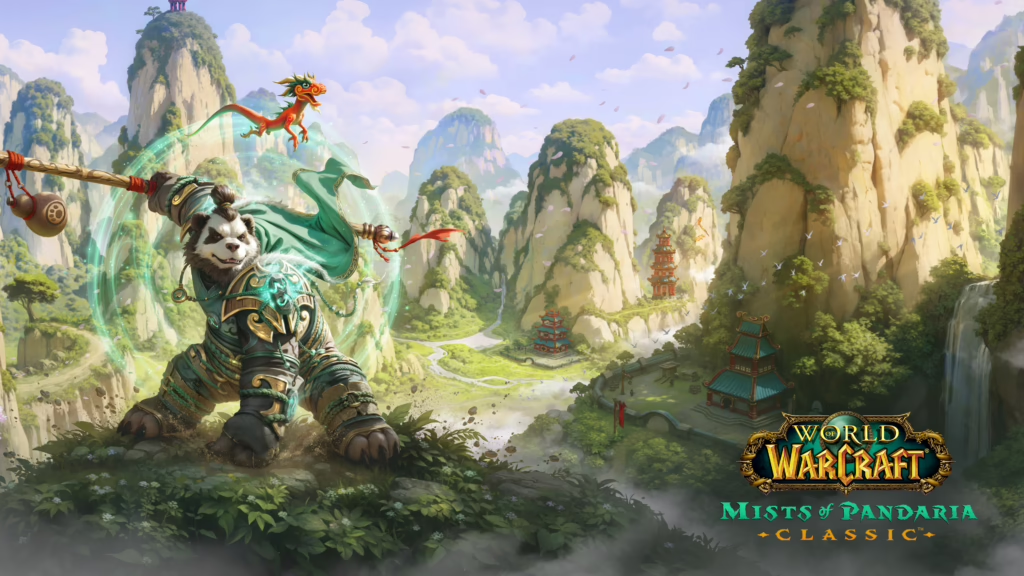
So what exactly is Pandaria, where did it come from, and when did it enter the game? The pandaria world of warcraft continent was revealed with the Mists of Pandaria expansion, officially released on September 25, 2012. Hidden behind magical mists for millennia, Pandaria emerged after the events of Cataclysm, drawing both Horde and Alliance into a land they barely understood.

Pandaria World of Warcraft – What Is This Continent?
Pandaria is a vast, ancient continent located south of Azeroth, long concealed by powerful magical mists. These mists shielded its people from the Sundering, the Burning Legion, and most of the world’s conflicts, allowing Pandarian civilization to evolve in relative peace.
The Hidden Land Behind the Mists
For thousands of years, Pandaria remained isolated. Its inhabitants believed that negative emotions such as hatred, fear, and anger could manifest physically. As a result, balance and inner harmony became core values of Pandarian culture.
When the mists finally parted, outsiders discovered a land shaped by philosophy as much as by warfare. Lush forests, fertile farmlands, towering mountains, and war-scarred wastelands all coexist, reflecting the delicate balance Pandaria strives to maintain.
Pandaria’s Role in Azeroth’s Lore
Pandaria is deeply tied to the Titans and their ancient experiments. The continent was once ruled by the mogu, a powerful empire that enslaved the Pandaren before being overthrown. The lingering corruption of the Sha-manifestations of negative emotions-serves as a constant reminder that inner conflict can be just as dangerous as external threats.
Through Pandaria, World of Warcraft expanded its narrative focus. Instead of purely cosmic villains, players faced moral dilemmas, emotional corruption, and the consequences of endless war.
World of Warcraft: Mists of Pandaria Expansion Overview
The world of warcraft: mists of pandaria expansion introduced a new design philosophy that emphasized exploration, narrative depth, and mechanical refinement.
Expansion Goals and Design Philosophy
Blizzard aimed to slow the pace of leveling and encourage players to engage with the environment. Zones were designed to tell self-contained stories while contributing to a larger narrative arc.
Combat systems were refined, class rotations were simplified, and encounter design rewarded situational awareness rather than raw reaction speed alone. This made Pandaria welcoming to new players while still offering depth for veterans.
Major Features Introduced in Mists of Pandaria
Mists of Pandaria delivered some of the most memorable systems in WoW history:
- A brand-new continent: Pandaria
- The Pandaren as a neutral playable race
- The Monk class, focused on mobility and resource management
- Pet Battles, adding a collectible mini-game across Azeroth
Each feature reinforced the expansion’s central theme of balance, both in gameplay and storytelling.
World of Warcraft Pandaria Zones and Leveling Experience
Leveling through Pandaria was a carefully structured journey that guided players through diverse regions, each with its own identity and challenges.
Key Zones in Pandaria
Pandaria’s zones are among the most visually distinct in the game:
- The Jade Forest introduces players to faction conflict in a lush, spiritual setting
- Valley of the Four Winds focuses on agriculture, community, and cooperation
- Kun-Lai Summit emphasizes endurance and ancient tradition
- Townlong Steppes explores Pandaria’s defensive struggle against corruption
- Dread Wastes presents the full consequences of imbalance and decay
Each zone builds upon the last, creating a cohesive leveling experience that feels purposeful rather than fragmented.
Leveling Flow and Quest Design
Questing in Pandaria leaned heavily into storytelling. Players encountered cinematic moments, memorable NPCs, and evolving zone narratives that reacted to their progress.
Instead of rushing players toward the level cap, the expansion rewarded curiosity. Exploration, side quests, and environmental storytelling all played key roles in shaping the experience.
World of Warcraft Mists of Pandaria Release Date and Legacy
Understanding the world of warcraft mists of pandaria release date helps place the expansion in context. Released on September 25, 2012, Pandaria arrived during a period of transition for World of Warcraft.
Official Release Date and Patch Timeline
Mists of Pandaria launched with a full leveling experience, multiple dungeons, and a clear roadmap for future content. Over time, major patches introduced iconic raids, PvP systems, and endgame activities that kept players engaged for years.
How Pandaria Changed World of Warcraft
Pandaria’s legacy extends far beyond its zones. It redefined how Blizzard approached class balance, narrative pacing, and player engagement. Many systems introduced during this era influenced later expansions and remain fondly remembered by the community.
Why Connection Stability Matters in Pandaria Content
Pandaria introduced large, detailed zones, complex raid encounters, and PvP-heavy areas where performance matters.
Open-World Zones, Raids, and Latency
From large-scale world events to mechanically demanding raid fights, Pandaria content often requires precise timing. Even small delays can disrupt rotations, positioning, and reaction-based mechanics.
How ExitLag Improves World of Warcraft Performance
ExitLag helps stabilize connections during intense World of Warcraft sessions. By optimizing routing in real time, it reduces latency spikes in raids, dungeons, and PvP scenarios.
For players revisiting Pandaria through modern WoW content or Timewalking events, ExitLag ensures smoother gameplay, faster response times, and a more consistent experience across all activities.
World of Warcraft Pandaria Endgame Content Explained
After completing the leveling journey, the true depth of world of warcraft pandaria reveals itself at max level. Mists of Pandaria introduced one of the most layered and diverse endgame structures the game had seen, offering meaningful activities for raiders, PvP players, and casual adventurers alike.
Max-Level Progression in Pandaria
At level 90, players entered an endgame built around long-term progression rather than rushing a single activity. Reputation systems, daily hubs, dungeons, and raids all worked together to create a steady sense of advancement.
Unlike earlier expansions, Pandaria encouraged players to engage with multiple systems at once. Progression felt more organic, allowing players to choose how intense or relaxed their endgame experience would be.
Daily Quests and Faction Systems
Daily quests played a central role in world of warcraft mists of pandaria. Instead of a single hub, players interacted with several factions across the continent:
- Golden Lotus unlocked access to other factions
- Shado-Pan focused on elite combat missions
- August Celestials offered rotating daily challenges
- The Klaxxi delivered story-driven questlines
These reputations rewarded gear, mounts, and story progression, reinforcing Pandaria’s narrative depth.
World of Warcraft: Mists of Pandaria Raids and Dungeons
Endgame PvE content in world of warcraft: mists of pandaria is often remembered as one of the expansion’s strongest pillars.
Major Raids Introduced in Pandaria
Pandaria featured a long and memorable raid timeline:
- Mogu’shan Vaults introduced Titan lore and mogu threats
- Heart of Fear and Terrace of Endless Spring expanded the Sha narrative
- Throne of Thunder delivered one of WoW’s most iconic raid experiences
- Siege of Orgrimmar concluded the expansion with a massive faction-driven finale
Each raid offered distinct mechanics, visual identity, and storytelling, keeping progression fresh throughout the expansion lifecycle.
Dungeon Design and Challenge Modes
Mists of Pandaria introduced Challenge Modes, a precursor to modern Mythic+. These timed dungeon runs emphasized skill, coordination, and mastery over raw gear level.
Rewards were cosmetic, encouraging competition without forcing participation. This design philosophy was widely praised and later evolved into one of WoW’s most popular systems.
PvP in World of Warcraft Mists of Pandaria
PvP saw significant refinement during the Pandaria era, balancing accessibility with competitive depth.
Battlegrounds and Arenas
Several balance changes improved class viability in arenas and battlegrounds. Gear scaling and stat tuning helped reduce extreme disparities, making PvP more approachable for new players.
Structured PvP benefited from Pandaria’s class design, which emphasized clarity and counterplay rather than overwhelming ability bloat.
World PvP and Faction Conflict
Pandaria reinvigorated world PvP, particularly in Krasarang Wilds, where faction bases and objectives fueled open conflict. These zones reinforced the expansion’s central theme: the destructive consequences of endless war.
Systems Introduced in World of Warcraft Pandaria
Beyond raids and PvP, Pandaria delivered systems that expanded how players interacted with the game world.
Pet Battles and Side Activities
Pet Battles introduced a turn-based collectible system inspired by classic monster-battling games. Players could collect, train, and battle pets across Azeroth, adding a relaxing alternative to traditional combat.
This system appealed to collectors and casual players, significantly broadening WoW’s audience.
Farming, Scenarios, and Casual Content
Pandaria also catered to players seeking non-combat progression:
- Halfhill Farm allowed players to grow crops and earn reputation
- Scenarios delivered story-focused content without rigid roles
- Solo-friendly activities reduced dependency on group play
These features reinforced the expansion’s philosophy of balance and choice.
Pandaria Endgame Overview
| Feature | Description |
| Max Level | 90 |
| Main Raids | Mogu’shan Vaults, Throne of Thunder, Siege of Orgrimmar |
| PvP Focus | Arenas, Battlegrounds, World PvP |
| Daily Systems | Reputation-based quest hubs |
| Side Content | Pet Battles, Farming, Scenarios |
Pandaria Endgame Progression Path
- Reach level 90
- Unlock key reputation factions
- Complete daily quest hubs
- Run dungeons and scenarios
- Progress into raids and PvP
This structure allowed players to advance at their own pace while still feeling consistently rewarded.
Why Players Loved Pandaria Endgame
- Strong pacing and content variety
- Clear progression without forced grind
- Memorable raid encounters
- Balanced mix of solo and group content
- Long-term replayability
Why Stable Connection Matters in Pandaria Endgame
High-end content introduced in Pandaria often demands precision, especially in raids and PvP.
Raids, PvP, and Latency Sensitivity
Complex mechanics, tight interrupt windows, and movement-heavy encounters mean that even minor latency spikes can cause wipes or lost matches. PvP scenarios are even less forgiving, where reaction time often determines victory.
How ExitLag Improves World of Warcraft Performance
ExitLag optimizes routing in real time, reducing latency and stabilizing connections during intense gameplay. For World of Warcraft players, this means smoother raid performance, more responsive PvP combat, and greater consistency in crowded zones.
Whether revisiting Pandaria content through Timewalking events or engaging in modern WoW activities inspired by its systems, ExitLag ensures a reliable connection that keeps performance at its peak.
All game images used in this blog belong to Blizzard Entertainment. They are used for informational/educational purposes only and do not imply endorsement or affiliation with the rights holders.
Got questions or want to connect with other players? Join the conversation at the ExitLag Forum!