PUBG maps are much more than different backgrounds for the same Battle Royale formula. The size of each battleground, terrain, available cover, transportation options, points of interest, and special mechanics can completely change how you loot, rotate, take fights, and approach the final circles.
Map knowledge is only one part of a consistent match. If you understand PUBG maps but still experience high ping or unstable routing when joining matches, our guide to optimal PUBG servers and regions explains how server location and network routes can affect your connection. Knowing where to rotate is useful, but network problems should be diagnosed separately from mistakes in positioning or strategy.
The current collection of PUBG maps includes nine official battlegrounds in PUBG: BATTLEGROUNDS: Erangel, Miramar, Sanhok, Karakin, Paramo, Taego, Deston, Vikendi, and Rondo. However, not every PUBG map is available in Normal Match at the same time because the game uses regional rotations that change throughout each update cycle.
How many PUBG maps are there in 2026?
PUBG: BATTLEGROUNDS currently has nine maps listed in its official map collection. They range from compact 2×2 km battlegrounds designed for faster encounters to expansive 8×8 km environments that make vehicles and long rotations much more important.
That does not mean all nine appear in your matchmaking menu simultaneously. The available map for PUBG depends on the current update, week, region, platform, and game mode.
What are all the current PUBG maps?
The official collection currently includes:
| Map | Size | General style |
| Erangel | 8×8 km | Classic mixed terrain |
| Miramar | 8×8 km | Desert and long sightlines |
| Sanhok | 4×4 km | Dense tropical combat |
| Karakin | 2×2 km | Compact desert fighting |
| Paramo | 3×3 km | Volcanic and partially dynamic terrain |
| Taego | 8×8 km | Open Korean-inspired battleground |
| Deston | 8×8 km | Urban areas, wetlands, and vertical movement |
| Vikendi | 8×8 km | Snowy terrain and varied environments |
| Rondo | 8×8 km | Large mixed environment with urban and natural areas |
Each PlayerUnknown’s Battlegrounds map encourages a different rhythm.
Erangel remains the classic all-rounder. Miramar creates more long-distance engagements. Sanhok compresses players into a smaller area. Karakin creates frequent encounters almost immediately, while Paramo uses changing terrain to prevent every match from feeling identical.
The larger modern battlegrounds add their own systems. Taego includes features such as Self AEDs and multiple care packages. Deston emphasizes vertical movement with systems such as Ascenders and Utility Parachutes. Vikendi combines snowy terrain with features such as trains and snow vehicles. Rondo mixes large natural spaces with major urban locations and systems such as Markets.
If you want to compare tactics and player experiences beyond official descriptions, our guide to PUBG Reddit communities worth following can help you find discussions about drops, rotations, map changes, weapon choices, and the current meta.
Why are Haven and Livik not on the current list?
Older PUBG guides sometimes include Haven or Livik when describing PUBG maps, but those names need context.
Livik is associated with PUBG Mobile rather than the current PUBG: BATTLEGROUNDS PC and console map collection. It should not be presented as one of the nine core battlegrounds in the main game.
Haven appeared historically in PUBG: BATTLEGROUNDS, but it is no longer listed among the nine maps on the current official map hub and does not appear in the current Normal Match rotation.
This distinction matters because searches for PUBG map lists often surface articles from different years or even different PUBG games.
For the current PC and console game, the nine-map list is:
Erangel, Miramar, Sanhok, Karakin, Paramo, Taego, Deston, Vikendi, and Rondo.
New battlegrounds, redesigns, and rotation changes can still alter that list in future updates.
What are the sizes of every PUBG map?
Map size is one of the easiest ways to predict how a match may feel.
An 8×8 km battleground provides far more room for loot routes, vehicles, long flanks, and delayed encounters than Karakin's 2×2 km layout. However, physical size is not the only factor that determines pacing.
Terrain density, plane path, Blue Zone timing, player distribution, and major points of interest all influence how crowded a PUBG map feels.
How do the 8×8 PUBG maps play differently?
Most of the current collection consists of 8×8 km environments.
Erangel, Miramar, Taego, Deston, Vikendi, and Rondo all use that large format, but they should not be played identically.
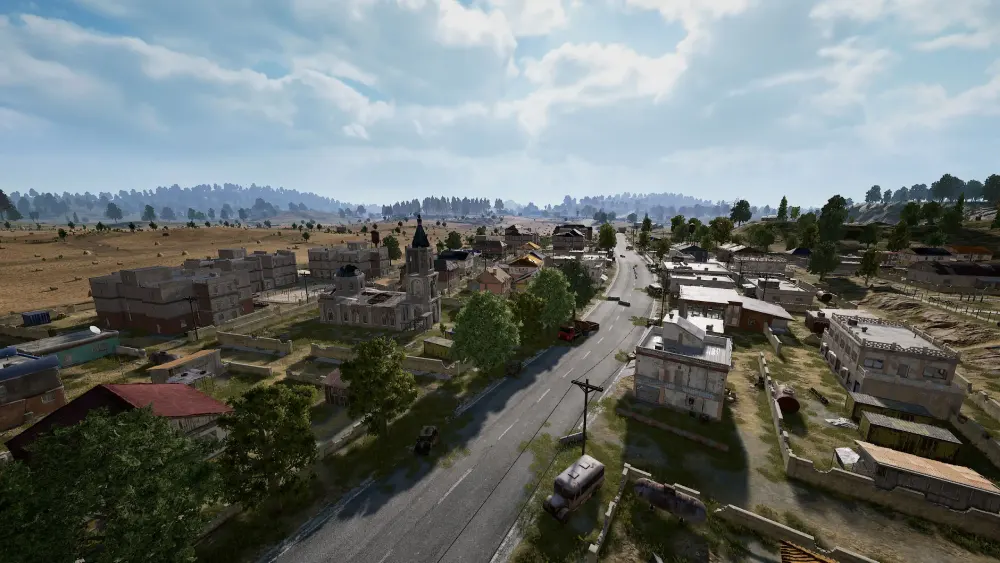
Erangel mixes fields, forests, hills, coastlines, towns, and military areas. Because its terrain is varied, it rewards flexible loadouts and good vehicle planning without pushing every fight toward one particular distance.
Miramar is much more exposed in many areas. Elevation changes, desert terrain, and long sightlines make DMRs and sniper rifles particularly useful. Moving without considering ridgelines can leave a squad exposed for a long time.
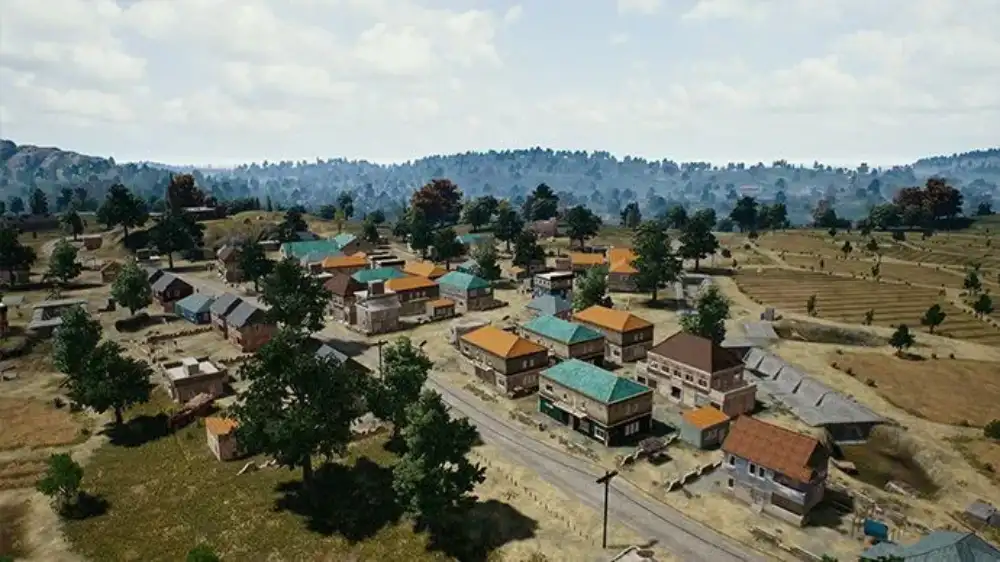
Taego has large open spaces mixed with towns and compounds. Vehicles become important when the zone shifts far away, especially if your initial drop is near the edge of the playable area.
Deston creates more vertical encounters. Urban zones such as Ripton offer a very different experience from the map's wetlands and open areas, so a loadout that works in one section may feel less comfortable elsewhere.
Vikendi is also 8×8 km in its current form. Older guides may still describe the previous 6×6 version, but the redesigned map for PUBG is now part of the large-map category.
Rondo is another 8×8 battleground and combines cities, mountains, water, bamboo areas, fields, and other terrain types. Its scale can create relatively quiet early games when squads spread widely before converging later.
Understanding these differences is useful when evaluating performance as well. Instead of comparing every match as if the conditions were identical, our PUBG map rotation guide can help you track which battlegrounds are available before you queue and prepare for the terrain you are most likely to encounter.
How do Sanhok, Paramo, and Karakin change the pace?
Sanhok is 4×4 km, making it substantially smaller than the large battlegrounds.
That compression naturally increases the chances of nearby enemies. Bootcamp remains one of the game's recognizable aggressive landing areas, while jungle vegetation and uneven terrain can make players difficult to spot.
Paramo is 3×3 km and has a volcanic setting. One of its defining characteristics is that elements of the terrain and locations can shift between matches.
As a result, memorization works differently from a conventional fixed PlayerUnknown’s Battlegrounds map. General navigation knowledge remains useful, but you should not expect every road and location relationship to be identical.
Karakin is the smallest map in the current official collection at 2×2 km.
Its scale creates fast encounters and short rotations. There is less room to loot in isolation for long periods, and third parties can arrive quickly after gunfire reveals your position.
Smaller maps generally reward faster information gathering.
Listen carefully for shots, watch nearby ridges, and avoid assuming an area is safe simply because you just eliminated one squad.
How does the PUBG map rotation work?
PUBG does not simply place all nine maps into every matchmaking queue with identical availability.
The Map Service system divides maps according to region and updates the available selection over time. Some regions have map selection structures, while others use random-map pools.
The current PUBG maps schedule also differs between PC and console because their update dates are not always identical.
Which PUBG maps are active in September 2026?
Update 43.1 uses weekly rotations.
For PC, Week 2 began on September 16, 2026. For console, the first week of the same update began on September 17.
In random-map regions such as South America, North America, Europe, and Russia, the PC Normal Match lineup for Week 2 is:
- Erangel as the fixed map;
- Taego in the large-map rotation;
- Paramo in the small-map rotation.
Console is one rotation step behind during the current update schedule. Its Week 1 lineup includes:
- Erangel;
- Rondo;
- Karakin.
Those schedules will continue changing over the following weeks.
Ranked uses a separate pool. In Update 43.1, the Ranked PUBG map distribution consists of:
| Ranked map | Selection probability |
| Erangel | 25% |
| Miramar | 25% |
| Taego | 25% |
| Rondo | 25% |
Ranked rotation is generally updated season by season rather than using exactly the same weekly pool as Normal Match.
This is why a static list saying that one particular map is "currently active" can become outdated within days.
Why does map availability change by region?
Player preferences and matchmaking populations differ between regions.
PUBG evaluates factors such as playtime, match count, map selection, and leave rates when organizing map service. Maintaining too many simultaneous queues can divide the player population and make matchmaking less efficient.
As a result, regions with different population patterns may use different rotation structures.
For example, some Asian regions can support broader map-selection arrangements, while regions such as South America use a fixed map plus rotating large and small options during Update 43.1.
That means two players can open PUBG during the same week and have different PUBG maps available depending on their region.
Platform also matters.
PC rotations currently update before console rotations, so a PC player and a console player in otherwise comparable regions may temporarily see different map pools.
For the most accurate current schedule, check PUBG's official news and patch announcements. Rotation articles are useful for understanding the system, but the official Map Service Report should take priority whenever a new update changes the schedule.
Which PUBG map is best for different playstyles?
There is no universally best map.
The answer depends on whether you enjoy long-range fights, aggressive hot drops, survival-focused rotations, urban combat, or unpredictable engagements.
Learning multiple PUBG maps is useful because the rotation system means you cannot always build your entire playstyle around one battleground.
Which maps are best for long-range and strategic play?
Miramar is the most obvious choice for players who enjoy long sightlines.
The terrain includes large stretches of exposed land and major elevation changes, creating frequent opportunities for DMR and sniper engagements.
Vehicles are also important.
A distant circle can become dangerous quickly if you stay too long on the edge without transportation.
Erangel provides a more balanced version of the same strategic scale.
Long-range weapons are useful, but towns, forests, compounds, and terrain changes also create plenty of medium- and close-range fights.
Rondo gives squads another large-scale environment.
Its variety means you may move from open terrain into a dense city within the same match. The best strategy is therefore not simply "use a sniper because the map is large."
You need a loadout that matches where you intend to rotate.
On any large map for PUBG, prioritize:
- early vehicle awareness;
- fuel when necessary;
- safe rotation routes;
- ridgeline control;
- scouting before crossing open areas;
- enough healing for long transitions;
- flexible weapon ranges.
The Blue Zone is often more dangerous when you underestimate travel distance.
Which maps are best for aggressive players?
Sanhok and Karakin naturally create faster encounters because of their smaller playable areas.
On Sanhok, dense terrain makes close fights common, but it can also conceal enemies nearby. A squad that fires continuously without checking its surroundings can quickly attract another team.
Karakin compresses that danger further.
At only 2×2 km, there is less distance separating squads. You should expect engagements to develop rapidly and be ready for enemies approaching immediately after a fight.
Paramo also tends to create relatively fast movement between engagements because of its 3×3 scale.
However, its dynamic terrain means familiar rotations can change.
Aggressive players can use smaller PUBG maps to practice:
- fast looting;
- close-range aim;
- rapid target prioritization;
- clearing nearby terrain;
- repositioning immediately after a kill;
- deciding when not to chase an opponent.
Aggression does not mean running toward every sound.
The best aggressive players understand when a fight creates an opportunity and when it exposes the squad to another team.
What are the best drop locations on PUBG maps?
A "best" drop is not necessarily the location with the most loot.
The correct drop depends on your goal for the match.
A player trying to improve combat may intentionally land in a crowded location. A Ranked squad trying to maximize consistency may prefer a quieter compound with predictable vehicle access.
The plane path can also completely change the popularity of a PUBG map location.
How should you choose between hot drops and safe drops?
Hot drops maximize early combat.
Well-known locations such as Pochinki on Erangel, Pecado on Miramar, and Bootcamp on Sanhok frequently attract players because they combine recognizable layouts with opportunities for immediate fighting.
That comes with obvious risk.
Your match can end before you finish looting.
Safer drops trade immediate action for preparation.
Landing farther from the plane path can give you more time to:
- collect weapons and armor;
- search for attachments;
- identify a vehicle;
- plan a first rotation;
- track nearby shots;
- enter the next zone with more information.
Neither approach is inherently correct.
If you are learning a PlayerUnknown’s Battlegrounds map, quieter drops can actually be useful because they give you time to study roads, elevation, compounds, and movement routes.
Hot dropping teaches combat quickly but can make it harder to learn the wider environment.
How can you learn a new map faster?
Start by learning a handful of important areas rather than trying to memorize the entire battleground.
Choose:
- two reliable landing locations;
- nearby vehicle spawn patterns;
- common routes toward central areas;
- dangerous open crossings;
- high-ground positions;
- recognizable compounds or landmarks.
Then expand outward.
Repeatedly landing in completely different locations can expose you to more of the PUBG map, but it slows detailed learning.
Also pay attention to how the Blue Zone changes your route.
A location that feels excellent when the first circle centers nearby may become difficult when the safe zone appears on the opposite edge of an 8×8 map.
The official PUBG website is also useful when major updates redesign a map or add new gameplay systems. Old route knowledge can become less reliable after significant world changes.
Are PUBG maps based on real places?
PUBG maps use recognizable geographic and architectural influences, but they are fictional battlegrounds designed around gameplay.
They should not be interpreted as exact digital replicas of real cities or regions.
Different battlegrounds use environmental themes to establish a distinct identity while still providing the roads, compounds, cover, elevations, and sightlines needed for Battle Royale.
What influences each PlayerUnknown’s Battlegrounds map?
Taego has a clear Korean identity, including architecture, roads, fields, and environments associated with its setting.
Miramar uses an arid desert environment with settlements, rocky terrain, and Spanish-language place names.
Vikendi creates a cold European-style environment with snow, mountains, rail infrastructure, and varied settlements.
Erangel combines rural landscapes, Soviet-style architecture, military locations, towns, coastlines, and industrial areas.
Rondo deliberately mixes contrasting environments. One part of the battleground includes natural landscapes such as bamboo groves and lakes, while other areas use dense modern architecture and industrial spaces.
This environmental variety helps each map for PUBG remain recognizable even before players memorize individual locations.
Why does terrain matter more than visual theme?
The strategic value of a map comes from how its environment affects decisions.
Mountains create sightlines and movement restrictions.
Rivers can force players toward bridges or alternative crossings.
Cities create vertical cover and close-range ambush opportunities.
Fields make players vulnerable when moving without vehicles or smoke.
A good player does not only know that Miramar is a desert or Vikendi has snow. They understand which terrain can protect a rotation and which route may expose the squad.
That level of map knowledge transfers between updates.
Even if a point of interest changes, the basic habits of reading cover, elevation, distance, and zone pressure remain valuable.
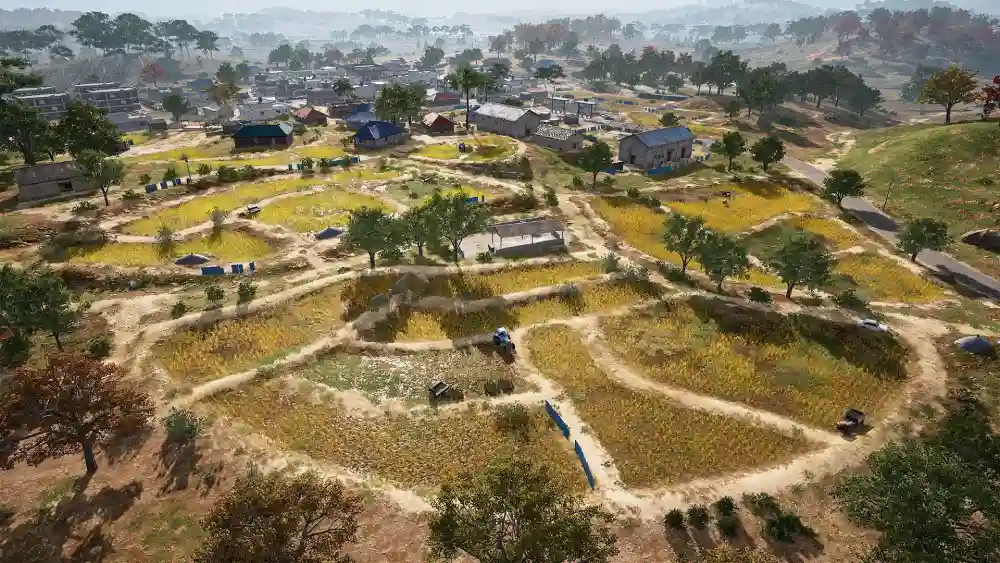
How can ExitLag help when playing on different PUBG maps?
ExitLag does not change your map, influence the Blue Zone, or determine which battleground matchmaking selects.
Its role is network route optimization.
That distinction is important because players sometimes associate lag with crowded locations or particular PUBG maps when the underlying issue may actually involve the network route to the server.
Map performance and network performance are different
A dense city may reduce FPS on some hardware because more geometry or effects need to be rendered.
That is a hardware or graphics-performance issue.
High ping, routing instability, and packet loss are networking issues.
ExitLag can help optimize network routes for supported games and may improve connection stability when the route between your device and the game infrastructure is inefficient or unstable.
Results depend on:
- your ISP;
- your region;
- the game server;
- current routing;
- network congestion;
- local connection quality.
ExitLag cannot guarantee lower ping.
It also cannot increase FPS caused by hardware limitations.
When should you test ExitLag with PUBG?
Consider network troubleshooting when you notice symptoms such as:
- abnormal latency;
- sudden ping spikes;
- packet loss;
- rubber-banding;
- unstable network routes;
- repeated online connection interruptions.
Compare matches under similar conditions.
Do not assume that one poor game on a specific PUBG map means the map itself caused the connection problem.
ExitLag also cannot:
- choose Erangel instead of Rondo;
- change the map rotation;
- populate matchmaking queues;
- modify weapon balance;
- predict the Blue Zone;
- change loot;
- remove bans;
- fix a PUBG-wide server outage.
Use it specifically for network-routing problems.
Map strategy still depends on your decisions, team communication, movement, aim, rotations, and knowledge of the battleground.
FAQ about PUBG maps
PUBG's rotating map system creates confusion because the complete collection and the active matchmaking pool are not the same thing.
The answers below focus on the current 2026 map collection and the structure used in Update 43.1.
How many PUBG maps are there?
There are currently nine official maps listed for PUBG: BATTLEGROUNDS:
Erangel, Miramar, Sanhok, Karakin, Paramo, Taego, Deston, Vikendi, and Rondo.
Not all nine are active in Normal Match simultaneously.
What is the biggest PUBG map?
Erangel, Miramar, Taego, Deston, Vikendi, and Rondo are all 8×8 km.
Therefore, there is no single largest PUBG map among them based only on the standard map dimensions.
What is the smallest PUBG map?
Karakin is the smallest map in the current official collection at 2×2 km.
Its compact size produces much faster encounters than the 8×8 battlegrounds.
Is Vikendi still 6×6 km?
No.
The current version of Vikendi is 8×8 km.
Older articles may still list 6×6 km because they refer to a previous version of the map before its redesign.
Is Livik a PUBG map?
Livik is associated with PUBG Mobile.
It is not one of the nine current maps listed for PUBG: BATTLEGROUNDS on PC and console.
This is why combining PUBG Mobile and PUBG: BATTLEGROUNDS map lists can create inaccurate totals.
Is Haven still in PUBG?
Haven has existed in PUBG: BATTLEGROUNDS historically, but it is not included in the current official nine-map collection and does not appear in the Update 43.1 Normal Match rotation.
Its historical existence should therefore be distinguished from current availability.
What PUBG maps are in Ranked?
In Update 43.1, Ranked uses:
- Erangel at 25%;
- Miramar at 25%;
- Taego at 25%;
- Rondo at 25%.
The Ranked pool can change with future seasons.
What PUBG maps are active in South America right now?
For PC Week 2 of Update 43.1, which began September 16, 2026, South America uses Erangel, Taego, and Paramo in Normal Match.
Console entered Week 1 on September 17, with Erangel, Rondo, and Karakin.
Always check the latest rotation after weekly changes.
How often does the PUBG map rotation change?
During Update 43.1, PC rotations change weekly, with console rotations also changing weekly on their own schedule.
Future updates can change the structure, so avoid assuming one timetable is permanent.
Can I choose the PUBG map I want?
That depends on your region and current matchmaking structure.
Some regions receive broader map-selection options, while random-map regions use fixed and rotating pools.
In those regions, you generally cannot freely choose any of the nine battlegrounds.
Which PUBG map is best for beginners?
Erangel is a useful starting point because it offers a broad mix of terrain, combat distances, towns, open fields, roads, and vehicle rotations.
However, beginners should eventually learn several PUBG maps because matchmaking rotations will regularly place them on different battlegrounds.
Which PUBG map is best for sniping?
Miramar is particularly well suited to long-range play because of its open desert terrain, high elevations, and long sightlines.
Other 8×8 maps can still create excellent sniper engagements depending on terrain and circle position.
Which PUBG map has the fastest gameplay?
Karakin is one of the fastest because its 2×2 km size keeps players close together.
Sanhok and Paramo can also produce frequent engagements compared with the larger maps.
Do PUBG maps have different weapons and features?
Yes.
Some maps have distinctive weapons, vehicles, environmental mechanics, traversal systems, or other features.
That is another reason to learn each battleground individually rather than treating every map as a different visual skin over identical gameplay.
Does ExitLag change which PUBG maps I get?
No.
ExitLag does not influence matchmaking or map selection.
It focuses on network-route optimization and may help with connection stability when routing is part of the problem.
Learning PUBG maps means understanding more than their names. Size, terrain, major locations, vehicles, special systems, regional availability, and the weekly rotation all influence how a match should be played. Start with reliable drops, learn safe routes, adjust your weapon choices to the terrain, and check current rotation information whenever a new update arrives. If connectivity is the problem rather than strategy, test network optimization separately. With those habits, PUBG maps become predictable environments you can read and adapt to instead of completely different battlegrounds you have to relearn every match.
All game images used in this article belong to their respective owners. They are used for informational and educational purposes only and do not imply endorsement or affiliation with the rights holders.