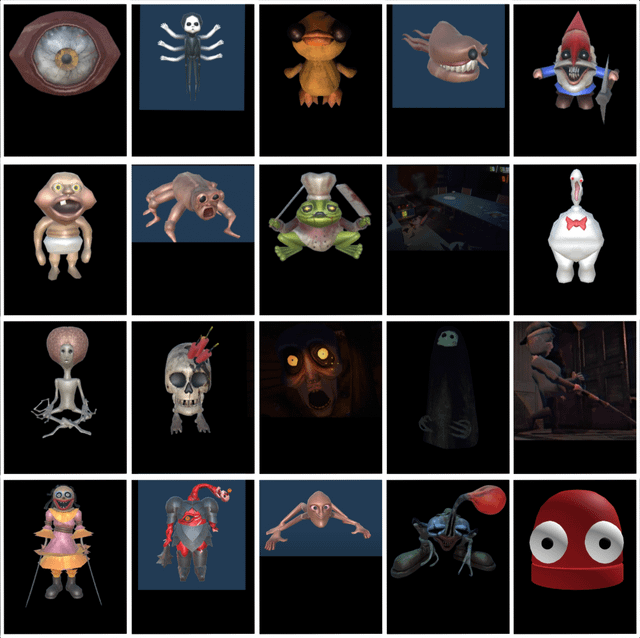
R.E.P.O. monsters can turn a clean extraction into complete chaos within seconds. Learning how enemies behave is just as important as carrying valuables safely because a badly timed encounter can separate the team, destroy objects, or force everyone to abandon a route that looked safe moments earlier.
That unpredictability is a major part of R.E.P.O.’s cooperative horror formula. R.E.P.O. monsters interact with the same physics-driven world as players and valuable objects, creating encounters where movement, positioning, communication, and quick decisions matter. Knowing what kind of threat you are facing can make surviving the next room much easier. And before we continue, know that to know more about all the relevant content about gaming, you just have to check our blog.

R.E.P.O. monsters explained: how enemies affect each run
R.E.P.O. monsters are the hostile enemies found throughout R.E.P.O., the online cooperative horror game developed and published by semiwork. The game remains in Early Access, and its official Steam description currently lists 29 enemies across four levels, with additional enemies planned as development continues.
These creatures are more than obstacles placed between players and the extraction point. Their presence affects how a team explores rooms, handles valuable objects, uses equipment, and decides when it is worth taking a risk.
Why learning monster behavior matters
Understanding enemy behavior gives players more time to make the right decision. Some situations encourage hiding and waiting for danger to pass, while others can force the group to move quickly or use available equipment.
A useful R.E.P.O. monsters guide should therefore focus on behavior as much as names. Simply recognizing a creature is not enough if you do not understand what that encounter means for your current position.
When a monster appears, consider several factors:
- Where the nearest safe route is located.
- Whether the team is together or separated.
- What equipment and weapons are currently available.
- Whether valuable objects are exposed to damage.
- How much health and stamina the group has left.
These decisions become even more important when players are transporting valuable objects. R.E.P.O.’s physics system means careless movement can damage the loot the team is trying to extract, so panic can become almost as dangerous as the monster itself.
How physics change monster encounters
Physics are central to R.E.P.O.’s identity. The official Steam description explains that players use a physics-based grabbing tool to handle valuable objects and that monsters are also affected by the game’s physics.
That interaction makes encounters less predictable than simply memorizing a fixed attack pattern. Objects, players, enemies, and the surrounding environment can become part of the same chaotic situation.
Physics also create opportunities. Depending on the encounter and available equipment, teams can use positioning and the environment to improve their chances of escaping danger. However, trying to improvise while carrying fragile valuables can quickly make the situation worse.
For that reason, good communication matters. A player who notices a threat first can warn the rest of the group before everyone enters the same dangerous space.
R.E.P.O. game monsters list and enemy categories
A R.E.P.O. game monsters list becomes easier to understand when enemies are considered according to how they threaten the team. The official game currently contains 29 enemies, but memorizing 29 names without understanding their behavior provides limited practical value.
Different encounters demand different reactions. Some threats disrupt movement or create pressure, while more dangerous encounters can quickly punish players who stay exposed or react too slowly.
Common threats and disruptive monsters
Not every encounter needs to become a fight. In many situations, recognizing danger early and avoiding unnecessary contact is the safer option, especially when the group is already carrying valuable items toward extraction.
The R.E.P.O. monster types players encounter can create pressure in different ways. A threat might interfere with movement, force players away from an area, separate teammates, or make transporting objects more difficult.
Instead of automatically attacking, players should ask whether engaging provides any meaningful advantage. If the team can simply change routes, hide, or wait for the situation to improve, preserving health and resources may be the smarter decision.
Sound also matters in a game built around proximity voice chat. Communication can help teammates coordinate, but players should remain aware of their surroundings instead of assuming a room is safe because nobody has reported a monster yet.
Dangerous monsters that can end a run
Some encounters become particularly dangerous because there is little room for mistakes. A team carrying damaged valuables, low on health, or separated across different rooms can be much more vulnerable than a coordinated group encountering the same threat.
This is why assigning one universal danger ranking to every enemy can be misleading. The most dangerous monster at a specific moment often depends on positioning, available equipment, team condition, and whether players understand its behavior.
A stronger survival routine is to identify the threat, communicate its location, and decide how the group should respond before everyone rushes into the same area.
R.E.P.O. monster types and how to survive them
Understanding R.E.P.O. monster types is ultimately about choosing the correct response. R.E.P.O. gives players weapons and equipment, but surviving does not always require confronting every creature they encounter.
Because resources and team condition can change throughout a run, the correct strategy against a threat can also change. A coordinated six-player group with useful equipment has more options than one injured player separated from everyone else.
When to hide, run, or fight
Start by determining whether the monster has actually blocked your objective. If the group has another safe route, avoiding unnecessary danger can protect both players and valuables.
A simple decision process can help:
- Identify the monster or its general behavior.
- Warn nearby teammates before moving closer.
- Check available escape routes and hiding options.
- Consider the team’s health, equipment, and positioning.
- Decide whether avoiding, escaping, or confronting the threat makes the most sense.
- Regroup before continuing the extraction.
This approach also prevents players from turning every monster sighting into uncontrolled panic. The more familiar a team becomes with the R.E.P.O. game monsters list, the easier it becomes to recognize when immediate action is necessary.
Using teamwork against monsters
R.E.P.O. supports online co-op for up to six players, and its proximity voice chat makes communication part of the experience. Teams can warn each other about threats, coordinate movement, protect valuable objects, and decide who should carry important equipment.
Good communication becomes even more valuable when several players are moving through different rooms. Short, useful warnings about a monster’s location can prevent another teammate from walking directly into danger.
Still, communication depends on a stable online session. A connection problem during a tense encounter can disrupt coordination at exactly the wrong moment. As the R.E.P.O. monsters roster continues to evolve through Early Access, understanding new enemies will remain important, but so will maintaining reliable multiplayer communication.
R.E.P.O. monsters guide and quick reference
A useful R.E.P.O. monsters guide goes beyond memorizing every creature name. During an actual run, recognizing how a threat behaves and deciding whether to hide, escape, or prepare for danger is more valuable than knowing where it sits on a subjective ranking.
The current Early Access version officially lists 29 enemies, and that number can change as semiwork continues development. Players should therefore treat any static monster reference as a snapshot rather than a permanent list.
Recognizing monsters before they attack
Audio, movement, nearby activity, and previous encounters can give players valuable information before they commit to entering a dangerous area. Teams that communicate what they have seen can reduce the chance of another player walking directly into the same threat.
The table below organizes R.E.P.O. monster types by practical encounter behavior rather than assigning unsupported official difficulty tiers.
| Threat category | Typical situation | Main concern | Recommended response |
| Disruptive threats | Interfere with normal exploration | Losing control of the situation | Stay aware and reposition |
| Pursuing threats | Pressure players to keep moving | Becoming trapped | Identify escape routes early |
| High-risk threats | Punish positioning mistakes quickly | Heavy damage or failed run | Avoid unnecessary exposure |
| Environmental pressure | Makes carrying valuables harder | Damaged or lost loot | Protect objects and coordinate |
| Unfamiliar threats | Behavior is not yet understood | Wrong reaction | Observe safely before engaging |
These categories are intentionally broad because individual monsters can behave very differently. As the roster changes, checking current behavior remains more useful than assuming an old strategy will always work.
Survival mistakes to avoid
Panic is one of the easiest ways to turn a manageable encounter into a failed extraction. Running without communicating can separate the group, while dropping or mishandling valuable objects can create another problem even after the immediate threat disappears.
Another mistake is treating every enemy as something that must be fought. Weapons and equipment provide options, but avoiding an unnecessary encounter can preserve health and resources for a more dangerous situation later in the run.
R.E.P.O. new monsters and future enemies
Players searching for R.E.P.O. new monsters should remember that R.E.P.O. remains in Early Access. The roster is not necessarily final, and semiwork’s official Early Access information explicitly identifies additional enemies among the content planned before the full version.
That makes monster knowledge a moving target. Guides and community references can become outdated whenever an update adds enemies, changes behavior, or adjusts other gameplay systems.
How updates expand the enemy roster
New enemies can create more than another name to memorize. A creature with different behavior can change how teams approach exploration, resource use, communication, and valuable-object transportation.
After a major update, players should check:
- Whether new enemies were introduced.
- Whether existing monster behavior changed.
- Whether equipment interactions were adjusted.
- Whether previously reliable strategies still work.
- Whether community guides reflect the current build.
This is particularly important for players returning after several updates. The R.E.P.O. game monsters list they remember may no longer represent the current Early Access experience.
Will R.E.P.O. get more monsters?
Yes, semiwork has indicated that more enemies are planned as part of R.E.P.O.’s continued development toward its full release. However, players should avoid assuming a specific final number unless the developer confirms one.
The safest approach is to follow official update information when looking for R.E.P.O. new monsters. Community databases can then provide additional practical observations once players have spent time encountering new threats.
Is the R.E.P.O. monster wiki reliable?
A R.E.P.O. monster wiki can be useful when players want detailed community information about individual enemies. However, community-maintained wikis should not be confused with official documentation from semiwork.
That distinction becomes especially important during Early Access. Monster information can change faster than older pages are updated, potentially leaving outdated strategies or behavior descriptions online.
Official information versus community documentation
Official sources are the strongest reference for confirmed features, update announcements, Early Access status, and developer plans. Community resources can provide additional observations about encounters, strategies, and player experiences.
Using both carefully can be useful. Start with official information when confirming what changed, then use community documentation to understand how players are responding to those changes.
How to check whether monster information is outdated
When reading a R.E.P.O. monster wiki, check when the page or relevant information was last updated. Then compare it with recent official patch information if the behavior described no longer matches what happens in-game.
Early Access makes this habit particularly valuable. An old guide can still rank well in search results even when a later update has changed the experience.
R.E.P.O. monsters and online co-op performance
Encounters with R.E.P.O. monsters depend heavily on teamwork when playing online. R.E.P.O. supports cooperative sessions for up to six players, and proximity voice chat makes quick communication useful when teammates discover danger in different areas.
Connection quality cannot change enemy AI or make a monster easier, but network instability can interfere with multiplayer communication and responsiveness. That is why game problems and connection problems should be diagnosed separately.
Why connection stability matters during monster encounters
Ping, jitter, and packet loss can affect online games in different ways. High or unstable latency may reduce responsiveness, while packet loss can contribute to inconsistent network behavior.
If multiplayer becomes unstable, players should first check local congestion, background downloads, Wi-Fi quality, and wider service problems. They should also test whether the issue happens consistently or only during one session.
How ExitLag can help R.E.P.O. players
ExitLag is designed to optimize connections for PC and Mobile games. Its Real-Time Optimization and Multipath Connection technologies can identify and use more efficient network routes when poor routing contributes to latency, jitter, packet loss, or connection instability.
For R.E.P.O. players on PC, this can help create a more consistent online connection when routing is the source of the problem. ExitLag cannot repair monster AI, broken game files, local hardware problems, game bugs, or server-side outages.
ExitLag can drastically improve your gameplay for an accessible price. To know more, check our pricing page.
Frequently asked questions (FAQ)
How many monsters are in R.E.P.O.?
The official Steam Early Access description currently lists 29 enemies across four levels. Because R.E.P.O. remains in development, that number can increase as semiwork releases additional content.
What are the different R.E.P.O. monster types?
There is no need to force every enemy into one official difficulty classification. For practical gameplay, players can think about threats according to behaviors such as pursuit, disruption, environmental pressure, and how aggressively an encounter forces the team to reposition.
What is the most dangerous monster in R.E.P.O.?
There is no official universal ranking that identifies one monster as objectively the most dangerous. Threat level depends on the enemy, team positioning, health, equipment, environment, and how well players understand the encounter.
Are new monsters coming to R.E.P.O.?
Yes. More enemies are included among semiwork’s planned additions during Early Access development. Exact future roster details should be checked against current official announcements.
Is the R.E.P.O. monster wiki official?
Community wikis are not official semiwork documentation. They can still provide useful player-created information, but details should be checked against recent updates when accuracy matters.
Do route optimization tools or ping reducers help with R.E.P.O.?
They can help when inefficient routing contributes to high ping, jitter, packet loss, or unstable online connectivity. They cannot fix game bugs, monster behavior, local hardware limitations, or server outages.

How much does ExitLag cost?
ExitLag offers several subscription plans, including monthly, quarterly, and annual options. Prices vary depending on your region and promotions, so checking the official website is the best way to see the latest offers.
Use the free trial to explore all features!
Is ExitLag compatible with R.E.P.O.?
R.E.P.O. players on PC should search for the game inside ExitLag to verify its current support and available routing options. Support can change as games and services are updated.
In conclusion
Learning the enemy roster can make R.E.P.O.’s unpredictable extractions easier to manage. Recognizing behavior, communicating locations, protecting valuable objects, and knowing when to avoid a confrontation can be more useful than memorizing a simple danger ranking.
R.E.P.O. is still evolving through Early Access, so new threats can continue changing how teams approach each level. Staying current with official updates and adapting your survival strategy is the best way to prepare for R.E.P.O. monsters waiting around the next corner. Download ExitLag now!
Got questions or want to connect with other players? Join the conversation at the ExitLag Forum!