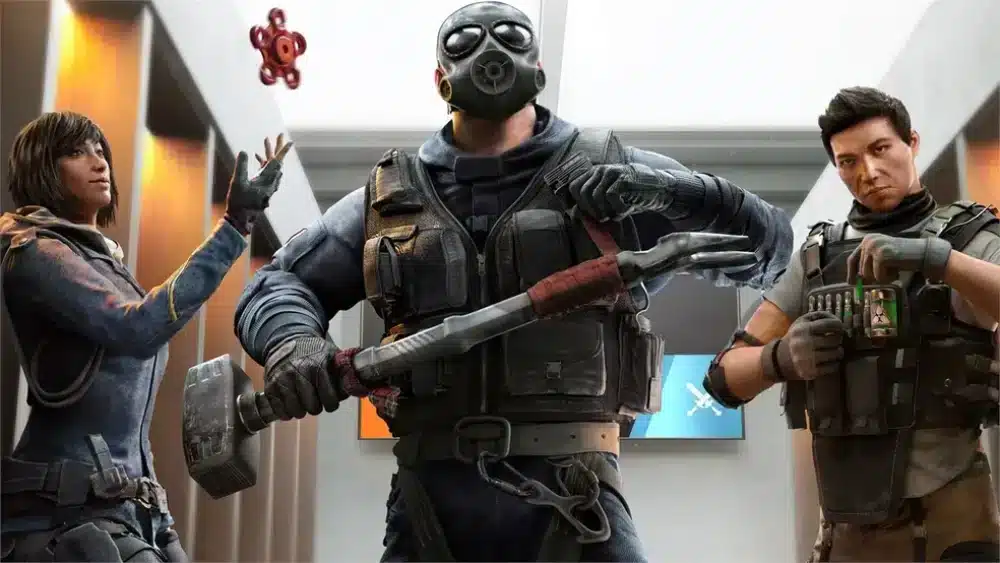
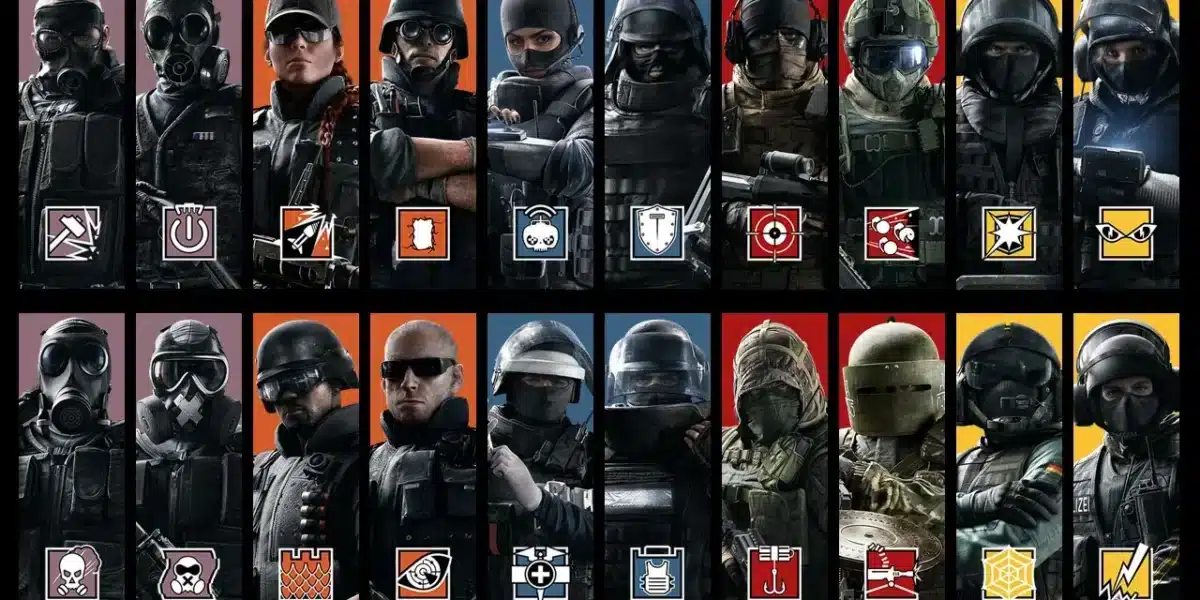
Competitive players spend countless hours trying to climb the rainbow six siege ranks ladder. Whether you are a beginner entering Ranked for the first time or a veteran aiming for Champion, understanding the ranking system is essential for consistent progression.
The current rainbow six siege ranks structure is based on Ubisoft’s Ranked 3.0 system, which completely changed how progression, RP gains, and matchmaking work. Today, players can grind through divisions more consistently while unlocking rewards throughout the season.
What are rainbow six siege ranks and why do they matter? Ranked mode is the competitive playlist in Rainbow Six Siege where players earn Rank Points (RP) by winning matches. Your rank reflects your overall skill level, teamwork, map knowledge, and consistency during the season.
Unlike casual playlists, Ranked introduces higher stakes, more strategic gameplay, and stronger opponents. Every round matters, especially in higher divisions where teamwork and communication become critical.
In addition, ranked progression gives players long-term goals. Unlocking new tiers, seasonal charms, and exclusive rewards keeps the competitive experience rewarding throughout the season.
Rainbow Six Siege ranks explained
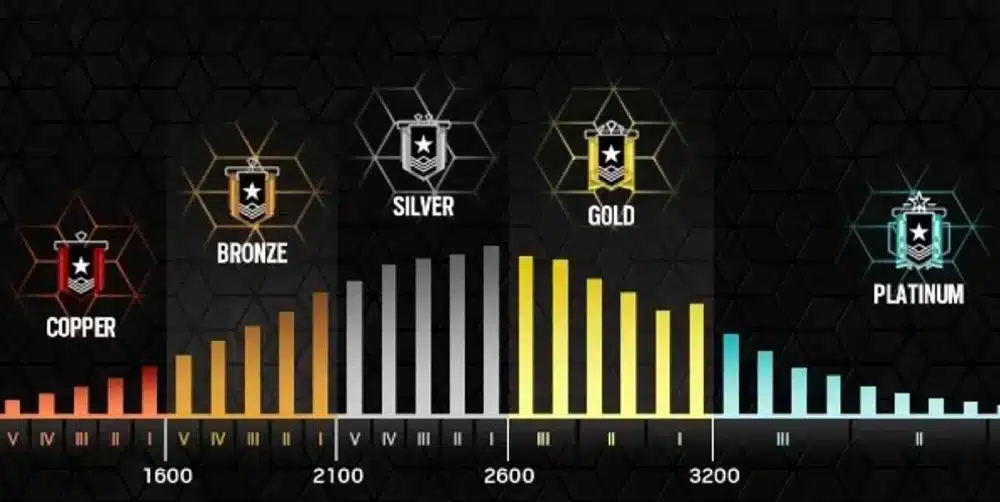
Ubisoft designed the ranking ladder to separate players based on performance and consistency. Each rank contains multiple divisions, allowing smoother progression between skill levels.
The ranked ecosystem rewards players who consistently win matches, coordinate with teammates, and adapt to changing metas.
What are ranks in Rainbow Six Siege?
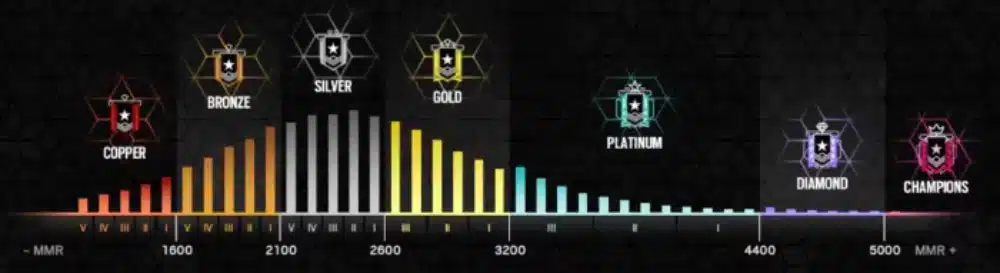
The ranking ladder starts at Copper and progresses upward until Champion. Players earn RP after victories and lose RP after defeats.
Here is the complete order of the current rank structure:
| Rank | Divisions |
| Copper | V to I |
| Bronze | V to I |
| Silver | V to I |
| Gold | V to I |
| Platinum | V to I |
| Emerald | V to I |
| Diamond | V to I |
| Champion | Top Players |
The addition of Emerald helped improve matchmaking distribution between Platinum and Diamond players.
Meanwhile, Champion remains the most prestigious competitive tier in the game.
Why ranks matter in competitive play
Competitive progression impacts almost every aspect of gameplay.
Benefits of ranked mode include:
- Better match quality
- More strategic teammates
- Seasonal rewards
- Competitive improvement
- Access to higher-level gameplay
Additionally, ranked matches encourage players to master operators, map rotations, and advanced strategies.
The higher you climb, the more tactical the experience becomes.
Rainbow Six Siege ranked play requirements
Before entering Ranked, players must unlock the mode by meeting Ubisoft’s requirements.
This ensures new players understand the game’s fundamentals before joining competitive matches.
How to unlock ranked mode
To access rainbow six siege ranked play, players must:
- Reach level 50
- Enable Two-Factor Authentication
- Own the full game version
- Maintain a valid Ubisoft account
These requirements help reduce cheating, smurfing, and unfair matchmaking.
New players should use Quick Match and Standard playlists to learn operators and maps before jumping into Ranked.
PC account security and ranked access
Ubisoft takes competitive integrity seriously.
Security requirements include:
- Verified email
- Two-Factor Authentication
- Anti-cheat compliance
- Account standing verification
Players who ignore these requirements may lose Ranked access temporarily.
Because of this, keeping your account secure is extremely important for long-term progression.
Rainbow Six Siege ranking system and RP progression
The modern rainbow six siege ranking system differs significantly from older seasons.
Ranked 3.0 introduced hidden skill values combined with visible progression ranks.
How RP works after each match
Players earn RP mainly through victories.
Several factors influence RP gains:
- Match outcome
- Team performance
- Hidden skill estimation
- Current division
- Win consistency
Early in the season, RP gains are usually larger. Later, progression slows as the system adjusts to your estimated skill level.
This helps place players closer to their true competitive rank.
What changed with Ranked 3.0?
The updated rainbow six siege rank system introduced major improvements.
Key Ranked 3.0 changes include:
- Removal of visible MMR
- Addition of Emerald rank
- Improved progression flow
- Better squad matchmaking
- Reward tracks during progression
These changes made Ranked more rewarding for active players while keeping competitive integrity intact.
At the same time, matchmaking became less punishing for players grinding long sessions.
Rainbow Six Siege ranks in order
Understanding the full ladder helps players set realistic climbing goals.
The current rainbow six siege ranks in order follow this progression:
| Tier | Skill Level |
| Copper | Beginner |
| Bronze | Basic understanding |
| Silver | Average players |
| Gold | Above average |
| Platinum | Competitive |
| Emerald | Advanced |
| Diamond | Elite |
| Champion | Top players |
Each tier introduces more advanced gameplay mechanics and coordination.
What is the highest rank in Rainbow Six Siege?
The highest rank in rainbow six siege is Champion.
Champion players represent the top percentage of the player base each season.
At this level, matches demand:
- Precise communication
- Strong map control
- Advanced utility usage
- Team coordination
- Consistent aim
Champion is where professional-level gameplay begins to appear regularly.
How difficult is Diamond and Champion?
Reaching Diamond or Champion requires exceptional consistency.
Most players struggle because higher-ranked matches punish small mistakes immediately.
Common challenges include:
- Strong coordinated teams
- Fast decision-making
- Utility management
- Advanced positioning
- Meta adaptation
Players aiming for these ranks must constantly improve mechanics and communication.
How to climb ranked in Rainbow Six Siege
Improving in ranked rainbow six siege requires more than good aim.
Success depends on strategy, communication, and consistency.
Team play and operator strategy
Rainbow Six Siege is heavily team-oriented.
Important climbing tips include:
- Learn multiple operators
- Master callouts
- Communicate constantly
- Play support roles
- Avoid solo rushing
Players who adapt to team needs climb much faster than those focusing only on kills.
Utility usage often matters more than raw fragging power.
Map knowledge and positioning
Map control separates average players from elite competitors.
Focus on:
- Common entry points
- Default plant spots
- Rotation paths
- Vertical gameplay
- Defensive setups
Strong positioning can win rounds even against mechanically superior opponents.
Over time, map awareness becomes one of the biggest factors in climbing ranks in rainbow six siege.
Best operators for ranked play
Operator selection impacts overall consistency during ranked matches.
Here are some strong competitive operators:
| Attackers | Strength |
| Ace | Hard breach |
| Iana | Information gathering |
| Buck | Vertical control |
| Thatcher | Utility denial |
| Zero | Camera intel |
| Defenders | Strength |
| Azami | Area control |
| Smoke | Plant denial |
| Valkyrie | Information |
| Wamai | Utility defense |
| Mute | Drone denial |
Flexible operators usually provide the best value in solo queue environments.
Common mistakes preventing rank progression
Many players remain stuck because of repeated habits.
Avoid these common issues:
- Overpeeking unnecessarily
- Ignoring drone information
- Poor communication
- Excessive solo plays
- Rage queueing after losses
Mental discipline matters heavily in long ranked sessions.
Staying calm improves consistency significantly.
How connection quality affects ranked matches
Competitive Siege demands precise reaction timing.
Even small connection problems can ruin rounds.
Common issues include:
- High ping
- Packet loss
- Rubberbanding
- Delayed hit registration
- Sudden lag spikes
This becomes even more frustrating during overtime rounds or clutch situations.
Rainbow Six Siege ranks and ExitLag optimization
Climbing ranks rainbow six siege becomes harder when unstable connections interfere with gameplay. Rainbow Six Siege relies heavily on split-second reactions, especially during gunfights, peeks, and utility usage.
ExitLag improves competitive stability using real-time route optimization, multipath technology, and traffic balancing. Instead of relying on a single unstable route, ExitLag dynamically redirects packets through optimized paths for lower latency and reduced packet loss.
Benefits include:
- Lower ping during ranked matches
- More stable server connection
- Reduced lag spikes
- Improved responsiveness
- Better consistency in competitive sessions
Because Rainbow Six Siege rewards precision, connection quality can directly influence your ability to climb higher ranks.
ExitLag supports thousands of games worldwide and gives players a smoother competitive experience on PC and Mobile platforms.
FAQ
Players earn RP after victories and lose RP after defeats. Winning consistently helps you climb through divisions and ranks.
Champion is the highest competitive rank available.
There are eight main rank tiers:
Copper
Bronze
Silver
Gold
Platinum
Emerald
Diamond
Champion
Most players consider Ranked 3.0 more rewarding because progression feels smoother and more consistent.
Yes. High ping and packet loss can negatively impact reaction time, hit registration, and overall gameplay consistency.
Why Rainbow Six Siege ranks matter more than ever
The modern competitive ecosystem makes rainbow six siege ranks more meaningful than ever before. With Ranked 3.0, Ubisoft created a progression system that rewards dedication, consistency, and teamwork while maintaining strong competitive integrity.
Whether your goal is Gold, Emerald, Diamond, or Champion, mastering strategy, communication, and connection stability is essential for climbing efficiently.
And when every millisecond matters in high-level ranked matches, ExitLag helps ensure your performance is limited only by your skill — not by lag or unstable routing.
Got questions or want to connect with other players? Join the conversation at the ExitLag Forum!