
If you are searching for Rocket League Steam, you are probably trying to understand whether the Steam version is still available, how access works for existing players, and what makes the platform different from the current Epic Games distribution. Rocket League has changed significantly since its original PC release, but Steam remains relevant for players who already own the game there. The key is knowing what is still possible, what is no longer offered to new users, and how the Steam ecosystem affects your experience.
The history of Rocket League Steam is closely connected to the game’s transition to free-to-play distribution. Rocket League was originally sold through Steam, giving PC players access to the game through Valve’s platform. After the transition to free-to-play, new players were directed to the Epic Games Store instead. According to official Rocket League Support, the Steam version is still available to players who owned the game on Steam before it became free-to-play, while Epic Games Support cannot grant a new Steam copy.
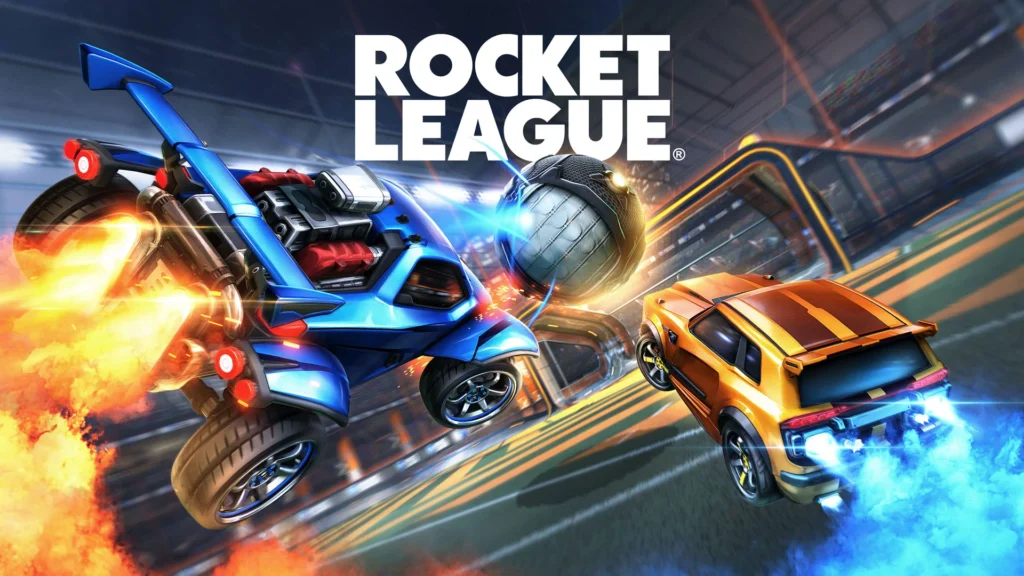
What is Rocket League Steam?
Rocket League Steam is the PC version of Rocket League associated with Steam, particularly the legacy version owned by players who acquired it before the game moved away from Steam distribution. The game combines fast car-based movement, physics-driven ball control, competitive matches, and multiple online modes. Today, Steam ownership is primarily relevant to legacy players, while new PC players generally access Rocket League through Epic Games.
For players who already have the Steam version, the platform can still be a practical way to launch and play Rocket League. Steam users can participate in online matches alongside players on other platforms because Rocket League supports cross-platform play. Official support confirms that players on Steam, Epic Games Store, PlayStation, Xbox, and Nintendo Switch can matchmake with or against each other in online match types.
What Is Rocket League Steam? Understanding the Steam version
Rocket League is a competitive sports game built around an unusual but immediately recognizable concept: players control rocket-powered cars instead of human athletes. The objective is simple to understand, but mastering the physics, positioning, aerial movement, recoveries, rotations, and team play requires considerable practice.
The Rocket League Steam version represents the Steam distribution of the PC game. Historically, players could purchase Rocket League directly through Steam and maintain the game in their Steam libraries. That changed when Rocket League moved to a free-to-play model and became distributed through the Epic Games Store.
The distinction is important because Steam ownership and simply wanting to download the game are no longer the same thing. Existing owners can continue to use their Steam copy, but new players cannot simply open Steam and purchase Rocket League as a new title through the old distribution model. Official support explicitly states that Rocket League was removed from Steam when the free-to-play update launched.
That makes Rocket League Steam primarily an access and platform question today. If Rocket League already appears in your Steam library, your situation is different from that of someone searching for the game for the first time.
Why the platform still matters
Steam remains important because it is more than a storefront. It is a complete PC gaming ecosystem that includes libraries, friends, achievements, controller configuration, community features, cloud functionality, and other platform-level tools.
For a legacy Rocket League player, this can make the Steam version feel familiar even after the game’s distribution strategy changed. Players who have spent years organizing their PC games through Steam may also prefer launching Rocket League from the same library.
At the same time, the core gameplay is not defined by Steam itself. The competitive experience depends on Rocket League’s servers, matchmaking, game settings, hardware performance, and network conditions. Therefore, choosing Steam is mainly about access and ecosystem preferences rather than expecting a fundamentally different version of the game.
Is Rocket League Still Available on Steam?
What new players need to know
The short answer is no for new purchases. Rocket League is no longer offered as a new Steam download in the traditional sense. Official Rocket League Support confirms that the game was removed from Steam after becoming free-to-play and that only players who already owned it on Steam before that transition retain access there.
For someone searching Rocket League Steam today, this is the most important distinction to understand. You may still find references to Rocket League on Steam, Steam support pages, community discussions, or existing player libraries. However, that does not mean the game has returned to Steam for general purchase.
Instead, new PC players should use the current official distribution channel. The Epic Games Store lists Rocket League as a free-to-play PC game developed and published by Psyonix. The current store listing also identifies online multiplayer, competitive play, cross-platform progression, and several game modes as part of the experience.
What existing Steam owners can do
If you purchased Rocket League before the transition, the situation is considerably different. Your Steam copy remains associated with your library, which means you can continue launching the game through Steam.
Existing players can still take advantage of the competitive ecosystem. Cross-platform play allows Steam players to interact with people using Epic Games, PlayStation, Xbox, and Nintendo Switch.
This means the Steam version is not isolated from the modern Rocket League player base. You can still participate in online matches and play against friends who use different platforms.
For that reason, an existing Rocket League Steam installation can remain useful even though Steam is no longer the standard distribution platform for new players.
How to Access Rocket League Steam
Check your Steam library first
If you believe you owned Rocket League before it became free-to-play, the first step is simple: check your Steam library.
Open Steam and search your library for Rocket League. If the game is already associated with your account, you can use the existing installation or download it from your library if the files are no longer present.
This is the safest approach because it relies on your own ownership history rather than an unofficial source.
If Rocket League is not present in your library, do not assume that every third-party offer promising a Steam copy is legitimate. Because the game is no longer normally sold through Steam, unusual listings can create unnecessary account and payment risks.
Be careful with old keys and accounts
Searches for a Rocket League Steam key can lead to old listings, resale platforms, forums, or advertisements claiming to provide access. However, availability and legitimacy can vary considerably.
An old game key is not automatically proof that it can still be redeemed. Likewise, buying an account that already contains Rocket League introduces additional risks because the account may not legally or safely belong to you.
The safer principle is straightforward:
- Use your own Steam account whenever possible.
- Check your existing library before looking elsewhere.
- Avoid sharing passwords or account credentials.
- Be skeptical of unusually cheap Steam account offers.
- Verify the legitimacy of any key before attempting activation.
- Prefer official distribution channels for new installations.
The goal is not simply to obtain the game. It is to maintain secure and reliable access to your gaming account.
Managing a Rocket League Steam Account
Linking your accounts
Rocket League supports a connected account ecosystem, allowing players to use their Epic Games account alongside platform accounts. This is particularly relevant for Steam players who want access to cross-platform functionality.
Account linking should be performed through official account-management processes rather than third-party services. Avoid giving your Steam credentials to websites that claim they can automatically connect or upgrade your account.
A properly connected account can make moving between platforms easier, particularly when your progression and inventory are tied to the appropriate Epic Games account.
However, linking accounts does not change the fundamental availability rules for Steam. If you did not previously own Rocket League on Steam, linking an Epic account does not create a new Steam entitlement.
Protecting your settings and data
Long-term players often accumulate custom controls, video settings, replays, and other personalized configurations. Losing these settings can be frustrating, particularly when returning to a game after a long break.
Before making major changes to your installation, it is sensible to preserve important configuration information. Keep copies of custom keybinds and other settings that you would not want to recreate manually.
Cloud functionality can also be useful, although players should not treat cloud storage as the only backup for important files.
A practical setup includes:
- Record your controller or keyboard configuration.
- Preserve important replay files when necessary.
- Keep track of your preferred video settings.
- Make sure your Steam installation is functioning correctly.
- Avoid unnecessary modifications to the game directory.
These simple habits can make returning to Rocket League Steam much easier.
Rocket League Steam and Performance
Why network stability matters
Rocket League is particularly sensitive to timing. The game may look simple because a match takes place on a relatively compact arena, but every interaction happens quickly.
A delayed input, inconsistent connection, packet loss, or sudden latency variation can affect how a player perceives the ball and responds to an opponent.
That is why performance should be considered as a combination of hardware, software, and network conditions. A powerful computer cannot eliminate problems caused by an unstable internet connection. Similarly, a fast connection does not automatically solve frame-rate problems.
For competitive Rocket League Steam sessions, consistency is often more important than simply pursuing the highest possible numbers.
Network and PC optimization
Start with the fundamentals before changing advanced settings.
Keep your operating system and graphics drivers updated. Close unnecessary applications that consume CPU, memory, or bandwidth. Use a stable connection whenever possible, and avoid downloading large files while playing ranked matches.
If your connection frequently changes route or experiences latency spikes, network optimization tools may help depending on the cause of the problem. However, they cannot fix every type of connection issue.
You should also distinguish between ping and FPS. Ping relates to communication between your device and the game server. FPS measures how quickly your computer renders frames. A player can have high FPS and poor ping, or low ping and unstable FPS.
Understanding that difference makes troubleshooting much more effective.
Rocket League Steam vs. Epic Games
Comparing the two PC experiences
The most important difference is availability. Steam is primarily relevant to existing owners, while Epic Games is the current distribution platform for new PC players.
The gameplay itself remains centered on the same Rocket League experience. Players on different platforms can compete together through cross-platform matchmaking.
| Feature | Steam Version | Epic Games Version |
| Available to new PC players | No | Yes |
| Online multiplayer | Yes | Yes |
| Cross-platform play | Yes | Yes |
| Steam achievements | Yes, for Steam owners | Not applicable |
| Steam ecosystem | Yes | No |
| Epic Games account integration | Supported | Native |
| Current standard PC distribution | No | Yes |
| Rocket League gameplay | Full | Full |
The table shows why the decision is mostly about ownership and platform preference. If you already own Rocket League Steam, there is little reason to abandon the version simply because new players are directed elsewhere.
On the other hand, if you are a new PC player, searching indefinitely for a Steam copy is unnecessary. The official Epic Games Store provides the current route to the game.
Cross-platform play changes the equation
One of the strongest reasons platform differences are less important than they once were is cross-platform multiplayer.
Rocket League allows Steam players to play with people using other supported platforms. Cross-play is enabled by default, according to official support documentation, and it can be controlled through the game’s settings.
That means your friend does not necessarily need to use Steam for you to play together.
For example, one player can launch through Steam while another uses Epic Games. The platform stores may be different, but the players can still participate in the same online environment.
This is particularly useful for groups of friends who purchased their games at different times or use different gaming hardware.
Rocket League and the Competitive Experience
Why Rocket League remains challenging
Rocket League is easy to start and difficult to master. A new player can understand the basic objective within minutes, but advanced mechanics require substantial practice.
Players need to learn how to control their cars, manage boost, position themselves, read ball trajectories, recover quickly, and coordinate with teammates.
The competitive structure adds another layer. A small mechanical mistake can turn into a goal, while good positioning can prevent a dangerous play before it develops.
For Rocket League Steam players, the Steam platform does not remove or alter these competitive fundamentals. The same principles apply whether the player is using Steam or Epic Games.
The importance of consistency
Consistency is one of the biggest differences between casual and competitive play.
A player may perform an impressive aerial once but still struggle if their basic touches are inconsistent. Similarly, a perfect mechanical skill is less useful if poor positioning constantly places the player out of position.
This is why optimization should focus on stability.
A useful competitive setup prioritizes:
- Stable frame rates.
- Responsive controls.
- Consistent network performance.
- Clear visual settings.
- Reliable controller or keyboard input.
- Predictable positioning and mechanics.
The goal is to reduce unnecessary variables so that mistakes come from decision-making rather than avoidable technical problems.
Rocket League Tracker and Player Progress
What a Rocket League Tracker can provide
A Rocket League tracker can be useful for players who want to monitor statistics, ranks, or progression information outside the standard in-game interface.
Depending on the specific service, trackers may present information about competitive performance, ranks, match history, or other publicly available statistics.
However, players should always check which information a tracker actually supports and whether it requires account access. Avoid entering sensitive credentials into unfamiliar websites.
A tracker should be treated as an analytical tool, not as a replacement for understanding the game itself.
Using statistics effectively
Statistics are most useful when they help identify a pattern.
For example, if your rank has remained unchanged for an extended period, reviewing match results may reveal whether your problem is consistency, positioning, mechanics, or decision-making.
However, statistics can also become distracting. A player who checks numbers after every match may focus more on the result than on the decisions that produced it.
The best approach is to use a Rocket League tracker as a supplement to practice.
Look for trends over multiple sessions rather than treating one match as definitive evidence of improvement or decline.
Understanding RL Terminology
What does RL mean?
In community discussions, RL is commonly used as a shortened reference to Rocket League. Players may use it in searches, social posts, forums, Discord conversations, or competitive discussions.
Because the abbreviation is so short, context matters. However, within gaming communities, RL frequently refers to Rocket League.
You may therefore see phrases such as RL ranks, RL mechanics, RL training, or RL tournaments. These references generally point back to the same game.
Understanding these abbreviations makes it easier to follow community discussions and find useful resources.
Why terminology matters for new players
Rocket League has its own vocabulary.
Terms related to rotations, aerials, flicks, air dribbles, recoveries, challenges, demos, boost management, and positioning appear frequently in guides and competitive conversations.
Learning the terminology can make tutorials easier to understand because players can identify exactly which mechanic or decision is being discussed.
For example, searching for a specific RL mechanic is generally more useful than searching for a broad phrase such as “how to get better.”
Rocket League Unblocked Searches and What They Mean
Understanding the phrase
The phrase Rocket League unblocked commonly appears in searches from users looking for ways to access Rocket League on restricted networks, such as school, workplace, or other managed environments.
However, an “unblocked” page is not automatically an official version of the game. Some sites use this terminology to attract users to browser-based mirrors, unofficial downloads, or unrelated services.
Players should be careful when encountering these results.
Rocket League is a full PC game with an established distribution ecosystem. Using an unofficial copy or suspicious website can expose your device or account to unnecessary risks.
Choosing legitimate access
If you want to play Rocket League on PC, use an official distribution channel whenever possible.
For existing Steam owners, that means accessing the copy already attached to your Steam account. For new PC players, the official Epic Games Store is the current route.
Avoid websites that promise instant access without explaining how the service works. Also avoid downloads that ask you to disable security software, install unknown executables, or provide your Steam credentials.
Searching for Rocket League unblocked should never mean compromising the security of your computer or account.
Improving the Rocket League Steam Experience
Start with your hardware
Before changing software settings, verify that your PC can run the game comfortably.
The official PC listing provides minimum and recommended system requirements. Steam’s support information lists requirements including a 64-bit operating system, 4 GB of RAM at minimum, 20 GB of available storage, and a DirectX 11-capable graphics setup. Recommended specifications are higher, including 8 GB of RAM and stronger hardware.
These requirements provide a useful baseline, but actual performance depends on the rest of the system and the settings you use.
If your PC is close to the minimum requirements, reducing unnecessary graphical load can help maintain a more stable experience.
Configure the game for competitive play
Competitive players generally benefit from settings that prioritize responsiveness and visibility.
That does not mean every player should use identical settings. Monitor refresh rate, GPU capabilities, personal preferences, and controller setup all affect the ideal configuration.
Instead, test changes individually.
If you change several settings simultaneously and performance improves or worsens, it becomes difficult to determine which adjustment caused the difference.
A controlled approach is more effective:
- Change one major setting at a time.
- Test the result in Free Play.
- Test again in an online match.
- Monitor FPS and network behavior separately.
- Keep the settings that provide consistent results.
This process is especially useful for legacy Rocket League Steam installations that have been maintained for years.
Security and Account Protection
Avoid suspicious offers
Because Rocket League is no longer normally sold through Steam, searches for old Steam copies can attract questionable offers.
Be cautious when a website claims to provide a rare Steam account, a guaranteed legacy entitlement, or an unusually cheap key.
The most important asset is not the game itself. It is your account.
If you lose access to your Steam account, you may lose access to many other games, purchases, achievements, and personal data.
Never give your password to another player or an unofficial service claiming to activate Rocket League.
Keep your accounts separate and secure
Use strong, unique credentials and enable available account-security features.
When connecting Rocket League, Steam, and Epic Games accounts, verify that you are using the official account-management environment.
This matters because phishing pages can look surprisingly convincing. A page that resembles a familiar login screen may still be designed to collect your credentials.
If you are unsure about a login request, stop and navigate to the official platform manually instead of following a suspicious link.
The Future of Rocket League Steam
Why Steam ownership remains relevant
The Steam version continues to matter because legacy ownership creates a unique position for existing players.
Although new users are directed to Epic Games, Steam owners can still launch their game through their existing library. Official support confirms that Rocket League on Steam remains available to players who owned it before the free-to-play transition.
This means the Steam version has effectively become a legacy access option rather than a standard retail product.
The distinction may become increasingly important as older platform ecosystems evolve. Therefore, players who already own the game should maintain their account security and avoid unnecessary changes.
Modern features still affect Steam players
The Steam version is not isolated from the game’s modern ecosystem. Cross-platform play allows Steam players to interact with users on other supported platforms.
Furthermore, Rocket League’s current PC security systems have also evolved. Official support states that Easy Anti-Cheat is available on Rocket League for both Epic Games Store and Steam, with online play requiring the protection enabled on PC.
That illustrates an important point: owning a legacy Steam copy does not mean playing an abandoned version of the game. The platform may be legacy, but the game continues to operate within the modern Rocket League ecosystem.

How to Make the Most of Rocket League Steam
Build a stable setup
The best experience starts with a reliable foundation.
Keep your game installation healthy, update relevant drivers, use a stable internet connection, and avoid unnecessary background applications during competitive sessions.
If you experience connection problems, identify whether the issue is latency, packet loss, jitter, or local network congestion before trying to fix it.
This approach is more effective than applying random “optimization” settings from the internet.
Practice before chasing rank
Technical optimization can help, but it cannot replace practice.
Rocket League rewards players who understand the relationship between mechanics and decision-making.
Spend time in Free Play, training packs, private matches, or casual games. Practice controlled touches rather than simply attempting difficult mechanics.
Once the fundamentals become reliable, advanced mechanics become easier to incorporate into actual matches.
For players returning to Rocket League Steam after a long break, this is particularly valuable. The game may feel familiar, but competitive habits can change over time.
A Practical Checklist for Steam Players
Before playing
Use this checklist to establish a reliable setup:
- Confirm that Rocket League is present in your Steam library.
- Make sure your Steam account is secure.
- Verify your linked Epic Games account if you use cross-platform progression.
- Update your graphics drivers.
- Check your controller or keyboard configuration.
- Confirm that sufficient storage is available.
- Close unnecessary background applications.
- Test your connection before entering ranked matches.
During competitive sessions
Once the game is running, focus on consistency.
Monitor whether your FPS remains stable and whether network conditions remain predictable. If you notice sudden problems, do not immediately assume that the game itself is responsible.
Try to identify whether the issue is local hardware, software, internet routing, server conditions, or another external factor.
This distinction can save considerable time.
Final Considerations for Rocket League Steam Players
When Steam is still the right choice
If you already own the game on Steam, there is a strong reason to continue using it: you already have legitimate access through your existing library.
The platform still supports the core Rocket League experience, and cross-platform functionality means you are not separated from friends who use other systems.
The main limitation is availability for new users. Steam is no longer the normal way to acquire Rocket League on PC.
When Epic Games makes more sense
If you are starting from scratch, the official Epic Games Store is the straightforward route. Rocket League is currently available there as a free-to-play title, with online multiplayer, competitive modes, cross-platform functionality, and progression features.
There is therefore little practical reason for a new player to chase an old Steam entitlement.
The distinction between the two platforms is best understood through ownership: Steam is primarily for legacy owners, while Epic Games is the current entry point for new PC players.
The official Rocket League support page provides the clearest confirmation of this distribution status and should be the first reference whenever platform availability changes.
For more technical information, players can also consult the officialSteam Support page for Rocket League, which lists the game’s PC requirements and platform information.
Final Thoughts On Rocket League Steam
Rocket League remains a game where milliseconds, positioning, control, and consistency can determine the outcome of a match. For legacy players, Rocket League Steam continues to offer a familiar way to access that experience. And to improve your gaming even further, you can count on tools such as ExitLag, which optimizes your connection and reduces lag.

Rocket League Steam FAQ
Is Rocket League still available on Steam?
Rocket League is no longer available as a new Steam purchase. Players who owned the game on Steam before it became free-to-play can continue accessing their existing Steam version. New PC players are directed to the Epic Games Store instead.
Can I play Rocket League on Steam with friends on other platforms?
Yes. Rocket League supports cross-platform play, allowing Steam players to compete with users on Epic Games, PlayStation, Xbox, and Nintendo Switch. Your friends do not need to use Steam for you to play together.
What is a Rocket League tracker?
A Rocket League tracker is a third-party statistics tool that can provide information such as ranks, match history, or other player-performance data, depending on the service. It can help identify trends, but it should complement rather than replace in-game practice and analysis.
What does RL mean in Rocket League?
rl is a common abbreviation for Rocket League. Players frequently use it in gaming communities, guides, forums, and competitive discussions when referring to the game, its mechanics, rankings, or tournaments.
What does Rocket League unblocked mean?
Rocket League unblocked is a search phrase commonly used by people looking for ways to access Rocket League on restricted networks. However, unofficial “unblocked” websites may not provide legitimate versions of the game and can create security risks. For safe access, use your existing Steam library if you own the Steam version or the official Epic Games Store for a new PC installation.
Got questions or want to connect with other players? Join the conversation at the ExitLag Forum!