Sandbox games give players something that heavily scripted experiences often cannot: freedom to decide what happens next. Instead of following only a predetermined sequence of missions, players can explore systems, build structures, experiment with mechanics, or create objectives of their own.
The appeal of sandbox games comes from that freedom. One player might spend hours constructing an enormous base, while another explores, fights enemies, experiments with physics, or survives alongside friends. The same world can support dramatically different experiences depending on how each player approaches it.
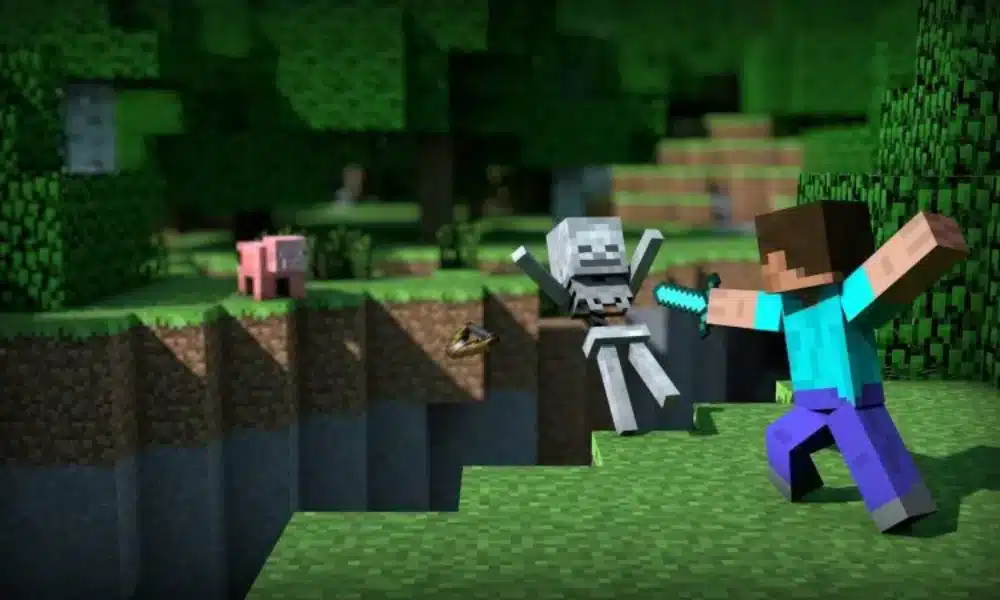
So, what are sandbox games? They are games designed around player agency, open-ended systems, and experimentation rather than a single mandatory path. Minecraft is one of the clearest examples because Mojang describes it as an open-world sandbox game where players can explore, survive, build, and approach the world in different ways.
That does not mean every sandbox needs blocks, crafting, or an enormous map. Some focus on physics. Others simulate planets, engineering systems, survival conditions, or multiplayer communities.
Understanding those differences makes it easier to find the right sandbox for your preferred playstyle.
What Are Sandbox Games and How Do They Work?
A sandbox game provides tools and systems, then gives players significant freedom over how to use them.
The term comes from the idea of a physical sandbox. You receive a space and materials, but nobody needs to tell you exactly what to create.
Player freedom instead of fixed objectives
Traditional linear games usually control progression carefully.
You complete one mission, unlock another area, follow the next objective, and eventually reach a predetermined conclusion. The developer decides much of the order.
Sandbox design loosens those restrictions.
Players might receive objectives, enemies, progression systems, or challenges, but they generally have more freedom to decide what deserves their attention.
Common sandbox characteristics include:
- Player-created objectives
- Exploration
- Construction or customization
- Interactive systems
- Experimentation
- Emergent gameplay
- Multiple solutions to problems
- High replayability
Garry’s Mod takes this idea to an extreme.
Its official Steam description calls it a physics sandbox without predefined aims or goals. Players receive tools and are largely left to decide what they want to create or experiment with.
That makes it a particularly pure example of sandbox design.
Sandbox games vs. open-world games
Sandbox and open world are closely related concepts, but they are not identical.
An open-world game primarily describes the structure of its environment. Instead of moving through tightly separated levels, players can explore a large interconnected space.
A sandbox describes the freedom provided by its systems.
Therefore, a game can contain a huge open world while still directing players through relatively fixed missions and interactions. Likewise, a sandbox can operate within a smaller environment while providing extensive freedom to manipulate objects and systems.
The easiest distinction is this:
Open world describes where you can go. Sandbox describes what you can do.
Many games combine both approaches, which is why the terms are frequently used together.
Sandbox Game Mechanics That Define the Genre
There is no single mechanic that automatically makes something a sandbox.
Instead, sandbox design usually emerges from several interconnected systems that allow players to create unexpected situations.
Building, crafting, and changing the world
Construction is one of the most recognizable sandbox mechanics.
Minecraft lets players place and remove blocks throughout its world, turning the environment itself into a building resource. A mountain can become a base, an underground cave can become a transportation network, and an empty field can become an entire city.
Crafting expands those possibilities.
Resources gathered through exploration become tools, building materials, equipment, decorations, and other useful items.
However, building does not need to involve blocks.
A sandbox game might instead let players assemble vehicles, manipulate physical objects, construct machines, terraform environments, or design complex systems.
The key is that player actions can meaningfully change the world.
Emergent gameplay and player-created goals
Emergent gameplay happens when simple systems interact to create situations that were not individually scripted.
Imagine a survival game with weather, hostile creatures, construction, fire, and physics. Those systems can interact in ways that produce memorable events without requiring a developer to write a specific mission for every possible combination.
Player-created goals work similarly.
A sandbox player might decide to:
- Build a massive castle.
- Gather rare resources.
- Explore distant regions.
- Create an automated system.
- Defeat a powerful enemy.
- Start again with a completely different strategy.
None of those objectives needs to be mandatory.
That freedom is one reason sandbox experiences can remain entertaining long after players understand their basic mechanics.
Sandbox Survival Games and Their Core Gameplay Loop
Sandbox survival games add pressure to open-ended freedom.
Players can still explore and create their own objectives, but they also need to deal with threats, resources, equipment, enemies, and other survival mechanics.
Gathering resources and staying alive
Minecraft Survival provides an accessible example.
Players explore the world, collect resources, craft equipment, construct shelters, encounter creatures, and gradually gain access to more advanced materials.
This creates a natural progression loop:
Explore → Gather → Craft → Build → Survive → Explore Further
The loop gives players direction without completely controlling what they do.
One player may immediately search for valuable ores. Another might prioritize agriculture. Someone else may spend several hours building before seriously exploring.
That flexibility separates sandbox survival games from more rigid survival experiences.
Why survival works so well with sandbox design
Pure freedom can occasionally leave players wondering what to do next.
Survival mechanics solve part of that problem by creating immediate needs.
You might need shelter before nightfall, food for an expedition, better equipment before entering a dangerous area, or additional resources for a construction project.
Those short-term needs generate objectives naturally.
At the same time, the player retains control over the larger adventure.
This combination is why survival and sandbox design fit together so naturally. The survival systems provide pressure, while the sandbox provides freedom.
Minecraft Sandbox Game: Why It Defines the Genre
Calling Minecraft a minecraft sandbox game is more than applying a convenient genre label.
Mojang describes Minecraft as an open-world sandbox experience, and its fundamental mechanics strongly reflect that design philosophy.
Creative Mode and unrestricted building
Creative Mode removes many of the restrictions found in Survival.
Players have access to resources without needing to gather them normally, can fly, and can focus primarily on building and experimentation.
This changes Minecraft dramatically.
A Survival player might spend hours gathering enough materials for an ambitious project. Creative Mode lets the builder move almost immediately to the design itself.
That makes it useful for:
- Large construction projects
- Redstone experiments
- Testing designs
- Creating adventure maps
- Planning Survival builds
- Experimenting with blocks
- Building cities and landscapes
The world becomes a giant construction environment.
Instead of asking whether you can survive long enough to complete something, the main question becomes what you want to create.
Survival Mode and player-driven adventures
Survival uses the same block-based world but changes the context.
Resources need to be collected, enemies become dangerous, equipment matters, and exploration introduces greater risk.
Yet Minecraft still does not force every player through exactly the same journey.
You can build, explore, farm, mine, fight, trade, experiment with Redstone, travel between dimensions, or focus on multiplayer communities.
Defeating the Ender Dragon may function as a major progression milestone, but reaching that point does not remove the sandbox.
Players can continue expanding their worlds afterward.
That combination of progression and freedom is one reason Minecraft became such a recognizable example of sandbox design.
Minecraft Sandbox Games and Multiplayer Creativity
The phrase minecraft sandbox games also highlights how dramatically Minecraft can change when other players enter the world.
A private Survival world with two friends can feel completely different from a large community server, even though both are fundamentally Minecraft.
Servers, Realms, and community worlds
Multiplayer turns construction into collaboration.
Several players can gather resources for one enormous project, establish different settlements, trade materials, explore together, or create their own rules.
Community servers can push this much further.
Depending on the server, players may encounter custom economies, minigames, survival rules, roleplaying systems, competitive modes, or heavily modified gameplay.
This means the sandbox exists at two levels.
Minecraft itself provides the foundational systems, while server communities can create additional structures on top of them.
Add-ons and community-created experiences
Customization expands the sandbox even further.
Minecraft Bedrock supports add-ons and Marketplace content, while the Java ecosystem has a long history of community-created modifications, maps, servers, resource packs, and other custom content.
These tools can alter how a world looks or behaves.
Some changes remain relatively small. Others introduce new creatures, mechanics, structures, challenges, or entire gameplay systems.
Therefore, minecraft sandbox games is better understood as a search for different sandbox experiences around Minecraft rather than several identical Minecraft titles.
The core game becomes a foundation that communities can reinterpret.
Universe Sandbox Game: Build and Destroy on a Cosmic Scale
A universe sandbox game demonstrates that sandbox design does not need crafting tables, houses, or survival meters.
Universe Sandbox applies the same philosophy of experimentation to space.
What is Universe Sandbox?
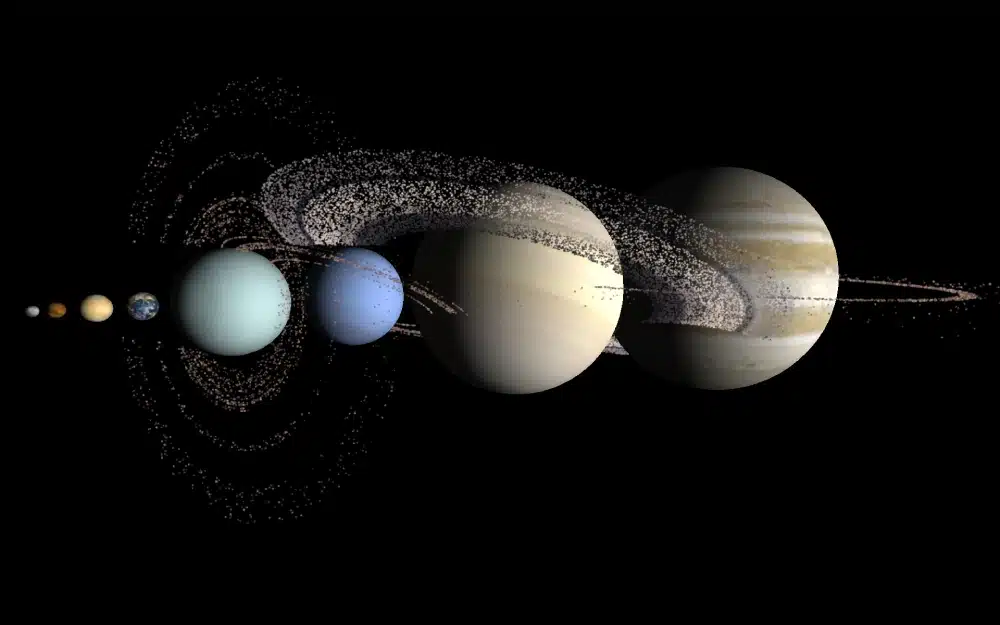
Universe Sandbox is a physics-based space simulator developed by Giant Army.
It combines gravity, climate, collisions, and material interactions, allowing players to experiment with astronomical objects and observe what happens.
Instead of building a wooden house, you might manipulate a solar system.
Instead of testing whether a wall can survive an enemy attack, you might test what happens when planets collide.
That makes the sandbox universe game concept dramatically different from Minecraft while preserving the same fundamental appeal: experimentation.
Creating planets, stars, and solar systems
Universe Sandbox allows players to interact with simulations involving planets, stars, moons, and other astronomical bodies.
Its gravity simulation uses Newtonian mechanics, while additional systems model collisions, climate, materials, and other physical interactions.
Players can change parameters and observe the consequences.
That can mean altering a planet’s properties, introducing another celestial body into a system, changing orbital conditions, or creating catastrophic collisions simply to see what happens.
The scale is radically different from most sandbox games, but the underlying question is familiar:
What happens if I try this?
That question sits at the heart of sandbox gameplay.
Engine Build Sandbox Game: What Does This Search Mean?
The phrase engine build sandbox game can point toward a few different player interests.
It may describe a sandbox where players build engines, machines, or vehicles. It can also reflect confusion between sandbox videogames and the development engines used to create games.
Building engines inside sandbox games
Engineering-focused sandboxes turn construction into a functional challenge.
Instead of creating something purely decorative, players may need individual components to interact correctly.
Depending on the game, that can involve:
- Engines
- Wheels
- Pistons
- Gears
- Electrical components
- Logic systems
- Vehicle frames
- Aerodynamics
- Physics
The fun comes from moving beyond appearance.
A machine needs to work.
That creates a different form of experimentation from building a decorative Minecraft castle. The player is designing a system, testing it, discovering problems, and modifying the design.
Game engines vs. sandbox building games
A game engine is not automatically a sandbox game.
Game engines are development frameworks used to create software and interactive experiences. Sandbox games are products designed around player experimentation.
The confusion is understandable because both may provide editors, physics systems, scripting tools, object manipulation, and creative freedom.
However, their purposes are different.
A development engine is primarily a tool for creating games or applications. An engineering sandbox packages construction and experimentation into the gameplay itself.
Sandboxing Games: Creativity, Physics, and Experimentation
The phrase sandboxing games captures one of the genre’s most important behaviors: testing ideas simply because the game allows it.
You do not always need a quest marker to have a reason to interact with the world.
Physics sandbox experiences
Garry’s Mod is one of the clearest examples.
Its official description emphasizes that players receive tools and are free to decide what to do rather than following predefined goals.
Physics makes that freedom particularly entertaining.
Objects can interact in unpredictable ways, allowing players to construct machines, create scenarios, pose characters, experiment with contraptions, or simply cause chaos.
This type of sandbox does not need a traditional campaign to generate entertainment.
The systems themselves are the content.
Why experimentation creates replayability
A scripted puzzle usually has a solution.
Once you know that solution, repeating it may become less interesting.
A sandbox problem can have dozens of solutions because the player determines the approach.
That produces replayability through experimentation.
You can rebuild something more efficiently, approach survival with different restrictions, create a new machine, experiment with another physics interaction, or start an entirely different project.
The world does not need to change every time.
Your objective can change instead.
Best Types of Sandbox Games to Explore
Not all sandbox games target the same audience.
Understanding the major categories can help narrow down what you should play.
Building, survival, physics, and simulation sandboxes
| Sandbox Type | Main Focus | Example |
| Building | Construction and creativity | Minecraft Creative |
| Survival | Resources, crafting, exploration | Minecraft Survival |
| Physics | Objects and experimentation | Garry’s Mod |
| Space simulation | Gravity and astronomy | Universe Sandbox |
| Multiplayer | Shared worlds and communities | Minecraft servers |
| Engineering | Functional machines and systems | Varies by title |
These categories can overlap.
Minecraft combines building, survival, exploration, multiplayer, automation, and simulation elements within the same broader sandbox structure.
Universe Sandbox focuses more heavily on simulation and experimentation.
Garry’s Mod emphasizes physics and community-created possibilities.
Choosing the right sandbox for your playstyle
Start by deciding what you want to create or control.
If construction is your priority, look for a sandbox with flexible building systems.
If danger and progression are important, sandbox survival games may provide a better balance between freedom and objectives.
If experimentation matters more than progression, consider physics or simulation sandboxes.
A simple selection process is:
- Decide whether you want building, survival, simulation, or physics.
- Choose between single-player and multiplayer.
- Check how much freedom the game provides.
- Consider whether community-created content matters to you.
- Look at the complexity of its systems.
- Choose a world you can imagine returning to repeatedly.
A good sandbox should make you think of projects before you even start playing.
Sandbox for Games: What the Term Can Mean
Searching sandbox for games can produce confusing results because “sandbox” has meanings outside videogame genres.
The context determines what the term describes.
Sandbox as a videogame design concept
In game design, a sandbox generally emphasizes experimentation and player agency.
Developers create interconnected systems, tools, rules, and environments. Players decide how they want to interact with them.
This does not mean there are no rules.
In fact, strong rules often make sandbox experimentation more satisfying because players can learn how systems behave and then use those systems creatively.
Minecraft blocks follow rules.
Universe Sandbox simulates physical systems.
Garry’s Mod provides physics-based tools.
Freedom comes from what players can achieve within those systems.
Sandbox environments outside videogame genres
In computing, sandboxing has another meaning.
A software sandbox is generally an isolated environment used to execute or test something while limiting its access to other parts of a system.
That concept should not be confused with sandboxing games.
The words are related through the idea of a controlled environment, but a gaming sandbox focuses on creative or systemic freedom, while a software sandbox primarily concerns isolation and controlled execution.
Sandbox Games and Multiplayer Performance With ExitLag
Multiplayer sandbox games introduce another system players need to consider: the network connection between their device and the online server.
A huge creative world can contain construction, movement, inventories, enemies, other players, and constant server interactions.
Why network stability matters in multiplayer sandboxes
Consider multiplayer Minecraft.
You might be fighting another player, exploring with friends, interacting with mobs, moving through a busy server, or placing blocks during a large collaborative project.
When connection quality becomes unstable, those interactions may feel less responsive.
However, not every performance problem is network-related.
Low FPS can come from hardware or graphics settings. Server-side performance can create problems that players cannot solve locally. Large modpacks can also put additional pressure on a system.
Network optimization specifically targets the connection side of the experience.
Using ExitLag for online sandbox games
ExitLag is designed to optimize supported online gaming connections on PC and Mobile.
Its Real-Time Optimization technology monitors routes while you play. Multipath Connection can use multiple simultaneous routes to improve stability in supported situations.
Traffic Shaper helps prioritize gaming traffic, while Multi-Internet provides additional connectivity options for compatible setups.
For supported multiplayer sandbox titles, this can be useful when inefficient routing or connection instability is interfering with online gameplay.
The process is straightforward:
- Sign up for ExitLag.
- Download the PC or Mobile application.
- Select the supported game.
- Apply the optimized routes.
- Start playing.
ExitLag does not make Minecraft generate worlds faster or increase the accuracy of Universe Sandbox’s physics simulation.
Its role is network optimization for supported online experiences.
FAQ
Because the genre is so broad, several terms are frequently confused.
These answers cover the most common distinctions.
A sandbox game gives players significant freedom to experiment with systems, environments, tools, or objectives.
It may include missions and progression, but players generally have more control over how they spend their time than in a strictly linear game.
Yes.
Mojang describes Minecraft as an open-world sandbox game. Building, exploration, resource gathering, crafting, Survival, Creative Mode, and multiplayer all contribute to its sandbox structure.
They combine open-ended gameplay with survival mechanics.
Players generally need to gather resources, craft equipment, manage threats, explore, and build while retaining freedom over their broader objectives.
Minecraft Survival is an accessible example of this combination.
Universe Sandbox is officially described as a physics-based space simulator.
It is available commercially as an interactive simulation experience and gives users tools for manipulating astronomical systems, gravity, climate, collisions, and related variables.
Players can experiment with planets, moons, stars, gravity, orbits, collisions, climate, and other astronomical systems.
Its sandbox design emphasizes experimentation rather than conventional combat or survival.
No.
The concepts frequently overlap, but they describe different qualities.
Open world primarily describes environmental structure and exploration freedom. Sandbox describes systemic freedom and player agency.
A game can emphasize one without fully embracing the other.
Sandbox refers to player freedom and experimentation.
Survival refers to mechanics built around staying alive, gathering resources, managing threats, or maintaining necessary conditions.
A game can combine both.
That combination creates the sandbox survival games category.
Yes.
Minecraft is a prominent example, supporting multiplayer worlds, Realms, and community servers.
Multiplayer can expand sandbox design by allowing several players to cooperate, compete, trade, build, or establish their own community rules.
Sandbox Games Give Players Freedom to Create Their Own Stories
The lasting appeal of sandbox games comes from what happens when developers stop controlling every moment. Instead of telling players exactly what to do next, a sandbox provides systems and asks them to experiment.
Why sandbox design remains popular
Freedom creates stories that scripted content may never produce.
A Survival base might begin as a tiny shelter and eventually become an enormous city. A physics experiment might fail so spectacularly that the failure becomes more entertaining than success.
Universe Sandbox can turn a simple astronomical experiment into planetary destruction.
Multiplayer makes those possibilities even less predictable because every additional player brings another set of ideas.
That is why the genre can remain engaging without constantly providing traditional missions.
Players create reasons to return.
Finding your next sandbox world
Choosing between sandbox games becomes easier when you know what kind of freedom you want. Minecraft emphasizes construction, survival, and exploration, Garry’s Mod focuses heavily on physics and experimentation, while Universe Sandbox moves the concept to an astronomical scale.
Online sandboxes add community and multiplayer interaction to that freedom. When supported PC or Mobile multiplayer games are affected by inefficient network routes, ExitLag can help optimize the connection through technologies such as Real-Time Optimization and Multipath Connection.
Whether you want to construct a city, survive with friends, design a machine, experiment with physics, or rearrange an entire solar system, sandbox games succeed because they give you the tools and let you decide what happens next.
All game images used in this blog belong to their respective developers and publishers, including Mojang Studios, Facepunch Studios, and Giant Army. They are used for informational/educational purposes only and do not imply endorsement or affiliation with the rights holders.
Got questions or want to connect with other players? Join the conversation at the ExitLag Forum!