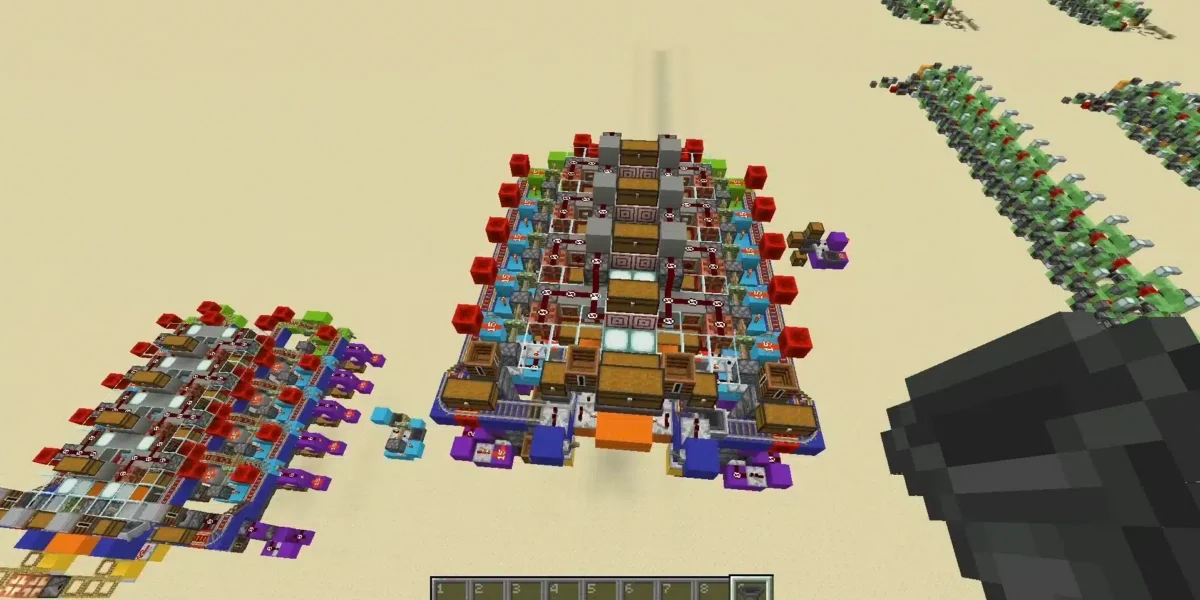
Scaffolding Minecraft is one of the most useful building tools ever introduced to the game. If you build large structures, towers, or survival bases, this lightweight block completely changes how you approach vertical construction.
Since the Village & Pillage update (1.14), scaffolding Minecraft has become essential for both Survival and Creative players. Instead of stacking dirt or risking fall damage, you can climb, expand, and remove entire structures in seconds.
So what is scaffolding Minecraft exactly? It’s a temporary, climbable block crafted from bamboo and string that allows players to build vertically and horizontally with built‑in physics support. If you’ve been wondering how to make scaffolding in Minecraft or looking for the correct minecraft scaffolding recipe, this guide explains everything in detail.
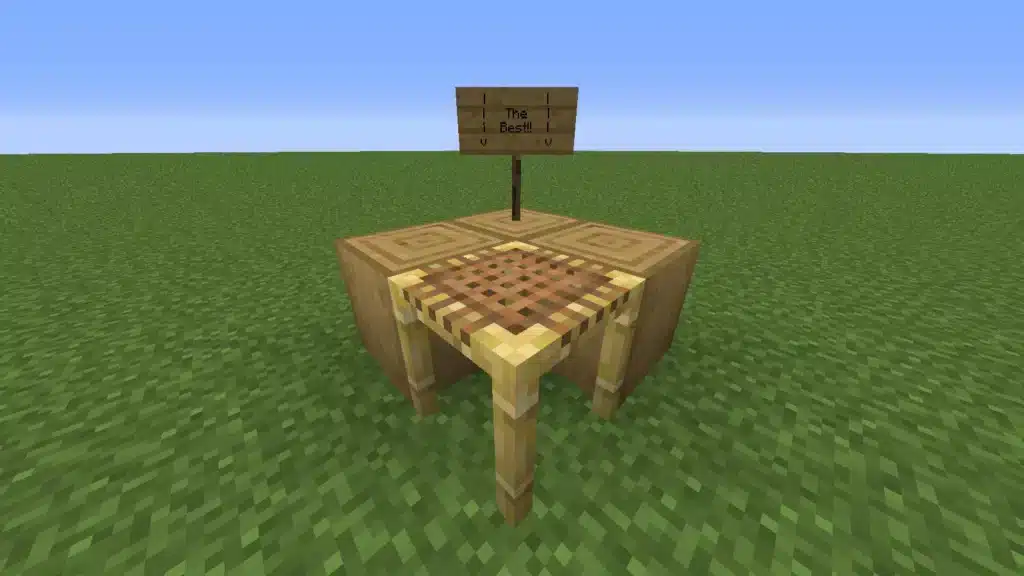
Scaffolding Minecraft Recipe and Crafting Materials
Before building massive towers, you need to understand the scaffolding minecraft recipe and how crafting works.
What Materials Do You Need?
To craft scaffolding, you need only two ingredients:
- 6 Bamboo
- 1 String
That’s it. The recipe is cheap, renewable, and survival‑friendly.
Bamboo is commonly found in jungle biomes, especially bamboo jungles. It grows quickly and can be farmed efficiently. String is obtained from spiders, cobwebs, dungeon chests, or fishing loot.
Because both materials are renewable, minecraft scaffolding becomes one of the most sustainable building blocks in long‑term survival worlds.
Scaffolding Recipe Minecraft Layout
The scaffold recipe Minecraft players must follow requires a crafting table (3×3 grid).
Here’s the correct layout:
Top Row: Bamboo | Bamboo | Bamboo
Middle Row: Bamboo | String | Bamboo
Bottom Row: Bamboo | Bamboo | Bamboo
This produces 6 scaffolding blocks.
Important: You cannot craft scaffolding in the 2×2 player inventory grid. You must use a crafting table.
How to Make Scaffolding in Minecraft Step-by-Step
If you’re still unsure how to make scaffolding in Minecraft, follow this simple survival process.
Step 1 – Collect Bamboo
Bamboo naturally generates in jungle biomes. Look for tall green stalks growing close together. You can break bamboo instantly without tools.
To farm bamboo efficiently:
- Plant bamboo on grass, dirt, or sand.
- It grows up to 12-16 blocks tall.
- Use bone meal to accelerate growth.
Bamboo farms are extremely easy to automate using pistons and observers.
Step 2 – Obtain String
String is equally easy to collect.
Common methods:
- Kill spiders at night.
- Clear abandoned mineshafts (cobwebs).
- Loot dungeon chests.
- Fish for junk items.
Mob grinders provide a steady string supply for large scaffold Minecraft projects.
Step 3 – Craft the Block
- Open a crafting table.
- Place bamboo and string in the correct pattern.
- Drag scaffolding into your inventory.
Now you’re ready to build vertically with speed and safety.
How Scaffolding Minecraft Works (Physics & Mechanics)
Understanding scaffolding mechanics is crucial before using it in mega builds.
Horizontal and Vertical Support Limits
Scaffolding follows unique support physics:
- It must be placed on solid support at the base.
- It can extend up to 6 blocks horizontally from that base.
- If placed beyond 6 blocks without support, it falls.
This falling behavior resembles sand or gravel physics.
Because of this, planning base placement is important when building bridges or floating platforms.
Climbing and Breaking Mechanics
Scaffolding Minecraft has built‑in ladder functionality.
When standing inside the block:
- Move forward to climb automatically.
- Jump to ascend faster.
- Sneak to descend safely.
One of its biggest advantages is removal efficiency.
If you break the bottom block of a vertical scaffolding tower, the entire stack collapses instantly and drops as items. This makes scaffold Minecraft significantly superior to dirt pillars for temporary builds.
Why Use Scaffold Minecraft Instead of Other Blocks?
Many players still stack dirt or cobblestone when building upward. However, minecraft scaffolding offers major advantages.
Advantages Over Dirt Towers
- Breaks instantly (no tool required)
- Entire stack removed from bottom
- Built‑in climbing mechanics
- Safer descent control
- Reusable and lightweight
You save time, inventory space, and effort.
Best Uses for Minecraft Scaffolding
Scaffolding Minecraft is perfect for:
- Mega base construction
- Castle towers
- Sky bridges
- Redstone installations
- Nether roof projects
- Multiplayer server builds
Builders who create vertical structures benefit the most from scaffold recipe Minecraft knowledge.
Minecraft Scaffolding Recipe Tips for Survival Mode
Crafting scaffolding is simple, but optimizing resource production is key in survival.
Efficient Bamboo Farming
To scale up bamboo production:
- Build automatic piston farms.
- Use observers to detect growth.
- Store excess bamboo for crafting.
Since scaffolding minecraft requires 6 bamboo per craft, large builds demand sustainable farming.
Automating String Production
String production methods include:
- Spider spawner farms
- General mob grinders
- Manual cave clearing
Mob farms dramatically improve your ability to craft scaffold Minecraft blocks in bulk.
Common Mistakes When Using Scaffolding Minecraft
Even experienced players make placement errors.
Avoid these common issues:
- Extending more than 6 blocks horizontally without support
- Forgetting to anchor the base properly
- Breaking a mid‑section block instead of the bottom
- Using scaffolding above lava (fall risk)
Understanding support limits prevents unexpected collapses during large builds.
Scaffolding Minecraft and Multiplayer Stability
Large multiplayer builds often involve constant vertical climbing. On servers, lag spikes can cause rubberbanding while ascending scaffolding towers.
When connection instability occurs, players may experience delayed block placement or movement desync while using scaffolding Minecraft.
ExitLag improves routing stability through Real-Time Optimization and Multipath Connection technology. Instead of relying on a single unstable path, traffic is dynamically routed across multiple optimized routes.
This reduces packet loss, stabilizes ping spikes, and creates smoother multiplayer building sessions — especially on Realms, SMP servers, or large public networks.
For players who frequently use scaffolding Minecraft in multiplayer mega builds, stable routing ensures a safer and more consistent construction experience.
Advanced Scaffolding Minecraft Mechanics Explained
Now that you understand the basics, it’s time to explore deeper scaffolding minecraft mechanics that experienced builders use to maximize efficiency.
Precise Horizontal Limit Rules (The 6-Block Rule)
Scaffolding can extend up to 6 blocks horizontally from a supported base block. The moment you place a 7th unsupported block, it will immediately fall.
Important details:
- Distance is measured from the nearest supported scaffolding block.
- The base must connect to a solid block.
- If the base is broken, all unsupported sections collapse.
Understanding this rule allows you to design temporary bridges and working platforms without accidental collapses.
Support Detection Logic
Scaffolding minecraft checks for direct support beneath the bottom block. It does not rely on diagonal support or indirect contact.
This means:
- Partial blocks do not count as full support.
- Transparent blocks must still be solid to anchor scaffolding.
- If the anchor block is removed, the structure recalculates stability instantly.
Planning anchor columns every 6 blocks ensures large platforms remain stable.
Scaffolding Minecraft in Java vs Bedrock Edition
Although scaffolding behaves similarly in both editions, there are subtle technical differences.
Behavioral Differences
- Horizontal limit remains 6 blocks in both editions.
- Falling updates may occur one tick later in Bedrock.
- Redstone interactions behave slightly differently due to engine variations.
While these differences are minor, large redstone or multiplayer builds may expose them.
Performance Impact on Large Builds
Large scaffolding towers can span multiple chunks. When crossing chunk borders:
- Block updates may delay slightly.
- Server tick rate affects falling calculations.
- Multiplayer latency may cause visual desync.
For mega bases, avoid building critical scaffolding platforms across chunk edges without additional support.
Redstone and Scaffold Minecraft Interaction
Many players wonder whether scaffold minecraft interacts with redstone systems.
Does Scaffolding Conduct Redstone?
Scaffolding does not conduct redstone signals.
However:
- Redstone dust can be placed on top of it.
- It can temporarily support repeaters and comparators.
- It does not transmit signal strength.
Because of this, it is ideal for temporary redstone testing structures.

Temporary Redstone Testing Platforms
Builders often use scaffolding minecraft to prototype redstone contraptions because:
- It breaks instantly.
- Entire testing towers collapse cleanly.
- It reduces cleanup time.
This makes debugging piston doors, farms, and flying machines significantly faster.
Scaffolding Minecraft in PvP and Speedrunning
Scaffolding minecraft also has niche applications in competitive gameplay.
Faster Vertical Mobility
Compared to stacking dirt blocks, scaffolding allows:
- Rapid upward movement.
- Immediate downward retreat.
- Safer vertical control.
In minigames like Bedwars or Skywars, this mobility advantage can be critical.
Combat Weaknesses
Despite mobility benefits, scaffolding has major drawbacks:
- Extremely low blast resistance.
- Breaks instantly when attacked.
- Vulnerable to bow or fireball hits.
Never rely on scaffolding as a permanent defensive structure.
Building Mega Structures with Scaffolding Minecraft
Large-scale builders depend heavily on scaffolding minecraft for efficiency.
Best Practices for Vertical Mega Builds
Follow these structural guidelines:
- Anchor support columns every 6 blocks.
- Build in modular grid sections.
- Avoid unsupported extensions.
- Remove scaffolding from bottom only.
This prevents accidental collapse and speeds up teardown.
Safe Removal Techniques
Always remove scaffolding from the base block first.
Breaking mid‑section blocks can cause unexpected falls if you are standing above. Controlled bottom removal ensures safe descent.
Automating Resource Production for Scaffolding
Large projects require large material supplies.
High‑Efficiency Bamboo Farms
Efficient bamboo production includes:
- Observer-based piston farms.
- Fully automatic harvesting systems.
- Storage sorting for excess bamboo.
Because scaffolding minecraft requires 6 bamboo per craft, automated farms dramatically reduce manual labor.
Spider Farms for String Production
To automate string:
- Build spider spawner farms.
- Create general mob grinders.
- AFK safely to collect drops.
With both bamboo and string automated, scaffold minecraft production becomes infinite.
Multiplayer Optimization and Stability
On multiplayer servers, vertical building introduces additional risks.
Chunk Borders and TPS
When scaffolding spans chunk borders:
- Server TPS drops may delay updates.
- Falling recalculations may appear inconsistent.
- Visual desync may occur.
Maintaining strong anchor points reduces collapse risks.
Lag and Rubberbanding
During vertical climbing, high latency may cause:
- Delayed movement response.
- Rubberbanding backward.
- Misplaced block placements.
ExitLag helps stabilize routing using Real-Time Optimization and Multipath Connection technology. Instead of relying on a single unstable path, it distributes traffic across optimized routes.
This reduces packet loss and smooths multiplayer mega builds that rely heavily on scaffolding minecraft for vertical mobility.
Scaffolding Minecraft Technical Comparison Table
| Feature | Java Edition | Bedrock Edition | Strategic Impact |
| Horizontal Limit | 6 blocks | 6 blocks | Requires anchor planning |
| Redstone Conductivity | No | No | Temporary builds only |
| Blast Resistance | Very Low | Very Low | Not combat safe |
| Falling Behavior | Immediate | Slight tick variance | Stability planning |
Understanding these mechanics allows you to use scaffolding minecraft more strategically in survival, creative, and multiplayer environments.
All game images used in this blog belong to Mojang Studios. They are used for informational/educational purposes only and do not imply endorsement or affiliation with the rights holders.
Got questions or want to connect with other players? Join the conversation at the ExitLag Forum!