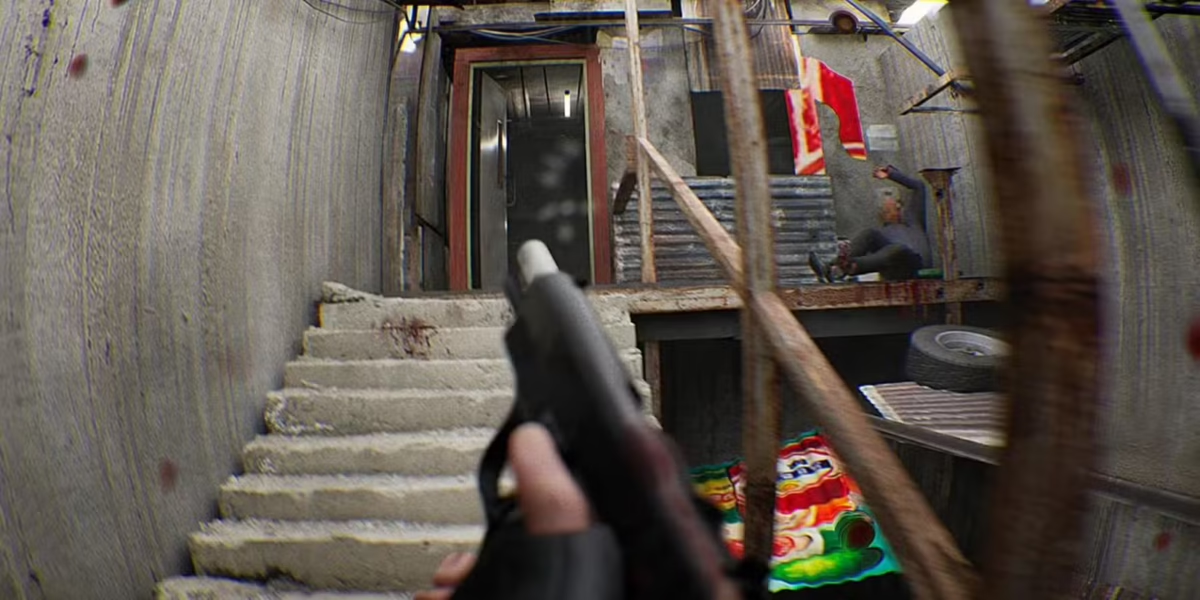
Few genres reward smart thinking the way Strategy Games do. Indeed, every match becomes a puzzle of resources, timing, and positioning.
Whether you build empires on Steam or command armies on your phone, the right knowledge changes how you play Strategy Games. This guide breaks down every major subgenre in plain language.
Strategy Games ask you to plan before you act, then adapt when your plan falls apart. That single loop, plan, execute, adjust, is what separates a good strategy game from a simple action title. Understanding it is the fastest way to get better at any of them.

Strategy Games Explained: What Makes This Genre So Addictive?
In simple terms, a strategy game is any title where planning, resource management, and decision making matter more than raw reflexes. Success depends on reading the board, weighing trade-offs, and outthinking an opponent or a system.
That definition covers a huge range of experiences. This detailed breakdown of strategies for games explains how the same core thinking applies across video games and board games alike.
Furthermore, this explains why the genre has stayed popular for decades across PC, console, and mobile platforms. Strategy sits alongside other major categories in the full guide to video game genres.
That guide also shows how strategy compares to action, RPG, and simulation titles in terms of pacing and player focus.
Core Elements Every Strategy Game Shares
Generally, most titles in this genre, regardless of setting or theme, lean on a shared set of mechanics. Recognizing them helps you learn new games faster.
- Resource management: Gold, food, energy, or influence that you must gather and spend wisely
- Unit or asset control: Armies, buildings, characters, or cards you position and upgrade
- Decision trees: Choices with delayed consequences instead of instant feedback
- Opponent modeling: Predicting what a rival player or the AI will do next
- Victory conditions: Clear win states, such as conquest, score, or survival
Why Strategic Thinking Keeps Players Coming Back
Clearly, Strategy Games reward mastery in a way that compounds over time. Every loss teaches something concrete about timing, scouting, or economy that you can apply next match.
Research also backs up the mental engagement involved. A peer-reviewed study published through the National Library of Medicine examined how different strategy formats affect cognitive control.
Notably, the study found that fast-paced real time strategy play increases impulsivity markers compared to slower-paced, puzzle-style formats. That nuance matters when picking a genre that fits your personality, not just your free time.
Real Time Strategy Games Vs Turn Based Strategy Games
Real Time Strategy Games and turn based titles both demand planning, but they test completely different skills. Real Time Strategy Games run on a live clock where every second counts, while Turn Based Strategy Games let you think as long as you need before committing to a move.
Neither format is objectively better; instead, the right pick depends on whether you enjoy pressure or patience.
How Real Time Strategy Games Test Your Speed
Real Time Strategy Games, or RTS titles, combine economy management with combat happening simultaneously and continuously. Notably, classics like StarCraft II and Age of Empires IV built entire esports scenes around this format.
In an RTS, you juggle base building, scouting, and unit control all at once. Consequently, multitasking under pressure becomes just as important as your actual strategy.
Key traits of a strong Real Time Strategy Games experience include:
- Fast decision making under a visible timer
- Constant map awareness through scouting
- Build orders that snowball small early advantages
- Mechanical skill (clicks per minute) mattering alongside strategy
How Turn Based Strategy Games Reward Patience
Turn Based Strategy Games remove the clock entirely. Instead, each side takes a full turn to move units, build structures, or issue orders before passing control back.
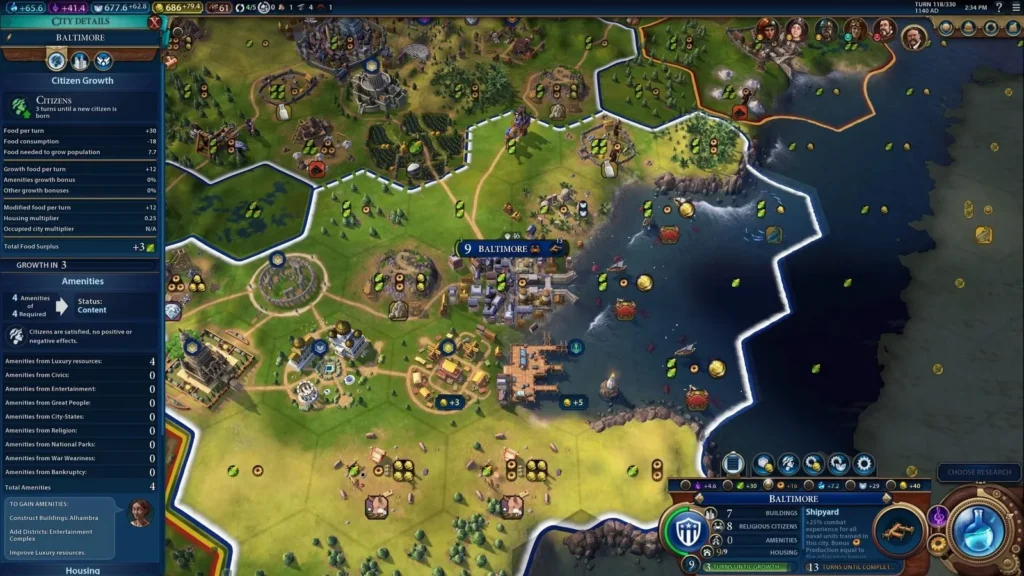
Generally, this format suits players who prefer deliberate planning over twitch reactions. Titles like Civilization, XCOM, and Into the Breach are defining examples of Good Turn Based Strategy Games done right.
Because there is no timer, Turn Based Strategy Games tend to have deeper strategic layers. Every choice can be fully analyzed before you commit, which lowers the skill floor for newcomers.
Grand Strategy Games And 4X Strategy Games Explained
Grand Strategy Games and 4X Strategy Games sit at the deepest end of the genre. Instead of fast action, they offer sprawling systems that can take dozens of hours to master.
Both formats focus on long-term empire building rather than single battles. However, they approach that goal from different angles.
What Defines A Grand Strategy Game
In short, a grand strategy game simulates an entire nation across politics, diplomacy, economy, and warfare, usually over a long historical or fictional timeline. Titles such as Crusader Kings and Europa Universalis are the genre’s clearest examples.
These games rarely have one correct path to victory. Instead, players juggle multiple competing systems, alliances, trade routes, succession, rebellion risk, that all interact with each other.
Grand Strategy Games typically include:
- A persistent map that evolves as borders shift over time
- Detailed diplomacy with treaties, alliances, and betrayals
- Deep internal management of provinces, laws, or culture
- Historical or semi-historical settings with emergent storytelling
- Long play sessions, often several hours per sitting
The 4X Formula: Explore, Expand, Exploit, Exterminate
4X Strategy Games get their name from four core pillars: explore the map, expand your territory, exploit its resources, and exterminate rivals when needed. Civilization and Old World are frequently cited as top examples of the format.
Unlike Grand Strategy Games, 4X titles are usually turn based and start every match from a blank map. As a result, the early game revolves around scouting and claiming territory before conflict escalates.
If you enjoy Grand Strategy Games but want a cleaner, more structured ruleset, a good 4X strategy game is often the easier entry point.
What Are The Best Mobile Strategy Games Right Now?
The Best Mobile Strategy Games right now combine base building, army management, and social features like clans or alliances. They are all designed for shorter play sessions.
Titles like Clash of Clans, Rise of Kingdoms, and Lords Mobile dominate this space. Indeed, they respect limited screen time without sacrificing depth.
Mobile strategy has grown into one of the most active gaming categories worldwide. Notably, it borrows heavily from both RTS and 4X design while adding timers and social competition.
If Clash of Clans is your baseline, this roundup of games related to Clash of Clans covers alternatives worth trying, including titles with deeper RPG or civilization-building elements.
Top Picks For Casual Mobile Strategy Fans
Good Mobile Strategy Games tend to fall into a few reliable formats. Consider these when choosing your next install:
- Base builders: Clash of Clans and Boom Beach focus on defense layouts and raid timing
- Civilization builders: Rise of Kingdoms adds map control and alliance warfare
- Card battlers: Clash Royale blends Real Time Strategy Games pacing with deck building
- Idle empire games: Lords Mobile mixes RPG heroes with kingdom management
Best War Strategy Games For Mobile Commanders
Best War Strategy Games on mobile lean into military themes, unit types, and territory control rather than fantasy factions. These titles often add historical or near-future settings for extra immersion.
Mobile war Strategy Games also tend to run longer live events. Therefore, a stable connection during peak hours becomes essential to avoid losing progress mid-battle.
Good Strategy RPG Games And Military Strategy Titles
Good Strategy RPG Games blend character progression with tactical, grid-based combat. This hybrid genre rewards both build planning and battlefield positioning in equal measure.
Meanwhile, dedicated military strategy titles focus purely on tactics, logistics, and command decisions without RPG elements layered on top.
Good Strategy RPG Games Worth Your Time
A strategy RPG asks you to level up units, manage equipment, and still think carefully about positioning every turn. Fire Emblem, Final Fantasy Tactics, and Triangle Strategy are commonly recommended starting points.
This tactical RPG combat guide goes deeper into positioning, terrain, and turn order for players who want to master the hybrid genre. It also breaks down beginner-friendly picks versus advanced titles.
The genre works well for players who want narrative and character growth alongside tactical depth. Unlike pure strategy titles, losing a key unit can carry emotional weight, not just a strategic setback.
Good Military Strategy Games For History Buffs
Good Military Strategy Games simulate real or realistic warfare with an emphasis on logistics, terrain, and unit composition. Total War and Wargame are strong examples that blend large-scale battles with strategic-level decisions.
These titles typically demand more research from players. As a result, understanding unit counters and supply lines matters as much as raw tactics.
Is Steam The Best Place To Find Good Strategy Games On Steam?
Indeed, Steam is currently the strongest platform for strategy fans because of its filtering tools, user reviews, and constant flow of new releases. Its dedicated strategy and 4X category pages make it simple to compare hundreds of titles by tags, price, and player rating.
That said, finding genuinely Good Strategy Games On Steam still takes some digging through the noise.
Good Strategy Games On Steam To Wishlist
Use Steam’s tag system to narrow results by subgenre before reading reviews. This saves significant time compared to scrolling an unfiltered store page.
- Filter by “Grand Strategy,” “4X,” “Turn-Based Strategy,” or “Real Time Strategy” tags
- Sort by “Most Positive Reviews” rather than release date for hidden gems
- Check the recent review percentage, not just the overall score, for current server and balance issues
- Read the top user reviews for multiplayer stability notes before buying
How To Filter Steam For The Right Subgenre
Follow this simple process to find your next strategy game without wasting money on the wrong fit:
- Decide if you want real time pressure or turn based planning first
- Pick a scope: single battles, one campaign, or an entire civilization
- Filter Steam tags to match that scope and pacing
- Read three recent reviews focused on multiplayer performance
- Check the minimum player count needed for online matches to stay active
Strategy Game Subgenre Comparison
The table below consolidates the core differences between every major subgenre covered in this guide. Use it as a quick reference before your next purchase.
| Subgenre | Pace | Core Skill | Typical Session | Example Franchise |
|---|---|---|---|---|
| Real Time Strategy | Fast, live clock | Multitasking, mechanics | 15-45 minutes | StarCraft, Age of Empires |
| Turn Based Strategy | Slow, no clock | Deep planning | 30-90 minutes | Civilization, XCOM |
| Grand Strategy | Variable, pausable | Systems management | 2-6 hours | Crusader Kings, Europa Universalis |
| 4X Strategy | Slow, turn based | Expansion planning | 1-4 hours | Old World, Civilization |
| Mobile Strategy | Short bursts | Timing, social play | 5-20 minutes | Clash of Clans, Rise of Kingdoms |
Pro Tips: Getting Better At Strategy Games
- Scout before you commit: Never build your full strategy blind. Checking what an opponent is doing prevents wasted resources on the wrong units.
- Play the economy first: In most subgenres, a stronger economy beats a slightly better army. Prioritize growth before aggression whenever possible.
- Save replays and review losses: Good Turn Based Strategy Games and RTS titles alike let you rewatch matches. Reviewing where a plan broke down teaches more than another quick match.
- Match the subgenre to your schedule: A grand strategy game needs hours of focus, while mobile strategy fits short breaks. Picking the wrong fit is the top reason players quit a genre they would otherwise enjoy.
- Keep your connection stable during live events: Base raids, alliance wars, and ranked ladders punish disconnects harder than casual matches. A dropped connection mid-battle in a strategy game can cost you units, resources, or an entire base.
Common Mistakes Strategy Games Players Make
- Ignoring the tutorial in complex titles: Grand Strategy Games and 4X Strategy Games bury key systems behind menus. Skipping the tutorial usually means missing mechanics that decide the whole match. Fix: complete the in-game tutorial before jumping into a full campaign.
- Overextending too early: New players often expand faster than they can defend, especially in 4X and mobile Strategy Games. Fix: secure your core territory before pushing borders further out.
- Ignoring unit counters: Every strategy game, from RTS to strategy RPGs, has a rock-paper-scissors layer between unit types. Fix: study counters for your chosen faction before ranked play.
- Blaming skill for what is actually connection lag: Missed inputs, delayed orders, or rubber-banding during Real Time Strategy Games are often a network issue, not a mechanical mistake. Fix: test your connection stability and routing before assuming it is a skill gap.
Play Every Strategy Game Without Connection Problems
As someone who has spent hundreds of hours across RTS ladders, grand strategy campaigns, and mobile alliance wars, connection quality changes everything. A single spike of lag during a base raid or a ranked 1v1 can undo minutes of careful planning.
How ExitLag Supports Every Strategy Games Session
ExitLag is a game connection optimizer, not a VPN. It analyzes multiple network routes in real time and automatically selects the fastest, most stable path to a game’s servers, without encrypting your traffic or touching apps outside the games you choose.
ExitLag supports over 4,000 titles across PC and mobile, backed by more than 1,500 servers in over 190 countries. As a result, millions of players already rely on it during Real Time Strategy Games, grand strategy sessions, and mobile alliance events.
For Real Time Strategy Games and competitive turn based ladders, the Multipath Technology sends your packets through several routes at once. If one route degrades, the others keep your connection stable instead of dropping your commands.
Meanwhile, mobile strategy fans dealing with unstable networks during alliance wars benefit the same way. Real-time optimization reduces delay and packet loss, so troop movements and base actions register exactly when you send them.
Is ExitLag Safe For Competitive Strategy Games?
Yes, ExitLag is safe for competitive and ranked strategy titles. It does not modify game files, inject code, or interact with anti-cheat systems, so it works cleanly alongside online strategy titles and their ranked modes.
However, it should not be run alongside a VPN, since that combination reduces its effectiveness rather than improving it.
Ready to stop losing Strategy Games to lag instead of losing them fairly? Grab ExitLag Download for your PC strategy library.
Alternatively, get ExitLag for Android and ExitLag for iOS to keep mobile Strategy Games running smoothly during every raid and ranked match.
Final Verdict: Which Strategy Games Should You Play First?
Ultimately, the Best Strategy Games for you depend entirely on how much time and mental pace you prefer. First, pick Real Time Strategy Games for fast, mechanical intensity.
Then, choose turn based or Grand Strategy Games for deep planning, and mobile strategy for short, social sessions.
Match Your Personality To A Strategy Subgenre
If you thrive under pressure, Real Time Strategy Games and mobile war Strategy Games will feel natural. On the other hand, if you prefer careful, unhurried planning, turn based and Grand Strategy Games are the better fit.
Strategy Games reward patience, curiosity, and a willingness to learn from every loss. That holds true whether you are commanding tanks in a war strategy game or raiding bases between meetings on your phone.
Keep Improving After Your First Strategy Game
Start with one subgenre, then master its fundamentals using the comparison table above. Once your strategic instincts sharpen, the rest of the genre becomes far easier to pick up.
Consequently, cross-training across RTS, turn based, and grand strategy titles tends to make every Strategy Games subgenre click faster.
All game images used in this blog post belong to their respective developers and publishers, including Blizzard Entertainment, Microsoft, Paradox Interactive, Firaxis Games, and Supercell.
They are used for informational and educational purposes only and do not imply endorsement or affiliation with the rights holders.
Got questions or want to connect with other players? Join the conversation at the ExitLag Forum!