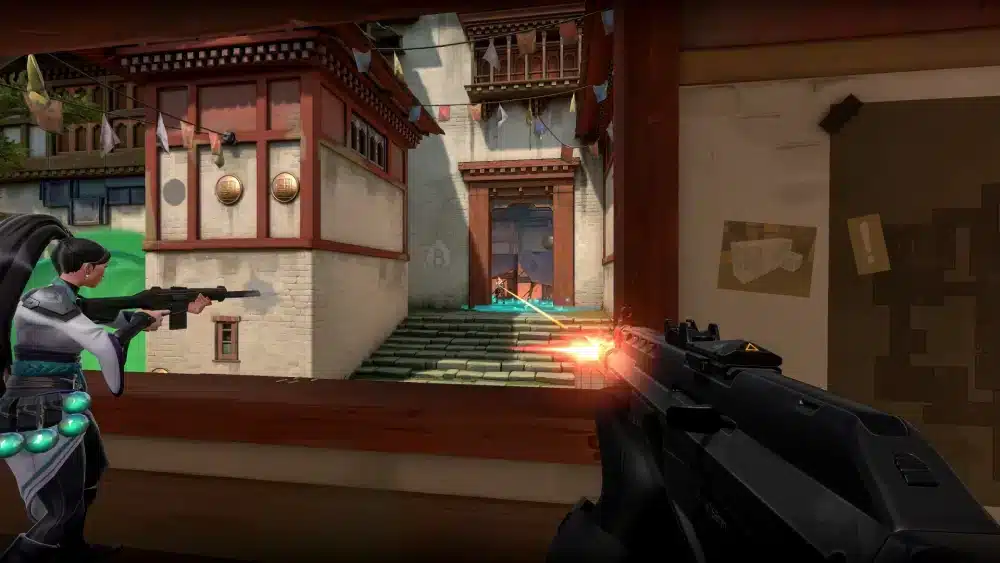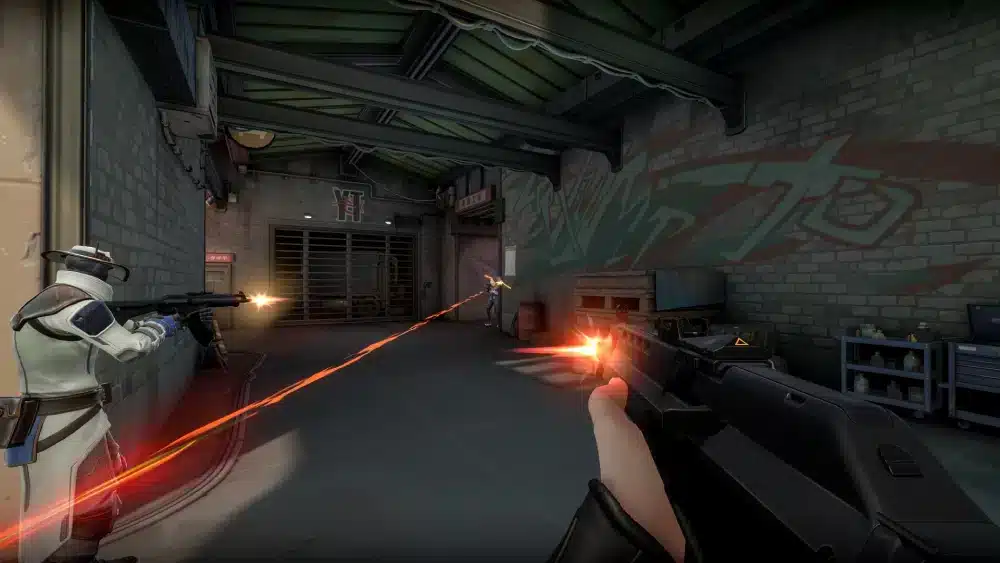
Valorant characters are the reason every match feels different, one round is pure chaos, the next is a slow, tactical squeeze with perfect utility.
If you’re trying to improve faster, Valorant characters are also the easiest “high impact” thing to learn early, because you can win fights with smart tools even when your aim isn’t perfect.
So, what are Valorant characters? They’re the playable agents in VALORANT, each built around a role and a kit of abilities that shapes how you take space, defend sites, and win rounds.
Valorant characters by role: how agents actually win rounds
Even if you know the names, understanding why each role matters is what makes your decision-making faster and cleaner. In VALORANT, roles aren’t “classes” that lock you in, they’re job descriptions that help your team function.
To make this practical, here’s a simple way to think about roles in real matches:
- Duelists go first to create space and force defenders to react;
- Initiators make entry safer by gathering info and disrupting common angles;
- Controllers block vision and control tempo so your team can move with purpose;
- Sentinels stabilize rounds by locking areas down and protecting flanks.
Duelists: create space (and take first contact)
Duelists are built to enter first, force fights, and turn a “closed” site into a playable one. Most have mobility, self-sustain, or tools that help them escape after taking an aggressive duel.
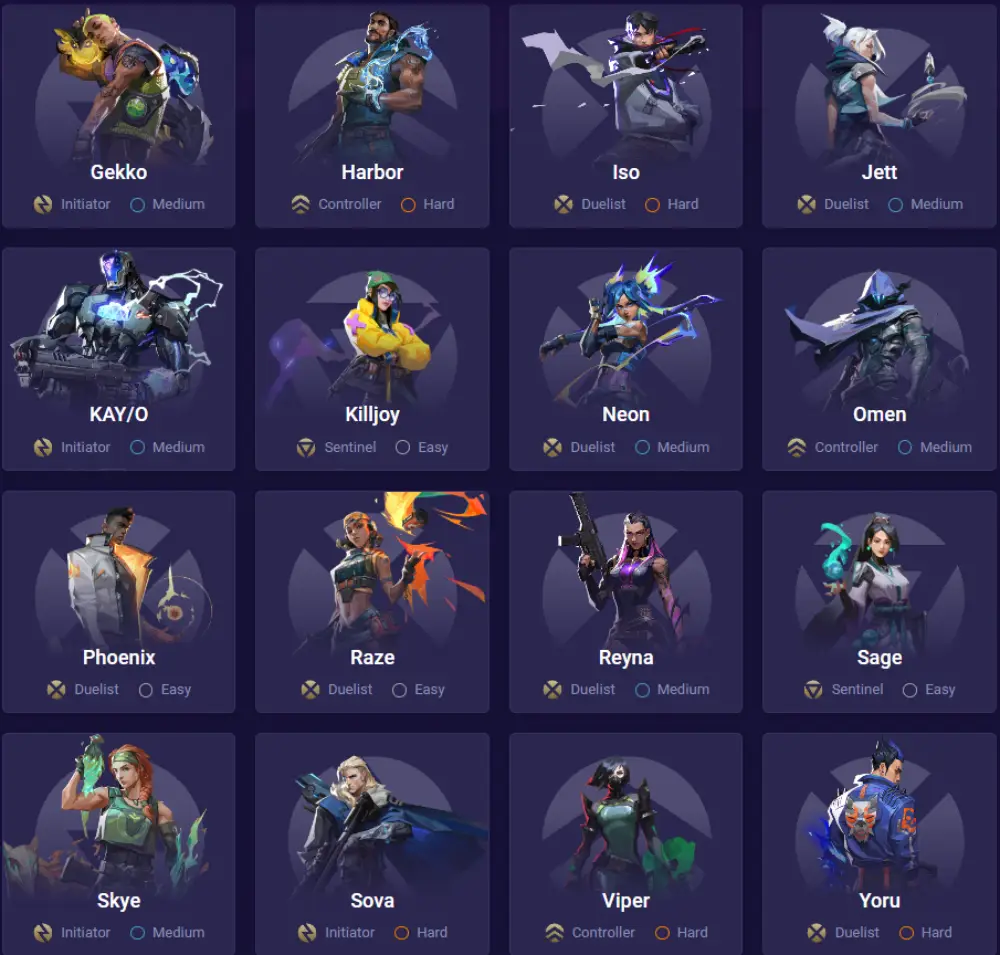
A few well-known Duelist agents include Jett, Phoenix, Reyna, Raze, Yoru, Neon, Iso, and Waylay.
Initiators: start fights on your terms
Initiators don’t always top frag, but they make kills easier for everyone. They gather info, clear angles, and disrupt defenders so your team can swing with confidence.
If you like setting up teammates, Initiators like Sova, Fade, Breach, Skye, KAY/O, Gekko, and Tejo are designed for that job.
Controllers: control sightlines and tempo
Controllers shape the map with smokes and zone tools. When your smokes are late, the round feels impossible. When they’re clean, your team suddenly looks coordinated.
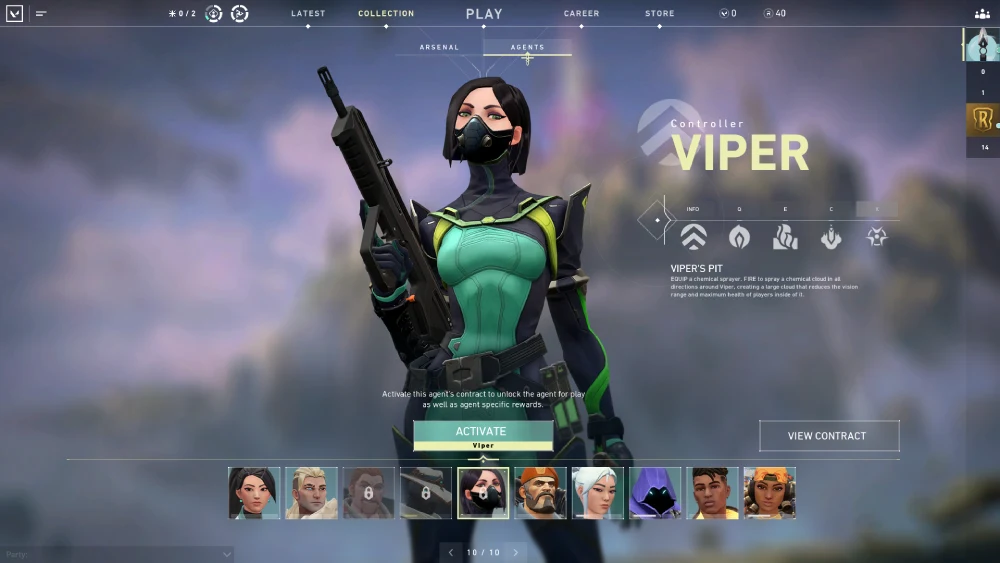
Controllers like Brimstone, Omen, Viper, Astra, Harbor, and Clove are all about timing and pressure.
Sentinels: lock down areas and protect the team
Sentinels defend space, punish flanks, and stabilize messy rounds. They’re also great if you like playing smart, holding angles, and winning rounds with positioning.
Classic Sentinel picks include Sage, Cypher, Killjoy, Chamber, Deadlock, Vyse, and Veto.
Valorant agent list: a role cheat sheet for all Valorant agents
To make the roster easier to learn, use this table as a “what do I actually do?” reference.
| Role | Main job in a round | What you should focus on | Examples |
| Duelist | Enter first, force fights | Timing entries, trading, escaping | Jett, Raze, Reyna, Phoenix, Waylay |
| Initiator | Start fights with info/disruption | Clearing angles, setting up swings | Sova, Fade, Breach, Tejo |
| Controller | Block vision, control space | Smoke timing, map pressure | Omen, Viper, Brimstone, Clove |
| Sentinel | Hold sites, stop flanks | Traps, anchoring, late-round control | Killjoy, Cypher, Sage, Veto |
Now, here’s how to use this without overthinking it: don’t try to master everything. Start by learning agent roles first, then build a small pool that covers at least two roles.
Quick “pick your role” cues:
- If you love being first in → Duelist;
- If you like setting traps and punishing rotates → Sentinel;
- If you want to call plays and control tempo → Controller;
- If you like enabling teammates and collecting info → Initiator.
That’s the foundation of a good team composition, not “who is coolest,” but who gives your squad the tools it needs.
Best Valorant agents: strong picks for ranked and solo queue
The “best” depends on your rank, your server pace, and how coordinated your team is. Still, certain best Valorant agents stay popular because they deliver value even in chaotic matches.
Best for beginners: low complexity, high impact
If you’re newer, prioritize agents that don’t require perfect timing to be useful. You want easy value: healing, simple smokes, or clear info tools.
A solid beginner-friendly pool usually includes picks like Sage, Phoenix, Brimstone, and Sova (easy to understand, useful every round).
Best for climbing: consistent value in ranked matches
In ranked matches, consistency wins. Agents with repeatable utility and clear jobs tend to climb faster than “high mechanic” picks you can’t fully control yet.
Here’s a simple approach that works across most ranks:
- Pick one agent you’ll main for 2 weeks;
- Pick one backup from a different role (in case your main is taken);
- Learn 2–3 basic setups per map (nothing fancy, just reliable).
After that, evaluate based on reality, not hype: are you winning more rounds because your utility is landing?
A few universal habits that make almost any agent stronger:
- Use utility to take space, not “because it’s available”;
- Trade your teammates instead of hunting solo highlights;
- Save one key ability for the post-plant or retake.
How to master Valorant characters without burning out
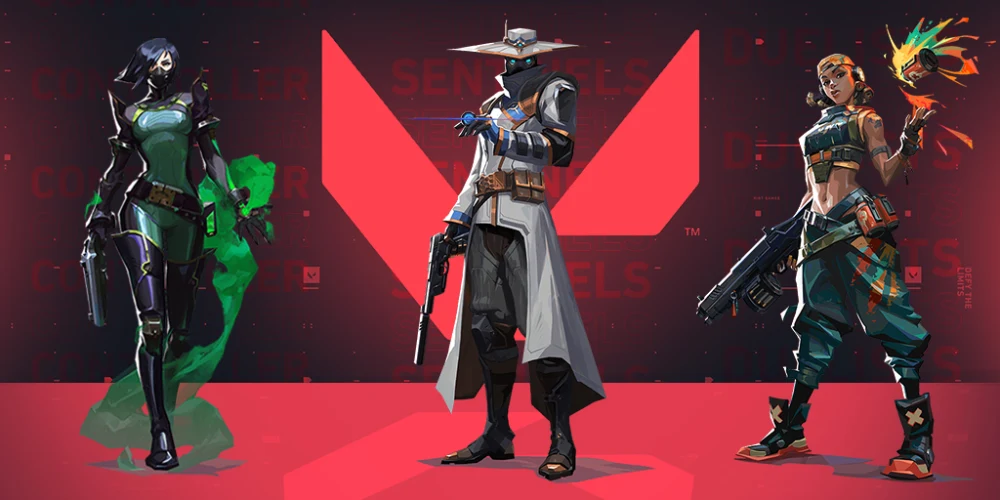
You don’t need 200 lineups or pro-level tech to get good value. You need a repeatable process.
Learn agent abilities with a simple routine
Pick one agent and do this for a week:
- Spend 5 minutes in the range learning ability distances;
- Play 2 matches focusing on one goal (e.g., “smoke on time” or “tripwire on flank”);
- Review 1 lost round: what ability would have changed it?.
That’s how you turn agent abilities into muscle memory instead of random button presses.
Build a small pool (and stop switching every day)
A strong pool looks like this:
- 1 main you love;
- 1 backup in another role;
- 1 comfort pick for bad days.
Once your fundamentals are stable, switching becomes a choice, not a coping mechanism.
FAQ
This section answers common questions players ask when learning Valorant agents and building an all Valorant agents roadmap.
They’re the same thing. “Characters” is the casual way players talk about them, while “agents” is the official term used for the playable roster.
The roster changes over time, but currently VALORANT features dozens of agents, each with a specific role and kit.
The best approach is using a guide that groups agents by role and explains what each role does, so you can learn the roster faster.
Solo queue rewards independence and consistent utility. Controllers with simple smokes, Sentinels with reliable flank control, and Initiators with clear info tools often shine, because you don’t need perfect teamwork to get value.
It’s okay to main one, but it’s smarter to have at least one backup in a different role. That flexibility helps when teammates lock your pick first, or when a map feels rough for your main.
Valorant characters and performance: play smoother with ExitLag
You can master lineups, learn every angle, and memorize every timing, but Valorant characters still depend on one thing to feel consistent: a stable connection.
If your network spikes mid-fight, your reaction can be perfect and the outcome will still look wrong on your screen, especially when you’re trying to execute a clean entry, land a fast flash, or trade instantly after contact.
That’s why stability matters. Ping spikes, jitter, and packet loss don’t just “feel bad”, they actively break the rhythm of fights and utility, making your decisions feel delayed and your shots feel off. And when you’re trying to play best Valorant agents at a higher level, those tiny inconsistencies add up fast.
Why connection stability affects agent abilities and timing
In VALORANT, many fights are decided in fractions of a second. That means your utility timing matters almost as much as aim.
When your connection stutters, the game can feel like it’s skipping beats: abilities trigger a split-second late, peeks feel inconsistent, and trades become harder to coordinate, even if your crosshair placement is solid.
This is especially frustrating when you’re relying on Valorant agents with kits that demand precision timing, like fast entries, instant pop flashes, or quick smoke placements. If your network isn’t stable, it’s harder to get reliable value from your toolkit, and you may lose rounds that you “played correctly.”
How ExitLag helps you play smoother (without being a VPN)
ExitLag is software focused on route optimization for online games. Instead of changing your location or hiding your IP like a VPN, ExitLag focuses on improving the path your connection takes to the game server.
It does this by sending your data through multiple routes and automatically selecting the fastest and most stable option, helping reduce common issues that impact competitive play, such as ping spikes and packet loss.
If you’re following a Valorant agent list to improve your role fundamentals, connection stability is the “multiplier” that makes your practice actually feel consistent from match to match.
In practice, smoother routing can help with:
- More stable ping during intense rounds and peak hours;
- Fewer sudden spikes that ruin trades and entries;
- Reduced packet loss that causes stutters or delayed actions;
- More consistent ability timing for aggressive plays;
- Cleaner gunfights when you’re holding angles or wide swinging.
When your connection is stable, your mechanics feel more predictable and your decision-making gets rewarded more often.
That means you can focus on improving fundamentals, picking smarter fights, and getting more value out of all Valorant agents, instead of battling your network every match.
Ready to enjoy Valorant more? Try ExitLag for a smoother ranked climb
If you want your utility, shots, and movement to feel consistent again, Valorant characters are way more fun when your connection is stable and ExitLag can help you get there.
Try ExitLag and optimize your connection for smoother Valorant today!
Got questions or want to connect with other players? Join the conversation at the ExitLag Forum!