

VALORANT players across the Middle East experienced major connection problems following regional server disruptions in March 2026. The problems affected Bahrain and Dubai, two important locations for players seeking low-latency matches across the Gulf region. For some players, the VALORANT Bahrain and Dubai servers disappeared from the selection menu. Others reported unusually high ping, packet loss, and unstable connections.
Riot Games responded by expanding access to alternative server locations, including Riyadh and Mumbai. However, choosing another server does not always guarantee a better connection. Here is what happened to the VALORANT Bahrain and Dubai servers, what the latest information shows, and how players can troubleshoot their connections.
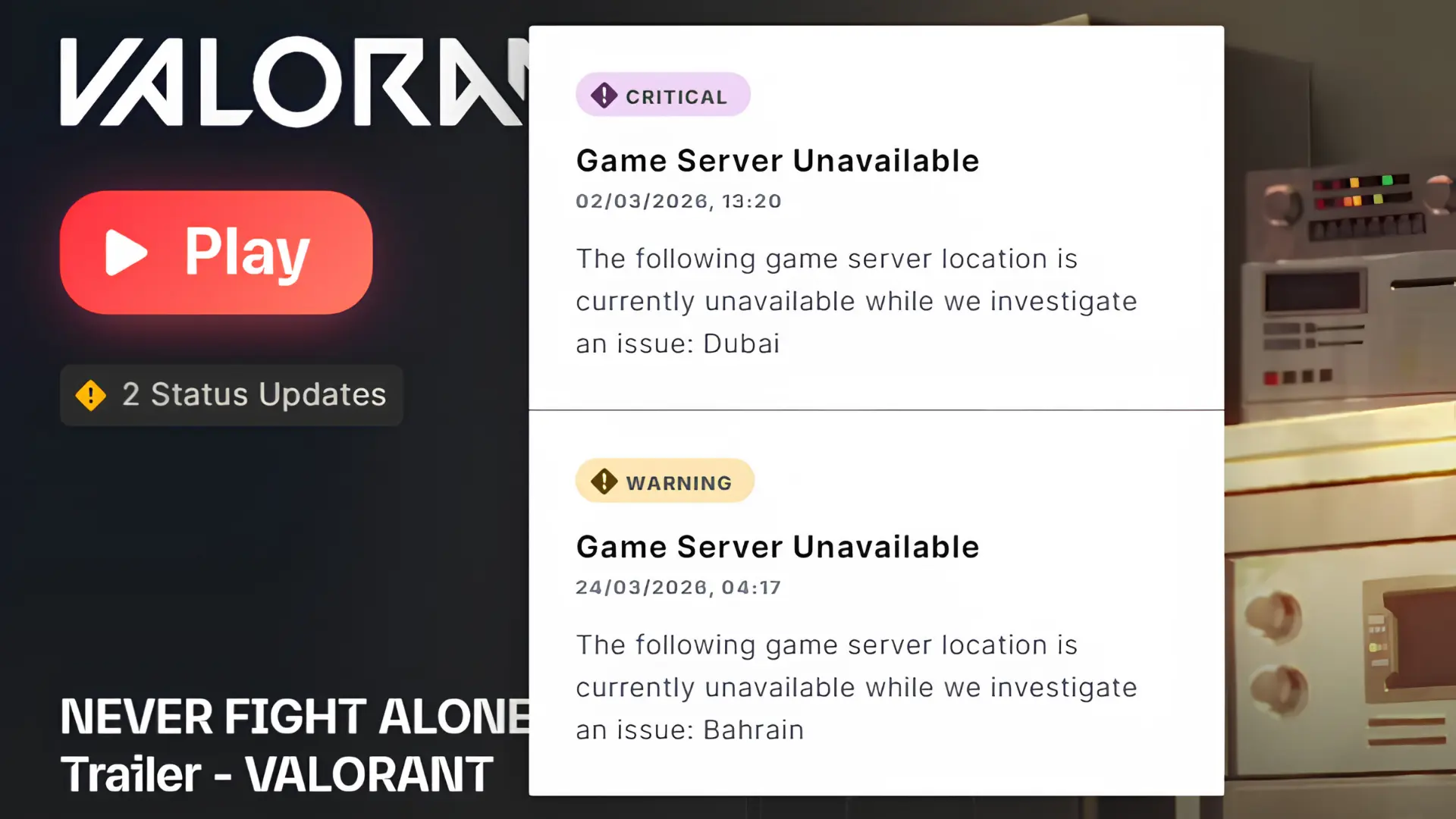 The regional disruption began in early March 2026, affecting connectivity across parts of the Middle East.
According to the Riot Games Service Status, Dubai received an official server unavailability notice on March 2, 2026.
Bahrain also experienced connection problems during March.
On March 10, Riot Support acknowledged that players connecting to Bahrain could experience increased latency or packet loss.
A second official server unavailability notice for Bahrain was registered on March 23.
These incidents disrupted access to nearby matchmaking locations for affected players in Saudi Arabia, Bahrain, Kuwait, and neighboring countries.
As a result, some players encountered several problems:
 Following the March disruptions, Riot expanded regional matchmaking options to help affected players continue playing.
On March 26, VALORANT Arabia announced the activation of additional servers intended to improve service stability.
According to Dot Esports, these options included Riyadh, Saudi Arabia, and Mumbai, India.
The alternatives provide additional matchmaking possibilities when previously preferred locations become unavailable.
However, their performance depends on where each player connects from.
Riyadh: A potentially attractive option for Saudi Arabian players and other Gulf residents with efficient routes into Saudi Arabia.
Mumbai: An alternative worth testing for players whose international connections perform better toward India.
European servers: Possible alternatives for eligible accounts, although greater distance can increase latency.
Importantly, Riot's server selection system operates within account-specific regional restrictions.
A player's Riot shard determines which matchmaking locations are available.
Selecting Mumbai or Riyadh does not automatically transfer the account to another shard.
Therefore, players should check which locations appear in their own client.
Neither Riyadh nor Mumbai should be considered the best choice for every Middle Eastern country.
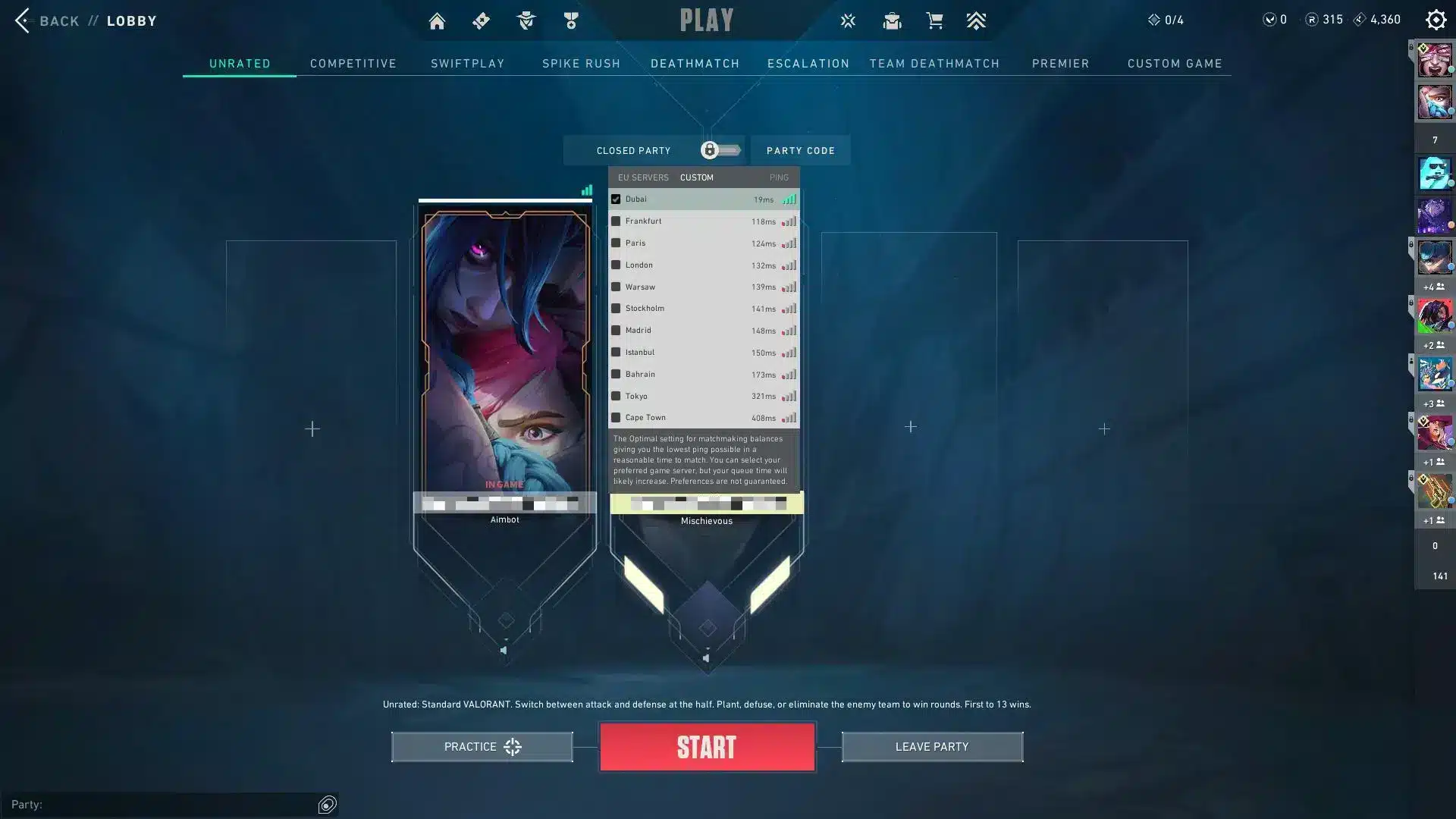 VALORANT includes a server selection feature that allows eligible players to choose their preferred matchmaking location.
According to Riot's official Server Select guide, party leaders and solo players can select among available servers.
Follow these steps:
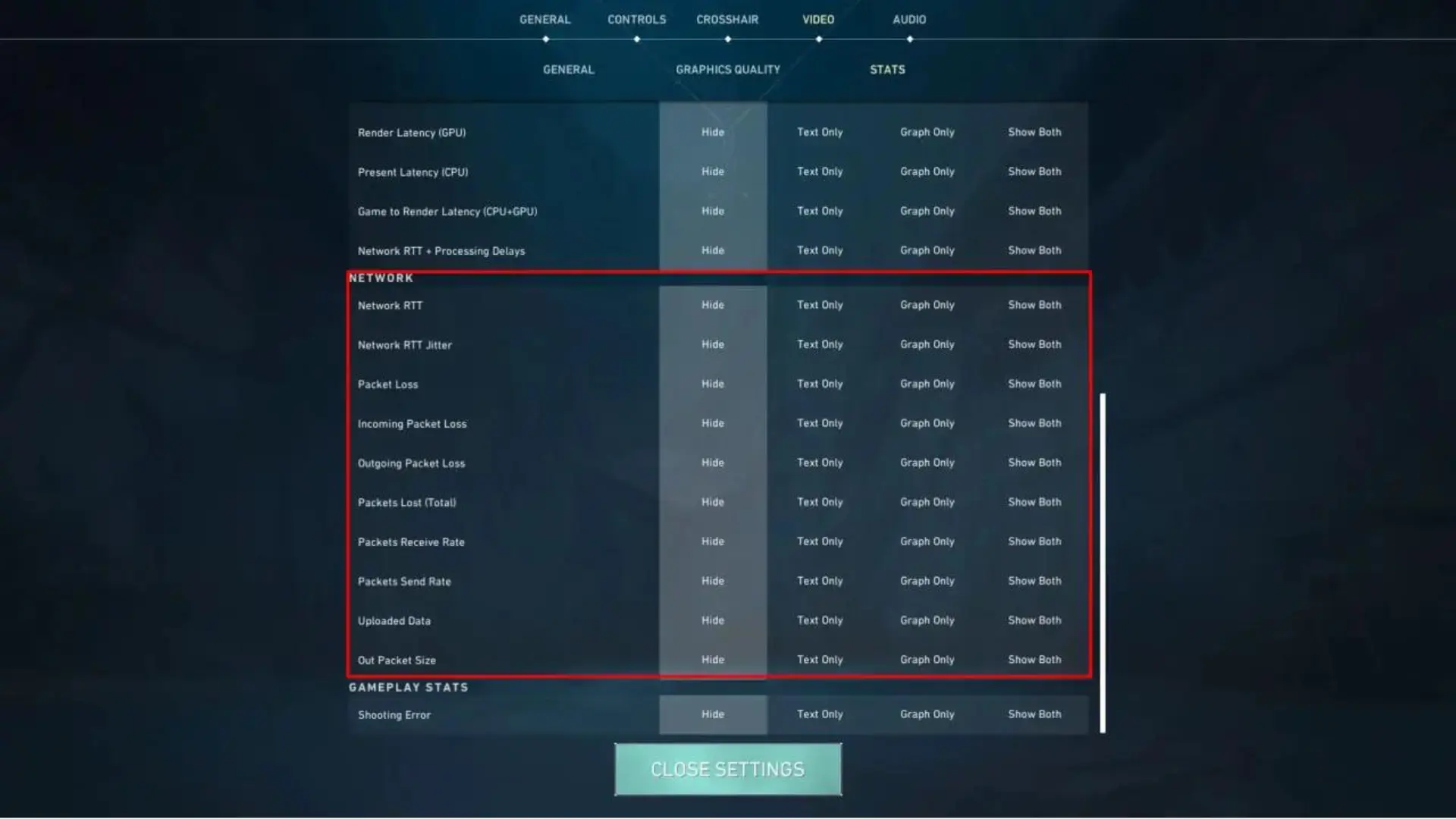 If you experience VALORANT high ping in the Middle East, begin by identifying whether the problem affects your network or Riot's infrastructure.
Different causes require different solutions.
What Happened to VALORANT Bahrain and Dubai Servers?
The regional disruption began in early March 2026, affecting connectivity across parts of the Middle East.
According to the Riot Games Service Status, Dubai received an official server unavailability notice on March 2, 2026.
Bahrain also experienced connection problems during March.
On March 10, Riot Support acknowledged that players connecting to Bahrain could experience increased latency or packet loss.
A second official server unavailability notice for Bahrain was registered on March 23.
These incidents disrupted access to nearby matchmaking locations for affected players in Saudi Arabia, Bahrain, Kuwait, and neighboring countries.
As a result, some players encountered several problems:
- Bahrain and Dubai missing from the server selection menu.
- Higher latency when connecting to alternative locations.
- Packet loss and unstable connections during matches.
- Longer response times when using distant servers.
Are Bahrain and Dubai Servers Available in 2026?
As of October 20, 2026, Riot's public status information still displays the March advisories for Bahrain and Dubai. The notices identify Dubai's March 2 incident and Bahrain's March 23 incident. However, these alerts should not be confused with a live test of every available matchmaking location. Actual server visibility can depend on the player's account region, platform, and Riot's current server configuration. Players should confirm availability through two sources:- The official Riot Games Service Status.
- The server selection menu inside VALORANT.
What do Saudi Arabia's latest latency reports show?
Saudi Arabia's Communications, Space and Technology Commission (CST) provides another perspective on regional connectivity. Its Game Mode report for Q2 2026 identifies VALORANT servers within Saudi Arabia. The report recorded an average national latency of 11 milliseconds for VALORANT. Among the measured internet providers, stc achieved 10 ms, while Zain and Mobily recorded 13 ms. These results came from participating fiber-optic connections measured during the second quarter of 2026. They do not represent every player, connection type, or server location. Still, the measurements demonstrate that low-latency VALORANT connections were available through Saudi-based infrastructure during that period.Why Are Riyadh and Mumbai Available in VALORANT?
Following the March disruptions, Riot expanded regional matchmaking options to help affected players continue playing.
On March 26, VALORANT Arabia announced the activation of additional servers intended to improve service stability.
According to Dot Esports, these options included Riyadh, Saudi Arabia, and Mumbai, India.
The alternatives provide additional matchmaking possibilities when previously preferred locations become unavailable.
However, their performance depends on where each player connects from.
Riyadh: A potentially attractive option for Saudi Arabian players and other Gulf residents with efficient routes into Saudi Arabia.
Mumbai: An alternative worth testing for players whose international connections perform better toward India.
European servers: Possible alternatives for eligible accounts, although greater distance can increase latency.
Importantly, Riot's server selection system operates within account-specific regional restrictions.
A player's Riot shard determines which matchmaking locations are available.
Selecting Mumbai or Riyadh does not automatically transfer the account to another shard.
Therefore, players should check which locations appear in their own client.
Neither Riyadh nor Mumbai should be considered the best choice for every Middle Eastern country.
Why Is VALORANT Ping High in the Middle East?
High ping is not always caused by a server outage. Even when a server operates normally, players may experience poor performance because of the network path connecting them to it. Three factors are particularly important.Server location and physical distance
Ping measures the round-trip time between a player's device and the destination server. Greater distances generally increase latency because information takes longer to travel. For example, connecting from Kuwait to a distant European server may involve considerably more distance than connecting to Riyadh. However, geographic proximity alone cannot determine the final ping.ISP routing and international connections
Internet service providers determine how traffic travels through interconnected networks. Sometimes, the selected route is longer than the geographically shortest path. A player living near Riyadh could experience unexpectedly high ping if their ISP sends traffic through inefficient international connections. This explains why two players in the same city might experience different latency on the same VALORANT server. Routing congestion, network interconnections, and provider infrastructure can all influence the result.Packet loss and unstable latency
Packet loss occurs when information fails to reach its destination. Meanwhile, jitter describes variations in latency over time. A connection with stable 40 ms ping may feel more consistent than another fluctuating between 25 and 120 ms. Common symptoms include delayed abilities, rubber-banding, and inconsistent movement. These problems may originate from Wi-Fi interference, local congestion, ISP routing, or upstream infrastructure. Identifying the actual cause is essential before attempting a fix.How to Choose the Best VALORANT Server
VALORANT includes a server selection feature that allows eligible players to choose their preferred matchmaking location.
According to Riot's official Server Select guide, party leaders and solo players can select among available servers.
Follow these steps:
- Launch VALORANT and open the Play menu.
- Select your preferred game mode.
- Find the connection indicator near your player card.
- Open the available server list.
- Compare the displayed ping for each location.
- Select the server offering the best balance of latency and stability.
How to Fix VALORANT High Ping in Saudi Arabia and MENA
If you experience VALORANT high ping in the Middle East, begin by identifying whether the problem affects your network or Riot's infrastructure.
Different causes require different solutions.
1. Check the official server status
Start with Riot's status website. If the selected server has an active outage, changing local settings will not restore it. Choose another available matchmaking location and follow Riot's announcements.2. Test your local connection
Before changing advanced settings, follow Riot's basic connection troubleshooting recommendations. These include:- Use an Ethernet cable instead of Wi-Fi.
- Restart your modem and router.
- Pause downloads and background updates.
- Reduce simultaneous network usage.
- Check whether other online applications experience similar instability.
3. Monitor ping and packet loss
Enable VALORANT's network statistics through the game's settings. Monitor your network round-trip time and packet loss during gameplay. Compare the results across different available servers. If every location shows unstable latency, investigate your local network or ISP. If only one server performs poorly, its network route may require closer examination.4. Investigate your ISP routing
Windows includes a diagnostic utility called tracert. It displays the network hops traffic follows toward a destination. Riot provides official instructions for collecting Tracert logs. These logs can help identify unusually long routes or persistent increases in latency. However, individual timeouts do not necessarily indicate a connection failure. Some network devices restrict diagnostic responses. If the results suggest routing problems, contact your ISP with the collected information.5. Test alternative routes with ExitLag
When inefficient routing contributes to high ping, connection optimization software may offer another approach. ExitLag analyzes available network routes and attempts to select more efficient paths for supported games. For VALORANT players in Saudi Arabia and MENA, this can be useful when an ISP's default route performs poorly. To evaluate the results:- Open VALORANT and record your baseline ping and packet loss.
- Close the game and activate ExitLag for VALORANT.
- Apply the recommended route configuration.
- Reopen VALORANT and connect to the same available server.
- Compare results under similar network conditions.