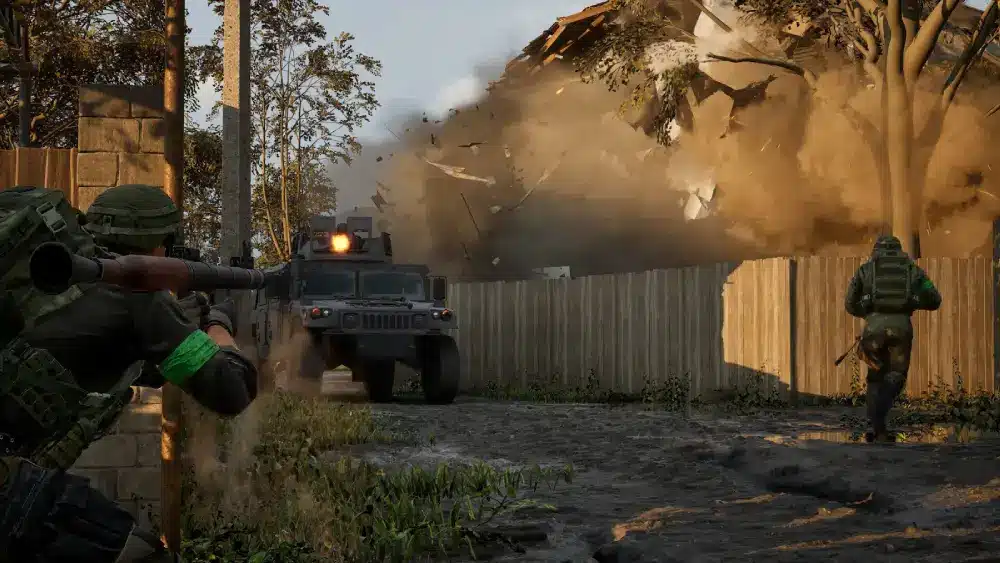
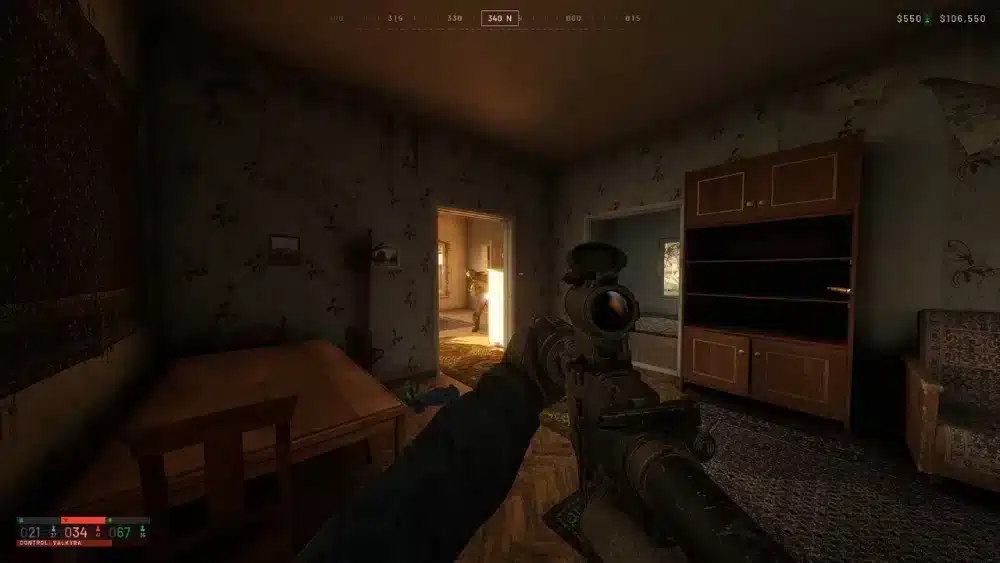
WARDOGS brings large-scale warfare back into focus with a tactical multiplayer experience built around 100-player battles, vehicles, destruction, construction, and three competing teams. Developed by BULKHEAD and published by Team17, the game aims to create unpredictable battles where teamwork matters as much as individual accuracy.
Unlike shooters where two teams repeatedly fight over familiar lanes, WARDOGS puts three factions on the battlefield simultaneously. That extra side can completely change a firefight because controlling an objective never guarantees that another enemy force will not attack from a different direction.
So, what is WARDOGS? It is an All-Out Warfare fps for PC that combines grounded gunplay with combined-arms combat and dynamic objectives. Up to 100 players fight across a large battlefield, while vehicles, destruction, building mechanics, communication, and an economy system create additional tactical options.
The result is an FPS that does not depend entirely on getting the most eliminations. Capturing territory, transporting allies, coordinating attacks, spending resources effectively, and responding to changes across the battlefield can all contribute to victory.
For players interested in large multiplayer shooters, understanding those systems before jumping into a match can make the first hours much easier. Here is how WARDOGS works and what separates it from other tactical FPS games.
WARDOGS: What Is the New Tactical Warfare Game?
WARDOGS is a multiplayer first-person shooter focused on large-scale warfare. Instead of narrowing every match to infantry combat alone, BULKHEAD combines soldiers, vehicles, destructible environments, construction, resources, and objectives inside the same battlefield.
Its three-team structure is one of its most distinctive elements. Rather than simply attacking one enemy, players need to consider two opposing forces competing for the same objectives.
Who is developing WARDOGS?
WARDOGS is developed by BULKHEAD and published by Team17.
BULKHEAD describes the project as an All-Out Warfare FPS rather than positioning it as another battle royale or extraction shooter. That distinction establishes what players should expect from the core gameplay loop.
The focus is on fighting as part of a larger team while contributing to a shared objective.
Players can influence the match through:
- Infantry combat
- Capturing and defending objectives
- Using vehicles
- Transporting teammates
- Constructing useful structures
- Destroying enemy positions
- Earning and managing resources
- Communicating with nearby players
Therefore, someone who is not consistently at the top of the elimination leaderboard can still make meaningful contributions.
What makes WARDOGS different from other FPS games?
Three-team warfare immediately creates a different tactical problem.
In a traditional two-team FPS, identifying the enemy is straightforward. If your squad is fighting one team, you generally understand where the immediate threat originates.
In WARDOGS, defeating one group does not necessarily secure an area.
A third faction can attack while the first two teams are weakened. As a result, positioning, awareness, and timing become especially important.
The game also combines infantry combat with vehicles, building, destruction, and an economy. These mechanics create a sandbox where teams can solve battlefield problems in different ways instead of following one fixed strategy.
How Does the WARDOGS FPS Gameplay Work?
The fps gameplay in WARDOGS centers on a large battlefield where up to 100 players are divided between three teams.
Those factions compete for a dynamic Control Zone. Maintaining a strong presence inside the objective allows a team to generate points toward victory.
100 players and three competing factions
The three factions are Valkyra, Lonestar, and Manticore.
All three compete simultaneously. Consequently, alliances should never be assumed simply because two factions happen to be attacking the same opponent.
This structure creates several possible situations during one match.
Your team could defend the objective against one faction while the third attacks from another direction. Alternatively, two opponents might weaken each other before your squad arrives to take control.
That means good players need to think beyond the opponent directly in front of them.
Situational awareness becomes essential because every engagement exists inside a much larger battle.
Understanding the Control Zone
The main objective takes inspiration from King of the Hill.
A Control Zone becomes the central focus of the battle, and teams compete to establish enough presence inside it to generate points.
The first team to reach the required score wins.
However, the location of the objective can change. This prevents teams from relying entirely on one defensive position throughout the match.
When the battlefield shifts, players may need to:
- Identify the new objective.
- Decide whether to attack immediately or regroup.
- Secure transportation.
- Move infantry and vehicles toward the new area.
- Establish defensive positions.
- Watch for both enemy factions.
- Maintain enough presence to score.
The combination of large maps and changing objectives makes mobility an important part of the overall strategy.
WARDOG Survivor: Is WARDOGS a Survival Game?
Players searching for wardog survivor may expect WARDOGS to use survival-game mechanics or feature a dedicated Survivor mode. However, current official descriptions do not identify WARDOGS as a traditional survival game or list “Survivor” as an official game mode.
Instead, BULKHEAD describes WARDOGS as an All-Out Warfare FPS centered on objective-based multiplayer combat.
Survival elements versus objective-based warfare
Staying alive is naturally valuable in any tactical FPS.
Survival allows players to maintain pressure, defend objectives, support teammates, preserve momentum, and continue contributing to the wider battle.
However, surviving is not the primary victory condition.
The objective is based around controlling territory and generating enough points for your faction to win.
Therefore, wardog survivor should not be confused with games where players gather food, manage hunger, craft shelters, or attempt to become the last surviving player.
The battlefield may reward survival, but WARDOGS belongs to a different genre.
Why WARDOGS is not a traditional survival shooter
WARDOGS also differs from battle royale games.
Battle royales typically reduce a large pool of players until only one player or squad remains. WARDOGS keeps the emphasis on competing factions and shared objectives.
It also differs from extraction shooters, where entering a dangerous area, collecting valuable equipment, and successfully extracting usually forms the central gameplay loop.
The easiest comparison is:
| Genre | Main objective | WARDOGS? |
| Survival game | Survive while managing resources and environmental threats | No |
| Battle royale | Become the last player or team standing | No |
| Extraction shooter | Collect resources and successfully extract | No |
| Tactical FPS | Win through combat and tactical decisions | Yes |
| Objective warfare | Capture/control objectives as part of a team | Yes |
| Combined-arms FPS | Mix infantry and vehicle warfare | Yes |
So, while searches for wardog survivor may lead players toward the game, the more accurate description is a tactical combined-arms multiplayer FPS.
Weapons and Tactical Gunplay in WARDOGS
Weapons are at the center of any FPS, but WARDOGS aims to place gunplay inside a wider tactical environment.
Players are not fighting isolated arena battles. Every engagement can affect control of the map, movement toward objectives, and the resources available to each faction.
Grounded FPS combat
BULKHEAD describes the gunplay as grounded.
That approach fits the wider military setting and emphasizes deliberate combat rather than turning every encounter into pure movement-based chaos.
Positioning can therefore become just as important as reaction speed.
Using cover, understanding sightlines, coordinating with allies, and deciding when to engage can determine whether a squad survives long enough to influence an objective.
Destruction complicates that calculation.
A position that appears safe when you arrive may become exposed as the environment changes around you.
How teamwork changes firefights
With dozens of players sharing the battlefield, individual skill remains important, but coordination can create a much larger advantage.
A coordinated squad can cover multiple angles, communicate enemy positions, transport teammates, attack objectives together, and react faster when another faction appears.
Proximity voice chat supports this emphasis on communication.
That can make interactions more organic because players near each other can coordinate without every conversation needing to involve the entire team.
Good teamwork may involve:
- Calling enemy locations
- Coordinating pushes
- Protecting vehicles
- Transporting infantry
- Defending Control Zones
- Warning teammates about the third faction
- Establishing useful defensive positions
The key difference is scale. Winning one duel feels good, but helping dozens of teammates control the battlefield can be more valuable.
Vehicles and Combined-Arms Combat
Combined-arms warfare means infantry does not exist separately from the vehicles operating around it.
WARDOGS integrates both into the larger battle.
Vehicles can provide mobility and combat opportunities, while infantry can operate in spaces where larger machines may be less effective.
How vehicles influence large battles
Large maps create a simple tactical problem: distance.
When the Control Zone changes, running across the entire battlefield may waste valuable time. Vehicles can help squads reposition quickly and contest objectives before opponents establish strong defenses.
They can also influence combat directly.
This makes vehicle control strategically valuable rather than treating vehicles as background decoration.
A team that coordinates transportation effectively may be able to react faster whenever the objective shifts.
Infantry and vehicle teamwork
Vehicles do not eliminate the importance of infantry.
Instead, both elements can complement each other.
Infantry can occupy buildings, move through tighter areas, defend positions, and engage enemies in situations where a vehicle may become vulnerable.
Meanwhile, vehicles can provide transportation and support across larger distances.
This relationship creates different roles for players. Someone who prefers driving, logistics, or supporting teammates can contribute without approaching every match as an infantry-only shooter.
Building and Destruction in the WARDOGS FPS
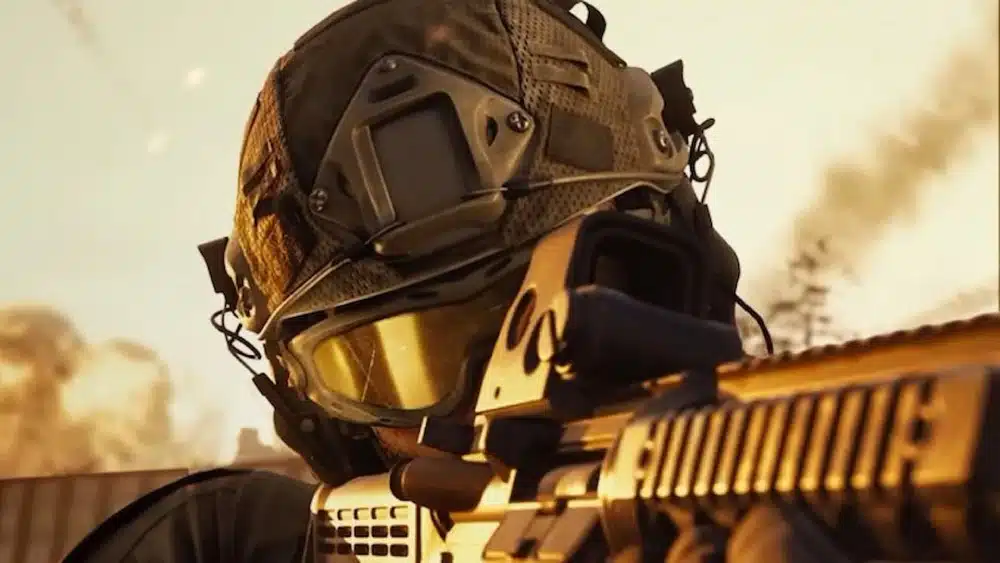
Static maps become predictable over time.
WARDOGS attempts to reduce that predictability by introducing both construction and destruction into its fps sandbox.
These mechanics can change how teams approach objectives because cover and defensive positions are not necessarily permanent.
Destructible environments
Destruction can reshape a firefight.
Players who rely too heavily on one defensive location may discover that enemies can remove or weaken the protection surrounding them.
This creates additional tactical possibilities.
Instead of repeatedly attacking an entrenched opponent through the same doorway or approach, teams may be able to alter the battlefield and create another opportunity.
Destruction also means players need to reassess their surroundings continuously.
Cover that protected you moments ago may no longer exist.
Building defenses and adapting the battlefield
Construction provides the opposite possibility.
Rather than only removing parts of the environment, players can create useful structures and strengthen positions.
Building becomes particularly interesting around objectives.
If your faction reaches a Control Zone first, establishing defenses can make the position harder for the other two teams to capture.
However, destruction prevents those defenses from becoming permanent guarantees of safety.
The interaction between building and destruction creates a cycle:
- Capture important territory.
- Establish useful defenses.
- Prepare for enemy attacks.
- Respond when structures are destroyed.
- Rebuild or reposition.
- Counterattack when opportunities appear.
That changing battlefield supports WARDOGS’ broader focus on dynamic warfare.
How the WARDOGS Economy and Progression Work
Gunplay is only one layer of WARDOGS. The game also uses cash and progression systems designed to give players additional goals.
BULKHEAD emphasizes the importance of cash within the experience, making the economy another component players need to understand.
Why cash matters
Players earn resources through gameplay.
This creates an incentive to participate meaningfully in the battle rather than treating every match exclusively as a race for eliminations.
The economy also complements the game’s team-focused design.
Actions that help your faction can contribute to your wider progression while supporting the battle at the same time.
Importantly, BULKHEAD has said players will not simply be able to purchase in-game cash or gold bars directly during Early Access.
That means earning resources remains tied to gameplay.
The economy-based metagame
WARDOGS is also planned around a broader metagame.
Progression gives individual matches a sense of continuity because players have goals beyond winning one battle.
However, WARDOGS is entering Early Access, so progression systems can continue changing as BULKHEAD receives feedback and observes player behavior.
Balance matters significantly here.
If progression is too fast, rewards can lose their meaning. If it is too slow, unlocking content can feel unnecessarily repetitive.
Early Access gives the developer time to adjust that balance with real gameplay data.
WARDOGS PC Requirements and FPS Performance
Large-scale multiplayer battles can be demanding.
WARDOGS combines up to 100 players with vehicles, environmental destruction, construction, large environments, and online networking. Therefore, checking the PC requirements before playing is important.
Minimum WARDOGS requirements
The official Steam specifications currently require 16 GB of RAM and approximately 50 GB of storage.
At the minimum level, listed graphics hardware includes the NVIDIA GTX 1660 and AMD RX 590 class.
These specifications target a lower visual preset with upscaling.
Players using hardware near the minimum requirements should be prepared to adjust settings to prioritize stable fps over maximum visual quality.
| Component | Minimum | Recommended |
| Memory | 16 GB RAM | 16 GB RAM |
| Graphics | GTX 1660 / RX 590 class | RTX 3070 / RX 6700 XT class |
| Storage | 50 GB available | 50 GB available |
| Platform | PC | PC |
| Internet | Broadband connection | Broadband connection |
Official requirements can change as optimization continues throughout Early Access.
Recommended hardware for better FPS
The recommended tier increases GPU expectations to approximately an RTX 3070 or RX 6700 XT.
More powerful hardware provides additional flexibility when balancing graphical quality and frame rate.
However, players should distinguish FPS performance from network performance.
Low frame rates usually relate to hardware, graphics settings, drivers, background processes, or game optimization. High ping and packet loss relate to the network connection.
Understanding that distinction prevents players from trying to fix the wrong problem.
WARDOGS Multiplayer and Network Performance
WARDOGS is built around online multiplayer.
That makes connection stability especially important because every movement, shot, vehicle interaction, and objective fight involves communication between the player’s PC and online infrastructure.
Why stable connections matter in 100-player battles
Competitive shooters depend heavily on responsiveness.
When latency becomes inconsistent, players may experience delays that make combat feel less predictable.
Packet loss can create another layer of instability because some information traveling between the player and server may fail to arrive correctly.
These issues become especially frustrating during critical moments such as:
- Close-range firefights
- Objective pushes
- Vehicle combat
- Rapid repositioning
- Large multi-team engagements
- Defensive stands
A stable connection cannot replace good aim or teamwork, but it helps ensure network problems interfere less with those skills.
Ping, packet loss, and multiplayer responsiveness
Ping represents the time required for data to travel between your system and a destination and return.
Lower is generally preferable, but consistency also matters.
A connection that constantly jumps between very different latency values can feel worse than one that remains stable.
Internet routing can influence this behavior. Data does not necessarily travel through the most efficient possible path automatically.
This is where network optimization can become useful.
How ExitLag Can Improve Your WARDOGS Experience
WARDOGS combines tactical shooting with large multiplayer battles where timing can matter during every engagement.
ExitLag is designed to optimize the connection route used for supported online games, helping players address network problems such as inefficient routing, instability, ping spikes, and packet loss.
Connection optimization for large multiplayer matches
ExitLag’s proprietary connection optimization technology is built specifically around gaming traffic.
Real-Time Optimization analyzes the connection and searches for better routing conditions, while Multipath Connection can send packets through multiple simultaneous routes to improve stability.
That can be particularly relevant in a multiplayer fps, where delayed or inconsistent network communication can interfere with movement and firefights.
ExitLag also offers Traffic Shaper, Multi-Internet, and FPS Boost technologies as part of its broader PC gaming toolkit.
However, it is important to understand what each type of optimization addresses.
Network routing optimization targets connection quality. It does not magically replace insufficient PC hardware.
Real-Time Optimization and Multipath Connection
Setting up ExitLag is straightforward:
- Create an ExitLag account.
- Download the PC application.
- Choose your supported game.
- Apply the recommended routes and settings.
- Launch the game.
ExitLag operates worldwide and supports thousands of games, giving PC players one platform for optimizing connections across different online titles.
For a game like WARDOGS, the main benefit is straightforward: reducing the impact of network-routing problems can help you concentrate on tactical decisions instead of connection instability.
FAQ
WARDOGS combines several mechanics associated with different multiplayer genres. As a result, players naturally have questions about exactly what kind of experience BULKHEAD is creating.
Here are the essential answers.
WARDOGS is an All-Out Warfare tactical multiplayer FPS.
It combines infantry gunplay, vehicles, construction, destruction, objectives, progression, and an economy inside large battles.
WARDOGS supports battles with up to 100 players.
Those players are divided between three competing factions rather than the traditional two-team structure.
No. Current official information does not describe WARDOGS as a traditional survival game.
Players searching for wardog survivor should expect objective-based tactical warfare rather than hunger management, shelter crafting, or last-player-standing survival mechanics.
Yes.
Vehicles form part of the game’s combined-arms warfare and can provide transportation as well as additional tactical options.
They are particularly valuable because WARDOGS uses a large battlefield where objectives can require teams to reposition.
Yes. Destruction is one of the features promoted as part of WARDOGS’ multiplayer sandbox.
The game also includes construction mechanics, allowing teams to influence the battlefield through both building and destruction.
WARDOGS is developed by BULKHEAD.
Team17 is the game’s publisher.
WARDOGS is scheduled to enter Steam Early Access for PC on September 10, 2026.
Early Access means development will continue after that launch, with BULKHEAD currently expecting the period to last approximately one to two years.
WARDOGS: What to Expect From This 100-Player FPS
WARDOGS is entering a crowded shooter market, but its approach has several features that help establish a distinct identity. The combination of 100 players, three factions, vehicles, destruction, construction, tactical gunplay, and dynamic objectives creates considerably more complexity than a straightforward team deathmatch.
Players searching for a new fps should therefore expect teamwork to play a major role. Individual mechanical skill matters, but understanding objectives, communicating with teammates, repositioning effectively, and recognizing what both enemy factions are doing could be equally important.
Why the three-team format matters
Three factions create uncertainty.
When two teams fight, the third gains an opportunity. When one faction dominates an objective, both opponents have a reason to challenge it.
This creates a natural pressure against treating any area as completely secure.
Combined with shifting objectives, vehicles, construction, and destruction, that structure can produce battles that develop differently from one match to another.
The main characteristics are easy to summarize:
- Up to 100 players
- Three competing factions
- Tactical infantry combat
- Combined-arms warfare
- Vehicles and transportation
- Dynamic Control Zones
- Building and destruction
- Proximity communication
- Cash and progression
- Large-scale team objectives
Together, these mechanics explain why WARDOGS is better understood as an All-Out Warfare FPS than as a battle royale, extraction shooter, or wardog survivor game.
What players should know before jumping in
The most important consideration is that WARDOGS is beginning its life as an Early Access title.
Players should expect systems to evolve.
Weapons can receive balance changes. Progression can be adjusted. Performance can improve. New maps, vehicles, objectives, and other content can arrive as development continues.
That uncertainty is part of Early Access, but it also gives players an opportunity to experience the game while its identity is still developing.
Connection quality should also be part of your preparation. In large online battles, unstable routing, packet loss, or sudden latency changes can interfere with the responsive experience an FPS requires.
WARDOGS combines tactical gunplay with the chaos of three-team, 100-player warfare, making communication and responsiveness central to every battle. For players who want to reduce the impact of network instability while fighting for the Control Zone, ExitLag can optimize gaming routes and help maintain a more consistent online connection throughout WARDOGS matches.
All game images used in this blog belong to BULKHEAD. They are used for informational/educational purposes only and do not imply endorsement or affiliation with the rights holders.
Got questions or want to connect with other players? Join the conversation at the ExitLag Forum!