Surviving on Arrakis requires more than combat skills and good gear. The desert is vast, dangerous, and constantly shifting, which makes planning essential. For that reason, many players rely on the Dune Awakening interactive map to track key areas, rare materials, and strategic zones before stepping into hostile territory.
Moreover, the Dune Awakening interactive map transforms exploration from random wandering into calculated progression. Instead of crossing open sand blindly and risking exposure to sandworms or enemy ambushes, players can define routes, identify safe zones, and prioritize high-value objectives.
So, what is the Dune Awakening interactive map and why is it so important? It is a dynamic digital mapping system that allows players to visualize Arrakis in layers, marking resources, bases, and conflict zones. When combined with optimized network routing from ExitLag, exploration becomes not only smarter but also smoother and more reliable.
Why the interactive dune map improves exploration strategy

Exploration in Dune Awakening is not simply about discovery. It is about risk management. Every journey across the desert consumes resources and exposes you to environmental threats.
Understanding the interactive dune map structure
An interactive dune map allows players to filter specific categories such as enemy camps, trade hubs, or crafting zones. Consequently, planning becomes intentional rather than reactive.
Instead of memorizing coordinates or relying on screenshots, players can track progress dynamically. This significantly reduces unnecessary backtracking.
Tracking resource locations efficiently
Knowing precise resource locations can mean the difference between survival and defeat. High-tier crafting materials are often located in contested or environmentally unstable regions.
Therefore, structured planning provides two major advantages:
- Faster material farming with reduced exposure time
- Better preparation for PvP encounters in contested zones
In addition, pairing this planning with ExitLag ensures that once you reach your destination, latency does not disrupt harvesting or combat timing.
Using poi markers and navigation tool for faster routes
Arrakis is unforgiving. Long-distance travel without preparation can quickly turn into disaster. Because of that, efficient route management is critical.
Marking poi markers for tactical advantage
Point-of-interest markers help players identify valuable objectives such as abandoned facilities, rare spawn zones, or faction-controlled territories.
To maximize efficiency:
- Mark high-priority objectives before leaving base.
- Group nearby objectives into a single travel route.
- Avoid crossing open sand unnecessarily to reduce risk.
This structured system minimizes exposure while increasing productivity.
Integrating a navigation tool with the world map
A reliable navigation tool integrated into the world map ensures that routes remain clear even in visually similar desert terrain. Sandstorms and dynamic weather can obscure landmarks, making digital orientation essential.
Furthermore, stable network performance supports this routing system. ExitLag optimizes traffic between your device and the game servers, reducing sudden lag spikes during movement transitions or fast-travel sequences.
As a result, planned routes feel fluid rather than interrupted.
Optimizing farming with Dune Awakening interactive map and ExitLag
Efficient farming requires both information and execution. The Dune Awakening interactive map provides the data, while ExitLag enhances the performance layer.
Structured material farming
Instead of roaming randomly, players can build farming loops based on terrain type and spawn frequency.
For example:
- Identify clusters of rare minerals.
- Connect them into a circular path.
- Return to base before inventory overload.
This approach reduces wasted movement and maximizes yield per trip.
Comparing unstructured vs optimized gameplay
Below is a practical comparison:
| Aspect | Without planning | With map + ExitLag |
| Travel efficiency | Random paths | Structured loops |
| PvP reaction time | Inconsistent | Stable response |
| Resource yield per hour | Moderate | Increased |
| Risk exposure | High | Controlled |
| Latency during combat | Variable | Optimized routing |
As illustrated, structured planning and connection optimization reinforce each other.
How network stability impacts exploration and PvP
While mapping tools provide clarity, performance determines execution quality. High latency can delay ability activation, vehicle control, or harvesting actions.
Combat precision in high-risk zones
In PvP encounters, milliseconds matter. Delayed input can cost valuable equipment or territory control.
ExitLag dynamically selects optimized routes to game servers. Consequently, packet loss and jitter are reduced during peak traffic periods.
Smooth traversal across large regions
Large-scale desert traversal often involves vehicles and fast movement across unstable terrain. Stable connectivity ensures smoother synchronization between player actions and server responses.
Therefore, integrating network optimization with exploration tools creates a competitive edge.
Preparing for faction wars and territory control
Faction-based conflict is central to Dune Awakening’s long-term progression. Planning assaults or defensive maneuvers requires accurate location awareness.
Coordinated team navigation
Teams can share mapped routes and synchronize movement toward objectives. This minimizes confusion and maximizes efficiency.
Additionally, coordinated strategy reduces the risk of fragmentation during desert travel.
Resource security planning
Before launching territory campaigns, factions must secure sufficient materials. Using mapped farming routes ensures consistent supply chains.
Moreover, network stability prevents communication or action delays during large-scale engagements.
Building a sustainable exploration system
Long-term survival depends on consistency. Rather than improvising each session, players benefit from structured routines.
Weekly optimization routine
Consider dividing objectives as follows:
- Dedicated resource farming sessions
- Territory scouting missions
- Base expansion planning
- PvP readiness drills
This system reduces chaos and increases measurable progress.
Balancing immersion and efficiency
While optimization is crucial, the atmosphere of Arrakis remains a core experience. Therefore, use mapping tools as guidance rather than restriction.
Stable connectivity enhances immersion by preventing interruptions during exploration or narrative events.
Advanced desert traversal strategies
Arrakis is dynamic. Sandworms, storms, and faction patrols constantly reshape risk levels.
Layered route planning
Instead of single-objective trips, layer multiple goals into one route. For example, combine resource harvesting with scouting tasks.
This reduces total exposure time in hostile zones.
Minimizing environmental risk
Avoid long stretches of open sand when possible. Hug rock formations and known safe paths marked on your map.
Additionally, smoother connectivity ensures vehicle handling remains responsive even during high-speed traversal.
Best base building spots using world map intelligence
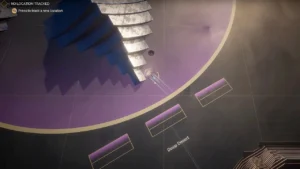
Choosing the right base location is a long-term strategic decision in Dune Awakening. By analyzing data from the world map, players can identify areas that balance resource accessibility with natural defensive advantages.
Defensive positioning near rock formations
Building close to rock structures reduces exposure to open desert threats and lowers the risk of sandworm detection. Elevated terrain also provides better visibility against incoming enemies.
Proximity to essential resource routes
Establishing a base near optimized farming routes decreases travel time and improves logistical efficiency, especially during high-risk resource runs.
Sandworm avoidance routes with navigation tool precision
Crossing Arrakis safely requires careful path planning to avoid high-vibration zones that attract sandworms.
Identifying high-risk vibration zones
Wide open sand areas with frequent vehicle traffic increase danger levels. Mapping these regions in advance reduces unexpected encounters.
Creating low-exposure travel corridors
By using a navigation tool strategically, players can trace routes along rocky terrain and low-activity sectors, minimizing environmental threats.
PvP hotspot analysis through poi markers
Competitive players benefit from tracking recurring conflict zones across the desert.
Monitoring faction-controlled territories
Analyzing poi markers helps identify dominant faction regions, allowing players to prepare offensively or avoid unnecessary confrontation.
Planning ambushes and defensive retreats
Mapping escape paths and tactical ambush points significantly increases survival chances during unpredictable PvP encounters.
Economic dominance through resource locations control
Controlling rare material zones plays a crucial role in long-term faction power.
Establishing resource monopolies
Identifying clustered resource locations enables organized patrols and stronger territorial control strategies.
Optimizing trade logistics with stable routing
Beyond territorial strategy, technical performance matters. Stable network routing ensures smooth trade interactions and rapid response during unexpected skirmishes.
Long-term progression and map mastery
Mastery of Arrakis is not achieved overnight. It requires continuous adaptation to shifting territories and economic demands.
The interactive map empowers players to document discoveries, track strategic points, and refine routes over time. When combined with ExitLag’s routing optimization, every expedition becomes more predictable and controlled.
Ultimately, survival in Dune Awakening is about preparation, awareness, and execution. By integrating smart route planning with optimized network performance, players can reduce risk, improve farming efficiency, and maintain competitive advantage. In the end, leveraging the Dune Awakening interactive map alongside ExitLag transforms chaotic desert survival into a structured and performance driven experience.