The Chalice of Muspel is the most challenging PvE dungeon in AION 2. Released on May 27, 2026 as part of a major content patch that also introduced new craftable gear, raised stat caps, and launched the Wings Enhance System, the dungeon set a new benchmark for what organized groups face in Atreia. It is not designed for casual players. It is not forgiving of poor mechanics. And the rewards it gives to the groups that conquer it are among the most powerful in the entire game.
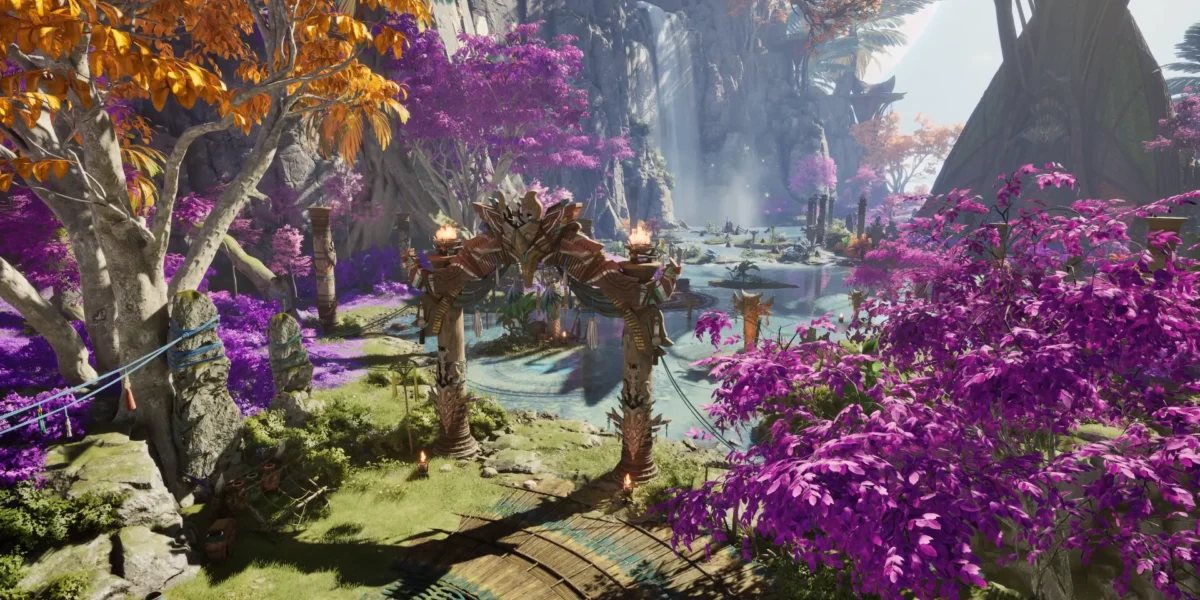
Chalice of Muspel is the most challenging PvE dungeon in AION 2. Set within an ancient temple submerged beneath lava deep inside the Muspel volcano, the dungeon has resurfaced following intense seismic activity.
This guide covers everything: the lore context, gear requirements, party composition, boss mechanics, the Normal versus Hard difficulty split, rewards, and how connection stability affects your group’s ability to clear the hardest encounters in the game.

What Is the Chalice of Muspel?
The Chalice of Muspel is a Sanctuary dungeon, a term in AION 2’s content taxonomy that distinguishes endgame high-stakes instances from standard progression dungeons. Sanctuary dungeons are specifically designed for players who have already cleared the standard endgame dungeon cycle and are looking for content that demands coordinated execution, optimized gear, and real-time mechanical awareness.
The dungeon is set inside an ancient volcanic temple. The environment is not just flavor: lava mechanics play directly into encounters, creating environmental hazards that punish poor positioning on top of the standard boss attack patterns. Everything in the Chalice of Muspel is designed to test whether your group has genuine mastery of the game’s combat system or has simply reached endgame through persistence.
You will need high-end gear just to get through the door, but the game gives you unlimited attempts within a designated time limit to figure out its punishing mechanics.
The unlimited-attempt structure is intentional. Chalice of Muspel is designed to be learned over many runs, not conquered on the first visit. The first-clear race that happened when the dungeon launched on KR/TW servers reflects how NC intended it: a prestige event where the groups that learn fastest are rewarded for doing so.
Requirements to Enter
To enter the Chalice of Muspel, players must meet a minimum item level of around 4,500. The dungeon is strictly designed for a 4-player party composition.
The item level requirement is a real gate. Players who have completed the standard endgame dungeon loop and invested in gear enhancement will meet it. Players who have rushed to max level without upgrading gear consistently will not.
Entry requirements checklist:
- Minimum item level approximately 4,500
- 4-player party required (not available as solo or duo content)
- Knowledge of your class’s full endgame rotation, not just the leveling priority order
- Full stock of consumables: health and mana potions, food buffs, flight restoration if any aerial phases apply
- Voice communication for your party (mechanic callouts are effectively mandatory at Hard difficulty)
Party Composition
A balanced party can make the dungeon significantly easier. Tanks should focus on controlling enemies, healers must manage incoming damage, and DPS players need to maximize damage while avoiding dangerous mechanics.
The recommended composition for Chalice of Muspel is the standard 4-player endgame structure with specific role performance requirements:
| Role | Class | Critical Responsibility |
|---|---|---|
| Main Tank | Templar | Positioning Scourge Kaldrix away from the party, interrupt management |
| Healer | Cleric | Sustaining through heavy lava damage phases, raid-wide heals on AOE |
| DPS 1 | Assassin or Gladiator | Melee burst during exposed windows |
| DPS 2 | Sorcerer or Ranger | Ranged damage during repositioning phases |
The Chanter can substitute for the Cleric as a secondary healer in an alternative composition that sacrifices some healing ceiling for additional support DPS. This is viable in well-geared groups where the healer check on specific boss phases is not tight.
Boss Structure
The Chalice of Muspel has at least two notable encounters before the final boss. Community sources confirm the presence of a mid-boss before the main encounter.
Mid-Boss: Iskariel
The mid-boss Iskariel is mechanically simple on paper but highly lethal in execution.
Iskariel’s lethality comes from the damage output relative to what healers can sustain when mechanics are not executed correctly. The dungeon’s volcanic environment creates fire-based debuff stacks on players who stand in incorrect positions. Against Iskariel specifically, fire debuff management is the primary mechanical challenge. Players who clear their stacks correctly experience a manageable healer burden. Players who ignore stack management force the healer into an impossible sustain situation.
Key mechanic: Track your fire debuff stacks and move to the designated cleanse position before reaching the stack threshold. The threshold for wipe conditions is lower than players expect on their first run.
Final Boss: Scourge Kaldrix
Players who defeat the dungeon’s boss monster, Scourge Kaldrix, can earn new rewards including the Lava Heart Weapon (Extend), Lava Heart Barrier, and Kaldrix Brooch.
Scourge Kaldrix is a multi-phase fight built around the volcanic environment. The tank’s primary responsibility is positioning Kaldrix away from the lava hazards that expand during phase transitions. DPS players must track phase transition timers and switch between single-target burst and AOE clearing when the fight demands it.
The community has documented several phase mechanics from the KR/TW run:
- Opening phase: Standard tank-and-spank with moderate tank damage. Establish healer rhythm here before mechanics activate.
- Lava expansion phase: Environmental hazards expand. The entire party must reposition simultaneously, with the tank dragging Kaldrix to the new safe zone.
- Enrage indicators: When Kaldrix drops below 30% HP, damage and attack speed increase. DPS must push hard enough before the healer cannot sustain through the incoming damage.
Normal vs Hard Difficulty: Reward Differences
Chalice of Muspel has two difficulty settings with meaningfully different reward tables.
The biggest difference between Normal and Hard difficulty lies in the reward drop rates. Hard difficulty has a 5% chance to drop brooches, while Normal difficulty has a 2.5% chance, half of that. Additionally, Hard difficulty can drop weapons and gauntlets, which are not available at all in Normal difficulty.
Normal difficulty guaranteed rewards:
You can obtain a low-grade equipment change ticket as a guaranteed reward. With two guaranteed rewards, you can craft a brooch. One change ticket can yield two weapon materials.
Hard difficulty exclusive drops:
- Weapons
- Gauntlets
- 5% brooch drop rate (versus 2.5% on Normal)
- Higher-quality loot table across all drop categories
The progression path is clear: run Normal until you understand the mechanics fully, then transition to Hard for the exclusive weapon and gauntlet drops that Normal cannot provide.
Patch Context: What Launched Alongside Chalice of Muspel
The major content patch that introduced Chalice of Muspel also brought the Brooch equipment slot, new Abyss gear and zones, wing enhancement, a Draconic crafting tier, and sweeping class changes.
The Brooch slot introduced by this patch is directly tied to Chalice of Muspel’s loot system. The Kaldrix Brooch is one of the most sought items from the dungeon and requires the new Brooch equipment slot to equip.
Other additions from the same patch:
- Genesis/Nemesis Dragon Lord Weapon: New craftable gear available exclusively through Transfer Crafting, not as a dungeon drop
- Character stat caps raised: Higher potential for all characters, particularly relevant for endgame gear optimization
- Wings Enhance System: Wing gear can now be enhanced through a dedicated system introduced in this patch
The first players to clear the dungeon on their server will walk away with the exclusive Pet: Red Dragon companion. This first-clear race incentive was already claimed on KR/TW servers. For global launch players, the first-clear race resets with the new servers.
First-Clear Race on Global Servers
When the global servers launch in September 2026, the Chalice of Muspel will be part of the endgame content that arrives either at launch or in an early content update. The first-clear Pet: Red Dragon reward resets with each new server, meaning global players will have their own first-clear race on NA, SA, EU, and Japan servers.
Preparing for this race means:
- Reaching item level 4,500 as quickly as possible through the standard dungeon progression loop
- Learning Chalice of Muspel mechanics from KR/TW community guides before attempting the dungeon
- Forming your 4-player team before the dungeon opens rather than assembling it under race pressure
Connection Stability in the Chalice of Muspel
Chalice of Muspel’s phase transitions and fire mechanic stack management require precisely timed reactions. Your character must move to the cleanse position before the stack threshold hits. Your tank must reposition Kaldrix during the lava expansion window. Your DPS burst must execute during exposed windows of known duration.
Every one of these actions depends on your input reaching NC’s server within the timing window the mechanic allows. At 20ms ping, every mechanic is fully executable. At 80ms, most mechanics remain achievable. At 150ms and above, stack cleanse timing becomes unreliable, repositioning during phase transitions becomes imprecise, and your group wipes on mechanics that your gear and knowledge should be able to handle.
Ping is the time it takes for data to travel from your computer to the game server and back. In real-time action games like Aion 2, every millisecond counts. With high ping, your abilities take time to activate, and dodging becomes nearly impossible.
ExitLag is a connection optimizer used by over 30 million players across 4,000+ game titles including AION 2. It analyzes multiple network routes in real time and selects the fastest, most stable path between your device and NC’s servers, replacing your ISP’s default routing with one built for gaming latency.
For Chalice of Muspel specifically:
- Real-Time Optimization keeps your ping stable throughout the full dungeon run, including the demanding phase transitions where timing is strictest
- Multipath Technology eliminates packet loss that would cause your mechanic actions to fail to register at the worst possible moment
- Traffic Shaper prioritizes your AION 2 traffic above all background applications so no background process spikes your ping during a Kaldrix phase transition
Setup for Chalice of Muspel:
- Download ExitLag from exitlag.com/free-trial
- Search for AION 2 in the game library
- Enable optimization for your regional server
- Launch AION 2 through the PURPLE launcher
- Form your party and enter the Chalice of Muspel with confidence that your connection is not the variable that wipes your group
Pro Tips: Clearing the Chalice of Muspel
- Use unlimited attempts to learn mechanics, not to brute-force DPS: The dungeon gives you unlimited attempts within the time window specifically because the mechanics require learning. The groups that clear fastest are the ones who commit to understanding each wipe rather than simply re-entering.
- Run Normal difficulty at least three times before attempting Hard: The mechanics that are punishing on Normal become tuned even tighter on Hard. Arriving at Hard without Normal clear experience is a significant setback for the entire group.
- Coordinate fire stack cleanse callouts in voice chat: The fire debuff stack mechanic against Iskariel and during Kaldrix phases requires simultaneous movement. Text chat during an active encounter is too slow. Establish callout responsibility before entering.
- Upgrade wings before your first Chalice attempt: The Wings Enhance System launched alongside Chalice of Muspel for a reason. Wing enhancement stats contribute to your survivability during lava environment phases. Enter with enhanced wings, not base ones.
Common Mistakes in the Chalice of Muspel
- Entering below the item level requirement after guessing at gear score: The 4,500 item level threshold is a hard gate. Entering below it means the healer cannot sustain the incoming damage regardless of how well everyone executes mechanics. Check your item level explicitly before forming the group.
- Ignoring fire debuff stacks because the damage “seems manageable” at low stacks: The fire debuff damage scales sharply at higher stack counts. Players who get comfortable at two or three stacks and stop managing them hit the threshold without warning and die before the healer can respond. Set a personal stack limit of two and move to cleanse position every time.
- Running Hard difficulty before understanding Normal: Hard mode drops weapons and gauntlets that Normal does not, which creates pressure to skip Normal. The groups that skip Normal preparation and attempt Hard cold spend significantly more total time in the dungeon than groups who run Normal five times first.
Clear the Chalice of Muspel with ExitLag keeping your connection stable on every attempt.
AION 2 and related marks are trademarks of NC. Used for informational and educational purposes only.
Got questions or want to connect with other players? Join the conversation at the ExitLag Forum!