

The All Fortnite Skins collection represents one of the biggest cosmetic libraries in modern gaming, with thousands of outfits released since Fortnite Battle Royale launched. From original characters created by Epic Games to major collaborations with movies, musicians, athletes, and other franchises, Fortnite skins have become one of the most recognizable parts of the game.
For players searching for All Fortnite Skins, understanding the collection can be challenging because new outfits, variants, and collaborations are added regularly. Some skins return frequently to the Item Shop, while others remain unavailable for years, making them highly desirable among collectors.
The All Fortnite Skins catalog includes original characters, Battle Pass rewards, Fortnite Crew outfits, Icon Series collaborations, crossover characters, and special event cosmetics. In this guide, you will discover the main skin categories, learn about rare and popular outfits, explore collections like Star Wars and The Seven, and understand how Fortnite’s cosmetic system continues to evolve.
All Fortnite Skins: Understanding Fortnite’s Cosmetic Collection
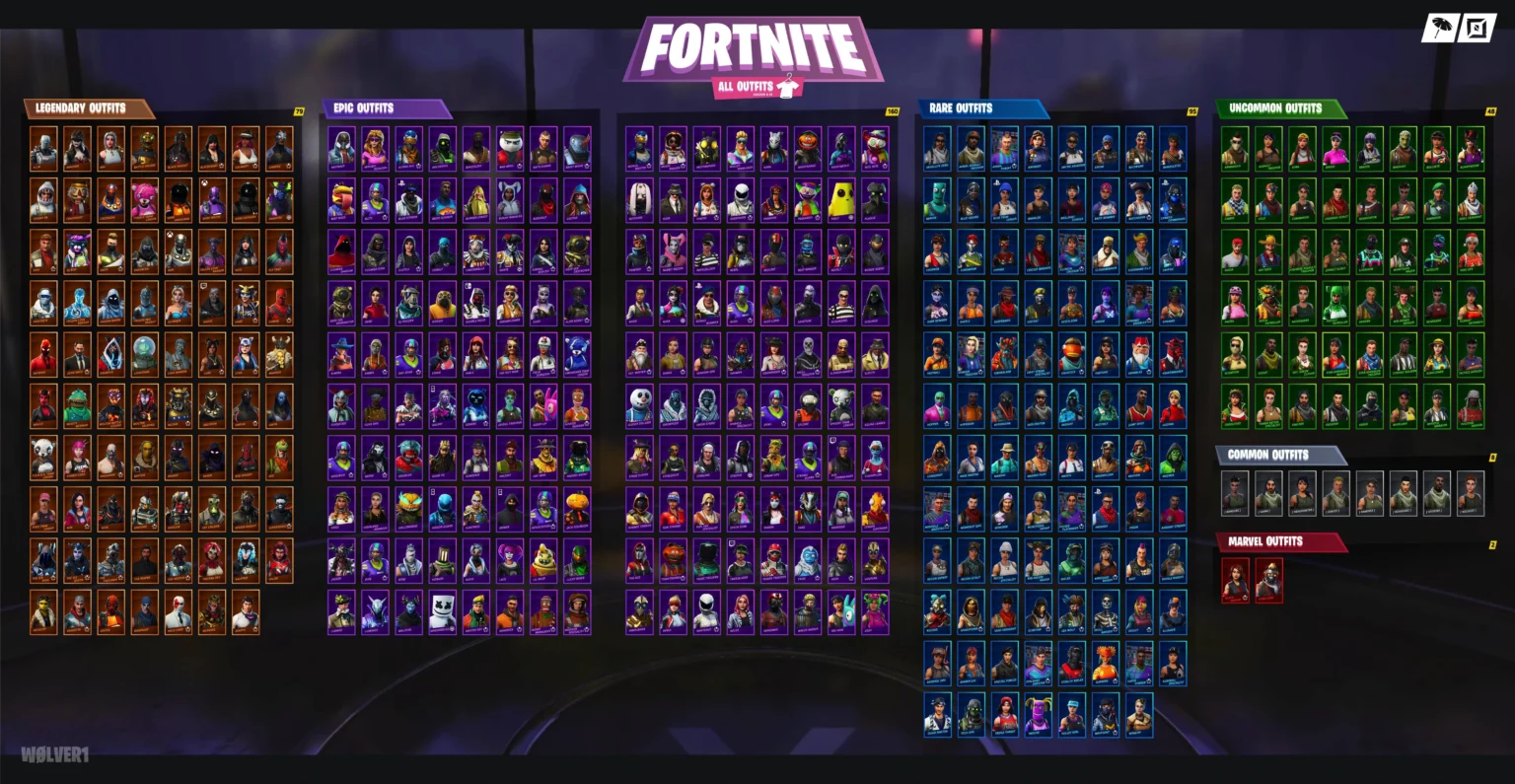
Before exploring specific categories, it is important to understand how Fortnite skins work.
Unlike weapons, items, or abilities, skins are purely cosmetic. They change the appearance of your character but do not provide gameplay advantages. This approach allows players to customize their experience while keeping matches balanced.
How Fortnite skins are released
Epic Games releases skins through several different methods:
- Item Shop releases;
- Battle Pass rewards;
- Fortnite Crew subscriptions;
- Special events;
- Limited-time collaborations;
- Promotional partnerships.
Because of this variety, collecting all skins in Fortnite is a difficult goal, especially because some cosmetics may not return after their original release.
Why Fortnite skins are so popular
Fortnite skins are more than simple character models.
For many players, skins represent:
- Personal identity;
- Favorite characters;
- Gaming history;
- Rare achievements;
- Community trends.
A player using an older skin may be showing a connection to an earlier Fortnite season, while newer collaboration skins often represent popular culture moments.
Fortnite Skins Categories Explained
The Fortnite cosmetic system includes several different categories, each with its own history and audience.
Understanding these categories makes it easier to explore Fortnite skins all collections.
Original Fortnite Skins
Original Fortnite skins are characters created specifically for the Fortnite universe.
These outfits often become some of the most recognizable faces of the game.
Examples include:
- Jonesy variants;
- Ramirez variants;
- Midas;
- Peely;
- Fishstick;
- Drift;
- Lynx.
These characters have become part of Fortnite’s identity and often appear in events, trailers, and storyline updates.
Storyline importance
Some original skins are connected to Fortnite’s ongoing narrative.
Characters such as members of The Seven, the Imagined Order, and other storyline groups became important parts of the game’s evolving universe.
This makes certain outfits valuable not only because of appearance but also because of their connection to Fortnite history.
Rare Fortnite Skins: The Most Desired Outfits
One of the biggest searches among collectors is rare Fortnite skins.
A rare skin usually does not mean it is stronger or better. Instead, rarity often comes from availability.
Why some skins become rare
A skin can become difficult to obtain because:
- It has not returned to the Item Shop;
- It was tied to an old Battle Pass;
- It was part of a limited event;
- It was connected to a discontinued promotion.
Because Fortnite has released cosmetics for many years, older outfits naturally become more difficult to find.
Examples of highly discussed rare skins
Some frequently mentioned rare outfits include:
- Renegade Raider;
- Aerial Assault Trooper;
- Black Knight;
- Galaxy;
- Special collaboration cosmetics.
However, rarity can change over time because Epic Games may bring older cosmetics back.
All Female Fortnite Skins: Popular Characters and Designs
The category of all female Fortnite skins is one of the most searched areas among players.
Female outfits have become popular because of their designs, customization options, and connection to Fortnite’s story.
Popular female Fortnite skins
Some well-known female outfits include:
- Lynx;
- Evie;
- Ramirez variants;
- Aura;
- Crystal;
- Jules;
- Lara Croft;
- Wonder Woman.
These skins represent different styles, from original Fortnite characters to crossover appearances.
Why female skins are popular
Players often choose female skins because of:
- Character design;
- Animations;
- Personal preference;
- Customization options;
- Competitive visibility preferences.
Since skins are cosmetic, the choice is completely based on individual style.
Fortnite All Evie Skins: Exploring the Evie Collection
Searches for Fortnite all Evie skins focus on one of the popular original Fortnite characters introduced during Chapter 3 Season 3.
Evie quickly became recognizable because of her futuristic design and customizable appearance.
Evie variants
Like many Fortnite characters, Evie received different styles and variations.
These versions allow players to customize:
- Colors;
- Clothing styles;
- Accessories;
- Visual themes.
The popularity of Evie shows how Fortnite transforms individual characters into recognizable parts of its cosmetic universe.
All Fortnite Crew Skins: Subscription Exclusive Outfits
The all Fortnite Crew skins category includes cosmetics released through Fortnite Crew, Epic Games’ monthly subscription service.
Fortnite Crew members receive exclusive benefits, including a monthly outfit bundle.
What makes Fortnite Crew skins different
Crew skins are attractive because they are connected to a specific subscription period.
Each month introduces a new character, making the collection different from regular Item Shop releases.
Benefits commonly include:
- Exclusive outfit;
- Matching cosmetics;
- V-Bucks;
- Battle Pass access.
Collecting Fortnite Crew skins
Players interested in collecting all Fortnite Crew skins need to follow monthly releases because these outfits are linked to specific subscription periods.
All Fortnite Icon Skins: Gaming, Music, and Celebrity Collaborations
The all Fortnite icon skins category represents one of Fortnite’s biggest connections with real-world personalities.
Icon Series skins bring creators, musicians, athletes, and entertainers into the game.
Examples of Icon Series skins
Popular Icon Series collaborations include:
- Ninja;
- Travis Scott;
- Ariana Grande;
- Marshmello;
- TheGrefg;
- Other creators and performers.
These skins allow fans to celebrate their favorite personalities inside Fortnite.
Why Icon Series skins matter
Icon skins demonstrate how Fortnite has expanded beyond being just a battle royale game.
The game has become a platform where entertainment, gaming, and digital culture meet.
All Fortnite Star Wars Skins: A Legendary Collaboration
The all Fortnite Star Wars skins collection is one of the most popular crossover categories.
The partnership between Fortnite and Star Wars introduced characters, cosmetics, events, and themed gameplay experiences.
Popular Star Wars skins
Some well-known Star Wars-inspired outfits include:
- Darth Vader;
- Anakin Skywalker;
- Obi-Wan Kenobi;
- Ahsoka Tano;
- Stormtrooper variants.
These collaborations attract both Fortnite players and Star Wars fans.
Why collaborations are important
Crossovers help Fortnite remain culturally relevant.
By introducing characters from famous franchises, Fortnite continues attracting new audiences while giving existing players new collectibles.
All The Seven Fortnite Skins and Their Importance
The all the seven Fortnite skins category focuses on one of the most important groups in Fortnite’s storyline. The Seven played a major role in several seasons and events.
Members of The Seven
The group includes characters such as:
- The Foundation;
- The Scientist;
- The Visitor;
- The Origin;
- The Imagined;
- The Order.
These characters became central to Fortnite’s lore.
Why The Seven skins are memorable
Unlike many cosmetic releases, The Seven skins are connected directly to Fortnite’s story. For many players, collecting these outfits means owning a piece of Fortnite’s history.
Fortnite Skins Collection
|
Skin Category |
Main Feature |
Examples |
|
Original Skins |
Fortnite-created characters |
Jonesy, Peely, Midas |
|
Rare Skins |
Limited availability |
Renegade Raider, Black Knight |
|
Female Skins |
Popular character designs |
Evie, Lynx, Aura |
|
Fortnite Crew |
Monthly subscription outfits |
Crew-exclusive characters |
|
Icon Series |
Real-world personalities |
Ninja, Ariana Grande |
|
Star Wars |
Franchise collaborations |
Darth Vader, Ahsoka |
|
The Seven |
Storyline characters |
Foundation, Scientist |
How to Get Fortnite Skins
Players searching for Fortnite skin names or Fortnite skins list often want to know how cosmetics can be obtained. There are several methods.
Item Shop
The Item Shop is the main way players purchase skins. However, availability changes regularly. A skin available today may disappear tomorrow and return months later.
Battle Pass
Many Fortnite skins were originally available through Battle Pass progression. These outfits are often considered valuable because they represent specific seasons.
Fortnite Crew
Subscription members receive exclusive monthly cosmetics. This is the main way to obtain Fortnite Crew outfits during their release periods.
FAQ
How Many Fortnite Skins Are There?
The exact number of Fortnite skins changes constantly because Epic Games continues releasing new cosmetics.
New collaborations, seasonal events, and original characters regularly expand the collection.
Therefore, any Fortnite skins database needs constant updates to remain complete.
Can You Collect All Fortnite Skins?
Collecting all skins in Fortnite is extremely difficult because the game has thousands of cosmetics released over multiple years.
Some skins require waiting for Item Shop returns, while others may no longer be obtainable.
For collectors, the challenge is not only purchasing skins but also tracking releases and availability.
Does Fortnite Skin Choice Affect Gameplay?
No. Fortnite skins are cosmetic only. They do not improve weapons, movement speed, health, or abilities. Players choose skins based on appearance, personal preference, and collection value.
Are rare Fortnite skins better?
No. Rare Fortnite skins are valuable because of limited availability, not because they provide gameplay advantages.
How many Fortnite skins are there?
The number changes constantly as Epic Games releases new outfits, collaborations, and seasonal cosmetics. The total includes original characters, crossover skins, and special collections.
What are the best Fortnite skins?
The best Fortnite skins depend on personal preference. Some players prefer rare outfits, while others choose Icon Series, collaboration characters, or designs that match their style.
What are Fortnite Crew skins?
Fortnite Crew skins are exclusive monthly outfits available through the Fortnite Crew subscription service, often including additional cosmetic rewards.
Are Star Wars skins still available in Fortnite?
All Fortnite Star Wars skins are not always available. Some return during special events or Item Shop rotations, while others may remain unavailable for long periods.
What are Icon Series skins in Fortnite?
All Fortnite Icon skins include outfits based on creators, musicians, athletes, and other real-world personalities who have partnered with Fortnite.
All Fortnite Skins: Build Your Collection and Play Smoothly
The All Fortnite Skins collection represents years of creativity, collaborations, and player customization. From rare classics and Battle Pass rewards to Icon Series and Star Wars collaborations, Fortnite offers one of the largest cosmetic libraries in gaming.
Whether you are collecting outfits, searching for your favorite character, or simply enjoying the latest releases, a stable gaming experience makes every match better.
Got questions or want to connect with other players? Join the conversation at the ExitLag Forum!


