The Apex Legends map rotation determines which battleground you can enter across Battle Royale, Ranked, Wildcard, and Mixtape playlists. Because the available maps change throughout a season and can cycle several times within a single day, knowing the current pool helps you prepare drop routes, rotations, Legend choices, and positioning before you queue.
Connection problems can make adapting to a new map even harder, especially when latency spikes appear during fights or long rotations. If that happens while following the Apex Legends map rotation, our guide to fixing lag in Apex Legends covers practical steps for diagnosing high ping, unstable connections, and network-related performance issues. Map knowledge and connection stability solve different problems, but both can affect how consistently you play.
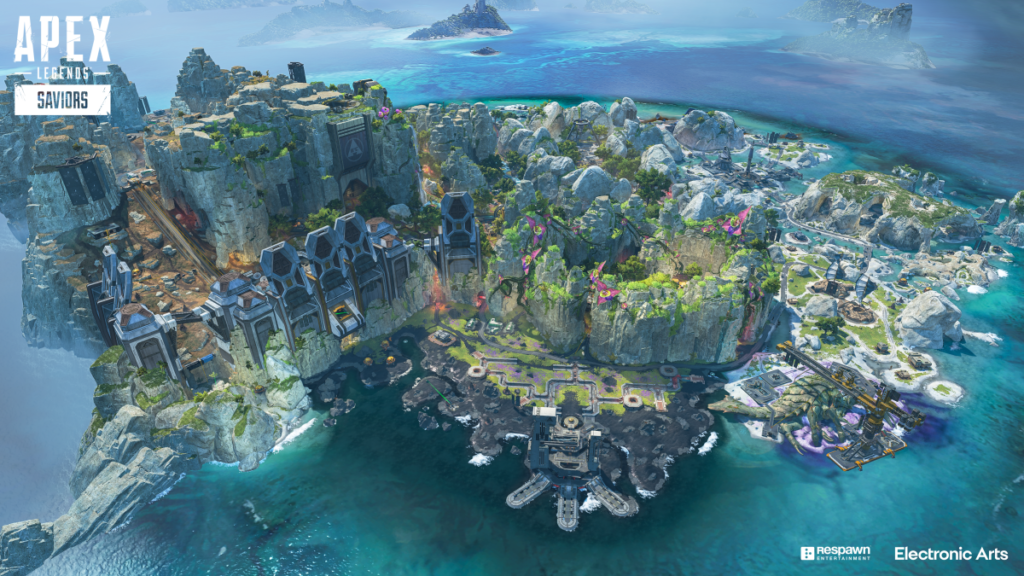
The current Apex Legends map rotation is also different from the one described in older seasonal guides. In Split 2 of Apex Legends: Marked, which began on September 15, 2026, World’s Edge, Olympus, and Broken Moon make up the official Battle Royale map pool for both public and Ranked matches, while Wildcard and Mixtape have their own separate selections.
What maps are in rotation in Apex Legends right now?
The current rotation depends on the playlist you choose. There is no single Apex map shared by every mode at all times.
For the second split of Marked, public Battle Royale and Ranked use the same three-map pool. Meanwhile, Wildcard cycles through different versions of maps, and Mixtape uses smaller locations designed for modes such as Team Deathmatch, Control, and Gun Run.
That means checking the Apex map rotation requires more than asking which Battle Royale map is active. You also need to know which playlist you plan to enter.
Current pubs and Ranked map pool
As of September 2026, the official map pool for public Battle Royale matches is:
| Mode | Current map pool |
| Pubs | World’s Edge, Olympus, Broken Moon |
| Ranked | World’s Edge, Olympus, Broken Moon |
These three Apex maps play very differently.
World’s Edge mixes dense urban points of interest with open terrain, chokepoints, vertical structures, and long sightlines. The map received another significant update for Marked, so returning players may notice changed areas and movement options.
Olympus is more open in many areas and rewards fast movement between points of interest. Tridents, open sightlines, elevated positions, and exposed transitions can make rotations especially important.
Broken Moon combines larger areas with structured routes and rapid traversal options. Knowing where teams are likely to move after the first ring can be just as important as winning your initial fight.
Because the same three maps appear in Ranked and Pubs during the current split, players can practice routes in casual Battle Royale before using them in more competitive queues.
Current Wildcard and Mixtape maps
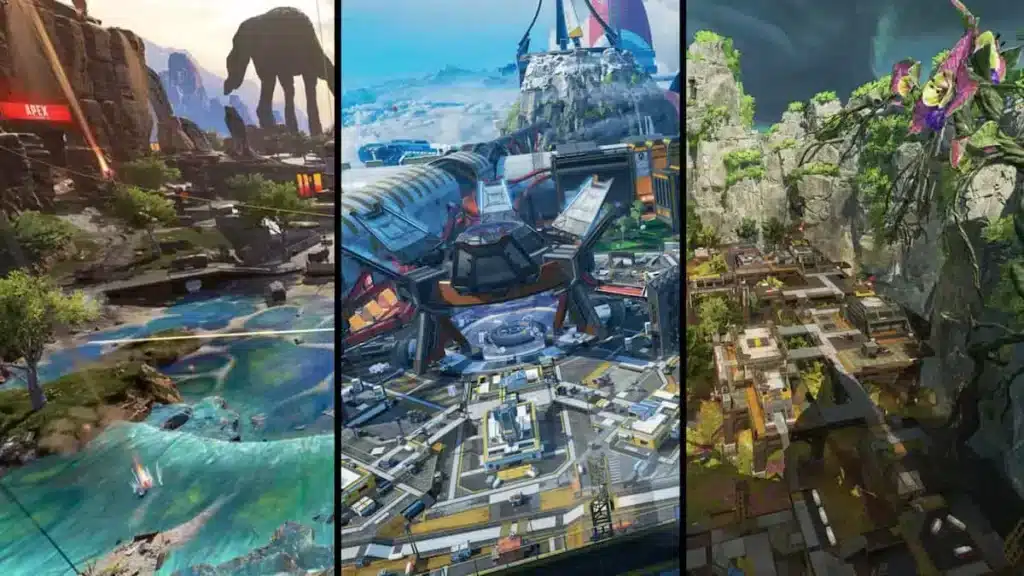
Wildcard follows its own Apex map rotation. During the current split, the playlist cycles through versions of King’s Canyon, Olympus, and District.
Mixtape works differently because the map is linked to the game mode. The current seasonal pool includes:
- Team Deathmatch: Fragment, Skull Town, Monument, and Estates;
- Control: Production Yard, Labs, Barometer, and Caustic Treatment;
- Gun Run: Monument, Estates, Fragment, and Skull Town.
These locations are smaller than full Battle Royale maps because Mixtape emphasizes repeated engagements rather than looting, ring management, and long rotations.
The choice of Legend can also feel different across these environments. A character who excels at controlling a small objective may play differently on a large Battle Royale map. For example, players experimenting with dimensional movement and repositioning can review our complete guide to Alter in Apex Legends before adapting her abilities to different terrain.
When you check the current Apex map, always confirm the mode as well. Seeing Fragment in Mixtape does not mean World’s Edge is necessarily the active Battle Royale map at that exact moment.
How does the Apex Legends map rotation work?
The Apex Legends map rotation is built from two related systems: the seasonal map pool and the shorter live rotation.
First, Respawn determines which maps are available for a playlist during a split or update. Those are the maps that can appear during that period. Then the game cycles between maps in that pool according to scheduled time windows.
This is why older guides that describe one Ranked map remaining active for weeks can be misleading. The selected pool may remain stable for part of a season, but the individual Apex map shown in the playlist can rotate much more frequently.
How often do pubs maps rotate?
During the current Marked split, public Battle Royale cycles between World’s Edge, Olympus, and Broken Moon in timed blocks.
Live rotation trackers currently show Pubs switching maps roughly every 90 minutes. However, this timing should not be treated as permanent because Respawn can change playlist schedules through patches, events, or seasonal updates.
The important distinction is that the pool and the active map are not the same thing.
For example:
- World’s Edge may be active now.
- Olympus may follow it.
- Broken Moon may appear next.
- The cycle can then return to World’s Edge.
The active Apex map rotation therefore changes during the day even when the seasonal pool itself remains unchanged.
Special events can also modify playlists. An event may introduce a temporary mode, alternate map version, or other variation without permanently changing the normal Battle Royale pool.
How often do Ranked maps rotate?
Ranked also rotates between the maps selected for the current split. During the current schedule, live tracking shows Ranked maps staying active for longer blocks than Pubs, with approximately four and a half hours per map.
That gives players more time to remain on the same battlefield during a Ranked session while still cycling between multiple maps throughout the day.
Ranked rotations matter because different maps reward different approaches. Your preferred drop point, crafting route, early-game fights, rotation timing, and final-ring positioning may all change when the map changes.
Respawn can adjust these systems between patches, so it is useful to review current Apex Legends updates and changes instead of relying on an old schedule indefinitely. A new patch can alter the map pool, individual points of interest, loot distribution, gameplay systems, or available playlists.
For that reason, any fixed Apex map rotation timetable should be treated as current information rather than a permanent rule.
Why does the Apex Legends map rotation matter for strategy?
Knowing which map is coming next does not automatically make you win fights. However, it lets you prepare for the environment instead of treating every match the same way.
Each map changes how squads approach movement, visibility, cover, third parties, positioning, and the distance between major points of interest. Learning those patterns makes the Apex Legends map rotation strategically useful rather than simply informational.
Even players who do not memorize every building can benefit from understanding which areas create long rotations and which maps encourage faster engagements.
Drop locations and early-game planning
A reliable drop strategy begins before your squad leaves the dropship.
On World’s Edge, you may prefer a location that gives access to multiple rotation routes rather than committing to a heavily contested point of interest. Olympus can require extra attention to exposed transitions between locations. Broken Moon may encourage you to think more carefully about the routes teams use to move quickly across the map.
When the Apex map rotation changes, review:
- your preferred landing zones;
- nearby loot routes;
- possible crafting locations;
- high-traffic chokepoints;
- evacuation options;
- nearby teams after the initial drop;
- likely paths toward the first safe zone.
This does not mean you need a completely different playstyle for every map. Instead, adapt the same fundamentals to the terrain.
A squad that understands its exit routes before a fight starts is less likely to become trapped by the ring or another team.
Legend selection and map movement
Different Apex maps can also change the practical value of Legend abilities.
Mobility Legends can help squads cross exposed terrain or take vertical positions. Controller Legends may gain value around defensible buildings and predictable chokepoints. Recon abilities can help when visibility or enemy movement becomes difficult to read.
However, map choice should not be the only factor behind Legend selection. Team composition, player familiarity, Ranked goals, and current balance changes are also important.
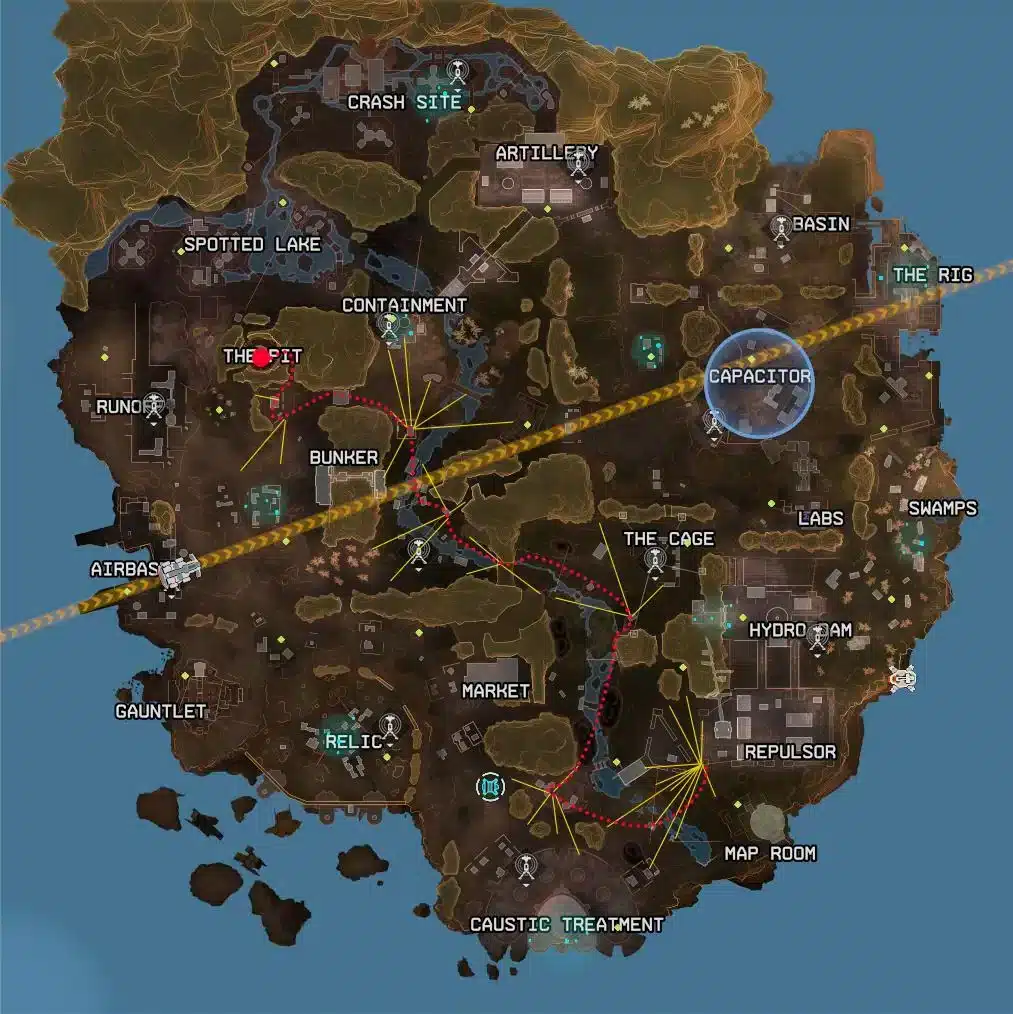
World’s Edge, Olympus, Broken Moon, King’s Canyon, Storm Point, and E-District are not interchangeable arenas. Their layouts create different encounter distances and movement patterns.
You can review the broader collection through the official Apex Legends maps hub, which covers the major Battle Royale environments even when some are outside the current rotation.
Players occasionally search incomplete phrases such as Apex Legends ma when trying to find the current map or a complete list. The useful distinction is whether you want the full collection of maps, the current seasonal pool, or the map that is live right now.
How can you track the current Apex map?
Because the active map changes during the day, a static article cannot permanently tell you which battlefield will be live at every moment.
Instead, use articles like this one to understand the current seasonal pool and combine that information with a live tracker when you need the exact active map.
This is especially useful if you only want to play a particular Apex map or if you are planning a Ranked session around maps you know well.
Check seasonal patch information first
Patch notes are the best place to confirm major rotation changes.
At the start of a season, split, or major update, Respawn normally identifies which maps are entering public and Ranked pools. Midseason patches can then change those selections.
For example, the Marked midseason update placed World’s Edge, Olympus, and Broken Moon in both the public and Ranked Battle Royale pools.
That seasonal information gives you the structure of the Apex Legends map rotation. However, it does not necessarily show which one is active at the exact minute you check.
This distinction is important when reading old guides. An article may correctly describe how a previous rotation worked while no longer reflecting the current pool.
Use a live rotation and server tracker
For the map that is active right now, a live tracker is more practical.
The Apex Legends Status live tracking tools provide current map information alongside broader Apex status data. That can help you check public matches, Ranked, Mixtape, and Wildcard without opening the game just to see the current rotation.
Live status tools are also useful when something feels wrong with matchmaking or connectivity. If many players are experiencing issues at the same time, checking Apex status can help distinguish a wider service problem from an issue limited to your own network or device.
Keep in mind that Apex Legends Status is a community-operated service rather than an official EA or Respawn website. It is useful for real-time tracking, but official announcements remain the best source for confirmed seasonal changes.
Using both approaches gives you a clearer picture: official information tells you which maps belong to the current pool, while live tracking tells you which Apex map rotation slot is active now.
What are the main Apex maps and how do they differ?
The complete Battle Royale map collection is larger than the current rotation. Maps regularly leave and return as Respawn updates seasons, events, and competitive pools.
Understanding the major environments makes it easier to return when an older map re-enters the Apex map rotation.
You do not need to memorize every point of interest. Start by understanding each map’s overall scale, movement style, and common types of engagement.
World’s Edge, Olympus, and Broken Moon
These three maps currently form the public and Ranked pool.
World’s Edge offers a mix of dense structures, lava-separated terrain, open zones, and major chokepoints. The Marked update also reworked parts of the map, so older routes may need adjustment.
Olympus has a clean, open design with large sightlines and fast traversal. Moving carelessly through exposed areas can leave squads vulnerable to long-range pressure.
Broken Moon contains large points of interest and multiple routes that encourage quick transitions between areas. Teams that understand likely movement paths can anticipate third parties more effectively.
Because these are the current Apex maps, learning at least two reliable drop zones on each one is useful for both Pubs and Ranked.
King’s Canyon, Storm Point, and E-District
Other maps remain important even when they are not part of the standard Battle Royale pool for the current split.
King’s Canyon is the original Apex Legends map and remains closely associated with compact engagements and frequent third-party fights.
Storm Point is considerably larger, with terrain that can create longer movement paths and more distant engagements.
E-District offers a dense urban setting with vertical structures, interior spaces, and different visibility challenges compared with the more open areas found on maps such as Olympus or Storm Point.
These maps can return in future rotations. That is why understanding the full map collection remains useful even when the current Apex Legends map rotation only uses three of them.
How can ExitLag help during the Apex Legends map rotation?
ExitLag does not change maps, control matchmaking, or determine which playlist is active. Its role is related to the network connection between your device and supported game infrastructure.
That means ExitLag should be considered separately from the gameplay mechanics behind the Apex map rotation.
Knowing the next map helps with preparation. Network optimization may help when the route used by your connection is unstable or inefficient.

When network routing affects an Apex match
Latency problems can become especially noticeable when a match requires precise movement, fast reactions, and reliable hit registration.
Possible network-related symptoms include:
- unusually high ping;
- sudden latency spikes;
- unstable routing;
- packet loss;
- connection interruptions.
ExitLag can help optimize network routes and may provide a more stable route depending on your ISP, region, destination server, and current connection conditions.
It does not guarantee lower ping, and it cannot fix every cause of lag.
If Apex status indicates a widespread server outage, for example, changing your route cannot restore a server that is unavailable. Likewise, ExitLag cannot increase FPS caused by hardware limitations or change the current Apex map.
What ExitLag can and cannot change
ExitLag focuses on connection routing.
It may be useful when your connection to Apex Legends takes an inefficient or unstable path. In those situations, testing an optimized route can help determine whether networking is contributing to the problem.
However, it cannot:
- select a preferred Battle Royale map;
- force a different Ranked rotation;
- change matchmaking;
- repair an EA outage;
- increase hardware-limited FPS;
- modify game balance;
- alter ring behavior;
- unlock Legends or cosmetics.
If your gameplay issue is connection-related, you can test ExitLag and compare the result with your normal connection. If the problem is caused by game servers, hardware, or an in-game mechanic, troubleshoot that specific cause instead.
FAQ about the Apex Legends map rotation
The map system changes often enough that older schedules can quickly become inaccurate.
These answers focus on the current structure while also explaining which details players should verify whenever a new patch or split begins.
What is the current Apex Legends map rotation?
As of Split 2 of Marked in September 2026, the standard public and Ranked Battle Royale rotation includes World’s Edge, Olympus, and Broken Moon.
Wildcard and Mixtape use separate map pools, so the current Apex map rotation depends on which playlist you select.
What is the current Apex map right now?
The exact active map changes throughout the day.
Use a live rotation tracker to see which Apex map is currently available and what is scheduled next. A seasonal guide can tell you the pool, but a live tracker is better for minute-by-minute information.
How often does Apex Legends change maps?
The interval depends on the playlist.
Under the current schedule, public Battle Royale maps rotate in shorter blocks than Ranked. Mixtape changes even more frequently because it cycles both maps and modes.
Respawn can adjust those timings, so do not assume they will remain identical after the next update.
Are Ranked and Pubs using the same maps?
Currently, yes.
Both standard public Battle Royale and Ranked use World’s Edge, Olympus, and Broken Moon during the current Marked split.
However, the active map and the amount of time it remains available can differ between the playlists.
Can you choose which Apex Legends map you want to play?
Normally, standard matchmaking does not let you freely choose any Battle Royale map from the complete collection.
You select the playlist, and the active map is determined by the current rotation. Waiting for the next slot is usually necessary if you want a different map.
Custom matches and special modes can operate differently.
Does Apex Legends Status show the next map?
Live tracking services can show the active map and upcoming rotation slots.
They can also provide broader Apex status information related to servers, matchmaking, logins, and reported connectivity problems. Because these services can update continuously, they are more useful for live scheduling than a static article.
Does ExitLag change the Apex Legends map rotation?
No. ExitLag does not control the map pool or matchmaking schedule.
Its purpose is network optimization. If your connection becomes unstable while playing different Apex maps, it may help optimize the route used by supported game traffic, depending on your network conditions.
Learning the maps, monitoring the schedule, and adapting your strategy are still up to you and your squad. Check the current rotation before playing, prepare your preferred drops, and use ExitLag when you want to test whether route optimization can improve connection stability during your sessions. Staying prepared for the Apex Legends map rotation means knowing both what battlefield is coming next and whether your connection is ready for the match.
All game images used in this article belong to their respective owners. They are used for informational and educational purposes only and do not imply endorsement or affiliation with the rights holders.
Got questions or want to connect with other players? Join the conversation at the ExitLag Forum!