Blast Furnace Minecraft is one of those blocks that feels “optional” until you build one, then you wonder why you ever smelted metal the slow way.
Because when you’re upgrading gear, smelting stacks of ore, or cleaning up a raid’s worth of armor drops, speed matters. And Blast Furnace Minecraft is basically the game’s shortcut for metal-related smelting.
So, what is Blast Furnace Minecraft? It’s a specialized smelter designed to process metal ores and metal gear faster than a regular furnace, helping you move from “resource gathering” to “building and upgrading” with less waiting.
If you’re trying to level up your tools, craft better armor, or keep your base workflow smooth, Blast Furnace Minecraft is one of the easiest quality-of-life upgrades you can make.
Blast Furnace Minecraft basics: why it matters for progression
A blast furnace is all about momentum. It helps you stay in the building loop instead of staring at a smelting timer.
In practical terms, it shines when your world hits that phase where iron and gold stop being “rare” and start being “required.”
What makes it different from a regular furnace
The regular furnace can smelt a lot of things. However, it does it at a standard pace.
A blast furnace focuses on metal categories only, and it’s built to do those jobs faster. That means it’s not a replacement for every situation, it’s a specialist tool that speeds up the most common upgrade materials.
When it’s worth crafting one
If you’re early game, you might not feel the need right away. Still, once you’re smelting iron for anvils, hoppers, rails, or tools, you’ll feel the slowdown.
As soon as you have a steady iron source (mining runs, caves, or even basic farms), Blast Furnace Minecraft becomes a “build it once, benefit forever” block.
Minecraft blast furnace vs furnace: speed, fuel, and limitations
If you’re deciding whether it’s worth the extra effort, think of it like this: a furnace is a general tool, while Minecraft blast furnace is a metal-focused upgrade.
That distinction matters because it changes how you organize your base and your smelting pipeline.
Smelting speed: what you actually gain
A blast furnace smelts eligible items faster than a standard furnace. So, even if the fuel cost per item stays familiar, the real gain is time.
That’s huge when you’re doing big batches, like turning ore into ingots for building projects or preparing gear before exploring.
What it cannot smelt (and why that’s useful)
Because it’s specialized, it won’t smelt food, glass, stone, or general blocks. At first, that sounds limiting.
However, that limitation is actually helpful. It prevents you from accidentally sending the wrong items into the wrong smelter when you start automating.
Before you automate, it helps to see the roles clearly:
| Smelter | What it’s best at | What it won’t do well | Best use case |
| Furnace | “Most items” smelting | Slower for metals | General base utility |
| Blast Furnace | Metal ores + metal gear | No food, no general blocks | Fast iron/gold workflows |
| Smoker | Food cooking | No ores/metal gear | Fast food prep |
Use that table like a base-planning cheat sheet. Once you separate roles, your storage and automation get cleaner and faster.
How to make blast furnace: materials, crafting, and placement tips
Crafting one isn’t hard, but it’s easy to waste time if you don’t gather the right items first. So, let’s keep it simple and practical.
To craft efficiently, prepare the materials before opening the crafting grid.
Blast furnace recipe: exact ingredients you need
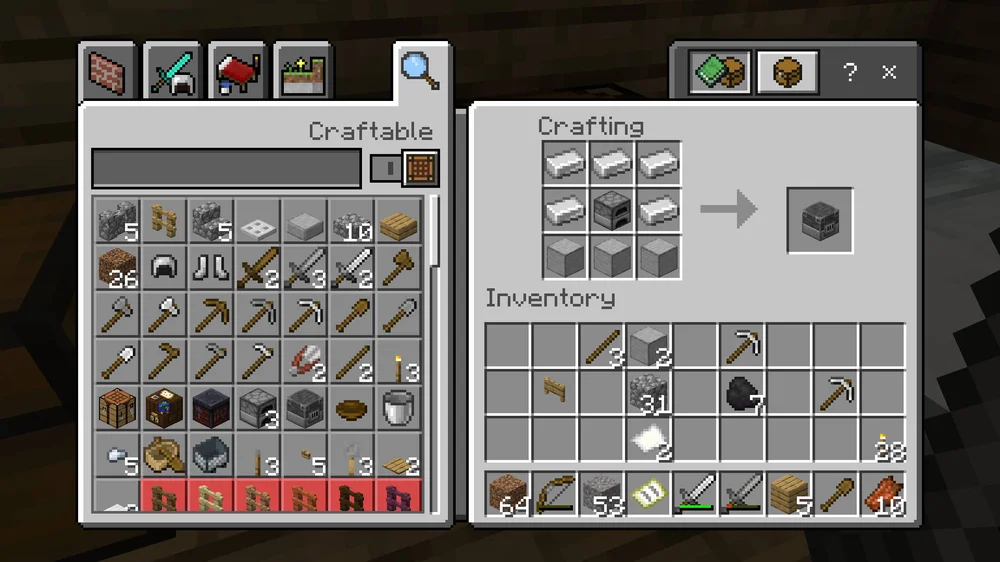
You’ll need these core components:
- 5 Iron Ingots;
- 1 Furnace;
- 3 Smooth Stone.
That combination is the classic blast furnace recipe and it’s designed to be early-to-mid game friendly.
Step-by-step crafting and where to place it
Once you have the materials ready, crafting takes seconds. The real question is placement.
Put it where you smelt metals most often—usually near storage, near your crafting area, or right next to your main furnace setup.
Here’s a clean, no-stress build flow:
- Smelt cobblestone into stone, then smelt stone into smooth stone;
- Craft a furnace if you don’t already have one;
- Combine iron ingots, the furnace, and smooth stone to craft the blast furnace;
- Place it near your ore/ingot storage to reduce running back and forth;
- Keep a fuel chest nearby so you can reload quickly during big sessions.
That’s it. Once it’s down, you’ll start using it constantly without thinking about it.
Blast furnace uses: what to smelt, what to skip, and why it’s faster
A blast furnace isn’t a “smelt anything” block. It’s a “smelt metals better” block.
So, the best approach is using it as your dedicated metal station while keeping a normal furnace for everything else.
Best items to smelt in a blast furnace
The biggest wins come from metal-related items, especially when you’re processing lots of them.
Here are smart targets for blast furnace uses:
- Iron ore and iron-related drops;
- Gold ore and gold-related drops;
- Metal tools and weapons you want to recycle;
- Metal armor pieces you don’t need anymore.
If your inventory is full after exploring, this setup turns clutter into usable resources faster.
Simple workflow tips that save time
A lot of players lose time not because smelting is slow, but because their workflow is messy.
To speed up your base loop:
- Keep ore and fuel in separate labeled chests;
- Smelt in batches instead of “one-off” loads;
- Convert output into blocks or storage immediately so it doesn’t pile up.
And if you’re building bigger projects, Blast Furnace Minecraft becomes one of the best “background tasks” while you craft, sort, and build.
Blast Furnace Minecraft automation: hoppers, chests, and clean smelting lines
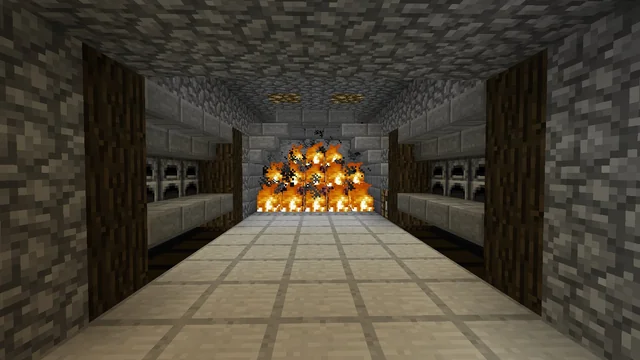
Once you’re past the “single chest base,” automation becomes the real game changer. And the blast furnace fits perfectly into that mindset.
Even a simple hopper setup can save you minutes every session.
Basic hopper setup that works in any base
The concept is easy:
- Inputs go in automatically;
- Fuel gets loaded automatically;
- Outputs get collected automatically.
Start small first. A simple line usually includes a chest, a hopper into the top for items, and a hopper into the side for fuel.
This is also where “specialized blocks” really shine, because your smelting line stays focused on metals only.
Scaling up for bigger projects
If you’re running mines, trading, or building huge rails and hoppers, you’ll eventually want multiple smelters.
At that point, you can:
- Run parallel blast furnaces for iron and gold batches;
- Keep a separate furnace line for stone/glass;
- And route outputs into storage automatically.
It’s not complicated, it just needs consistency.
Blast Furnace Minecraft performance tips: smoother multiplayer with ExitLag
If you mainly play solo, your smelting speed is your biggest bottleneck. But if you play online, stability can matter just as much—especially when you’re building, sorting, and hopping between farms in multiplayer worlds.
Because when your connection stutters, the game can feel delayed: blocks place inconsistently, interactions feel “off,” and shared sessions can become frustrating.
Why stable routing matters in online worlds
Minecraft multiplayer depends on consistent communication with the server. So, when you get spikes, jitter, or packet loss, you may notice:
- Delayed block placement or interaction timing;
- Rubberbanding while moving around builds and farms;
- Random freezes that interrupt crafting and inventory management.
That kind of inconsistency isn’t fun, especially when you’re doing precise building or large resource runs.
How ExitLag helps
ExitLag is built to improve route stability for online gaming by testing multiple routes and automatically selecting the most stable path. It’s designed to reduce issues like spikes and packet loss during online sessions.
Importantly, ExitLag is not a VPN. It doesn’t exist to change your location or hide your IP. Its focus is simply improving the quality of your route to the game server.
Also, ExitLag works on PC and supports mobile when the game is supported. It does not work on consoles like PlayStation, Xbox, or Nintendo Switch.
FAQ
If you’re building efficiently, these questions come up constantly. Here are fast, practical answers.
No. It’s designed for metal-related smelting only. For food, glass, or general blocks, use a furnace or smoker instead.
It’s better for metals, but not for everything. Think of it as a specialist that makes your metal workflow faster and cleaner.
The biggest benefit is time and workflow efficiency. If you batch smelt and organize storage, you’ll also feel more efficient overall.
Craft it as soon as iron becomes part of your daily crafting routine, and place it near your storage so you smelt while doing other tasks.
Upgrade your smelting, and your sessions, with ExitLag
A faster smelter makes your base feel smoother. A cleaner workflow makes your upgrades feel faster. And if you play online, stable sessions make everything feel more consistent.
To get the most out of your builds, your automation, and your time, Blast Furnace Minecraft is one of the smartest upgrades you can craft, and it pairs even better with reliable online performance.
Got questions or want to connect with other players? Join the conversation at the ExitLag Forum!