The Brawl Stars Championship is the clearest path from ranked ambition to official esports competition in Brawl Stars. For players who want to test themselves beyond ladder matches, it offers a structured route into qualifiers, monthly events, and the year’s biggest international stages. It is also one of the most visible mobile esports circuits, which makes preparation far more important than raw mechanics alone.
Mechanical skill is only part of the equation when the margins get tighter and every missed interaction matters. Players dealing with unstable matches or delayed responses should fix those problems early, especially by understanding what causes high ping in Brawl Stars before serious challenge runs begin. A cleaner connection gives your practice more value.
In 2026, the Brawl Stars Championship still follows a familiar road to the top, but Supercell has confirmed meaningful format updates. The season begins with the in-game Championship Challenge, runs through monthly regional competition, includes Brawl Cup and the Last Chance Qualifier, and ends with a 12-team World Finals. Supercell also announced a map pick system for 2026, refined bans, and a few qualification changes meant to streamline the route into competition.
That means the Brawl Stars Championship is no longer just about being good in ranked. You need consistency, drafting awareness, map preparation, and a real team process. If your goal is to take the Brawl Stars Championship challenge seriously, or even just follow the circuit more intelligently, this guide breaks down the current structure, how to enter, how to train, and what matters most in tournament play.
What is the Brawl Stars Championship?
The Brawl Stars Championship is Supercell’s official esports circuit for Brawl Stars. In 2026, Supercell describes the season as a two-split year with three LAN events, built around regional competition and a road that leads to World Finals. The company’s official 2026 overview also confirms that World Finals will feature 12 teams, while the Last Chance Qualifier will include 8 teams with 2 spots advancing to Worlds.
For players and fans, that structure matters because it changes how you should think about the season. It is not only one big tournament. It is a year-long competitive ladder with several checkpoints. Monthly results matter. Regional strength matters. International LAN performance matters. So when people talk about the Brawl Stars World Championships or broader Brawl Stars Championships, they are usually referring to the top end of this full circuit rather than one isolated event.
The 2026 season also adds strategic depth. Supercell has officially said that a map pick system will be introduced and bans will be refined with global match bans and visible match bans. That alone raises the skill ceiling for teams, because preparation now has to include more than just comfort picks.
At that point, following official updates becomes part of preparation, not just something for spectators. The official Brawl Stars blog is the best place to track format changes, event announcements, and competition-related updates without relying on secondhand summaries. For a team taking the season seriously, that matters.
Why this circuit matters for serious players
The official circuit gives players a measurable way to improve. Instead of guessing whether your team is good, you can compare results across qualifiers, monthly stages, and regional play. It also forces skills that casual ranked cannot fully teach, such as draft discipline, mid-set adaptation, and pressure management.
That is why preparing for the Brawl Stars Championship 2026 season should look different from simply grinding trophies. Competitive play rewards structure.
What changed for 2026?
Supercell’s 2026 overview highlights four especially important changes:
- A new map pick system
- Refined bans, including global and visible match bans
- Brawl Cup continuing as a major mid-year tentpole event
- Pro Rank qualification into Monthly Qualifiers being sunset, so everyone follows the same path into BSC
Those updates make tournament prep more merit-based and more strategic.
How do you join the Brawl Stars Championship?
If you want to compete, the official starting point is the in-game Brawl Stars Championship challenge. Supercell’s event site says players begin there and must get to 15 wins before 4 losses to qualify for the next stage. That is the first real gate, and it is much less forgiving than normal ranked sessions.
Supercell’s 2026 roadmap also states that the Spring Split kicked off on January 30 with the in-game Championship Challenge, and the February 2026 release notes confirmed BSC Challenges on February 27 to March 1 and March 27 to 29.
So, if you are trying to enter the Brawl Stars Championship, the first rule is simple: watch official timing closely. Missing challenge windows means missing your route in.
That is also why it helps to stay anchored to the official game ecosystem instead of fragmented community posts. The official Brawl Stars page gives a reliable central reference for the game itself, which is useful when event timing, access, and competitive interest all start overlapping. It keeps your preparation tied to the right source.
What is the first step to qualify?
The first step is the in-game challenge. The goal is official and clear: 15 wins before 4 losses. Supercell also notes that playing with friends improves your chances. That last part matters a lot, because coordinated teams usually outperform solo queue-style coordination under challenge pressure.
What happens after the challenge?
After the challenge, the path continues into qualifiers and monthly regional competition, then toward bigger international checkpoints later in the year. Supercell’s 2026 recap and February reports show the season moving through Monthly Qualifiers, Monthly Finals, Brawl Cup, LCQ, and World Finals.
What is the 2026 format of the Brawl Stars Championship?
The 2026 format is more structured than many players realize. Supercell’s official season preview describes it as two splits, three LANs, and a road to World Finals built around regular regional competition. World Finals will have 12 teams, Brawl Cup will have 12 teams, and LCQ will have 8 teams, with the top 2 from LCQ advancing to Worlds.
That makes the Brawl Stars Championship 2026 season a marathon, not a sprint. Teams need to think about long-term performance, not only one challenge weekend. Even early-season results matter because Supercell also said Brawl Cup offers an increased prize pool and BSC points, and can help regions earn extra World Finals or LCQ slots.
A concrete example of how active the circuit already is: Supercell announced Brawl Cup 2026 in Berlin, Germany, at the Uber Eats Music Hall from May 15 to 17, with 12 teams competing and viewership rewards available on the event site.
How important are Monthly Finals?
Very important. Supercell’s February 2026 recap says the first Monthly Finals of the season took place in East Asia and EMEA, with the top eight teams from Monthly Qualifiers battling for early BSC points. That means monthly results are not side content. They are core to the season’s hierarchy.
Why does Brawl Cup matter so much now?
Because it is not just a showcase LAN. It influences the larger season. Supercell explicitly says Brawl Cup awards BSC points and can help regions earn extra LCQ or World Finals slots. So mid-year performance has direct consequences on the global road to the Brawl Stars World Championships.
How should you prepare for competitive Brawl Stars?
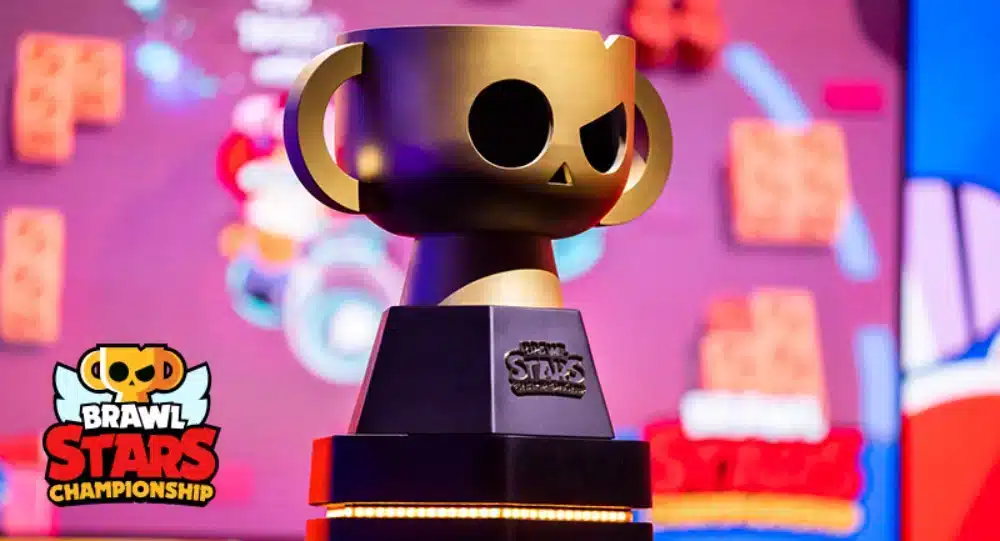
Once you understand the structure, preparation becomes more practical. The biggest mistake aspiring competitors make is training like ladder players instead of tournament players. Ladder rewards comfort and repetition. Official competition rewards planning, flexibility, and clean communication.
To prepare for the Brawl Stars Championship, focus on five areas:
- Draft and map knowledge
- Team communication
- Mode-specific structure
- Replay review
- Pressure management
The 2026 format changes make drafting even more important because of the new map pick system and more refined bans. So a team that only knows a few strong comps will be easier to target.
Build a map-based practice routine
Do not scrim randomly. Build sessions around maps and modes likely to matter. Practice:
- First-pick plans
- Counter-pick options
- Safe fallback comps
- Endgame decision-making on each map
With visible and global match bans becoming part of 2026 strategy, it is smart to train at least two comfortable looks per map rather than one predictable lineup.
That kind of flexibility gets easier when your team studies specific brawlers in depth instead of talking only in broad comp terms. A focused breakdown like this one on how Max works in Brawl Stars can help players think more clearly about mobility, tempo, and where certain picks create pressure in organized play. In a format with more drafting complexity, that extra detail helps.
Review games like a team, not like three individuals
After scrims or challenge runs, review together. Look for:
- Lost lane matchups
- Missed pinch timings
- Poor gadget or super trades
- Weak callouts
- Overcommits after an early advantage
Good teams improve faster because they review systems, not only aim.
What strategies help you win the Brawl Stars Championship challenge?
The in-game Brawl Stars Championship challenge is not identical to a full LAN stage, but it punishes the same weaknesses: bad coordination, panic drafting, weak map understanding, and tilt after one loss. Since you need 15 wins before 4 losses, your margin for error is thin.
That means challenge strategy should be conservative and disciplined. You do not need to prove you are flashy. You need to maximize win rate.
Prioritize stable comps over surprise picks
In challenge runs, reliable execution usually beats experimental drafting. Use comps your team actually understands. The safest structure is often:
- One lane you trust under pressure
- One flexible mid option
- One answer to popular comfort picks
This is more valuable than chasing every trend from social media.
Protect team mental after each set
The challenge is short enough that emotional collapse can ruin the whole run. Build a rule set before you start:
- No blame between matches
- Short review only
- Reset after every loss
- Keep comms specific, not emotional
Teams that stay calm preserve mechanics and decision-making deeper into the run.
Brawl Stars Championship predictions for 2026
The safest Brawl Stars Championship predictions are the ones based on official structure and early season signals, not hype alone. Since Supercell has made the 2026 format more strategic with map picks and refined bans, teams with deeper pools and cleaner prep should gain even more value than before.
Another signal is regional momentum. Supercell’s February 2026 recap shows East Asia and EMEA already active in Monthly Finals, with Zeta Division taking the first East Asia title of the season. That does not guarantee future dominance, but it does suggest that early structure and roster stability matter immediately in the new year.
So, the most reasonable Brawl Stars Championship predictions for 2026 are:
- Draft depth will matter more than last year
- Regions that adapt quickly to the new format will gain an edge
- Brawl Cup will influence Worlds more than casual viewers expect
- Teams with stable communication will benefit most from the tougher strategic layer
These are still inferences, but they are grounded in the official rule and format changes Supercell has already announced.
Which teams benefit most from the 2026 changes?
In general, structured teams with wider champion pools and strong staff support should benefit the most. The new format rewards preparation quality, not just raw mechanics.
What should fans watch for early in the season?
Watch for three things:
- Who adapts fastest to bans and map picks
- Which regions build consistency across Monthly Finals
- Which rosters look composed under pressure rather than only explosive
Those are usually better indicators than one highlight clip.
Execution still decides whether good prep actually turns into wins. If your matches feel inconsistent mechanically, it is worth looking at ways to improve FPS in Brawl Stars for smoother gameplay so your reads, movement, and reactions hold up better under pressure. In competitive play, small technical issues become big mistakes fast.
Why does ExitLag matter in the Brawl Stars Championship?
At high level, clean execution matters. In a game decided by tight spacing, fast reactions, and coordinated collapses, unstable routing can cost you crucial moments. ExitLag matters because it is designed to improve connection stability and reduce avoidable network problems during online competition.
That is especially relevant on the road to the Brawl Stars Championship, where your first steps happen online. Challenge matches, qualifiers, practice blocks, and review sessions all depend on stable performance from your connection, not only from your mechanics.
When does ExitLag help most?
ExitLag is most useful when you are dealing with:
- Lag spikes during challenge runs
- Unstable routing in ranked or scrims
- Inconsistent input feel across matches
- Team practice sessions where one player’s connection keeps breaking the flow
For a team trying to qualify, small interruptions add up fast.
Why should competitive players care?
Because online performance is part of competitive performance. If you are serious about the Brawl Stars Championship, you should remove as many avoidable problems as possible. Mechanics, comms, and preparation are still the core, but connection stability supports all three.
FAQ
The Brawl Stars Championship is Supercell’s official Brawl Stars esports circuit. In 2026, it includes the in-game Championship Challenge, regional monthly competition, Brawl Cup, LCQ, and a 12-team World Finals.
Supercell’s official event page says you need 15 wins before 4 losses to qualify from the in-game Brawl Stars Championship challenge.
Supercell confirmed a map pick system, refined bans with global and visible match bans, Brawl Cup as a major mid-year event, and a streamlined path where Pro Rank qualification into Monthly Qualifiers is removed.
Supercell announced that Brawl Cup 2026 will take place in Berlin, Germany, at the Uber Eats Music Hall from May 15 to 17.
According to Supercell’s 2026 overview, Brawl Cup features 12 teams, LCQ features 8 teams, and World Finals features 12 teams.
Only partly. Early predictions are best treated as informed guesses based on official format changes and first Monthly Finals results, not certainties.
Final thoughts on the Brawl Stars Championship
The Brawl Stars Championship is a much deeper competitive path than it first appears. To do well, you need more than aim and comfort picks. You need structured practice, calm communication, map-specific prep, and the discipline to treat every stage like part of a longer season. That is even more true in 2026, where Supercell has added more drafting depth and made the route feel more competitive from the start.
If your goal is to break into the Brawl Stars Championship, start with the official challenge, build a stable team environment, and prepare around maps and bans instead of only individual mechanics. And if you want fewer network issues while you grind qualifiers, scrim, and push through the Brawl Stars Championship season, use ExitLag to give yourself a smoother competitive experience.
Got questions or want to connect with other players? Join the conversation at the ExitLag Forum!