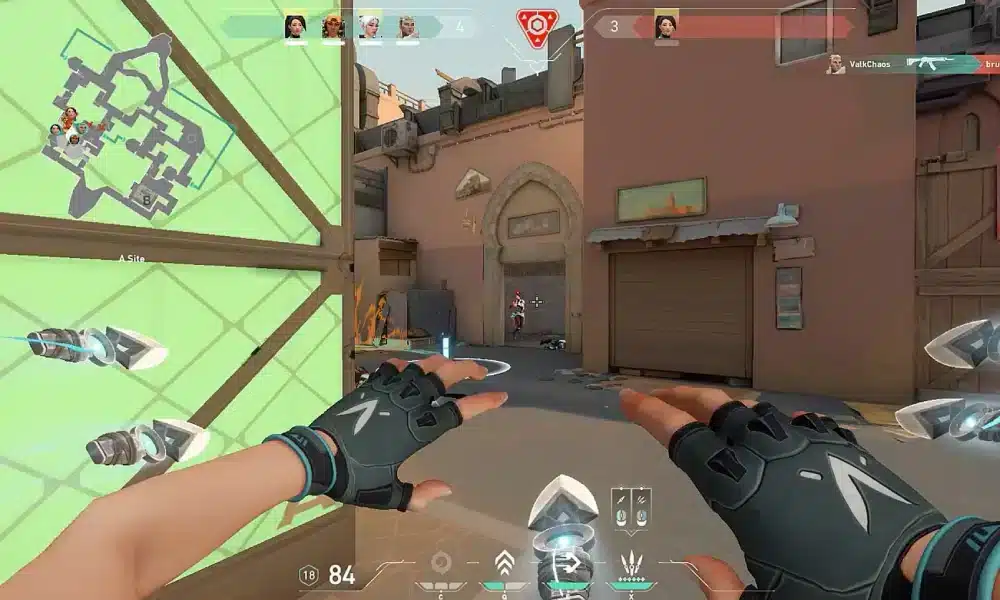
Since his debut, Chamber Valorant has stood out as the French sentinel known for combining elegance with deadly precision. His toolkit blends mechanical skill with strategic map control, making him a popular pick among players who favor calculated defense and impactful aim.
Moreover, Chamber’s unique playstyle shines when paired with low-latency performance. If you want to optimize your gameplay and reduce lag, check out this guide to improving ping in Valorant, which covers everything from settings to connection stability.
Ultimately, this Chamber Valorant guide will cover his origin, all abilities, meta changes, setups by map, and updated tips for mastering the agent in 2025 — including whether he’s still viable and how to get the most out of his tactical potential.

Chamber’s Abilities (Updated)
As a sentinel focused on precision and map control, Chamber Valorant has a unique toolkit that rewards sharp aim and strategic positioning.
Thanks to the current Chamber abilities Valorant, he can control space aggressively without relying solely on utility.
Although past Valorant Chamber nerf updates have changed his dominance, Chamber remains a deadly choice when used with the right timing and discipline.
Below is a breakdown of each ability and how it fits into his tactical identity.
Trademark (C)
To begin, Trademark is Chamber’s area control tool — a trap that scans for enemies and slows them on detonation.
Whenever an opponent enters its radius, it destabilizes the terrain, creating a field that hinders movement and reveals locations.
While other sentinels like Killjoy rely on setups, Chamber abilities Valorant let players control flanks while staying mobile.
This skill shines when paired with good map awareness and is key to the best Chamber setups Valorant.
Headhunter (Q)
Instead of a standard sidearm, Chamber equips Headhunter — a heavy pistol with pinpoint accuracy. Because each bullet must be purchased, managing economy is essential when using this skill effectively.
Moreover, in the hands of players who know how to play Chamber Valorant, this ability turns into a primary weapon. Its ADS (aim down sights) function adds consistency in medium-range duels, making it a core part of every Chamber Valorant guide.
Rendezvous (E)
Formerly one of his most controversial tools pre–Chamber buff Valorant, Rendezvous lets Chamber teleport between two anchors.
These anchors can be repositioned, offering fast rotations, escapes, or even aggressive peeks with a planned retreat.
Thus, this skill supports repositioning and makes Chamber incredibly hard to pin down, especially when anchoring sites. Among all Chamber abilities Valorant, this one defines his fluidity and creative potential.
Tour De Force (X)
Finally, Chamber’s ultimate — Tour De Force — summons a custom sniper rifle with devastating one-shot potential. Once it’s activated, any kill creates a lingering slow field, adding both impact and utility to each elimination.
Although this weapon mirrors the Operator, it has a faster equip time and higher mobility — perfect for aggressive defenders.
Consequently, this ultimate is key to how to play Chamber Valorant in clutch rounds or when economy is tight.
The True Radiant Chamber Guide!
Recent Buffs and Nerfs
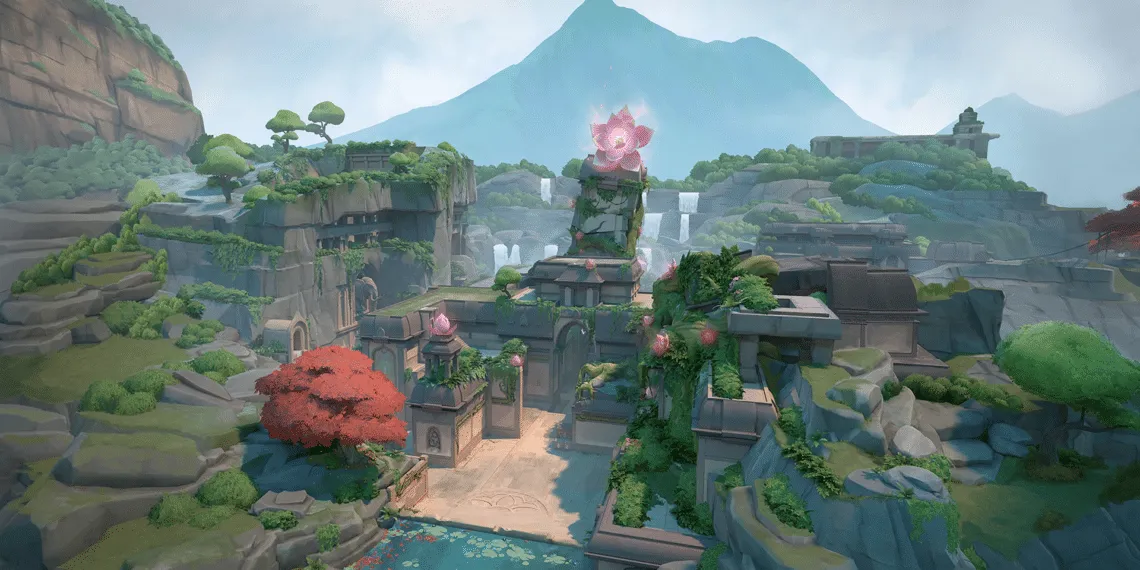
Below is a detailed timeline of the most relevant Chamber buff Valorant and Valorant Chamber nerf updates, followed by how these adjustments reshaped his place in the competitive meta.
Patch History: Chamber Buffs and Nerfs
Patch 3.10 – November 16, 2021
- Chamber is officially added to the agent roster.
- Initial kit introduced with high-impact teleportation, traps, and a sniper ultimate.
Patch 4.09 – May 10, 2022
- Trademark trap count reduced from 2 to 1.
- Trap activation time increased slightly, weakening his site control.
Patch 5.12 – December 14, 2022
- Major nerfs to all Chamber abilities valorant:
- Rendezvous: reduced to one anchor, increased cooldowns, limited radius.
- Trademark: activation delay increased, range restricted, reduced slow.
- Tour de Force: fire rate reduced from 0.75 to 0.7, less slow duration.
- Headhunter: recoil added, especially during spamming.
- Considered the largest Valorant Chamber nerf to date.
Patch 8.03 – February 21, 2024
- Chamber buff Valorant includes:
- Headhunter cost reduced from 150 to 100 credits.
- Tour de Force fire rate increased from 0.7 to 0.9.
Patch 9.05 – September 10, 2024
- Rendezvous teleport radius increased from 13m to 18m.
- Improved anchor pickup responsiveness.
Patch 10.01 – April 9, 2025
- Trademark slow duration slightly increased by 0.25 seconds.
- Minor visual clarity added to trap range and slow zone.
Impact on Chamber's Meta Usage
Immediate Decline Post-Nerf (2023)
Following the patch 5.12 Valorant Chamber nerf, Chamber’s pick rate dropped drastically in ranked and pro play.
Most players pivoted to agents like Cypher and Killjoy who offered more consistent utility without mobility loss.
Strategic Return After Buffs (2024)
After the buffs in patches 8.03 and 9.05, players began integrating Chamber again into aggressive defender setups.
Lower Headhunter cost allowed for eco-round flexibility, while enhanced Tour de Force restored some long-range power.
Current Meta Viability in 2025
As of patch 10.01, Chamber Valorant is situational but viable in maps favoring long sightlines like Pearl and Icebox.
While no longer the overpowered sentinel of 2022, his current kit rewards players with strong aim and map control understanding.
Summary: Chamber’s Role After Adjustments
- Strengths restored:
- Cost-efficiency with Headhunter.
- Sniping threat via Tour de Force.
- Moderate trap control with updated Trademark.
- Weaknesses introduced:
- Limited repositioning tools post-nerf.
- Reliance on mechanics rather than utility uptime.
- High skill requirement in trade for mobility and aim-heavy value.
Overall, the Chamber buff Valorant updates in 2024–2025 refined his role as a precision sentinel.
Still, the lingering effects of the Valorant Chamber nerf mean he fits best in coordinated comps or with specific best Chamber setups Valorant built around early picks and safe repositioning.
How to Play Chamber by Map: Setup Guide for Competitive Play

When using Chamber Valorant effectively, your success depends on smart positioning and trap placement tailored to each map.
Because he excels at holding angles and anchoring sites, choosing the best Chamber setups Valorant makes a significant difference in both solo queue and team environments.
Chamber on Ascent: Mid Control and A Site Defense
Since Ascent favors mid presence, Chamber can dominate by locking down rotations and creating safe escape routes.
For an optimal setup, place Trademark in A Main or Catwalk and use Rendezvous anchors between A Tree and Heaven for fast retreats.
- Trap spot: A Main near barrier — slows early pushes.
- Teleport anchors: One in A Tree, one Heaven — ensures quick fallback.
- Sniper angle: A Heaven onto A Main or B Market peek from Defender Spawn.
This map benefits from the full range of Chamber abilities Valorant, especially when denying early aggression and resetting duels.
Chamber on Icebox: Verticality and Long Angles
Although Icebox is fast-paced, Chamber thrives when controlling long sightlines like B Long and Mid.
Place Trademark near Tube or on B Green while your Rendezvous anchors connect Snowman to Yellow or Kitchen.
- Trap spot: Tube entrance or Mid Orange — counters flanks.
- Teleport anchors: Yellow to Snowman or Kitchen — vertical coverage.
- Sniper angle: B Green behind Snowman, or Mid Top peeking Tube.
Because Icebox has several layered angles, these best Chamber setups Valorant give Chamber the space and time to reposition and punish peeks.
Chamber on Lotus: Rotations and Delay Utility
Given Lotus’s three-site layout, Chamber can anchor A or C with a passive-aggressive playstyle.
Place your Trademark at A Main or C Mound while using Rendezvous between safe backline and site entrances.
- Trap spot: A Main entry or C Mound — ideal for stalling pushes.
- Teleport anchors: C Hall to Spawn, or A Link to Tree — flexible rotation.
- Sniper angle: C Site to Mound peek, or A Tree crosshair hold.
Due to frequent rotations, Lotus rewards agents with adaptable tools, and knowing how to play Chamber Valorant here relies on pre-emptive setups and map knowledge.
Tips for Optimizing Chamber Setups
Because Chamber Valorant now demands more precision after previous Valorant Chamber nerf, every placement must be deliberate.
Follow these universal tips for improving your map-specific executions:
- Avoid overly aggressive trap spots — favor concealed, high-value areas.
- Use Rendezvous to hold off-angles, not just retreat paths.
- Pair your setups with utility from teammates like Fade or Skye for info.
- Reset teleport anchors each round to stay unpredictable.
When mastering how to play Chamber Valorant, understanding timing and spacing is as crucial as aim.
Is Chamber Still Viable in the Meta?
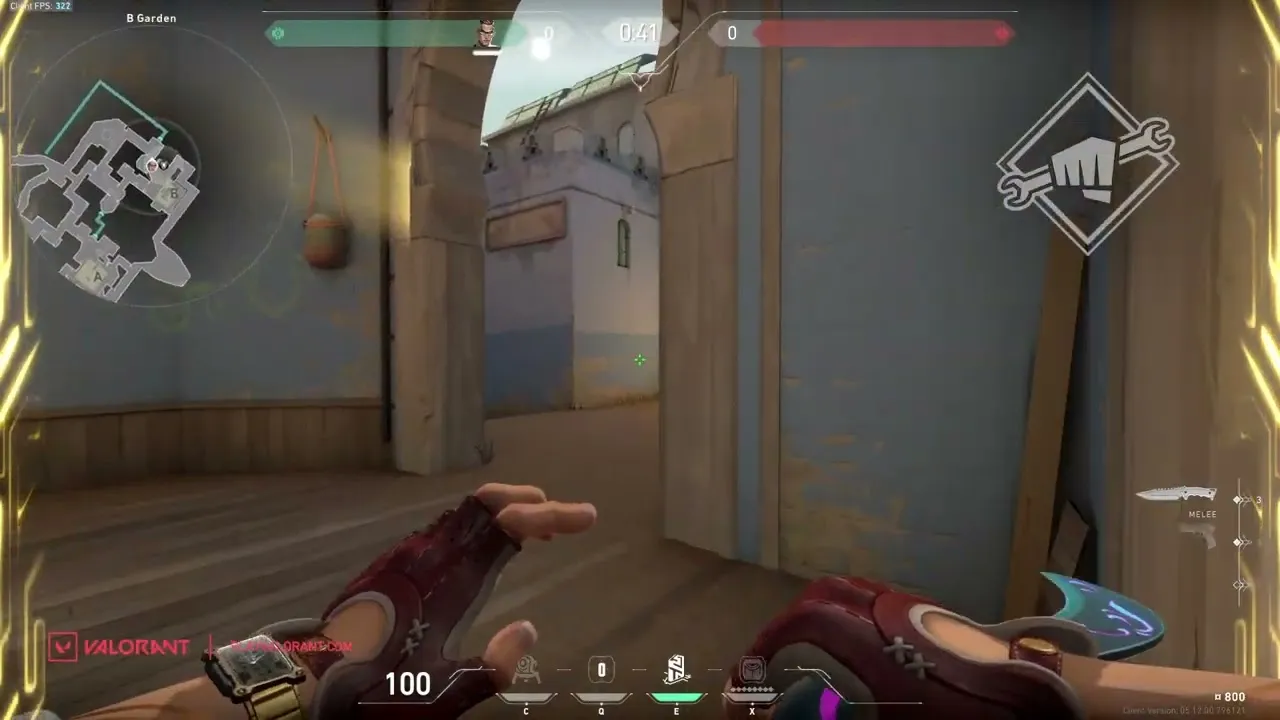
While Chamber Valorant was once a dominant force in pro play, recent changes have shifted his standing, leading players to question is Chamber still good Valorant in 2025.
Yet, in the right hands and specific team compositions, Chamber remains a valuable sentinel — especially for players who favor mechanical precision and map control.
Current Pick Rate and Competitive Presence
Although his pick rate dropped after the Valorant Chamber nerf, Chamber is still actively used in ranked and certain pro-level comps.
According to Blitz.gg and Valorant Tracker, his global pick rate in Ranked sits around 4–6%, with spikes in maps like Ascent and Icebox.
- In high-elo lobbies, Chamber is picked more by one-tricks or snipers.
- In team play, he's often preferred over Killjoy when mobility is prioritized.
Therefore, while not the meta default sentinel, Chamber Valorant still fits niche playstyles and strategies.
Ideal Scenarios and Player Profiles
Since Chamber no longer dominates through sheer utility, his value shines in maps with long angles or when holding off-sites.
He is especially strong for players who are confident with precision aim and rely on sharp positioning over area denial.
- Best scenarios: Defense on Ascent A or Lotus C; attack-side lurks with teleport escape.
- Ideal player type: Tactical anchors, high-AWP impact fraggers, or snipers who want mobility over stall tools.
Unlike Killjoy or Cypher, Chamber thrives when played proactively — not just passively locking sites.
Effective Agent Combos and Team Synergies
Because Chamber Valorant lacks recon tools, his setups perform best when paired with agents who provide information or zone denial.
Combining him with initiators or controllers that extend his vision control boosts both his survivability and kill potential.
- Chamber + Fade: Prowler clears allow safe peeks for Headhunter or Tour de Force.
- Chamber + Omen: Smokes enable repositioning with Rendezvous without being exposed.
- Chamber + KAY/O: Suppression and flashes open space for Chamber to anchor or retake.
Is Chamber still good in Valorant in 2025?
Yes, Chamber remains a viable sentinel in Valorant, especially for players with strong mechanical skills.
While past nerfs limited his dominance, recent balance patches have adjusted his mobility and utility, making him a niche pick for defensive control with aggressive potential.
His teleport repositioning and lethal headshots are still powerful in ranked and coordinated team setups.
See current pick rates and win rates for Chamber on Blitz.gg.
What are Chamber’s current abilities?
Chamber has four distinct abilities that blend precision, control, and mobility, crucial for area denial and isolated eliminations.
- Trademark (C): Deploys a trap that scans for enemies and slows them on detection.
- Headhunter (Q): Equips a high-accuracy pistol with ADS capability.
- Rendezvous (E): Deploys two anchors that allow instant teleportation between them.
- Tour de Force (X): Ultimate sniper rifle with one-shot kills and a slow field on elimination.
You can view the full ability details and cooldown info on Valorant Fandom.
How to play Chamber on each map?
To play Chamber effectively, you must position your Trademark traps and Rendezvous anchors with purpose, allowing for rapid escape or re-engagement.
Examples by map:
- Ascent: Place Trademark on B Market and anchor in Switch to hold Mid. Rotate safely via teleport if pressured.
- Icebox: Use Rendezvous between A Rafters and Nest to control vertical space and maintain angle safety.
- Lotus: Set up traps on rotating doors and teleport between A Drop and Tree for dynamic site control.
For optimized plays, see setups and map guides from Blitz.gg Chamber setups.
What setups work best for Chamber?
The best Chamber setups depend on map layout, enemy push tendencies, and your team's composition. Ideal setups prioritize:
- Holding chokepoints using Trademark on flanks and high-traffic paths
- Safe repositioning with Rendezvous in off-angles that allow fast retreats
- Aggressive picks by combining Headhunter with teleport for early duels
On Haven, place Rendezvous on B Site boxes and Garage for flexible rotates. On Split, set up Trademark near Ramps and teleport from Heaven to Screens.
Check detailed setups on Valorant Chamber Guide – Fandom or watch pro matches via Riot's VCT content.
What were the recent Chamber buffs or nerfs?
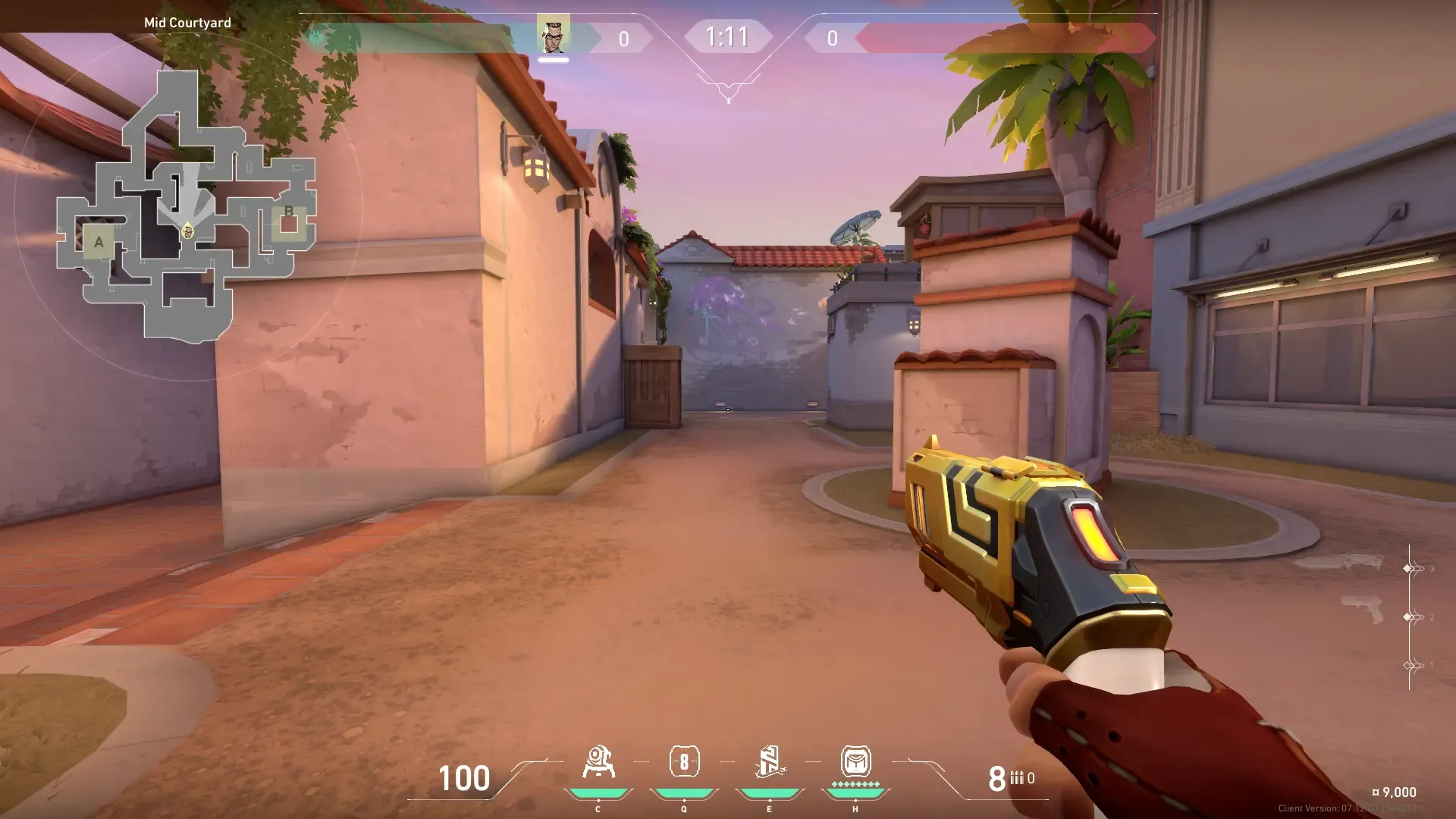
Chamber’s most impactful changes occurred between 2022 and 2024, but his Patch 9.05 in 2024 included a buff:
Recent Buffs (Patch 9.05 – Sep 2024):
- Rendezvous radius increased from 13 m to 18 m
- Reduced delay on anchor reactivation
Past Nerfs (Patch 5.12 – Dec 2022):
- Trademark limited to single trap
- Tour de Force fire rate reduced
- Rendezvous anchor became destructible and had slower recall
Read full patch notes from Riot Games official updates.
Ready to Master Chamber in Your Next Ranked Game?
Whether you’re holding angles with deadly precision or anchoring a site with tactical traps, mastering Chamber can offer a serious edge in competitive play.
To fully unleash his potential, practice the best setups and positioning on maps like Ascent and Lotus, and focus on perfect timing for teleport and shots.
For optimal performance, ensure your connection is as sharp as your aim — use ExitLag to reduce ping, eliminate lag spikes, and maintain perfect timing in every duel.
After all, connection stability can be the difference between a clutch win or a missed opportunity — especially when playing Chamber Valorant.
TRY EXITLAG FREE