Haven Valorant is a three-site map that rewards information, disciplined rotations, and the ability to change plans before a round becomes predictable. Attackers can pressure A, B, and C, while defenders must protect more territory than they would on a standard two-site layout.
Players learning Haven Valorant should first understand VALORANT’s economy, movement, shooting, abilities, and round structure. The complete guide to playing VALORANT explains those fundamentals before you begin memorizing site executions, defensive setups, and post-plant positions on a specific map.
Haven Valorant is difficult because every decision affects several areas at once. Giving up Garage can expose C, losing Mid can create pressure on B and both links, and rotating too early may leave the opposite side of the map completely open.
What makes Haven different from other VALORANT maps?
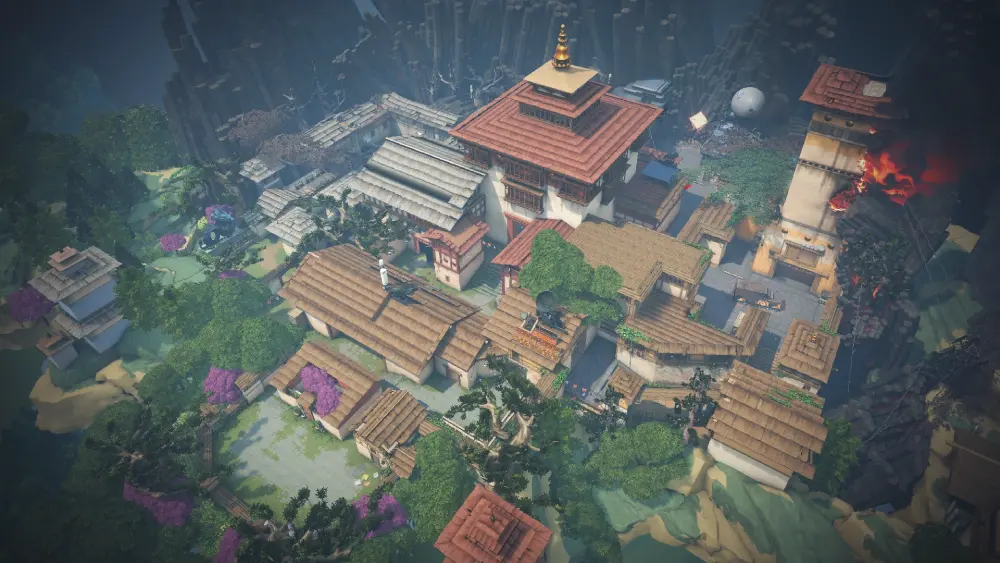
Haven is best known for its three Spike sites: A, B, and C. This layout forces defenders to spread their resources across a wide area and gives attackers several ways to create uncertainty.
However, Haven is no longer the only three-site map in VALORANT. Lotus also uses three sites. What makes the Haven map Valorant experience distinctive is the combination of long exterior lanes, a compact central site, Garage control, and fast internal rotations through Defender Spawn and the two link areas.
How the three-site layout changes each round
On a two-site map, defenders can often place two players on each site and leave one player responsible for Mid or flexible support. Haven makes that structure harder to maintain.
A common defensive starting arrangement may include:
- Two players near A;
- One player around B or Mid;
- One player in Garage;
- One player near C.
This setup covers the initial approaches, but it can also leave individual defenders isolated. Attackers who identify the solo player can use several abilities together and overwhelm that position before support arrives.
The three-site design also makes fakes more convincing. Attackers can show utility at A, make noise around C, and finish through B before defenders fully understand the plan. Even a small amount of pressure can force movement because defenders cannot afford to ignore any site.
The Valorant Haven layout therefore rewards teams that collect information without immediately surrendering space. A defender who sees one smoke and rotates across the map may create the opening the attackers wanted.
Attackers face their own challenge. More options can lead to indecision. A team that repeatedly walks between sites without controlling key areas may run out of time and be forced into a predictable final push.
What are the most important Haven callouts?
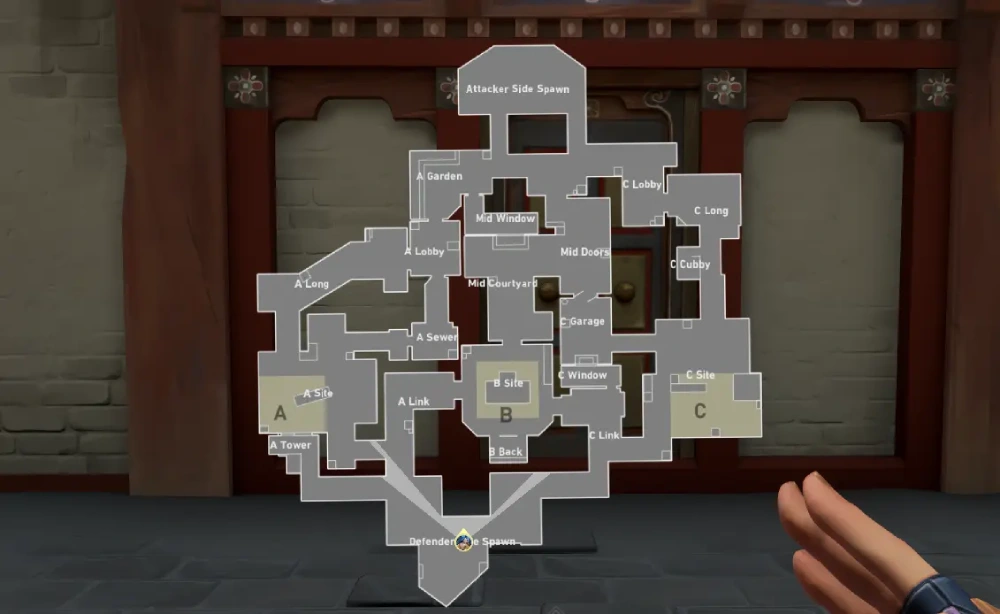
Clear callouts help teammates react without needing a long explanation. Exact terminology can vary between regions and groups, but most players recognize the following areas:
| Area | Common callouts |
| A side | A Long, A Lobby, A Short, Sewers, A Site, Hell, Heaven, A Link |
| Middle | Mid Courtyard, Mid Window, Mid Doors, B Site, A Link, C Link |
| C side | Garage, Garage Window, Garage Doors, C Long, C Lobby, C Site, Platform |
| Defender area | Defender Spawn, CT, A Link, C Link |
A Long provides a direct exterior route toward A. A Short, often called Sewers, creates another approach and allows attackers to split the site from two directions.
B is located in the center. It is compact and can be reached quickly from Mid, but planting and holding it can be difficult because defenders may retake through several nearby entrances.
Garage connects the central portion of the map to C. Controlling it gives attackers another route toward C Site and prevents defenders from using the room freely for information or rotations.
C Long creates a narrow approach with a long sightline. Attackers must clear common Operator angles and close positions before entering the site safely.
New players can review the VALORANT beginner’s guide for more help with communication, ability usage, crosshair placement, and basic team roles. These fundamentals make learning the Haven Valorant map much easier than trying to memorize isolated lineups without understanding why they work.
How should attackers play Haven in VALORANT?
Attackers should use Haven’s size to stretch defenders and create incomplete information. A successful round does not always begin with a five-player rush. Often, the strongest opening involves controlling several areas while preserving the option to finish on any site.
The goal is not to fight everywhere simultaneously. Instead, attackers should collect space, draw out defensive utility, and identify where the defense is weak.
Control Garage and Mid before committing
Garage is one of the most valuable areas on the Haven map Valorant teams must understand. It sits between Mid and C, making it important for C splits, rotations, lurks, and defensive information.
Attackers can pressure Garage with recon, flashes, stuns, damaging utility, or carefully coordinated peeks. Once they control the room, defenders must consider several threats:
- A Garage-to-C split;
- A lurker moving through Garage;
- Pressure on C Link;
- A fast transition toward B;
- A late flank after defenders rotate.
Mid control creates similar uncertainty. Attackers near Mid Window and Courtyard can threaten B, pressure Garage Doors, or move toward the link areas after gaining space.
However, control does not mean taking every duel. Sometimes, forcing defenders to use smoke, recon, traps, or crowd-control abilities is already valuable. Attackers can then leave the area and execute elsewhere while those abilities are unavailable.
A strong Valorant Haven attack frequently combines one player maintaining pressure with four players preparing the main execution. The lurker must communicate clearly and avoid dying without creating value.
Use fakes and delayed rotations
Haven offers enough distance between A and C to make rotations costly. Attackers can exploit that distance by showing believable pressure before changing direction.
A convincing fake may include:
- An initiator ability that reveals or clears the site;
- A Controller smoke placed in a normal execution position;
- Footsteps or weapon fire from multiple players;
- A Duelist threatening an entry;
- A pause that gives defenders time to rotate.
The team does not need to spend every ability. The objective is to make defenders believe a commitment is happening.
After the fake, attackers should rotate with purpose. Moving slowly through unsafe territory can allow defenders to recognize the plan and return before the Spike reaches the other site.
Information is equally important. If a defender pushes the opposite side and discovers the rotation, the fake may fail. Sentinels, utility, and a disciplined lurker can protect the team from that information.
The best Haven Valorant map strategies also adapt to patterns. If defenders rotate immediately every round, use more fakes. If they remain anchored, group for a stronger site execution.
How do you attack A Site?
A Site can be entered through A Long and A Short. A split is generally harder to stop than a single-lane push because defenders must watch several angles.
Before entering, attackers should account for:
- Long-range defenders near Heaven or the back of site;
- Close positions around Short;
- Players behind site boxes;
- Utility delaying the plant;
- A defender positioned in Hell;
- Fast support arriving through A Link.
Controllers can block Heaven and Defender Spawn or A Link, depending on the execution. Initiators should clear close corners and common defensive positions before the Duelist enters.
The Spike carrier should understand the intended post-plant. A plant exposed to A Long may support long-range lineups and weapon fights, while another position may offer more protection during the initial plant but create a weaker post-plant angle.
After planting, attackers should avoid standing together. Spread across Long, Short, site, and nearby safe positions so one piece of utility cannot remove the entire team.
How do you attack B Site?
B is the fastest site to reach from Mid, but it is also difficult to hold. Defenders can enter through A Link, C Link, and the central approaches.
A B rush can work when defenders use weak Mid utility or repeatedly leave the site empty. Nevertheless, attackers must plan for the retake before planting.
A typical execution may use smokes on both links while utility clears the site. The entry player creates space, and the Spike is planted before defenders can surround the area.
The team should then decide whether to:
- Remain on site and fight;
- Fall back toward Mid;
- Control one link aggressively;
- Use post-plant utility from a protected position;
- Push through a link before defenders organize.
B becomes dangerous when attackers plant and then stay in the same small area. Defenders can combine flashes, damaging abilities, and coordinated swings from several entrances.
How do you attack C Site?
C can be attacked through C Long, Garage, or both. A split forces defenders to divide their attention and can remove common positions from multiple angles.
C Long must usually be cleared carefully because Operators and rifles can hold the narrow lane. Smokes, flashes, recon, or movement abilities can reduce the risk of crossing into the site.
Garage control makes the execution stronger. Attackers can pressure the defender near Garage Window, move through the doors, and threaten the back of C or C Link.
The VALORANT ranked tips and strategies guide can help players convert map knowledge into better competitive decisions. On Valorant Haven, coordinated timing and communication are usually more valuable than knowing a complicated lineup that the rest of the team cannot support.
After the plant, C Long is a powerful post-plant area, but it can become predictable. Mix positions between Long, site, Garage, and Platform while maintaining angles that allow teammates to trade kills.
How should defenders play Haven in VALORANT?
Defenders must protect three sites without giving attackers free access to the connecting areas. The solution is not to remain completely passive. Controlled aggression, early information, and flexible support can reduce the amount of space the team must defend.
Every setup should include a rotation plan. Players need to know who anchors each site, who supports Garage or Mid, and which defender can move first when information appears.
Gather information without overrotating
A defender does not always need to see the full attacking team before communicating. Utility activation, several footsteps, Spike visibility, and the number of abilities used can all help the team estimate the threat.
However, early information should not automatically trigger a full rotation. Attackers often use noise and utility to pull defenders away from the real target.
A practical communication sequence is:
- Report what was seen or heard;
- Estimate the number of attackers;
- Identify which abilities were used;
- State whether the attackers entered;
- Request specific support;
- Continue updating the team.
Saying “many A” is less useful than explaining that three players used recon and smoke but have not entered the site.
Sentinels can watch flanks and provide information while teammates rotate. Initiators can investigate contested areas without exposing themselves to an unnecessary duel.
On the Haven map Valorant defenders should also vary their early-round behavior. Repeating the same Garage peek or A Long push allows attackers to prepare a direct counter.
Anchor sites and delay the plant
An anchor’s main responsibility is not always to eliminate every attacker. Delaying the push can provide enough time for the team to rotate and establish a retake.
Useful delaying actions include:
- Placing smokes at narrow entrances;
- Using damaging utility on the plant area;
- Slowing or stunning the entry path;
- Hiding until attackers move past;
- Taking one kill and repositioning;
- Maintaining control of a link or safe retake route.
A solo defender who takes an unfavorable fight immediately may give attackers a free site. Waiting for utility or support can create a more manageable engagement.
On A, defenders can alternate between site, Heaven, Short, and aggressive Long positions. On C, they can use Platform, back site, Garage support, or a cautious Long angle.
B is often played more flexibly because its central location allows a defender to help nearby areas. Still, leaving it completely open every round creates an easy target for fast attackers.
The Haven Valorant map favors defenders who understand when to contest and when to preserve their life for a retake.
Rotate through safe routes
Rotations through Defender Spawn can be fast, but attackers may anticipate them. A lurker near Mid or Garage can punish defenders who run with their weapons lowered.
Before rotating, check:
- Whether Mid is controlled;
- Whether Garage is safe;
- Whether a trap is watching the flank;
- Whether the Spike has been seen;
- Whether the original site anchor still needs help;
- Whether the attacking pressure could be a fake.
Noise discipline matters. Running across connecting areas reveals timing and may tell attackers that another site has become weak.
The official VALORANT website provides current information about maps, agents, updates, and major competitive changes. Because Valorant Haven can be affected by patches and rotation decisions, players should compare older setup videos with the current game before relying on exact geometry or utility behavior.
Plan retakes before the site falls
A retake begins before the Spike is planted. Defenders should preserve useful abilities, maintain multiple entrances, and avoid giving attackers complete control of post-plant positions.
For an A retake, defenders may approach through Heaven, A Link, and Short. For B, they can coordinate through both links and Mid. For C, they can use Defender Spawn, C Link, Garage, and parts of the site.
Entering one at a time usually fails. Wait briefly for teammates when the Spike timer allows it, then combine utility and create simultaneous pressure.
Defenders should also identify the plant location. The Spike may be visible or defusable from a safer angle, and a smoke can sometimes allow a partial or full defuse while teammates fight.
Saving can be the correct decision when the retake is unlikely and the team’s weapons are valuable. However, players should not abandon every difficult round. Economy, score, enemy position, remaining utility, and ultimate progress all affect the choice.
What are the best agents for Haven?
The best agents for Haven are those who can gather information, control several entrances, support long-range rotations, or create space during site executions. Team composition matters more than selecting five individually popular characters.
Balance updates can change exact preferences. Therefore, players should focus on the function each role provides rather than treating one composition as permanently mandatory.
Which Controllers are strongest on Haven?
Omen is a natural choice because he can place smokes at range and reposition with teleport abilities. His flexibility helps teams cover several sites and support fast changes in direction.
Astra can also influence distant areas through global utility. Her stars can smoke, pull, or stun important chokepoints, although effective use requires planning and communication.
Other Controllers may work depending on the team’s strategy and the current balance state. The core requirement is reliable smoke coverage for site executions, defensive delays, and retakes.
Common smoke targets include:
- A Heaven;
- A Link or Defender Spawn;
- B’s two links;
- Garage Window;
- C Link;
- Defender Spawn near C.
Controllers should avoid spending all utility during the opening seconds. Haven rounds can involve several rotations, and a late smoke may be more valuable than an early smoke that blocks no meaningful vision.
Which Initiators work well on Haven?
Sova is effective because recon and drone utility can gather information across long lanes and clear dangerous site positions. His abilities support C Long, Garage, A approaches, and post-plant situations.
Breach benefits from Haven’s narrow lanes and walls. Stuns and flashes can help attackers enter sites or allow defenders to retake confined areas.
Fade, Skye, KAY/O, and other Initiators can also contribute through information, flashes, suppression, or space-clearing tools.
The ideal choice depends on the rest of the composition. A team with limited information may prioritize recon. A team that already gathers information effectively may benefit more from powerful entry support.
The Haven map Valorant teams play successfully often includes two Initiators, particularly when the group wants stronger utility for controlling Garage and executing through several lanes.
Which Sentinels and Duelists should you use?
Cypher can monitor flanks, control portions of the map, and gather information without standing in every location. His utility is valuable on a map where defenders cannot physically cover all approaches.
Killjoy can secure areas and delay pushes, but her utility ranges and preferred positions may affect how freely she rotates. Other Sentinels can provide different forms of stall, protection, or site control.
Jett remains useful for taking early space, challenging long sightlines, and escaping dangerous positions. Raze can clear confined corners and pressure defenders with explosive utility.
Other Duelists may work when their entry tools match the team’s plan. The most important question is whether the Duelist can convert support utility into space.
A balanced Valorant Haven composition commonly includes:
- One Controller;
- One Sentinel;
- One Duelist;
- Two Initiators or one Initiator and one flexible second Duelist, Controller, or Sentinel.
This structure is not a rule. Ranked teams often succeed with unconventional compositions when players understand their agents and communicate effectively.
Is Haven currently in the VALORANT map pool?
Yes. Haven remains part of the Competitive map rotation as of July 2026. It is also featured in other supported modes, although map availability can differ between Competitive, Unrated, Deathmatch, Retake, and temporary queues.
Riot Games periodically rotates maps to limit the number players must prepare for in ranked matches. A removed map is not necessarily deleted from VALORANT, and it may return in a later act.
Why does Riot rotate maps?
Map rotation gives players a more manageable competitive pool. It also allows developers to update a map outside ranked play, collect feedback, or create room for a new release.
When Haven leaves or enters the pool, old search results may become misleading. A page saying the map is “coming back” may have been accurate for one patch but outdated several months later.
Players should verify:
- The article publication date;
- The patch number;
- Whether the information refers to Competitive or another mode;
- Whether a new act has changed the pool;
- Whether console and PC queues use the same availability.
The Haven Valorant map has moved in and out of rotation during its history. That does not change the importance of learning its core structure because the map can return and remains relevant to custom play, practice, and other available modes.
How should you practice Haven?
Start in a custom game without opponents. Walk through every route and learn how long rotations take.
Then practice:
- Clearing common corners;
- Placing basic smokes;
- Understanding safe Spike plants;
- Holding post-plant angles;
- Retaking through multiple entrances;
- Using agent abilities around common geometry;
- Communicating concise callouts;
- Checking the minimap while moving.
Deathmatch can help with crosshair placement and common duel angles, although it does not recreate standard round strategy.
Unrated and Swiftplay provide more realistic practice for economy, utility, plants, and team rotations. Competitive should be the place where you apply prepared knowledge rather than discover every callout for the first time.
How can ExitLag help players on Haven?
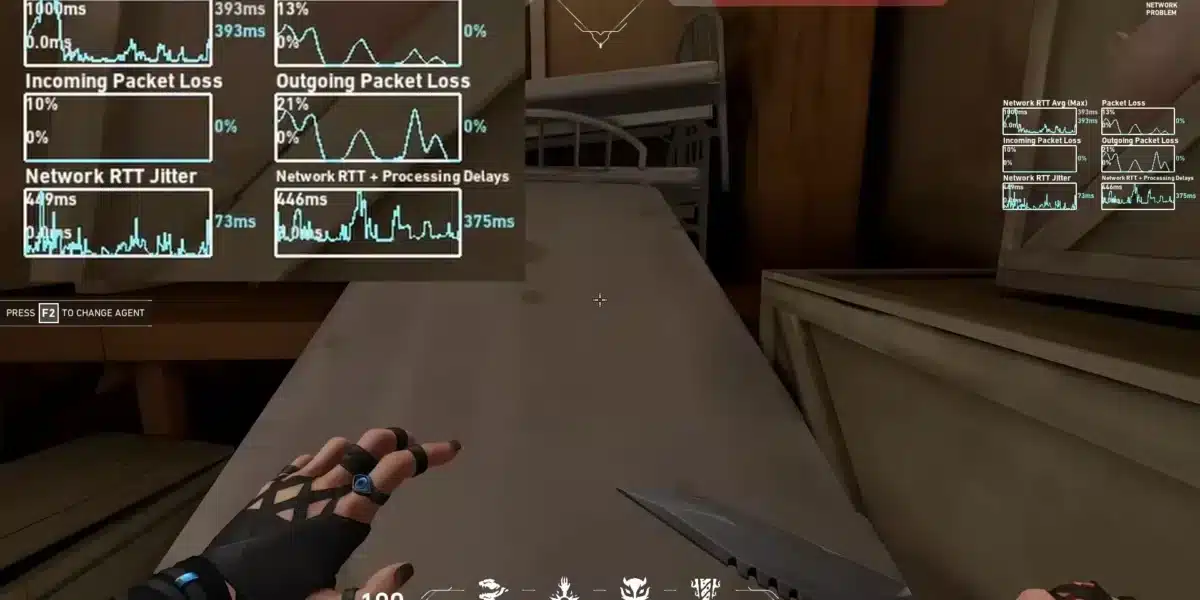
ExitLag can help when connection routing contributes to unstable latency, packet loss, or sudden changes during online matches. It does not teach the map, improve aim, select agents, or guarantee a competitive advantage.
VALORANT is a tactical shooter in which small timing differences can affect peeks, utility coordination, and weapon fights. A consistent route may help some players maintain a more stable connection, depending on their provider, region, and route to the server.
How route optimization may improve stability
Game data travels through several network nodes before reaching the selected VALORANT server. An inefficient or congested route may contribute to instability even when the player’s basic download speed appears high.
ExitLag analyzes available paths and can help optimize supported game traffic. Depending on network conditions, it may provide a more stable route or reduce route-related variation.
Results depend on:
- The internet provider;
- The selected Riot Games server;
- Geographic location;
- Local network quality;
- Regional congestion;
- Available network routes.
Players should compare performance under similar conditions. Test the same server, time period, and local setup rather than comparing unrelated matches.
What ExitLag cannot fix
ExitLag cannot:
- Improve FPS limited by hardware;
- Repair corrupted game files;
- Remove account restrictions;
- Change ranked matchmaking;
- Guarantee lower ping;
- Eliminate every packet-loss event;
- Fix a Riot Games outage;
- Improve aim or crosshair placement;
- Update an outdated Haven Valorant map guide;
- Correct poor team communication.
Players experiencing account, Vanguard, installation, or service problems can use the official Riot Games support portal to locate current troubleshooting and account resources. Connection optimization should only be used for connection-related issues, not as a replacement for official support.
Frequently asked questions
Haven has existed since VALORANT’s original launch period, but map rotations, agent balance, and utility behavior continue to change. These answers cover the most common questions about the current map.
No. Haven and Lotus both have A, B, and C Spike sites.
Haven was the original three-site VALORANT map, which is why older articles sometimes describe it as the only one. That statement became outdated after Lotus was introduced.
The answer depends on rank, team composition, patch, and coordination. Attackers benefit from three possible sites and powerful fakes, while defenders can use aggressive information plays and fast internal rotations.
Instead of assuming one side has an automatic advantage, review how your team loses rounds. Poor communication can make defense feel impossible, while indecisive map control can make attack feel much harder.
Garage and Mid are among the most important areas because they connect several routes and influence access to B and C.
However, the priority changes according to the strategy. A team executing A may care more about A Short, while a C split depends heavily on Garage.
B is the fastest site to reach, but it is not always the easiest to hold. Its small size and several retake entrances can make the post-plant difficult.
A or C may offer stronger post-plant positions when attackers control the correct lanes. The easiest target is often the site with the weakest defender setup in that particular round.
Omen, Sova, Breach, Cypher, Killjoy, Jett, and several other agents can perform well because they support information, site control, long-range utility, or entries.
The best team includes the tools required for smoke coverage, information, entry, flank protection, and defensive delay. Agent balance can change, so avoid treating one list as permanent.
Use information utility, flexible positions, and planned rotations. Defenders do not need two players permanently standing on every site.
A common setup distributes players across A, B or Mid, Garage, and C, with one or more defenders prepared to support nearby areas.
Rotate when the team has reliable evidence of a commitment, such as the Spike, several attackers entering, or substantial utility being used with forward movement.
Avoid abandoning the opposite site after hearing a single ability. Haven makes early rotations easy to punish with fakes.
Yes. Haven is in the current Competitive map rotation as of July 2026.
Map pools change between acts, so check recent patch information when reading this guide at a later date.
ExitLag does not improve mechanical skill or strategic knowledge. It can help optimize network routes when routing contributes to connection instability.
Use map practice, communication, aim training, and match review to improve your decisions. Use ExitLag when the issue involves the route between your connection and the game server.
Mastering Haven Valorant requires more than memorizing three sites. Practice information gathering, coordinated executions, disciplined rotations, and patient retakes, then test ExitLag when route-related instability is affecting your matches and you want to evaluate whether a more stable connection path can help.
All game images used in this article belong to their respective owners. They are used for informational and educational purposes only and do not imply endorsement or affiliation with the rights holders.
Got questions or want to connect with other players? Join the conversation at the ExitLag Forum!