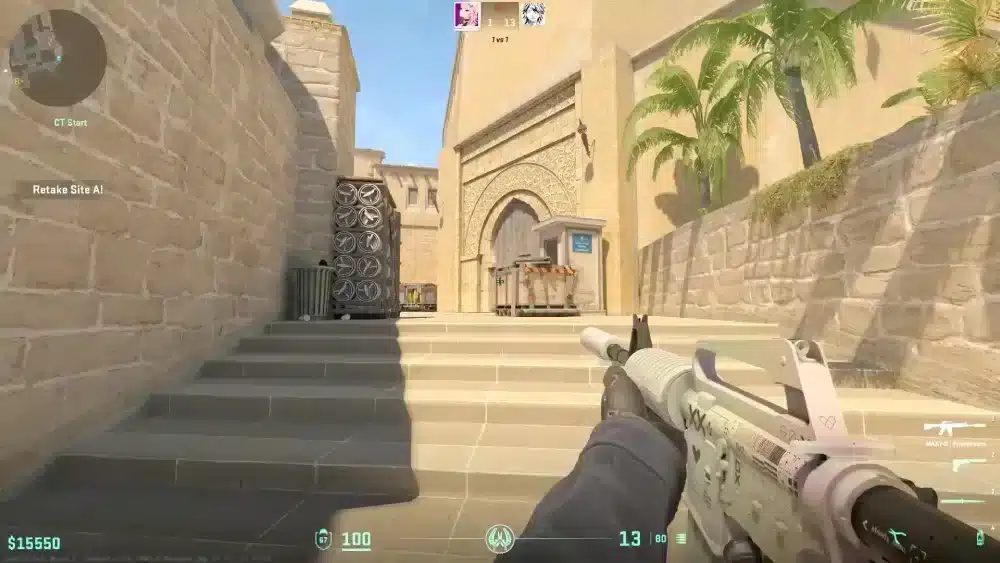
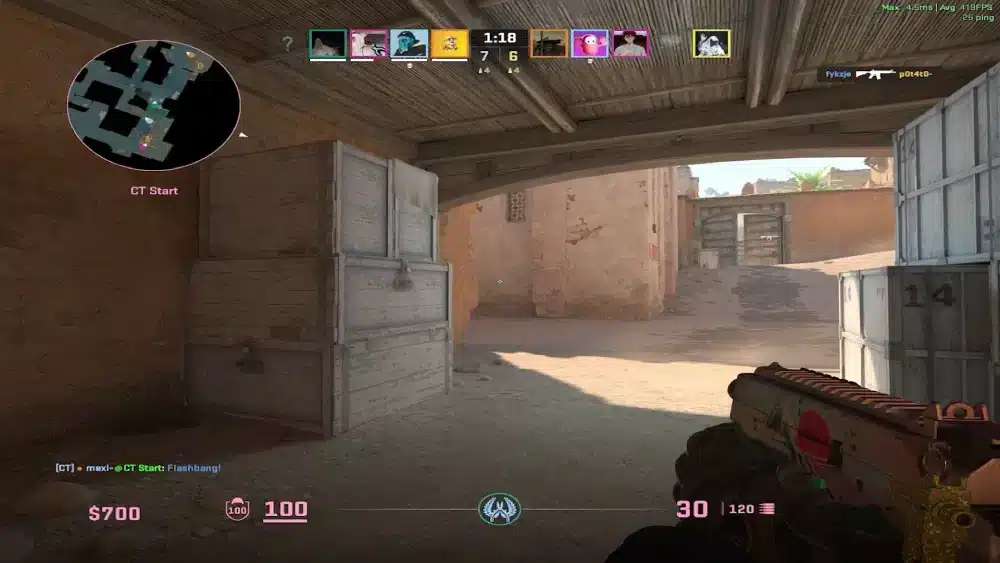
Counter-Strike Legacy refers to the original versions of Counter-Strike that predate CS:GO, primarily Counter-Strike 1.6 and Counter-Strike: Source. The term gained new relevance when, following CS2’s release in September 2023, Valve re-released CS:GO back to Steam on March 3, 2026 as a separate legacy product, using the classic branch preserved within the CS2 installation files.
Understanding what Counter-Strike Legacy means in the current landscape requires separating two distinct uses of the term: the community-used label for old-school CS gameplay (pre-CS:GO), and the more recently relevant classification of CS:GO itself as a legacy product now that CS2 has replaced it on Steam.
What are the differences between Counter-Strike Legacy and CS:GO is a question that involves both mechanical differences and cultural distinctions. The two represent different eras of competitive design, with Legacy (1.6 and Source) prioritizing raw mechanical skill and community modding, while CS:GO introduced automated matchmaking, a skin economy, and the infrastructure for organized esports.

What Is Counter-Strike Legacy?
Counter-Strike Legacy encompasses the titles that preceded CS:GO in the franchise timeline. In most community discussions, Legacy refers specifically to:
- Counter-Strike 1.6: Released in September 2003, the definitive version of the original CS formula. Widely considered the golden era of Counter-Strike by players who competed in the early 2000s.
- Counter-Strike: Source: Released in November 2004, built on the Source engine with improved physics and graphics. A divisive entry that some players preferred and others criticized for moving away from 1.6’s feel.
- Counter-Strike: Condition Zero: Released in 2004, a version that added single-player campaign content alongside the standard multiplayer.
- CS:GO (post-2023): With CS2 having replaced CS:GO as the active product, CS:GO itself has effectively become a legacy title. Valve re-listed it on Steam in March 2026 as a separate product, confirming its transition to classic/archive status.
There is also a community-developed remake project called CS: Legacy, a standalone reimagination of CS 1.6 built by modders. As of mid-2026, the project has not yet released publicly, with an early access announcement expected later in the year.
Differences Between Counter-Strike Legacy and CS:GO
The differences between Legacy versions and CS:GO span every aspect of the game, from technical foundations to competitive design philosophy.
Movement and Physics
Legacy Counter-Strike (1.6 and Source) used movement mechanics that gave players significantly more freedom for advanced techniques:
- Bunny hopping: In 1.6, skilled players could chain jumps to move faster than walking speed using precise timing. This technique was largely removed or limited in CS:GO.
- Strafe jumping: Angled jumps that allowed faster movement across maps were accessible in Legacy versions.
- Duck jumping: Crouching while jumping created alternative movement options that disappeared in later versions.
- Russian walking: A crouching movement technique that made players quieter while maintaining movement speed was specific to 1.6.
CS:GO simplified movement and removed most of these advanced techniques, which is a central point of debate between Legacy and CS:GO communities. Proponents of Legacy argue these mechanics raised the skill ceiling. CS:GO advocates argue their removal made the game more readable and fair.
Gunplay and Spray Patterns
Both Legacy versions and CS:GO share the core concept of spray patterns: each weapon has a defined recoil path that players can learn and compensate for. However, the specific patterns and weapon feel differ meaningfully:
| Element | CS 1.6 | CS:GO / CS2 |
| AK-47 spray | Pattern exists, feel differs | Standardized, widely documented |
| AWP quickscope | Accurate when scoped briefly | Slower scope-in, higher skill floor |
| Wall penetration | Strong, heavy caliber wallbangs | Maintained but material-dependent |
| Running accuracy | Significant movement penalty | Significant movement penalty (similar) |
| Headbox size | Slightly larger hitboxes | Refined, smaller hitboxes |
Map Design Philosophy
Classic CS maps were designed by community members and adopted into the competitive rotation based on popularity. Dust2, Inferno, Nuke, and Mirage all originated as community-designed maps in the 1.x era.
CS:GO and CS2 continue using many of these same maps but have rebuilt them graphically and made structural adjustments. Some community members prefer the original layouts, which they argue had cleaner sightlines and simpler geometry for competitive play.
Matchmaking and Competitive Infrastructure
This is where CS:GO and Legacy versions differ most dramatically:
- Legacy (1.6 and Source): No automated matchmaking. Players browse community servers, join manually, and find consistent teams through forums, Discord communities, or organized leagues.
- CS:GO and CS2: Built-in ranked matchmaking that pairs players based on skill rating. Valve-hosted servers with standardized settings. Premier mode and Majors provide an esports infrastructure that did not exist in the Legacy era.
The absence of matchmaking in Legacy versions is both a limitation and a feature depending on your perspective. Community-run servers create lasting player relationships that automated matchmaking cannot replicate.
Where Can I Find Servers or Communities for Counter-Strike Legacy?
Dedicated Counter-Strike Legacy communities continue to thrive despite the age of the games. The most active ecosystems exist around CS 1.6, which has never fully died.
CS 1.6 Servers and Communities
- GameTracker (gametracker.com): Tracks live CS 1.6 server activity globally. Filter by region and player count to find active servers matching your preferred game mode.
- tsarvar.com: Dedicated CS 1.6 server browser with comprehensive listings, ratings, and historical player data.
- CStrikeArena (cstrikearena.com): One of the oldest surviving CS 1.6 server networks, running since 2005.
- Steam: CS 1.6 remains purchasable for $9.99, with the in-game server browser providing access to active community servers.
CS:GO Legacy Community
When CS:GO returned to Steam as a separate legacy product in March 2026, it brought the classic client back for players who prefer the pre-CS2 experience. Access is through the Steam Store page, distinct from CS2.
The CS:GO legacy community primarily exists in:
- Reddit: r/GlobalOffensive maintains active discussion for both CS:GO legacy content and CS2
- Discord communities organized around specific CS:GO map preferences, like Dust2-only servers or Retake communities
- Workshop maps: CS:GO still has an active workshop with thousands of community-created maps accessible through the legacy client
How Do I Find Online Multiplayer Games Similar to Counter-Strike?
Players looking for the tactical shooter experience of Counter-Strike in different settings have several strong options:
- Counter-Strike 2: The direct continuation of the franchise, free on Steam, with matchmaking and competitive ranked play.
- Valorant: Available on PC and console. Similar economy rounds, bomb-site objectives, and precise gunplay, with the addition of agent abilities. The competitive alternative most commonly chosen by CS players.
- Rainbow Six Siege: The deepest tactical alternative. Destructible environments, operator gadgets, and one-life rounds create high-stakes matches with a different but equally rewarding skill ceiling.
- Hunt: Showdown 1896: A PvPvE extraction shooter with extremely punishing death consequences, sharing Counter-Strike’s philosophy that individual lives matter and death has permanent consequences within a session.
- The Finals: A team-based objective shooter with destructible environments, available on PC and console with an active competitive scene.
Pro Tips: Navigating Counter-Strike Legacy and Modern Options
- Buy CS 1.6 during Steam sales: The game regularly drops to $0.99 during seasonal sales. At that price, experiencing the Legacy era firsthand costs less than a coffee.
- Try CS:GO Legacy before investing in CS2 settings research: If you are returning to Counter-Strike after years away, the CS:GO legacy client provides a familiar environment that removes the need to adjust to CS2’s volumetric smokes and sub-tick system simultaneously.
- Join Discord communities for region-specific Legacy server recommendations: The most active servers in your region are often not the top results in the server browser. Community Discord groups maintain curated lists of servers with consistent player populations.
- Use CS: Legacy (when it releases) as a modern alternative to raw 1.6: The community remake project aims to preserve the 1.6 feel in a modern engine. Following their official channels gives you early access notifications when the project opens for players.
Common Mistakes When Comparing Counter-Strike Legacy and CS:GO
- Assuming Legacy mechanics transferred directly into CS:GO: The games share conceptual DNA but not mechanical behavior. Players who learned advanced bunny-hopping or strafe techniques in 1.6 need to unlearn those habits in CS2, where the movement model does not support them. Fix: Treat each version as a separate skill set rather than assuming competence in one transfers cleanly to another.
- Using CS:GO guides for Legacy servers: YouTube guides labeled “CS:GO tips” describe a game that no longer actively receives updates and in many cases operates differently from the Legacy title being discussed. Fix: When searching for guides about CS 1.6 or CS:Source, include the specific version in your search to avoid CS2 or CS:GO content that describes different mechanics.
- Expecting populated servers at all hours in all regions: CS 1.6 servers are most active during regional prime time hours, typically evenings in Europe, Southeast Asia, and Latin America. Fix: Check server browsers during your region’s evening hours for the best population density, and bookmark servers with consistent player counts.

Play Any Counter-Strike Version Smoothly with ExitLag
Whether you are playing on a CS 1.6 community server, the CS:GO legacy client, or the latest CS2 Premier mode, your connection quality determines whether the game feels responsive or frustrating.
ExitLag is a connection optimizer used by over 30 million players across 4,000+ game titles, including all Counter-Strike versions. It analyzes multiple network routes in real time and selects the fastest, most stable path between your device and the game server you are connecting to.
Key features for Counter-Strike players across all versions:
- Real-Time Optimization: Selects the lowest-latency available path to any game server, whether it is a Valve official CS2 server or a community-hosted CS 1.6 server.
- Multipath Technology: Routes game data through multiple simultaneous paths, preventing single connection failures from disrupting your match.
- Traffic Shaper: Prioritizes Counter-Strike traffic over background applications so Steam downloads and other software cannot spike your ping mid-round.
- Multi-Internet: Supports up to four connections simultaneously for session stability across any internet infrastructure.
Download ExitLag and reduce ping on any Counter-Strike server.
All images used in this blog post belong to their respective owners and are used for informational and educational purposes only. They do not imply endorsement or affiliation with the rights holders.
Got questions or want to connect with other players? Join the conversation at the ExitLag Forum!