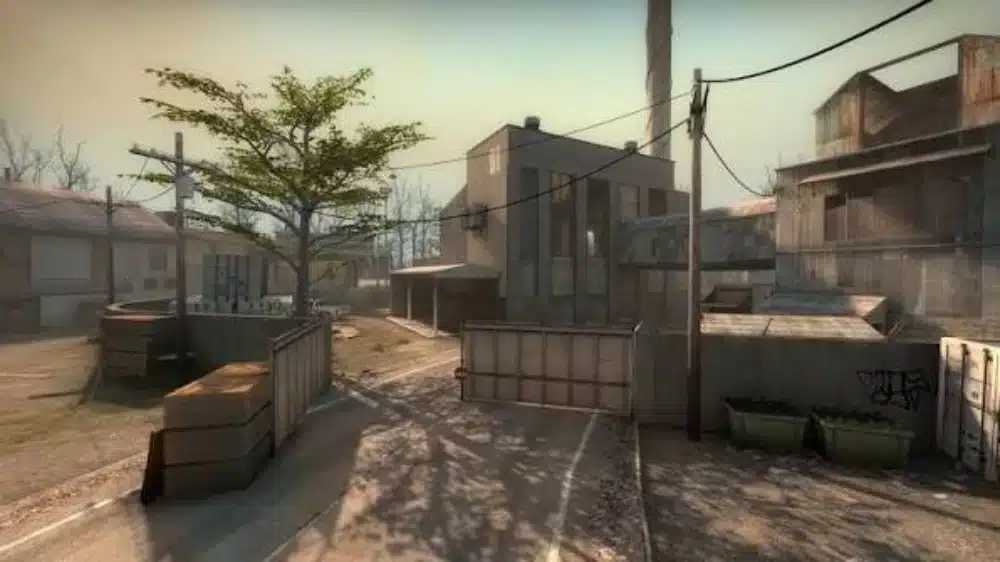
Counter Strike Legacy spans over 25 years and represents one of the most remarkable stories in entertainment history. What began as a Half-Life mod built by two developers in 1999 became the global standard for competitive first-person shooters, the foundation for the esports industry, and one of the most-played games in Steam history.
Counter Strike Legacy is not just about the game itself. It is about the culture, the competitive ecosystem, the iconic moments, and the millions of players whose relationship with the franchise represents genuine years of their lives.
This complete guide covers the full Counter-Strike legacy: every major version, the competitive history, the cultural impact, and why Counter-Strike 2 continues a tradition that shows no signs of ending.

Counter Strike Legacy: The Complete Game Timeline
Counter-Strike 1.0 (2000)
The retail release of the original Half-Life mod. Introduced the round-based tactical combat, economy system, and bomb defusal / hostage rescue formats that have remained unchanged in their fundamental form for 25 years.
Counter-Strike: Condition Zero (2004)
The first attempt at a single-player CS experience with an improved bot system. Considered a mixed success commercially but introduced many new players to the franchise.
Counter-Strike: Source (2004)
CS rebuilt on the Source engine. Improved graphics, physics, and server infrastructure. Created a significant community split with CS 1.6 players who preferred the original game’s feel.
Counter-Strike 1.6 (Long-Term)
Despite CS: Source’s release, CS 1.6 remained the dominant competitive version for most of the 2000s. Its player base refused to migrate, and the game’s competitive scene remained active for years after it was technically superseded.
Counter-Strike: Global Offensive (2012)
CS:GO launched with new mechanics, updated graphics, and a fresh weapon balance. Most importantly, it introduced the weapon skin system in 2013 that created the skin economy. CS:GO became the most successful CS game, reaching peaks of over a million concurrent players.
Counter-Strike 2 (2023)
CS:GO’s successor, built on Source 2. Included volumetric smoke grenades (fundamental change to tactical play), improved lighting and visual rendering, and the Premier mode ranking system. All CS:GO skins and inventory carried over.
Counter Strike Legacy: Competitive History
The First CS Major Era (2001–2012)
Counter-Strike became the first game with a global professional circuit:
- CPL (Cyberathlete Professional League): The first major CS tournaments in 2001
- World Cyber Games (WCG): International CS competition from 2001 onwards
- Electronic Sports World Cup (ESWC): European-dominated competitions
- ESL: The longest-running CS organizer, active to this day
This period established the competitive framework that the entire esports industry later adopted.
The CS:GO Major Era (2013–2023)
Valve introduced the CS Major Championship format in 2013 with the first EMS One Katowice Major. The format defined modern esports production:
- $1 million prize pools
- Global broadcaster distribution
- Team sticker revenue shared with competing organizations
- Souvenir drops to viewers watching specific matches
| Year | Major | Champion |
|---|---|---|
| 2013 | EMS One Katowice | NaVi |
| 2018 | ELEAGUE Boston | Cloud9 |
| 2019 | StarLadder Berlin | Astralis |
| 2022 | PGL Antwerp | NaVi |
| 2023 | BLAST.tv Paris | Vitality |
Counter Strike Legacy: Cultural Impact
CS Created Esports Infrastructure
Before CS, competitive gaming events were small, local, and loosely organized. CS tournaments created the need for professional event organizers, broadcast infrastructure, dedicated arenas, and sustainable prize structures.
The infrastructure built for CS in the early 2000s became the template every subsequent esport expanded from.
The Café Culture
In the early 2000s, Counter-Strike was primarily played at internet cafes worldwide. CS was the reason internet cafes existed in South Korea, China, Brazil, Eastern Europe, and Southeast Asia. The game created entire economic categories.
CS as a Cultural Institution
Counter-Strike is one of the few games where a complete stranger mentioning it in conversation creates immediate recognition across generations of players. The name “Counter-Strike” is culturally legible in a way that very few games achieve.
Pro Tips: Honoring the Counter Strike Legacy
- Learn the maps that have been active since 1.6: Dust2, Inferno, and Nuke have been competitive maps for over 20 years. Deep knowledge of these maps comes with earned history. Study them seriously.
- Watch historical competitive VODs: Seeing how CS was played in 2005, 2012, and 2018 reveals how the game evolved and why certain strategies persist.
- Appreciate the continuity: The knife you hold in CS2 is a descendant of the knife in the 1999 mod. The economy you manage is the same system those developers designed in their spare time.
- Engage with the competitive community: CS has one of gaming’s deepest competitive communities. Forums, coaching platforms, and analysis content have never been more accessible.
- Use the game’s history as motivation: If CS has survived and thrived for 25+ years, it will likely be here for your entire gaming career. The investment in getting good has permanent returns.
Low Ping: Honoring the Tradition With the Right Connection
CS was built on LAN cables in 1999. Today’s version is played online globally, but the principle is the same: low latency wins. Every legendary play in CS history happened under conditions where connection quality was maximized.
How ExitLag Continues the Legacy
ExitLag routes your connection to CS2 servers through the fastest available path. It is not a VPN. It reduces ping and eliminates the latency variance that breaks consistency.
For players who respect the Counter Strike Legacy:
- Lower ping: Your play reflects your actual skill.
- Multipath Technology: Multiple routing paths for match stability.
- Multi-Internet: Up to 4 connections for uninterrupted sessions.
- PC Boost: Background process management for peak CS2 frames.
Counter Strike Legacy: Still Being Written
Counter Strike Legacy is a living document. CS2 is adding new chapters every year with updated cases, map rotations, competitive seasons, and Majors that will be remembered for decades.
The players competing today are adding to a history that started in 1999. Every Major won, every rank achieved, and every clutch round executed joins a tradition that spans a quarter century. That is what makes Counter-Strike more than a game. It is one of competitive gaming’s great ongoing stories.
All CS:GO / CS2 game images belong to Valve Corporation. Used for informational and educational purposes only.
Got questions or want to connect with other players? Join the conversation at the ExitLag Forum!