
Counter-Strike 2 brought new visuals, better performance, and a refreshed ecosystem-but one thing remains at the center of the community: CS2 cases. Whether you’re interested in opening them, trading them, or just understanding how skins retain value, learning the fundamentals is essential.
CS2 cases aren’t only cosmetic loot boxes-they’re the foundation of the game’s economy and the main way players obtain skins through randomized rewards. Every case contains a curated set of skins, some extremely rare, and each opening is governed by strict probability rules that players should understand before spending money.
This guide explains how cases work, where they come from, what your real chances are, and how new players can approach the system in a safe and informed way.
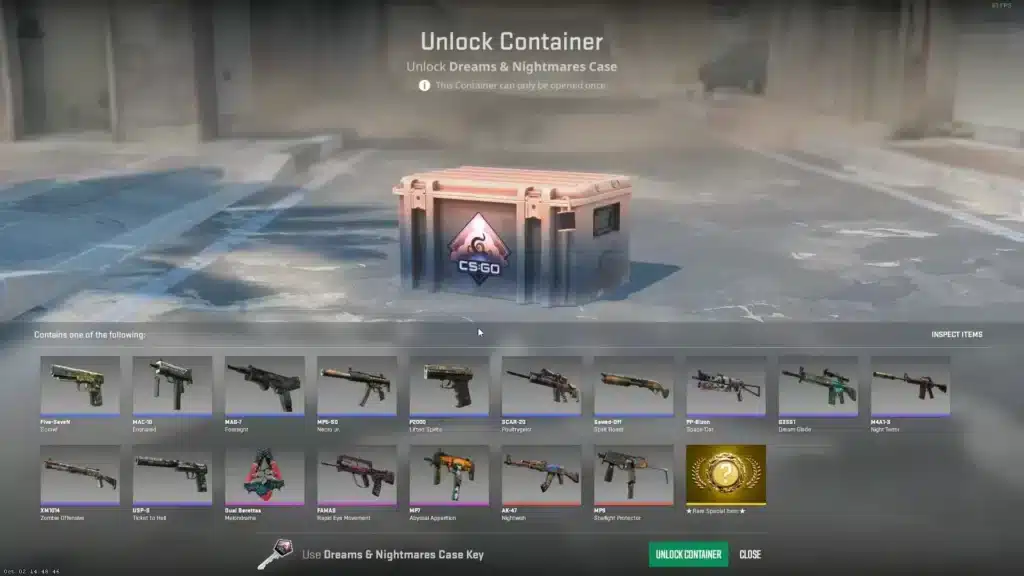
Understanding CS2 Cases
A CS2 case is a virtual container containing:
- a fixed set of weapon skins
- a tiny chance at an Exceedingly Rare knife or glove
To open a case, players need:
- the case
- a key purchased through the Steam Store
Opening a case awards one random item from its loot pool. CS2 maintains the same rarity tiers and drop probabilities that Valve established in CSGO, making the system transparent and consistent.
CS2 Case Drop Rates
All standard CS2 cases share identical probability distributions:
| Rarity Tier | Drop Chance |
| Mil‑Spec (Blue) | ~79.92% |
| Restricted (Purple) | ~15.98% |
| Classified (Pink) | ~3.20% |
| Covert (Red) | ~0.64% |
| Exceedingly Rare (Gold – Knives/Gloves) | ~0.26% (~1 in 385) |
Additional rules:
- StatTrak™ appears ~10% of the time only for eligible weapon skins.
- Knives and gloves do not roll StatTrak unless the case explicitly supports it.
- Each opening is fully independent – no hidden luck multipliers, no pity system, no improved odds over time.
No case offers better chances than another. All differences are market‑based, not statistical.
Where CS2 Cases Come From
Many explanations incorrectly imply that all cases can drop in matches. In reality, only a small, rotating set of cases is eligible to drop during gameplay.
Prime Weekly Drops (Active Drop Pool Only)
Players with Prime status may receive one weekly case, but only from the Active Drop Pool, a curated rotation of cases selected by Valve. This pool changes periodically.
Most cases in CS2’s history cannot drop anymore and are permanently excluded from the active pool.
Rare Drop Cases
Old or discontinued cases may appear as extremely rare drops, but these occurrences are inconsistent and should not be expected.
Steam Market Purchases
Most players acquire cases by purchasing them on the Steam Market, where all cases – including retired ones – remain available.
Trading
Cases also enter inventories through trades, trading bots, and third‑party marketplaces.
Opening Mechanics
Any case from any source can be opened with a key, but only Active Drop Pool cases can drop via gameplay.
How to Check How Many Cases You’ve Opened
CS2 does not provide an in‑game counter for total cases opened. Players often rely on third‑party trackers.
These tools may:
- estimate your case‑opening history
- track your past openings
- display personal statistics
However, it is critical to note:
- These trackers are not official, and their data accuracy is limited.
- They may require Steam login, which poses security and privacy risks if the site is unverified.
- Their numbers represent community estimates, not audited or Valve‑verified data.
Use them cautiously.
CS2 Case Simulators
Community websites and apps sometimes offer simulated case openings.
Key clarifications:
- They are entirely third‑party, not affiliated with Valve.
- Items “won” cannot be transferred to Steam.
- Simulated jackpots or profits do not translate into real‑world value.
- Many simulators modify odds for engagement or entertainment.
Simulators are hypothetical tools meant for fun or probability visualization – not reliable indicators of actual outcomes or profit potential.
Best CS2 Cases for Beginners
Since all cases share the same drop odds, recommendations for “beginner‑friendly cases” are based solely on:
- low case prices
- affordable key + case cost
- popularity of the skins inside
- liquidity and resale demand
- ongoing market trends
These factors change constantly.
Kilowatt Case (CS2)
Recommended due to modern skins and strong market demand – not because it offers better odds.
Gallery Case (CS2)
Often cheap to buy, making it a low‑risk entry option.
Fracture Case (CS2)
Has long‑standing popularity and a recognizable skin pool.
These are market‑based suggestions, not guarantees of better value. ROI depends on the marketplace and luck – both highly unpredictable.
Should You Open CS2 Cases?
Opening cases is thrilling – but statistically, players lose money.
When Opening Cases Makes Sense
- For entertainment.
- For collecting specific skins you personally enjoy.
- When you understand that the outcome is random and financially unfavorable.
When It Does Not
- When expecting consistent profit.
- When assuming rare drops will eventually “balance out.”
- When relying on third‑party simulators as predictors.
Reality Check
The expected outcome of opening cases is a loss. Large wins (knives, red skins, golds) are rare statistical exceptions – not the norm.
Approach case opening the same way you would approach any entertainment expense.
Why ExitLag Helps When Playing CS2
While case opening itself is not performance‑dependent, your actual gameplay experience is.
ExitLag enhances gameplay by:
- reducing latency
- stabilizing routing paths
- preventing lag spikes
- improving hit registration
This helps ensure consistent performance while testing or using newly obtained skins in real matches.
The Economic Side of CS2 Cases
Although case opening is entirely luck-based, the skin economy surrounding CS2 follows patterns influenced by supply, demand, hype cycles, and community interest. Understanding these trends helps collectors and traders navigate the market more safely.
Market Demand and Skin Liquidity
“Liquidity” refers to how quickly an item can be sold or traded. High liquidity means faster sales and more consistent demand.
Liquidity typically depends on:
- universally popular weapons (AK-47, AWP, M4A4, USP-S)
- visually appealing or trending finishes
- skins used by streamers, influencers, or pro players
- memes and cultural trends within the community
Low-liquidity items may look valuable but can be difficult or slow to sell.
Long-Term Value of Cases (Contextualized and Cautious)
While some cases have appreciated historically, this outcome is not guaranteed. Case value is influenced by complex and unpredictable market forces.
Factors that may cause appreciation
- The case leaves the Active Drop Pool, reducing new supply
- Player interest shifts toward older or nostalgic content
- Market speculation or hype during major updates
Factors that limit or prevent appreciation
- High circulation: many cases remain widely available for years
- Shifts in demand: player interest fluctuates with new content
- Release of alternative skins competing for attention
- External market volatility and economic conditions
Leaving the Active Drop Pool does not automatically make a case rare or valuable. Some cases appreciate, some stay flat, and others may even lose value over time.
Treat case holding as speculation, not investment.
Advanced Trading Strategies (With Realistic Caveats)
Advanced trading techniques can yield profit, but they require deep knowledge, patience, active market participation, and acceptance of risk. None of these strategies guarantee success.
Pattern-Based Value (Not Guaranteed)
Some skins have rare, highly desirable patterns – such as:
- Case Hardened “Blue Gem” patterns
- Doppler rare gemstone phases
Traders may attempt to:
- find undervalued rare patterns
- purchase listings from sellers unaware of the pattern value
- resell to collectors seeking specific looks
However:
- these skins can be highly illiquid
- finding a buyer may take a long time
- pricing is subjective and community-driven
Pattern trading is a niche skill with inconsistent results.
Float Value Optimization (Requires Skill and Demand)
Float value directly affects the appearance and price of a skin. Extremely low or high floats can be valuable – but only if collectors are actively seeking them.
Traders may:
- buy low-float skins at mid-range prices
- target rare float brackets (e.g., 0.00X or 0.99X)
- flip items to collectors for a premium
Still:
- perfect floats do not guarantee a buyer
- float premiums only exist when demand is strong
Both pattern and float strategies involve risk, expertise, and market timing.
Avoiding Scams and Securing Your Inventory
The CS2 trading ecosystem carries real-money value, attracting scammers. Protecting your items is essential.
Common scam methods include:
- fake website impersonation
- fraudulent “Steam” inspection links
- API key hijacking attempts
- impersonation of known traders or friends
To stay safe:
- keep Steam Guard enabled
- never share your API key
- verify every trade URL manually
- avoid discussing trades outside trusted platforms
Any mistake can lead to irreversible inventory losses.
Should You Hold or Sell Cases?
There is no universal answer – it depends on your risk tolerance and market conditions.
Reasons players sometimes hold cases
- they recently left the Active Drop Pool
- perceived long-term scarcity potential
- ongoing community interest
Reasons to sell cases
- the market becomes oversaturated
- key prices rise while case prices stagnate or fall
- stable, guaranteed returns are preferable to speculation
Again: case appreciation is not guaranteed, and depreciation is always possible.
Responsible Participation in the CS2 Case Ecosystem
The CS2 skin economy is large, but it is not stable or predictable enough to be treated as a reliable income source. Its volatility stems from:
- shifting community interest
- updates that alter market demand
- supply surges or drops
- external economic conditions
To participate responsibly:
- treat case opening strictly as entertainment
- expect financial losses as the normal outcome
- avoid emotional spending or “chasing” rare items
- spend only what you can comfortably lose
- remember that big wins (knives, rare reds, golds) are statistical outliers, not routine events
This mindset ensures a healthier and safer experience.
Platform Fees, Restrictions, and Hidden Costs (Clarified)
The marketplace you choose directly affects your profitability.
Steam Community Market
- charges ~15% total fee (game fee + Steam fee)
- fees apply to every Steam Market sale
- regional taxes or currency conversions may increase the final cost
Third-Party Marketplaces
- fee structures vary significantly
- some platforms have withdrawal fees or hidden commissions
- price floors and liquidity differ from Steam’s ecosystem
- not all marketplaces are equally safe or reputable
Because each platform operates differently, traders must evaluate fees and risks individually.
Final Thoughts
CS2 cases remain a major part of Counter-Strike culture – but they require caution, context, and realistic expectations. The skin economy is speculative, interest-driven, and highly volatile. Understanding these dynamics helps you navigate the ecosystem safely and responsibly.
For smoother gameplay when using or testing new skins, ExitLag can improve routing, reduce ping, and help prevent lag spikes – offering a more consistent CS2 experience.
General Disclaimer: All game images used in this blog belong to Valve Corporation. They are used for informational and educational purposes only and do not imply endorsement or affiliation.
Got questions or want to connect with other players? Join the conversation at the ExitLag Forum!