
Death Stranding is a game about rebuilding connection in a broken world, one careful delivery at a time. If you’re starting on Xbox, you’re getting a version designed for modern hardware and long sessions, where comfort and stability matter as much as story.
If you want a fast, spoiler-light way to understand what the Director’s Cut changes (and what first-time players usually struggle with), use this Death Stranding 2 complete guide reference as a practical “what matters” checklist. It’s an easy way to set expectations for pacing, systems, and comfort before you commit to long delivery sessions.
For many players, Death Stranding is also a “first time” experience twice: first when you realize the game isn’t what you expected, and again when it finally clicks. That click usually happens when you stop rushing and start planning.
If you’re here for Death Stranding on Xbox, you’re not late. You’re entering at a moment where the Director’s Cut is available on Xbox Series X|S and Windows PC, with key features like high frame rates and the Social Strand System built in.
Is Death Stranding on Xbox Series X|S?
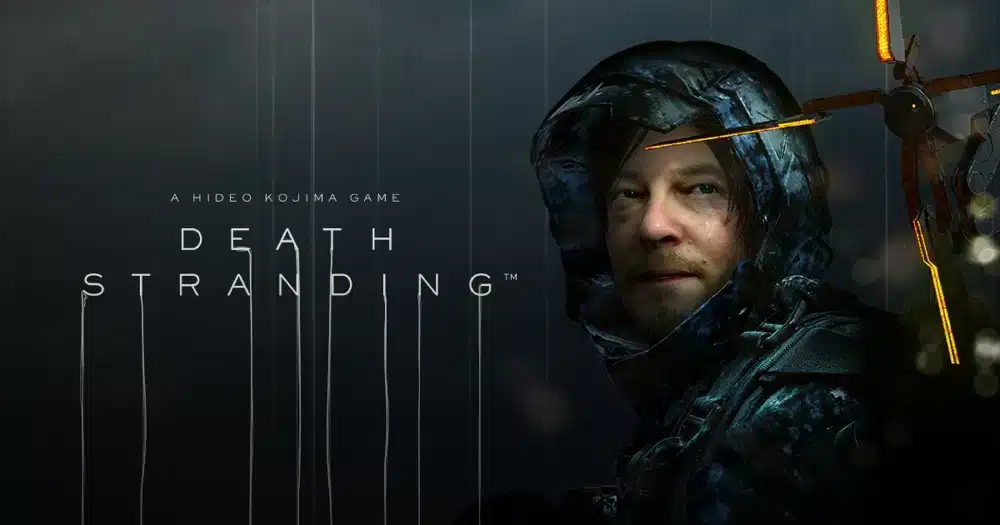
Yes. DEATH STRANDING DIRECTOR’S CUT is available on Xbox Series X|S (and also on Windows PC in the Microsoft ecosystem), and KOJIMA PRODUCTIONS announced it as “now available” on November 7, 2024.
The Xbox store listing also shows it is Optimized for Xbox Series X|S and supports Xbox Play Anywhere.
This matters because the Xbox version isn’t missing “the good stuff.” It’s the Director’s Cut, which is generally treated as the definitive release, and it includes the online-connected systems that make the world feel shared.
You’ll also see the version details spelled out on the Xbox product page, including high frame rate support, Photo Mode, and ultrawide support on PC.
What you get with Death Stranding xbox (Director’s Cut)
Before you install, set expectations properly. You’re getting:
- A complete Director’s Cut experience on Xbox Series X|S
- Series X|S optimization and modern performance support
- The Social Strand System for asynchronous online cooperation
- Crossover content tied to Half-Life and Cyberpunk 2077
And yes, that blend matters. Death Stranding gameplay is slow-burn by design, and quality-of-life improvements can significantly change how the first 10–15 hours feel.
Xbox Play Anywhere and why it’s a practical advantage
The Xbox listing shows Xbox Play Anywhere, which can be a real win if you play across console and Windows PC.
That flexibility fits Death Stranding’s rhythm:
- Console is great for long narrative sessions.
- PC can be great for fine-tuning performance.
- Both work well for short “delivery loops” when you only have 30–60 minutes.
If you want a simple takeaway from this section: your platform choice doesn’t limit the core experience. Your approach does.
What is Death Stranding gameplay like, really?
Death Stranding is not a traditional action game. It’s a traversal-focused experience where movement, planning, and route control are the “combat loop,” and everything else supports that.
It helps to frame Death Stranding correctly: it’s a traversal game with tension systems layered on top, not a combat-first sandbox. For a clean baseline overview of what the game is, how it was positioned historically, and the core ideas behind its worldbuilding, the Death Stranding background and overview page is a quick reference you can skim without derailing your playthrough.
That doesn’t mean there’s no tension. There is. It just comes from different sources:
- terrain that punishes impatience
- cargo balance that forces rhythm
- weather that changes risk
- hostile zones that demand stealth and discipline
This is why Death Stranding gameplay is often described as meditative by some players and frustrating by others. The game asks you to accept its pace before it rewards you.
The core loop, in one scan-friendly list
Here’s what you’ll do most of the time:
- Pick a delivery or objective.
- Plan a route.
- Prepare tools (ladders, ropes, PCC structures, etc.).
- Traverse carefully.
- Protect cargo and your stamina.
- Deliver, earn progress, unlock better tools.
- Use the Strand system to benefit from shared infrastructure.
That’s the heart of this Death Stranding guide.
The Strand system, explained in plain English
The Social Strand System is asynchronous online cooperation. You won’t be walking next to another player in real time, but you will see what they built.
You’ll find:
- bridges placed at the exact river crossing you hate
- ladders on cliffs that would otherwise cost you minutes
- signs warning you about danger
- structures that change your “route math” completely
In other words: you’re not alone, even when you’re alone.
This is also why connection stability matters for the full vibe of the game. When online updates sync smoothly, the world feels more responsive.
Combat expectations for new players
Combat exists. Stealth exists. But the game rarely rewards “constant fighting.”
A useful mindset is:
- Fight only when it solves a problem.
- Avoid fights when they create new problems.
- Prioritize survival and cargo integrity.
If you treat combat like the primary objective, you’ll feel punished. If you treat combat like one tool in your kit, you’ll feel empowered.
Does Death Stranding Director’s Cut include new content?
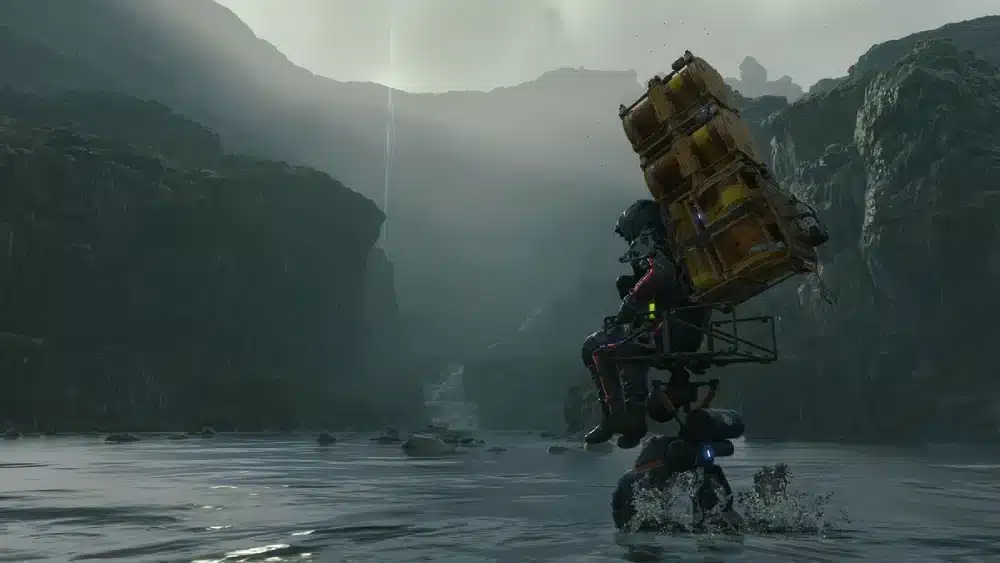
Yes. The Director’s Cut release is positioned as the definitive version, and official pages for the Director’s Cut highlight additional features and crossover content, including Half-Life and Cyberpunk 2077 items.
The most important thing to understand is that Director’s Cut additions don’t “change the genre.” They improve flow and expand your options.
That matters because early-game friction is the #1 reason people bounce off Death Stranding. Director’s Cut features can reduce that friction.
What “Director’s Cut improvements” mean in practice
Think in terms of daily use:
- more tools that help traversal feel smoother
- more options for how you approach deliveries
- better support for modern hardware features
- more reasons to experiment without feeling punished
You will still walk. A lot. But you’ll have more ways to make walking feel strategic rather than slow.
Crossover content and what it actually adds
Crossover content is often misunderstood as “cosmetics only.” In Death Stranding Director’s Cut, crossover items can be practical, fun, and integrated into the world’s systems.
The Xbox product page explicitly mentions crossover content from Half-Life and Cyberpunk 2077.
505 Games also states the Director’s Cut includes this crossover content.
If you like collecting gear and experimenting with tools, this content adds variety without breaking immersion.
Death Stranding tips for Xbox players who want a smoother first playthrough
This section is intentionally tactical. These Death Stranding tips are designed to reduce frustration without ruining discovery.
Also, don’t skip this: Death Stranding is a “compounding advantage” game. Small good decisions early save hours later.
The #1 rule: build convenience once, benefit forever
If a structure saves you 30 seconds today, it might save you 30 minutes across the next week of play.
That’s how you should think.
Early-game Death Stranding tips that instantly help
- Carry less than you want to carry.
- Scan terrain constantly.
- Choose safer routes over “shortest route.”
- Bring tools to solve terrain, not to react to terrain.
- Stop sprinting when balance matters.
- Place structures where you’ll pass again.
Use this like a checklist for your first 5–10 hours.
What to build first (simple priority list)
- Roads on high-traffic routes
- Bridges over annoying water crossings
- Generators near stamina-heavy paths
- Ziplines later (they become game-changing)
If you want a quick table to guide choices:
| Structure | Best use case | Why it matters long-term |
| Road segments | Main delivery corridors | Huge time savings over dozens of runs |
| Bridges | Repeated water crossings | Reduces cargo damage and risk |
| Generators | Long climbs or heavy loads | Keeps momentum without forced rest |
| Ziplines | Mountain regions | Turns “slow routes” into fast networks |
This is where the game starts feeling like a system, not a hike.
Optimizing performance and online stability on Xbox Series X|S
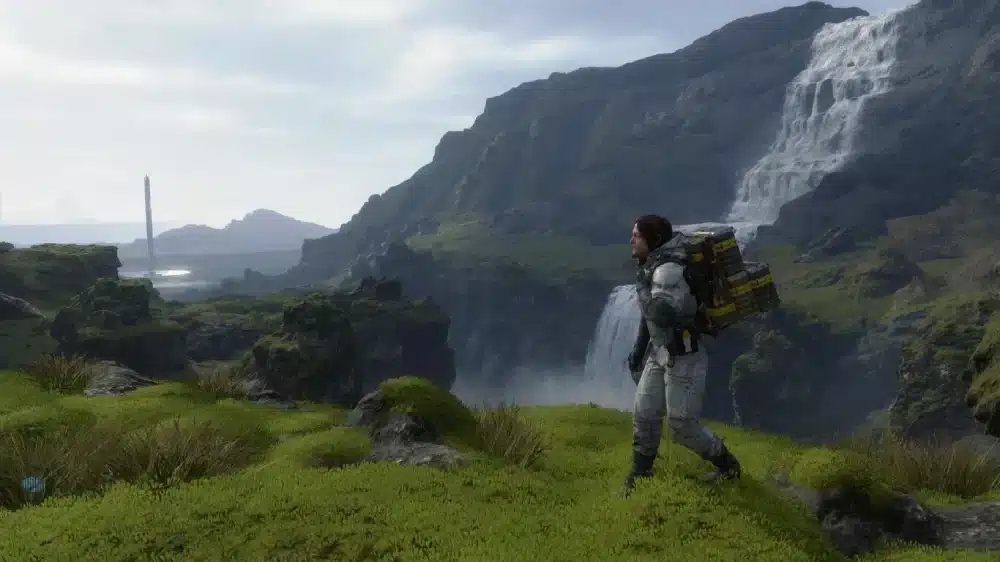
This matters more than people expect. Death Stranding is about control, balance, and clean movement.
When performance is smooth:
- traversal feels responsive
- camera control feels stable
- steep terrain feels manageable
- fights feel fairer
Smooth traversal is one part performance, one part network stability—especially in connected games where online sync is constantly happening in the background. If you want a clear explanation of what “ping” actually means and why it affects responsiveness (even when multiplayer isn’t real-time co-op), this gaming lag and ping explained breakdown gives you the quick mental model.
The Xbox listing for Director’s Cut highlights high frame rates, which is a clear signal that smooth performance is a core part of the modern release.
Performance-first settings mindset
Prefer stability over “max everything.”
If you feel micro-stutter or inconsistent input response:
- prioritize performance modes
- reduce background downloads
- restart after long sessions
Also, keep your storage healthy. SSD performance can degrade when the drive is almost full.
Why online stability matters for the Strand system
Even though the multiplayer is asynchronous, it still depends on clean online syncing for structure sharing and community content updates.
If your connection is unstable, your game can feel “less alive,” because shared infrastructure updates may be delayed or inconsistent.
Lag is rarely just “bad internet.” It’s usually a mix of Wi-Fi instability, background traffic, routing variance, and server-side timing. This lagging in games causes and solutions guide is a practical checklist you can run through in minutes—perfect for long sessions where you want the Strand system to feel alive instead of delayed.
If you’re sensitive to network spikes in connected games, tools like ExitLag can help stabilize routing and reduce packet loss and jitter (especially on PC paths), which keeps sessions consistent when the game checks online systems.
FAQ
Yes. DEATH STRANDING DIRECTOR’S CUT is available on Xbox Series X|S, announced as “now available” on November 7, 2024.
The Xbox release is DEATH STRANDING DIRECTOR’S CUT.
Yes. The Xbox product page and 505 Games materials reference crossover content from Half-Life and Cyberpunk 2077.
Death Stranding 2: On the Beach released on June 26, 2025 for PS5 (per Kojima Productions and PlayStation channels).
An Xbox version has not been confirmed on those official pages, so treat it as unannounced unless the publisher or Kojima Productions states otherwise.
If you want story context without replaying everything, a timeline recap can be useful—especially because Death Stranding’s narrative lands differently once you understand the order of key events. This Death Stranding full story timeline recap is a handy refresher for players preparing for the broader series conversation.
Death Stranding on Xbox Series X|S is a strong entry point into Kojima’s most unusual and ambitious world. The Director’s Cut includes modern performance features, the Social Strand System, and crossover content that rounds out the definitive package. If you take your time, plan routes, and build infrastructure that compounds over time, you’ll feel the game open up in a way that’s hard to forget. And if you want that online-connected layer to feel seamless, stabilize your sessions and keep your experience consistent—because Death Stranding is at its best when the journey flows.
Want a smoother connected experience and fewer interruptions during long delivery sessions? Try ExitLag for more stable routing, then bookmark this Death Stranding guide and subscribe for more tips, settings, and advanced route strategies.
Got questions or want to connect with other players? Join the conversation at the ExitLag Forum!