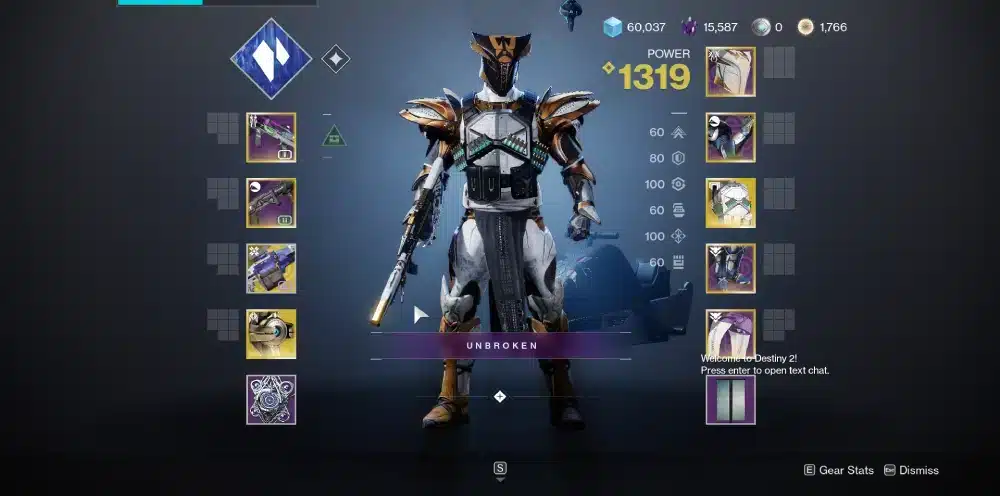

Destiny 2 Titan builds can turn the class into an aggressive frontline fighter, a durable source of team support, or a powerful ability-focused Guardian. With several subclasses, Exotics, weapons, armor choices, and buildcrafting systems available, Titans have plenty of ways to adapt to different activities.
Finding effective Destiny 2 Titan builds is not simply about copying one combination of gear. The best Titan build Destiny 2 players can use depends on the activity, subclass, modifiers, team composition, and current sandbox, which means understanding why each part of a build works is more valuable than memorizing one loadout.
So, what are the best Destiny 2 Titan builds? Strong Titan setups combine a clear subclass strategy with complementary abilities, armor, Exotics, weapons, stats, and artifact options. Solar, Strand, Prismatic, Void, Arc, and Stasis can all support useful builds when their mechanics match the content you are playing.
Destiny 2 Titan Builds: How Titan Buildcrafting Works
Before choosing specific Destiny 2 Titan builds, decide what you want the build to accomplish. A setup designed for surviving difficult PvE encounters should not necessarily use the same priorities as one built for Crucible or aggressive ability damage.
Start with the subclass and gameplay loop, then choose equipment that reinforces that strategy. This approach creates a coherent build instead of a collection of individually strong items that do not work particularly well together.
Start with your subclass
Your subclass determines many of the mechanics around which the rest of your build will operate. Aspects, Fragments, melee abilities, grenades, class abilities, and subclass verbs can all influence your armor and weapon choices.
Titans currently have access to several elemental approaches:
- Solar;
- Arc;
- Void;
- Stasis;
- Strand;
- Prismatic.
Each supports different playstyles. Solar can provide strong survivability and offensive loops, while Strand can offer powerful crowd control and defensive options. Void emphasizes mechanics such as Overshields, and Prismatic allows combinations drawn from multiple elemental kits.
The strongest choice depends on what the activity demands.
Build around a gameplay loop
Every good Destiny 2 Titan build should have a repeatable gameplay loop. Instead of simply asking which Exotic is strongest, determine how you expect abilities, weapons, and armor effects to interact throughout an encounter.
For example, your loop might involve:
- Use an ability to activate a subclass effect;
- Defeat or control enemies;
- Generate resources or another useful effect;
- Recover ability energy;
- Activate your Exotic synergy;
- Repeat the process.
If a piece of gear does not contribute to the loop or solve an important weakness, consider whether another option would provide more value.
Best Titan Build Destiny 2 for PvE
Choosing the best Titan build Destiny 2 offers for PvE depends heavily on difficulty. A setup that destroys groups of enemies in casual activities may become unreliable when enemies survive longer and deal significantly more damage.
For difficult PvE, prioritize consistency. Damage matters, but staying alive, controlling enemies, supporting teammates, and maintaining ability uptime can be equally important.
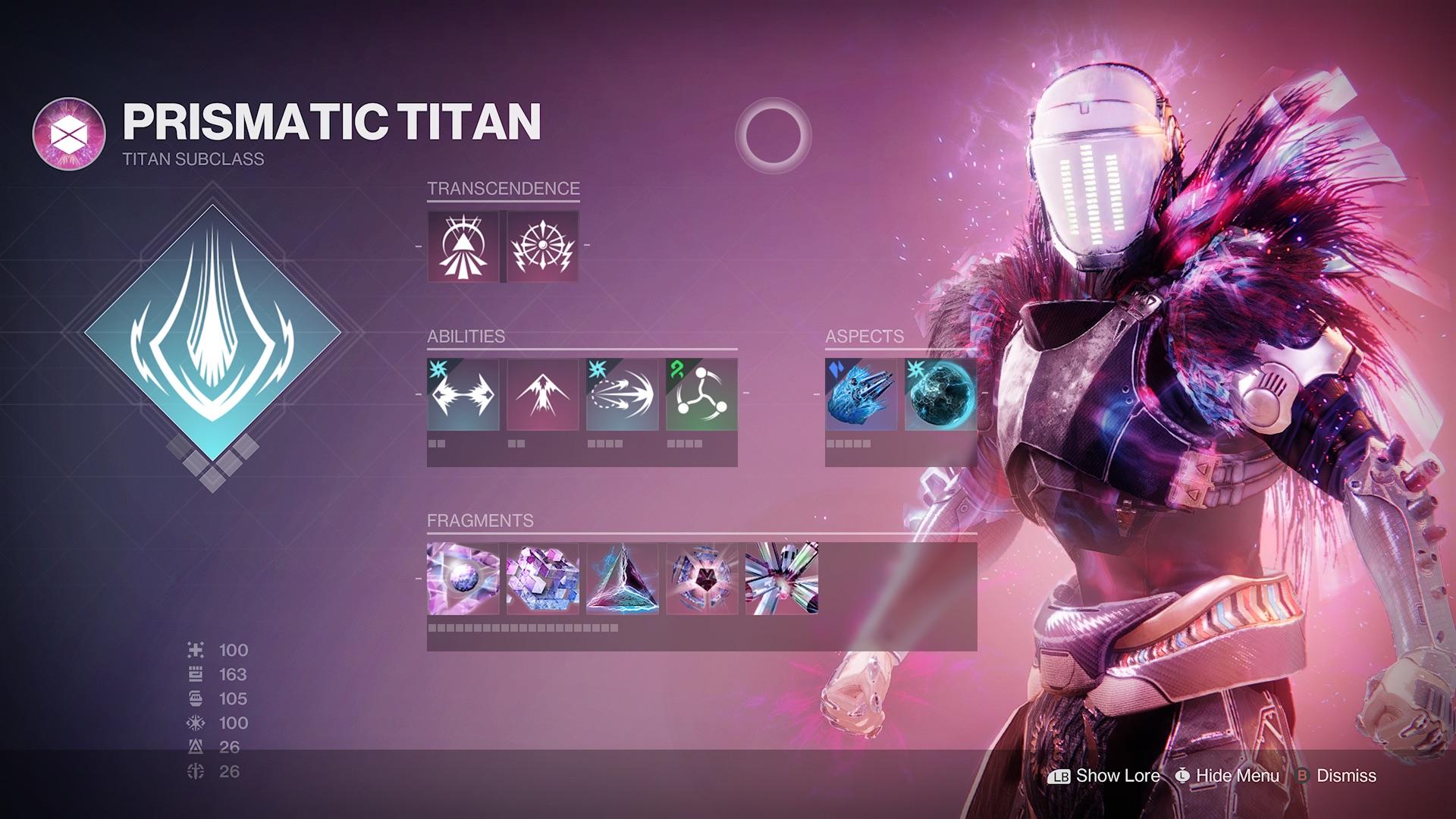
Prismatic Titan for flexible PvE
Prismatic gives Titans access to abilities and effects inspired by multiple subclasses, creating opportunities for flexible buildcrafting. Rather than committing entirely to one elemental identity, Prismatic can combine tools that would normally belong to different kits.
This makes it useful for players who want a build capable of handling several situations. Depending on your selected abilities and Exotic synergy, Prismatic can support aggressive melee gameplay, crowd control, survivability, or combinations of these roles.
When creating a Prismatic setup, avoid selecting abilities simply because they are individually powerful. Look for interactions that reinforce the same combat loop.
A strong Prismatic Titan build Destiny 2 setup should feel connected rather than random.
Solar Titan for survivability
Solar has historically been attractive for Titans who want to combine offensive pressure with reliable survivability. Solar mechanics can create strong loops around healing, restoration, ability damage, and elemental interactions.
This makes Solar particularly comfortable for solo activities or encounters where remaining active under pressure is important.
When building Solar, consider:
- How you will maintain survivability;
- Which abilities trigger your core effects;
- Whether your weapons complement Solar mechanics;
- How quickly your abilities return;
- Which Exotic reinforces your intended loop.
The goal is not simply to equip Solar gear everywhere. Every choice should contribute to the same overall strategy.
Titan Builds Destiny 2 for Endgame PvE
Endgame Titan builds Destiny 2 players use should prioritize reliability. Grandmaster-style content, difficult missions, raids, and other high-pressure activities can punish builds that depend entirely on standing close to dangerous enemies without a backup plan.
Your build should therefore account for survivability, range, Champions or activity mechanics, team roles, and whatever modifiers are currently active.
Strand Titan for control and defense
Strand provides Titans with tools that can support both aggressive and defensive gameplay. Crowd-control mechanics can reduce pressure from dangerous enemies, while defensive subclass interactions can make encounters more manageable.
In difficult content, controlling an enemy can sometimes be more valuable than immediately defeating it.
A good Strand build can focus on:
- Crowd control;
- Defensive effects;
- Ability regeneration;
- Melee interactions;
- Strand weapon synergy;
- Team utility.
The exact combination should reflect the activity.
If an encounter punishes close-range combat, adjust the build instead of forcing an aggressive melee loop into every situation.
Void Titan for team utility
Void Titan remains an important option when you want defensive utility and team-oriented gameplay. Void Overshields and related mechanics can create breathing room during difficult encounters, while other subclass tools can support area control and survivability.
This makes Void useful when your role involves more than personal damage.
For example, a team-focused Destiny 2 Titan build may prioritize keeping teammates alive or controlling dangerous spaces rather than maximizing individual ability damage.
In coordinated activities, that utility can be extremely valuable.
Destiny 2 Titan Build Comparison
There is no universal best Titan build Destiny 2 players should use in every activity. Each subclass offers different strengths, and balance changes can shift which strategies perform best.
The table below provides a practical way to compare general playstyles rather than relying on a temporary tier list.
| Titan subclass | Main strength | Good for | Typical playstyle |
| Prismatic | Flexibility | General PvE and buildcrafting | Hybrid |
| Solar | Sustain and offense | Solo and general PvE | Aggressive/sustainable |
| Strand | Control and defense | Difficult PvE | Control/aggressive |
| Void | Defensive utility | Team content | Support/defensive |
| Arc | Mobility and offense | Fast combat | Aggressive |
| Stasis | Control | Managing groups | Tactical/control |
These categories are not strict limitations. Buildcrafting can push subclasses toward different roles depending on the abilities, Exotics, and weapons you select.
Use the table as a starting point, then adapt your loadout to the actual encounter.
Choose for the activity
Before launching difficult content, ask what the activity requires.
Do you need survivability? Burst damage? Crowd control? Champion coverage? Team support? Long-range weapons?
Answering those questions makes choosing a subclass much easier.
The strongest Titan build Destiny 2 setup for one encounter may perform poorly in another simply because the activity asks you to solve different problems.
Don't ignore activity modifiers
Modifiers can dramatically change how a build performs.
Certain elemental effects, weapon bonuses, enemy types, or activity-specific mechanics can make one strategy significantly more useful than another.
Check modifiers before entering difficult content.
This simple habit prevents situations where you spend time creating an excellent build only to discover that it conflicts with the activity's requirements.
Best Titan Exotics for Buildcrafting
Exotic armor often defines the central mechanic of Destiny 2 Titan builds. A well-chosen Exotic can strengthen abilities, improve survivability, change how an ability works, or create an entirely new combat loop.
However, “best Exotic” lists can become outdated quickly. It is more useful to understand what role you need the Exotic to perform.
Choose an Exotic that supports your loop
Start with your subclass strategy.
If your build revolves around melee abilities, an Exotic that improves melee interactions may provide more value than one focused on an unrelated mechanic.
Likewise, defensive builds should consider Exotics that strengthen survivability or provide team utility.
Ask these questions:
- What ability do I use most?
- What resource limits my build?
- How do I survive difficult encounters?
- What does my Exotic activate?
- Can I trigger its effect consistently?
- Does it work with my chosen subclass?
If the Exotic's effect rarely activates during actual gameplay, it may not be the right choice regardless of how powerful it looks on paper.
Exotic armor vs. Exotic weapons
Remember that Destiny 2 limits how many Exotic items you can equip at once in relevant equipment slots.
Therefore, your Exotic armor and weapon decisions should be considered together.
Sometimes the weapon is essential to the build's damage strategy. In other situations, the armor defines the entire gameplay loop while your weapon selection remains flexible.
Do not automatically force an Exotic weapon into every build.
Legendary weapons with the right perks and elemental synergy can often provide exactly what the setup needs.
Weapons for Destiny 2 Titan Builds
Weapons should complement Destiny 2 Titan builds rather than exist separately from them. Subclass synergy, enemy type, engagement distance, and activity mechanics can all influence which weapons make sense.
A weapon that performs well in general gameplay may not be ideal for a specific endgame encounter.
Match weapons to your subclass
Elemental weapon synergy can activate subclass effects and support your build loop.
For example, if your setup benefits from specific elemental interactions, using a weapon matching that element may help maintain those effects more consistently.
However, do not sacrifice everything simply for elemental matching.
You still need weapons capable of handling the encounter. Consider:
- Enemy density;
- Engagement range;
- Boss damage requirements;
- Champion mechanics;
- Ammo economy;
- Subclass interactions;
- Artifact bonuses.
The best weapon is the one that contributes to the activity and your build simultaneously.
Carry options for different ranges
Not every encounter takes place at melee distance.
Titans are often associated with aggressive close-range gameplay, but difficult activities can punish players who refuse to adapt.
Keep options available for different engagement distances.
A balanced loadout might include a weapon for regular enemies, another for dangerous targets, and a Heavy weapon suited to boss damage or major threats.
Adaptability becomes increasingly valuable as difficulty rises.
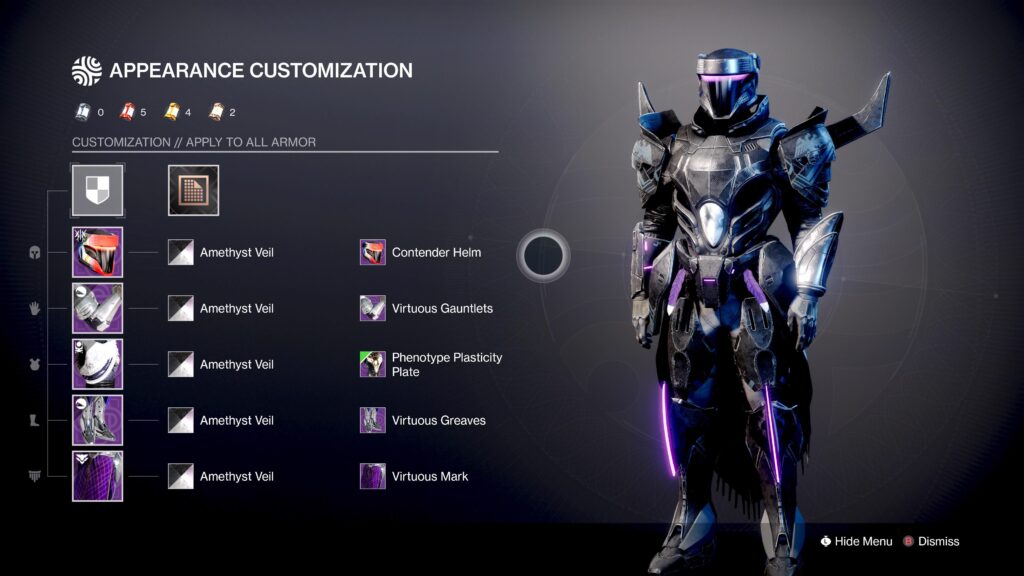
Titan Armor, Stats, and Armor 3.0
Modern Destiny 2 Titan builds also depend heavily on armor and stat priorities. Armor systems have evolved over time, which means older build guides may recommend stat structures or mod strategies that no longer reflect the current game.
Always build around the current armor system rather than copying a loadout created for an older version of Destiny 2.
Understand your important stats
Stat priorities should reflect your gameplay loop.
If your strategy depends on repeatedly using a specific ability, look for ways to support that ability's availability. If survivability is your biggest problem, defensive priorities may deserve more attention.
Instead of chasing numbers without context, ask what each stat contributes to the build. Your ideal distribution depends on:
- Subclass;
- Abilities;
- Exotic;
- Activity;
- Weapons;
- Team role.
Two strong Titan builds can therefore use different stat priorities and both be correct.
Use armor set bonuses strategically
Armor set bonuses add another layer to modern buildcrafting. Equipping compatible pieces can provide effects associated with specific sets and activities.
However, a set bonus should support the build rather than dictate every equipment choice.
Compare the value of the bonus with the stats and other benefits you would sacrifice.
The strongest setup is not necessarily the one with the most complicated combination of systems. It is the one where the systems reinforce each other consistently.
Best Titan Build for PvP
PvP Destiny 2 Titan builds require a different mindset from PvE. Enemy Guardians behave unpredictably, engagements happen quickly, and movement, positioning, weapon skill, and map knowledge become especially important.
A PvE setup built around defeating large groups of enemies may provide little value in Crucible.
Prioritize consistency in Crucible
Build around mechanics you can activate reliably against other players.
An ability that requires several PvE enemies to trigger a chain reaction may not translate well into PvP.
Instead, prioritize tools that support:
- Movement;
- Survivability;
- Engagement control;
- Ability availability;
- Weapon consistency;
- Positioning.
Your subclass should complement how you want to take fights.
Aggressive players may prefer mobility and close-range pressure, while more defensive players can build around controlling important positions.
Don't rely on abilities alone
Abilities are important, but weapons remain central to Destiny 2 PvP. A strong build cannot compensate for poor positioning or consistently missing shots.
Use your abilities to create advantages.
For example, they can force an opponent away from cover, help you survive an engagement, restrict movement, or make an aggressive push safer.
Then use your weapons to capitalize on that advantage. This balance creates a much more reliable PvP strategy.
How to Create Your Own Destiny 2 Titan Build
Copying Destiny 2 Titan builds can help you understand buildcrafting, but eventually you should be able to create and modify your own setups.
This becomes particularly important after balance updates, when a previously popular build may lose effectiveness.
The process becomes much easier when you start with one clear objective.
Build around one core idea
Do not begin by choosing ten different effects you want simultaneously.
Start with one.
For example:
“I want a Titan that can survive aggressive close-range PvE.”
From there, choose:
- A subclass supporting that goal;
- Abilities that reinforce it;
- An Exotic that improves the loop;
- Weapons that complement the subclass;
- Armor stats that support key abilities;
- Relevant artifact options;
- Activity-specific adjustments.
Then test the build. If something does not contribute to your goal, replace it.
Test in real activities
A build can look perfect in a menu and still perform poorly during actual combat.
Take it into an activity where enemies survive long enough for you to evaluate the full gameplay loop.
Ask yourself:
- Am I surviving consistently?
- Are my abilities available when needed?
- Does my Exotic activate often enough?
- Can I handle stronger enemies?
- Do my weapons cover different situations?
- Does the build collapse when one ability is unavailable?
These questions reveal weaknesses that are difficult to see by looking only at stats.
Common Titan Build Mistakes
Even strong Destiny 2 Titan builds can perform badly when individual components do not support the same strategy. One common mistake is copying a loadout without understanding why each Fragment, ability, weapon, or Exotic was selected.
Another is refusing to adjust the setup when the activity changes.
Copying outdated builds
Destiny 2 receives frequent sandbox changes. A video or guide may have been excellent when published but rely on mechanics that were later adjusted.
Before copying a build, check whether its core interactions still work.
Pay particular attention to:
- Exotic changes;
- Ability tuning;
- Subclass updates;
- Armor systems;
- Artifact perks;
- Weapon balance;
- Activity modifiers.
You do not necessarily need to abandon an older build completely. Often, replacing one or two components can make the concept useful again.
Building only for maximum damage
Damage is important, but a Guardian who cannot survive contributes no damage while waiting to revive.
Endgame builds should consider survivability and consistency alongside offensive potential.
Likewise, team activities may reward utility that does not appear in a damage test.
A Titan who controls enemies, protects teammates, or keeps an encounter stable can provide enormous value.
Build for completing the activity, not simply generating the largest isolated number.
Best Titan Build End Game Stellaris: Understanding the Search
Players researching Destiny 2 Titan builds may occasionally encounter the phrase best Titan build end game Stellaris in search suggestions. However, Stellaris is a separate strategy game and does not contain Destiny 2's Titan class or subclass build system.
The phrase appears to combine different gaming search intentions, so it should not be treated as an official Destiny 2 build name.
Is Stellaris connected to Destiny 2 Titan builds?
No. Destiny 2 and Stellaris are separate games with completely different gameplay systems.
Destiny 2 uses Guardian classes such as Titan, Hunter, and Warlock, while Stellaris is a grand strategy game centered on building and managing an interstellar civilization.
Therefore, if you searched best Titan build end game Stellaris while looking for a Destiny build, the relevant part of your search is likely “best Titan build end game.”
For Destiny 2, focus on builds designed for the endgame activity you intend to play.
What makes a Titan build endgame-ready?
An endgame Destiny 2 Titan build should remain functional when enemies are more dangerous and mistakes are more costly.
That usually means combining reliable survivability with useful damage or team utility.
Before considering a build ready for difficult content, make sure it can:
- Survive sustained pressure;
- Handle dangerous enemies;
- Function at appropriate ranges;
- Support required activity mechanics;
- Maintain a repeatable gameplay loop;
- Contribute to the fireteam.
A build that satisfies these requirements is more valuable than one optimized only for easy enemies.
Destiny 2 Titan Builds and Online Connection
Using Destiny 2 Titan builds effectively still depends on executing your abilities and weapons during an online game. Destiny 2 relies on network communication across its multiplayer environment, particularly when participating in activities with other players.
Connection problems are separate from buildcrafting, but unstable routing can affect the overall online experience.
What network problems can affect Destiny 2?
Network-related problems can include high latency, packet loss, routing instability, and connection fluctuations. These issues are different from low FPS, incorrect build choices, or poor weapon selection.
Common network symptoms can include:
- Latency spikes;
- Packet loss;
- Connection instability;
- Routing fluctuations;
- Inconsistent responsiveness.
Before troubleshooting, identify whether the issue comes from gameplay, hardware, or the network.
Changing your Titan build Destiny 2 setup will not fix a routing problem, just as network optimization cannot replace an effective build.
How can ExitLag help Destiny 2 players?
ExitLag is designed to optimize network routes for supported online games. Its technology analyzes multiple paths and works to select faster and more stable routes for supported gaming traffic.
ExitLag is not a traditional VPN designed to hide your IP address or change your location. Its focus is gaming connection route optimization.
Therefore, while you focus on abilities, weapons, armor, and executing your Titan build, ExitLag can work on optimizing the supported network route behind your online gameplay.
FAQ
Players researching Destiny 2 Titan builds often want to know which subclass, Exotic, and strategy they should prioritize. These five answers cover the most important starting points.
What is the best Titan build in Destiny 2?
There is no single best Titan build Destiny 2 players should use everywhere. Prismatic, Solar, Strand, Void, Arc, and Stasis can all support effective builds, while the ideal choice depends on activity difficulty, modifiers, your equipment, and the role you need to perform.
What is the best Titan subclass for PvE?
Prismatic offers extensive buildcrafting flexibility, while Solar, Strand, Void, and other subclasses can excel in specific roles. For difficult PvE, prioritize a subclass that provides the survivability, control, damage, or team utility required by the activity.
What stats should a Titan prioritize?
Stat priorities depend on your current armor system, subclass, abilities, Exotic, and gameplay loop. Instead of following one universal stat distribution, prioritize the stats that improve the abilities and survivability your particular build relies on.
Are Titan builds different for PvP and PvE?
Yes. PvE builds often focus on ability loops, enemy control, survivability, and sustained damage, while PvP places greater emphasis on movement, positioning, weapon consistency, engagement control, and abilities that work reliably against other Guardians.
How do I know if my Titan build is good?
Test it in the type of activity it was designed for. A strong build should have a repeatable gameplay loop, enough survivability for the difficulty, appropriate weapons, reliable ability synergy, and a clear role within solo or team content.
Destiny 2 Titan Builds: Build Smarter and Play With ExitLag
Destiny 2 Titan builds are strongest when every part of the setup supports the same goal. Choose your subclass for the activity, build a reliable ability loop, match your Exotic and weapons to that strategy, and adjust whenever the sandbox or encounter changes.
Build your Titan for the challenge ahead and optimize your Destiny 2 connection with ExitLag!