Destiny 2 builds matter more than ever in the Year of Prophecy. Since The Edge of Fate launched in July 2025, Bungie has overhauled buildcrafting with Armor 3.0, new stats, armor set bonuses, and a more layered approach to gear progression. Instead of simply stacking old stat breakpoints, players now build around 200-point stat caps, set bonuses, and stronger subclass identity.
Weapon choice is just as important as subclass planning, especially when your build needs to perform under pressure. For Crucible and Trials players, this Destiny 2 PvP weapons guide can help connect strong loadouts with the guns that make those setups feel more consistent.
If you want the best Destiny 2 builds right now, the short answer is this: the strongest setups in April 2026 usually combine one clear gameplay loop with the new systems Bungie added in The Edge of Fate and later tuned through the Renegades era. That means high-uptime Prismatic builds are still relevant, but focused class setups like Destiny 2 Hunter build damage loops, Destiny 2 Titan build sword or Void pressure, and Destiny 2 Warlock build ability spam are also thriving. Community build hubs continue to spotlight Void Hunter DPS, Strand Hunter pressure, Solar Titan, Void Titan Praxic Blade setups, Void Vortex Warlock, and Prismatic Warlock control as standout archetypes.
That makes this a very different sandbox from older Destiny years. Today, Destiny 2 builds are less about copying one “broken” setup and more about choosing the right tool for the activity. Raids, dungeons, Solo Ops, Crucible, and Trials all reward different priorities. Bungie’s own Year of Prophecy roadmap and update notes show that current buildcrafting is tied not only to subclasses and Exotics, but also to activity modifiers, artifact support, ammo-generation changes, and armor set incentives.
What are the best Destiny 2 builds right now?
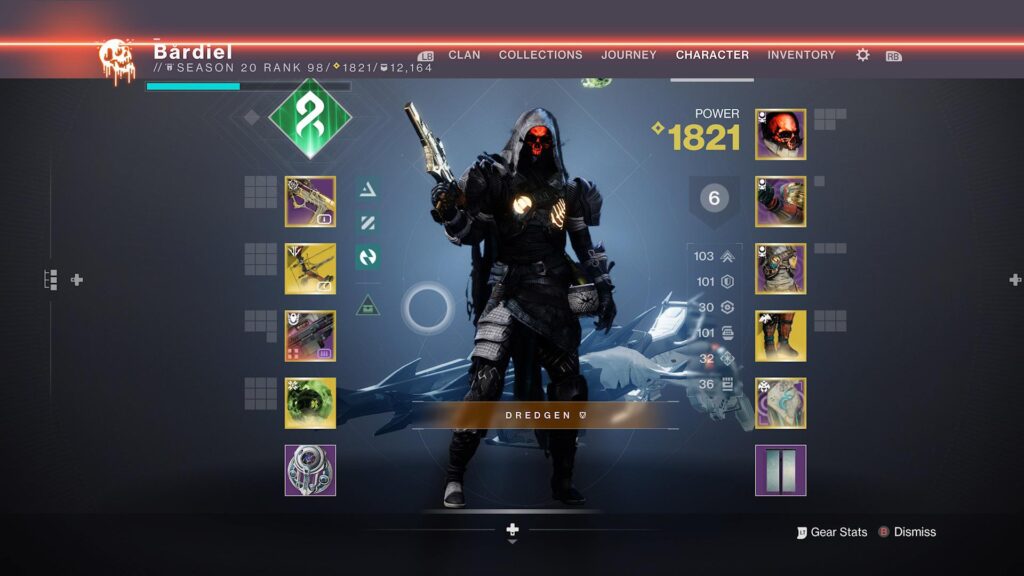
Right now, the strongest Destiny 2 builds are the ones that do one of three things exceptionally well: generate abilities at high speed, convert survivability into reliable damage, or lock down fights through crowd control and weapon pressure. That applies to both PvE and PvP. Bungie’s own updates made this possible by expanding stat depth, adding armor set bonuses, and making ammo generation a direct part of build planning.
For PvE, the current leaders are generally Void and Strand-heavy setups on Hunter and Titan, plus Void, Stasis, and Prismatic-control Warlock builds. For PvP, the best-performing setups usually lean into movement, burst damage, lane control, and fast cooldown loops. The Renegades artifact also matters here: Bungie said it boosts Kinetic, Arc, and Void toolkits, with extra focus on reliable weapon performance and Sword synergy, which has helped shape the current sandbox.
Why buildcrafting changed after The Edge of Fate
The biggest reason the meta changed is that Bungie changed the foundation. Armor 3.0 introduced new stats, new stat conversion rules, set bonuses at two and four pieces, full mod energy on drops, and a new philosophy where gear tier and set identity matter more than they used to. Bungie also confirmed that Exotics were updated to fit this system, even if they do not use tiered armor in the same way as new legendary sets.
That means the old way of thinking about a Destiny 2 Endgame build is outdated. You are no longer just trying to hit the familiar old resilience and recovery breakpoints and then calling it done. Instead, you are balancing health, melee, grenade, super, class, and weapons stats under the new structure, while also deciding whether a set bonus is worth more than a flexible off-piece. This is why best Destiny 2 builds in 2026 feel more intentional and more gear-dependent than many 2024-era loadouts.
Players still learning the current systems should start with the official onboarding path before chasing complex endgame loadouts. Bungie’s Destiny 2 New Light guide gives newer Guardians a safer foundation for understanding classes, progression, and the basics behind buildcrafting.
What the current sandbox rewards most
The current sandbox rewards builds that can keep pressure high without falling apart in longer encounters. Bungie’s late-2025 Renegades artifact preview highlighted Kinetic, Arc, and Void support, sword-focused perks, ammo economy interactions, and weakening effects spreading across groups. That pushes players toward weapon-forward setups instead of purely ability-only loops.
That is why the top Destiny 2 PvE build options tend to fall into a few broad categories:
- Void damage and debuff loops
- Strand suspend and melee control
- Solar survivability with strong neutral game
- Prismatic builds with excellent Transcendence uptime
- weapon-centric setups that benefit from artifact support and armor bonuses
The same logic appears in community meta hubs. Mobalytics’ featured and highlighted builds in early 2026 still lean heavily into Void Hunter DPS, Strand Hunter pressure, Praxic Blade Void Titan, Solar Titan, Void Vortex Warlock, Stormdancer Warlock, and Prismatic control variants rather than one single universal answer.
What is the best Destiny 2 build for each class?
There is no single universal winner for every Guardian. The best answer depends on whether you care more about raids, solo content, Grandmaster-style pressure, Control, or Trials. Still, if you want a practical snapshot of the strongest class directions, there are clear front-runners. Community build hubs in early 2026 consistently highlight Hunter damage and mobility setups, Titan survivability and sword/void pressure, and Warlock control-heavy ability loops.
For most players, the smartest approach is to maintain one Destiny 2 PvE build and one Destiny 2 PvP build per class. That gives you flexibility without forcing constant rebuilds. It also fits Bungie’s current design direction, where different activities reward different priorities instead of allowing one build to solve everything equally well.
Class identity matters because each Guardian type solves combat problems in a different way. A deeper look at Destiny 2 characters can help players understand why Hunter, Titan, and Warlock builds prioritize different strengths across PvE and PvP.
Hunter: the best Destiny 2 Hunter build options
The strongest Destiny 2 Hunter build options right now split into two main paths. In PvE, Void DPS and Strand movement-control builds are showing up constantly in featured community lists, with Void Hunter and Strand Hunter both highlighted by Mobalytics in 2026. Prismatic Hunter is still relevant too, especially because current Hunter build pages still emphasize grappling, Combination Blow loops, and Transcendence uptime.
A smart Hunter breakdown looks like this:
| Activity | Strong Hunter direction | Why it works |
| Raids / Dungeons | Void DPS Hunter | Excellent burst and debuff pressure |
| Solo PvE | Strand or Prismatic Hunter | Mobility, control, and self-sustain |
| Crucible / Trials | Arc or Prismatic Hunter | Movement, dueling, and fast engagement control |
This is why Hunter remains one of the most flexible classes in the game. If you want the best Destiny 2 builds for raw pace and aggression, Hunter still offers some of the clearest payoffs. Even community PvP examples in 2026 show Arc and Prismatic Hunter setups built around dodge uptime, melee pressure, and fast dueling.
Titan: the best Destiny 2 Titan build options
The current Destiny 2 Titan build meta is in a very healthy place. Mobalytics’ highlighted Titan page for the Renegades-era sandbox shows Solar Titan, Praxic Blade Void Titan, Stronghold-adjacent sword builds, Nuclear Storm, and Suspend-focused Titan setups all competing for attention. That tells you something important: Titan is not trapped in one archetype right now.
In practical terms, Titan’s strongest lanes are:
- Solar Titan for survivability and steady output
- Void Titan for support, volatility, and Praxic Blade synergy
- Strand Titan for suspend-based battlefield control
- Prismatic Titan for hybrid uptime and utility
If you need a Destiny 2 Endgame build, Titan is arguably the easiest class to stabilize because its strongest setups give you both damage and durability. Bungie’s artifact language around swords, Void weakening, and dependable weapons also lines up well with Titan’s current strengths, especially once you start layering Armor 3.0 stat targets and set bonuses on top.
Warlock: the best Destiny 2 Warlock build options
The strongest Destiny 2 Warlock build choices continue to revolve around control, uptime, and team value. Mobalytics’ Warlock build pages and highlighted lists in early 2026 point toward Void Vortex, Stormdancer, turret-oriented Prismatic builds, Stasis freeze control, and high-uptime grenade-focused loadouts. That fits what Warlock has always done best, but the modern sandbox makes those strengths even more important.
A clean Warlock snapshot looks like this:
| Activity | Strong Warlock direction | Why it works |
| Endgame PvE | Void Vortex / Void control | Add clear, debuffs, and survivability |
| Solo / Utility PvE | Prismatic or Stasis Warlock | Turrets, suspend, and flexible control |
| PvP | Solar or Prismatic Warlock | Rift utility, movement tools, and duel support |
Warlock is especially strong if you want a Destiny 2 PvE build that can scale from normal content into serious endgame. Prismatic Warlock pages continue to stress Bleak Watchers, Threadlings, and Transcendence uptime, while Solar Warlock pages still emphasize healing, support, and ignition-based offensive play.
Are Prismatic builds still good in Destiny 2?
Yes, Prismatic is still good, but it is no longer the automatic answer to every activity. Bungie specifically tuned Prismatic going into The Edge of Fate, including fragment-slot reductions on various aspects because the subclass had been “a bit hot” since release. That is a strong sign that Bungie still considers Prismatic powerful, just not something they want to sit too far above every other subclass forever.
So if you are asking whether Destiny 2 builds should still start with Prismatic in 2026, the answer is: sometimes. Prismatic remains excellent when you want flexibility, fast Transcendence uptime, and the ability to combine crowd control, healing, or burst from different elemental identities. But in some activities, monoelement builds now give you cleaner artifact synergy and more focused results.
When Prismatic is the best choice
Prismatic is at its best when you need adaptability. That is why it still shows up on Mobalytics’ Prismatic pages for Titan, Hunter, and Warlock, all of which highlight Transcendence uptime and flexible ability interactions as core reasons to use it.
Prismatic usually shines in these situations:
- mixed-content sessions where you do not want to respec often
- solo content where flexibility beats specialization
- builds designed around cooldown chaining
- encounters where both crowd control and damage matter
- Guardians who prefer one adaptable loadout over multiple specialized ones
That makes Prismatic one of the safest ways to build a general-purpose Destiny 2 Endgame build, even if it is not always the absolute top damage or top control answer in every single activity.
Major system changes usually make more sense when viewed alongside Destiny’s expansion history and how each release reshaped subclasses, gear, and activity design. This guide to Destiny 2 expansions gives useful context for why modern builds feel so different from older loadouts.
When a focused elemental build is better
A focused elemental build is usually better when the artifact strongly supports that element or weapon family. Bungie’s Renegades artifact preview emphasized Kinetic, Arc, and Void, plus sword perks and weakening effects. That naturally makes some focused Void, Arc, or sword-centric builds more efficient than a generalist Prismatic loadout in the current sandbox.
That is why many of the current best Destiny 2 builds are not purely Prismatic. Void Hunter DPS, Void Titan support and blade setups, Solar Titan tanks, and Void Vortex Warlock builds are all still relevant because they hit current activity demands directly. If your goal is maximum performance instead of maximum flexibility, focused builds often win.

How ExitLag helps Destiny 2 on PC
Build quality matters, but connection quality still decides whether those builds feel smooth in practice. That is especially true in Destiny 2, where small delays can ruin peek shots, sword timing, movement loops, and raid execution. If you play on PC, ExitLag is useful because it helps stabilize routing and reduce the random network issues that can make even strong Destiny 2 builds feel worse than they should.
This matters more now because the game keeps encouraging harder cooperative content, longer dungeon attempts, and more competitive play. Bungie’s Year of Prophecy structure added new solo and fireteam activity options, while Trials and other PvP modes still punish unstable connections heavily.
Official resources are still useful when players need to connect build decisions with broader game systems, activity expectations, and current progression. Bungie’s official Destiny 2 guide is a strong reference point before refining advanced PvE or PvP setups.
Why ExitLag helps in PvE
For PvE, ExitLag is most valuable in:
- long raids where disconnects waste time
- dungeons where one death can ruin momentum
- solo content where consistency matters
- build loops that depend on precise movement or melee timing
If you are running a Destiny 2 PvE build based on swords, suspends, grenades, or rapid-rotation damage windows, poor routing can break the feel of the build even when your gear is correct. ExitLag helps reduce that frustration by keeping your PC connection more stable.
Why ExitLag helps in PvP
For PvP, the benefits are even easier to feel. Trials and Crucible punish delay immediately. A strong Destiny 2 PvP build can still lose gunfights if your connection adds inconsistency to your peeks, slide timing, shotgun pushes, or melee trades.
ExitLag helps most with:
| PvP situation | Why stability matters |
| Trials duels | Peek timing and fast reactions decide rounds |
| Control / Comp | Consistent fights matter more than one flashy play |
| Movement-heavy builds | Dodges, slides, and aggressive pushes feel better |
| Ability-based loadouts | Cooldown value drops if execution is delayed |
So yes, gear matters. But when your build is already good, connection quality is one of the biggest remaining differences between a loadout that feels sharp and one that feels frustrating.
FAQ
The strongest Destiny 2 builds in April 2026 are mostly built around Void Hunter DPS, Strand and Prismatic Hunter pressure, Solar and Void Titan setups, and Void, Stasis, or Prismatic Warlock control. Armor 3.0, stat reworks, set bonuses, and the Renegades artifact all shaped that meta.
There is no single winner for every mode, but the strongest Destiny 2 Hunter build paths right now are Void DPS for PvE, Strand or Prismatic for flexible content, and Arc or Prismatic for PvP movement and duel pressure.
The best Destiny 2 Titan build options currently include Solar Titan for survivability, Void Titan for support and blade synergy, and Strand or Prismatic Titan for control-heavy PvE. Titan is one of the easiest classes to tune into a reliable Destiny 2 Endgame build because it combines durability with strong neutral game.
The strongest Destiny 2 Warlock build choices revolve around Void Vortex, Prismatic control, Stasis freezing, and Solar support. Warlock remains one of the best classes for players who want ability uptime and team value in PvE.
Yes, but they are not always the best answer. Bungie tuned Prismatic before The Edge of Fate because it was too hot, but it still remains a very strong option for players who want flexibility and strong Transcendence uptime.
The biggest changes were Armor 3.0, stat reworks, set bonuses, full mod energy on new armor, and a new focus on gear tiers and weapon/ammo systems. These systems made best Destiny 2 builds more dependent on smart stat planning and armor identity than before.
Final thoughts
The modern answer to Destiny 2 builds is not about one single overpowered loadout. It is about understanding the current sandbox. Armor 3.0 changed the math. The Renegades artifact changed what weapon and element pairings feel strongest. Community build hubs now show a wide but clear meta, with Void Hunter, Solar and Void Titan, and Void or Prismatic Warlock standing out as the most practical places to start.
If you want a simple recommendation, start by building one strong Destiny 2 PvE build and one strong Destiny 2 PvP build for your main class, then expand from there. And once your loadout is ready, make sure your connection does not become the weakest part of your setup. Destiny 2 builds feel best when the game is smooth, responsive, and consistent, which is exactly why ExitLag is worth using on PC if you want your raids, dungeons, Crucible matches, and Trials cards to feel as clean as your build looks on paper.
Got questions or want to connect with other players? Join the conversation at the ExitLag Forum!