DLSS 5 in Hogwarts Legacy is set to arrive on November 5, 2026. Nvidia has confirmed that Avalanche Software’s RPG will receive the neural rendering technology in an update. The announcement highlights a more efficient model and a more restrained approach to the game’s visuals.
The technology first appeared in NBA 2K27 in September after its introduction in March. Nvidia now says the revised model runs twice as fast as the one used in that initial release.
Beyond the technical upgrade, new previews of DLSS 5 in Hogwarts Legacy show subtler effects than those seen in the original demonstrations. The changes have renewed the debate over how much AI should influence a game’s visual identity.
The release also raises a practical question: who will be able to use it? Nvidia has outlined the supported platforms, along with several updates to other technologies in the DLSS lineup.
What Is DLSS 5, and How Does It Change Graphics?
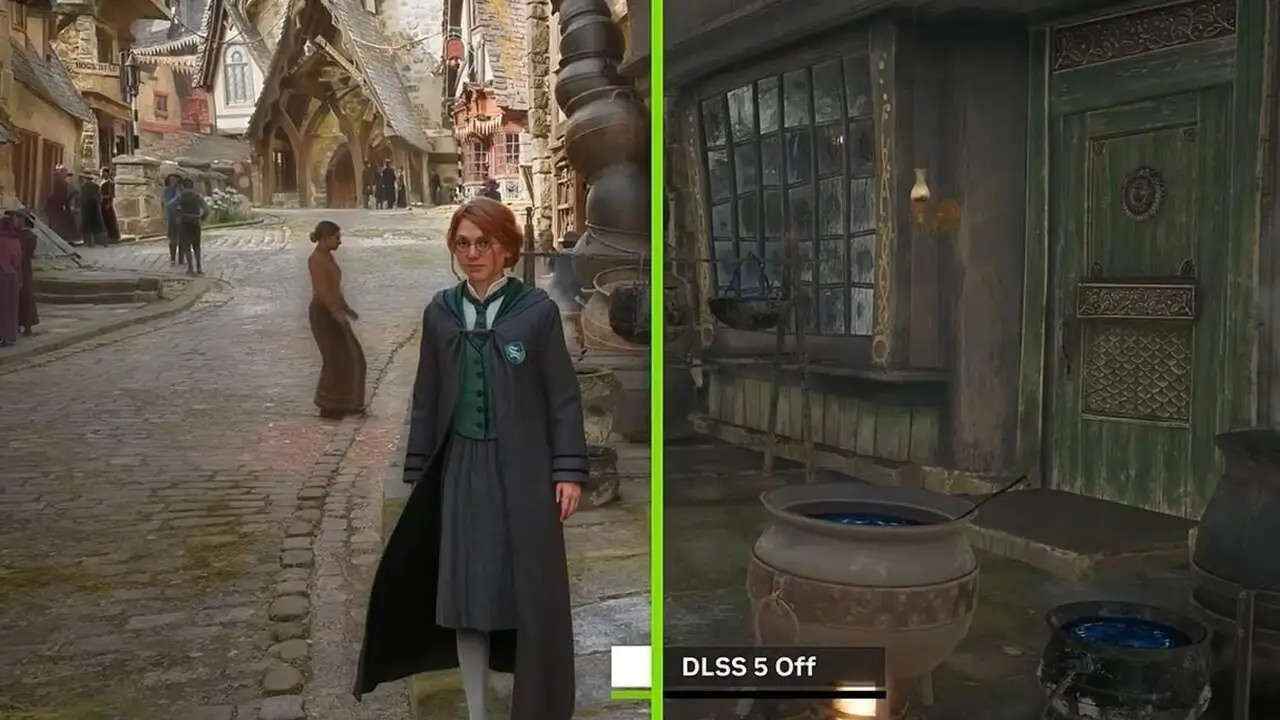
Officially unveiled on March 16, 2026, DLSS 5 is a neural rendering system guided by 3D scene information. It uses artificial intelligence to enhance lighting, materials, and visual details.
The approach differs from previous DLSS technologies. While earlier features focused on reconstructing higher-resolution images or generating additional frames, the new system can also change the appearance of rendered scenes.
To do that, it draws on data from the game engine, including geometry, textures, and lighting information. Nvidia says those inputs help the system add detail while respecting the developers’ intended art direction.
In Hogwarts Legacy, the results can affect both environments and characters. This is not simply about achieving higher frame rates. It is also about how surfaces, lighting, and faces look on screen.
Why Did DLSS 5 Face Backlash?
When Nvidia first demonstrated DLSS 5, comparisons featuring Hogwarts Legacy, Resident Evil Requiem, and Starfield sparked criticism. Some players felt the results looked like an artificial “AI filter” placed over the original graphics.
In the Harry Potter-inspired RPG, much of the discussion focused on a student shown in the demo. Some viewers thought the character looked older, raising concerns about whether the technology was preserving the game’s visual identity.
The latest presentation suggests a more restrained approach. According to VideoCardz, character faces now look closer to the original rendering, with less pronounced differences than those shown in March.
Avalanche Software used controls in the DLSS 5 software development kit to adjust the strength of the neural effects and preserve its intended visual style. The debate has not disappeared, though. Some players say the difference between enabling and disabling the feature is now difficult to notice.
A 2x Faster Model: What Does That Actually Mean?
Nvidia says the updated DLSS 5 model is twice as fast as the version used in September. Compared with the model shown at the March reveal, the company claims its processing is now 10 times faster.
Those figures have different points of comparison. They do not mean Hogwarts Legacy will run at twice the frame rate. The claims concern neural model processing efficiency, rather than a measured FPS increase in the game.
The company reduced the neural network’s size by 24%, bringing it to roughly 118 million parameters. Nvidia also reports about 20% lower video memory usage at 4K.
That marks a notable change from the initial demonstration, which required two GeForce RTX 5090 GPUs. The revised model is scheduled to arrive first in NBA 2K27 on October 16, ahead of its November rollout in Hogwarts Legacy.
DLSS 5 in Hogwarts Legacy: Release Date and Requirements
The update is scheduled for November 5, 2026. According to Nvidia, DLSS 5 support in Hogwarts Legacy will be available through:
- GeForce RTX 50-series graphics cards on compatible systems.
- RTX Spark laptops.
- GeForce NOW, Nvidia’s cloud gaming service.
The announced compatibility list does not include GeForce RTX 40-series cards for the new neural rendering feature in Hogwarts Legacy. That restriction should not be confused with the requirements for other DLSS technologies.
The update will also bring the game’s existing DLSS features to newer versions. In other words, DLSS 5 will not be the only graphics-related change arriving with the patch.
Preset C and RTX Remix Are Getting Updates Too
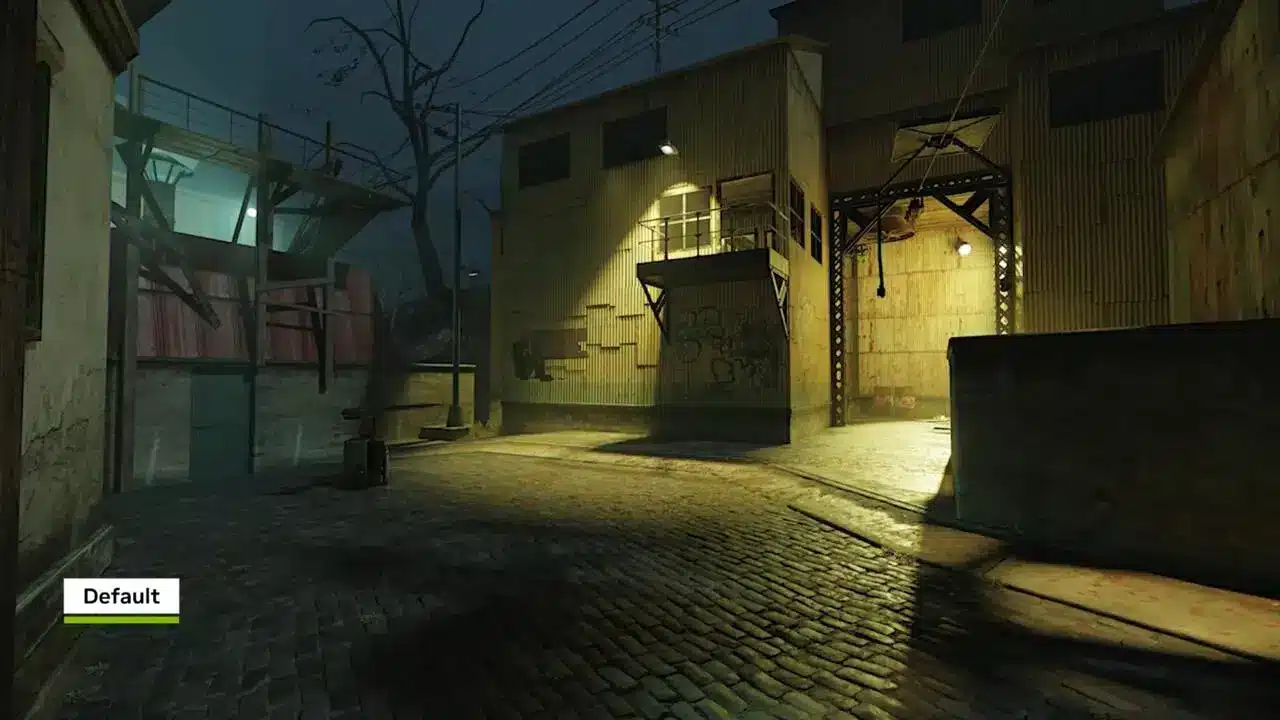
Alongside the DLSS 5 rollout, Nvidia has introduced Preset C in beta. It is a new performance-oriented preset for Frame Generation, with support for RTX 40-series and RTX 50-series GPUs as well as RTX Spark laptops. This does not expand the DLSS 5 compatibility list for Hogwarts Legacy.
According to Nvidia, the preset can run up to 35% faster on an RTX 5060, at the cost of minor visual quality trade-offs. That figure applies to the frame generation feature and is not a guaranteed FPS boost in the RPG.
Another update is planned for October 23, when DLSS 5 will be added to RTX Remix. The tool will allow modders to use neural rendering in projects that modernize the visuals of older games.
With these changes, Hogwarts Legacy will become another public test of the technology. The November update will help show whether players find the balance between better visuals, improved efficiency, and fidelity to the original art style convincing.
Got questions or want to connect with other players? Join the conversation at the ExitLag Forum!