When did Minecraft come out? This question continues to capture the curiosity of millions of gamers around the world. More than a simple launch date, it’s a window into the origins of one of the most influential video games in history. From its humble beginnings in early development to becoming a multi-platform, billion-dollar franchise, Minecraft has shaped the gaming landscape like no other title.
Much like classic MMOs that continue to thrive today, keeping track of server status and stability became essential as Minecraft scaled to host millions of players across online realms and custom servers.
Understanding the Minecraft release date gives us more than trivia — it reveals how a small indie project became a global creative outlet for players of all ages. In this guide, we’ll break down every milestone, version, and update that helped turn Minecraft into the phenomenon it is today.
When Did Minecraft First Come Out?
To answer the question “When did Minecraft first come out?”, we need to look at its development timeline, from prototype builds to full release.
Timeline: From Alpha to Official Release
| Milestone | Date | Description |
| First Public Release (Pre-Classic) | May 17, 2009 | Game uploaded by Notch on TIGSource forum |
| Minecraft Alpha | June 28, 2010 | First paid version on PC |
| Minecraft Beta | December 20, 2010 | Introduced major mechanics and bug fixes |
| Official Release | November 18, 2011 | Released at Minecon 2011 (v1.0.0) |
The official release date of Minecraft is November 18, 2011, when it exited beta during Minecon and became available as version 1.0.
When Did Minecraft Officially Release?
The game’s transition from indie project to mainstream hit was solidified on November 18, 2011. Released by Mojang under the direction of Markus “Notch” Persson, the game immediately struck a chord with creative players.
Fun fact: The release date was intentionally timed with the first-ever Minecon, held in Las Vegas.
When Did Minecraft Come Out on Consoles and Mobile?
After the success of the PC version, Minecraft rapidly expanded to new platforms. Each release was tailored to the system, leading to new controls, UI, and multiplayer support.
Minecraft Expansion Across Platforms
| Edition | Release Date | Notes |
| Minecraft: Xbox 360 | May 9, 2012 | Developed by 4J Studios |
| Minecraft: Pocket Edition (PE) | August 16, 2011 | Initial mobile version on Android |
| Minecraft: iOS (PE) | November 17, 2011 | Released for iPhone/iPad |
| Minecraft: PlayStation 3 | December 17, 2013 | Ported to Sony’s console |
| Minecraft: Nintendo Switch | May 11, 2017 | Runs the Bedrock Engine |
| Minecraft: Windows 10 Edition | July 29, 2015 | Bedrock-based crossplay version |
These rollouts introduced millions of console and mobile players to the Minecraft universe. It’s no surprise that questions like “When did Minecraft PE come out?” or “When did Minecraft come out on Xbox 360?” remain top search queries.
Minecraft’s evolution is comparable to long-standing titles that also reinvented themselves through retro re-releases and community revival. A great example is World of Warcraft Classic, which—like early Minecraft—reminded players of what made the original version special.
What Were the Most Iconic Minecraft Versions?
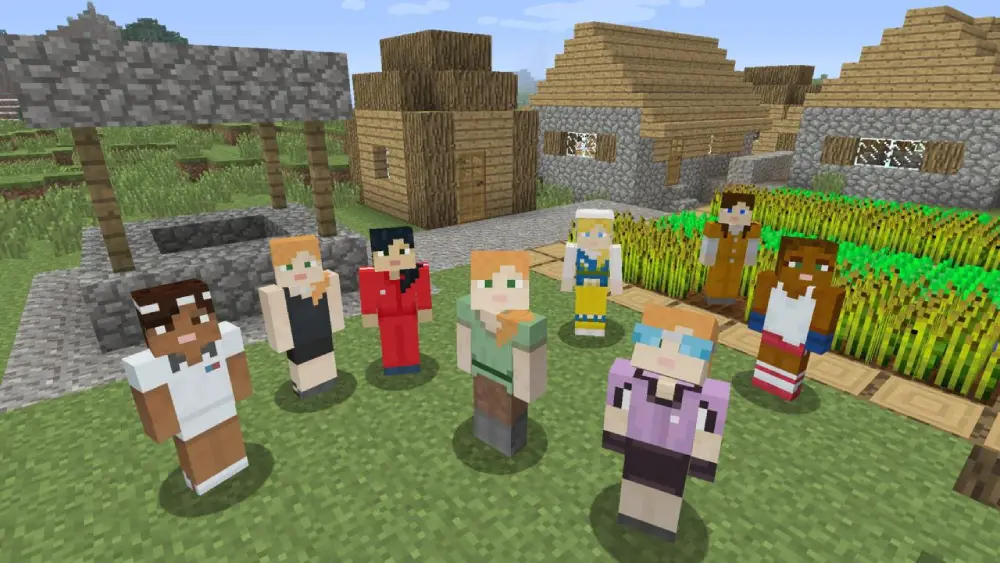
Beyond platform expansion, Minecraft’s identity was shaped by game-changing updates and special editions.
Most Influential Minecraft Versions
Minecraft 1.8 – The Bountiful Update (2014)
- Added ocean monuments, guardians, and rabbits
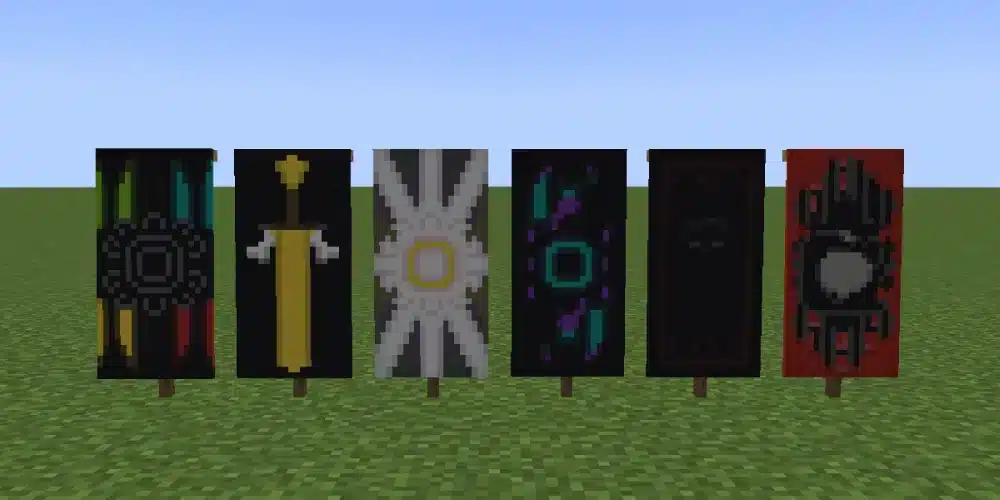
- Introduced armor stands and banners
Minecraft 1.9 – The Combat Update (2016)
- Added dual wielding, shields, and end cities
- Major rework of PvP combat
Minecraft 1.17–1.18 – Caves & Cliffs (2021)
- Overhauled terrain generation
- Introduced geodes, axolotls, and lush caves
Minecraft 1.21 (2024)
- Expanded automation and redstone systems
- New mobs and biome refinements
These updates didn’t just add content — they evolved how players interacted with the game, pushing Minecraft from sandbox to survival strategy to modding engine.
What About Minecraft Story Mode and Special Editions?
Minecraft also branched into story-driven experiences and media adaptations.
- Minecraft: Story Mode – Released on October 13, 2015
A narrative game by Telltale Games, it featured episodic storytelling and new characters. - Minecraft: Education Edition – Launched in November 2016
Designed for classrooms, with lesson templates and coding tools. - Minecraft: Java vs Bedrock
- Java Edition: PC-exclusive, more mod-friendly
- Bedrock Edition: Cross-platform, optimized for consoles and mobile
And just as WoW offers a variety of class playstyles, Minecraft’s unique versions can be compared to how World of Warcraft classes define your experience in entirely different ways — whether you build, survive, or automate.
Why Did Minecraft Become So Successful?
Understanding when Minecraft came out is just the beginning. Its journey to becoming a cultural and gaming icon involved a combination of innovation, timing, and community-driven evolution.
Why Was Minecraft So Successful?
- Open-ended creativity: Unlike most games with fixed objectives, Minecraft encouraged players to set their own goals. Build a castle, mine for diamonds, survive the night — or all three.
- Community engagement: Mojang continuously listened to the player base, integrating fan-requested features and showcasing mods that often inspired official updates.
- Accessible design: Despite its blocky visuals, Minecraft’s low hardware requirements made it available to a broad audience, including those without high-end PCs or consoles.
- Endless replayability: With procedurally generated worlds, no two playthroughs are the same. Add in redstone contraptions, custom servers, and mods, and the possibilities are infinite.
- Education and collaboration: Minecraft found a place in schools for teaching coding, architecture, and teamwork. Its classroom edition gave it a whole new level of legitimacy.
Is Minecraft Infinite?
In a literal sense, no — but in practice, yes. Minecraft’s world generation system allows for maps up to 60 million blocks wide. While players can eventually reach the “Far Lands” or face floating point glitches, the playable area is so vast it feels endless.
This near-infinite scope feeds into the game’s most iconic gameplay loop:
- Explore randomly generated terrain
- Mine for valuable resources and hidden caves
- Craft tools, armor, and redstone machines
- Build structures limited only by imagination
With multiplayer servers, modpacks, and PvP arenas, Minecraft continues to reinvent itself for every type of gamer — from builders and roleplayers to survivalists and speedrunners.
Minecraft’s sprawling open-world gameplay and complex systems echo the design principles seen in other MMO giants. The official World of Warcraft website showcases how persistent content, player interaction, and massive worlds foster longevity — just like Minecraft has achieved through regular updates and cross-platform integration.
The Modding Scene and YouTube Explosion
Part of Minecraft’s success can be traced directly to its fans. The rise of modding and content creation turned a game into a platform.
Minecraft’s Modding Legacy
Since its early Java days, Minecraft was built with a flexible architecture that allowed for modding. Modders took advantage of this to create:
- Total conversions (like Pixelmon and SkyFactory)
- Utility mods (like Optifine or Minimap mods)
- New mobs, blocks, and biomes
- Server tools (like Bukkit and Forge)
Many of these fan-made mods influenced official updates and continue to drive player retention today.
YouTube and Streaming Power
Minecraft’s impact on YouTube is unrivaled. It helped define entire genres of video content:
- Let’s Plays and survival series
- Redstone tutorials
- Roleplay series (e.g., Minecraft School, Minecraft Life)
- Mod showcases
- Speedruns and challenge runs
Creators like CaptainSparklez, Dream, Technoblade, Grian, and DanTDM became household names. Minecraft content remains one of YouTube’s most-watched categories, with billions of views across thousands of channels.
Global Growth and Microsoft Acquisition
By 2014, Minecraft had achieved what few indie games could: global brand recognition and a massive multi-platform presence. It was then that Microsoft acquired Mojang and Minecraft for $2.5 billion.
Why Microsoft Bought Minecraft
- Massive user base: Over 100 million copies sold across PC, mobile, and consoles
- Cross-generational appeal: Played by both children and adults
- IP potential: Toys, books, clothing, and licensing deals
Since the acquisition, Microsoft has invested in expanding Minecraft into:
- Education (Minecraft Education Edition)
- Cross-platform play (Bedrock Edition)
- Spin-off games (Minecraft Dungeons, Minecraft Legends)
- Cloud gaming and Game Pass availability
Despite concerns, Microsoft maintained the core identity of Minecraft while scaling its infrastructure and reach.
To understand Minecraft’s broader cultural and economic impact, this Wikipedia article on World of Warcraft offers a compelling comparison. Both games became household names through community engagement, sandbox-like freedom, and massive player bases that transcended traditional genres.
Minecraft Timeline Highlights
Here’s a breakdown of major events in Minecraft’s history:
| Year | Event |
| 2009 | Pre-Classic version uploaded by Notch |
| 2010 | Minecraft Alpha and Beta released |
| 2011 | Official release at Minecon |
| 2012 | Xbox 360 Edition launches |
| 2014 | Microsoft acquires Mojang |
| 2016 | Combat Update (1.9) and Education Edition released |
| 2020 | Minecraft reaches 200 million copies sold |
| 2021 | Caves & Cliffs update transforms terrain |
| 2024 | Minecraft 1.21 expands automation systems |
Each of these moments helped Minecraft shift from indie darling to gaming empire.
Frequently Asked Questions
Minecraft was officially released on November 18, 2011, during the first Minecon event. Prior to that, it was available in various pre-release and beta versions starting in 2009.
The first playable version of Minecraft was released on May 17, 2009, by Notch. It was a basic sandbox with no crafting or survival — just block placement and destruction.
The full version, known as Minecraft 1.0.0, was launched at Minecon on November 18, 2011, marking the transition from indie experiment to official game.
Minecraft Pocket Edition (PE) was first launched on August 16, 2011, for Android devices, followed by an iOS release on November 17, 2011. It was the first mobile version of the game.
Minecraft’s mobile rollout began with Pocket Edition in 2011 and eventually evolved into the Bedrock Engine, which supports cross-platform play across:
– iOS
– Android
– Windows 10
– Consoles
Conclusion: The Global Impact of a Blocky Beginning
So, when did Minecraft come out? While the official date is November 18, 2011, the real story is about what happened after. Minecraft didn’t just release — it revolutionized.
It created a new kind of game — one where creativity, community, and coding mattered as much as survival. It empowered players to become creators, educators, and influencers.
And more than a decade later, Minecraft is still growing — through content updates, classroom applications, and esports events.
Playing Minecraft Online? Get a Lag-Free Experience With ExitLag
Nothing breaks immersion like lag, especially in multiplayer survival, creative co-op, or PvP arenas.
ExitLag optimizes your network path, reduces ping, and improves stability when connecting to Minecraft servers around the globe.
✅ Lower your latency with real-time routing
✅ Avoid disconnects in multiplayer games
✅ Connect to servers worldwide — lag-free
Build smarter. Play smoother. Get ExitLag now.
Got questions or want to connect with other players? Join the conversation at the ExitLag Forum!