

The arrival of Human Torch Marvel Rivals gave the roster a fiery Duelist built around pressure, mobility, and objective control. Johnny Storm officially joined the game on February 21, 2025, alongside The Thing, as part of the Season 1.5 rollout for Marvel Rivals.
If you are trying to understand Human Torch Marvel Rivals, the core fantasy is simple: fast movement, aggressive aerial pressure, and flames that force enemies to move. Human Torch Marvel Rivals was introduced by the official site as a hero who brings “scorching flames” to battle and soars across the map, which matches his identity as a mobile damage threat rather than a stationary backline pick.
That is also why Human Torch Marvel Rivals has remained relevant in discussions about Duelists, especially after a later official balance update on April 14, 2026 adjusted his Plasma Body mobility to improve burst movement while making his movement more predictable for opponents. That change gave him two charges on the ability, a short directional dash on cast, and a per-charge recharge structure, which matters a lot for how you should position and engage with him now.
In this guide, you will learn how to play Human Torch Marvel Rivals, what we can safely say about Human Torch abilities Marvel Rivals from official sources, how to think about a practical Human Torch build Marvel Rivals, which matchups feel difficult, and whether is Human Torch good Marvel Rivals is a yes in the current environment.
Who is Human Torch in Marvel Rivals?
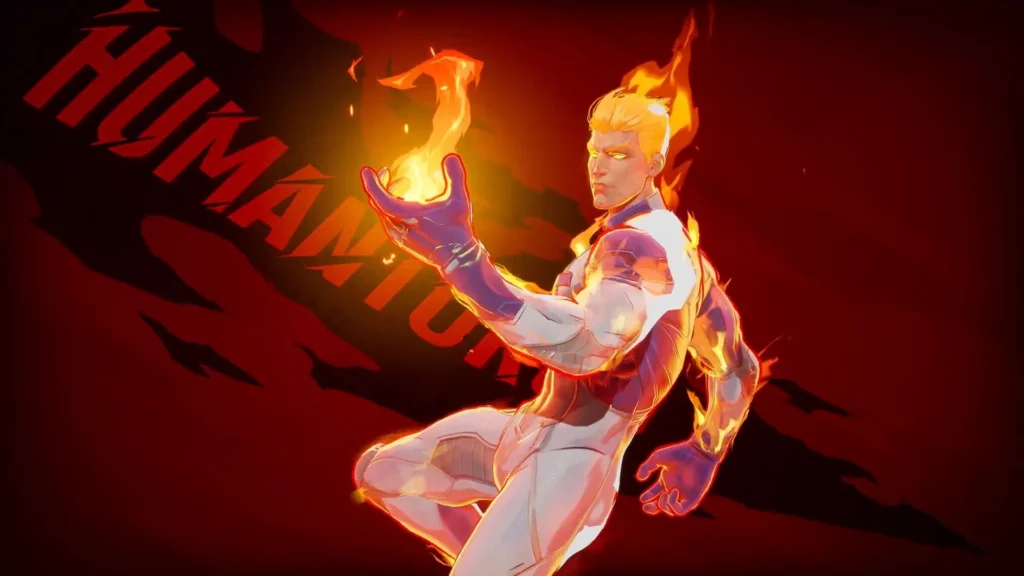
Johnny Storm is the Human Torch, one of the Fantastic Four’s most recognizable members. In Marvel Rivals, the official site presents him as a blazing aerial fighter who turns up the heat with intense flames and fast movement. The release announcement also framed him as part of the Fantastic Four push against Dracula’s forces in Season 1.5.
That matters because his personality and gameplay line up well. He is flashy. He is aggressive. He is built to disrupt space rather than play passively for long stretches.
What role does Human Torch play?
The safest way to describe his role is this: he is a mobile DPS hero who wants to pressure grouped targets, threaten objectives, and use movement to take angles that more grounded heroes cannot access. That interpretation is supported by the official presentation of him as a highly mobile flame-based attacker and by the later mobility-focused balance changes.
In practice, that usually means:
- taking off-angles
- pressuring choke points
- punishing grouped teams
- forcing repositioning with area threat
- diving when enemies are already distracted
What makes him different from other Duelists?
Human Torch feels different because his identity is not just about burst. It is also about control through threat. Even when he is not securing eliminations immediately, he can make areas uncomfortable to stand in and punish slow responses.
That is why many players search for is Human Torch good Marvel Rivals in the first place. He does not always win by raw duel stats alone. He wins by changing how the enemy team is allowed to move.
What are Human Torch’s abilities in Marvel Rivals?
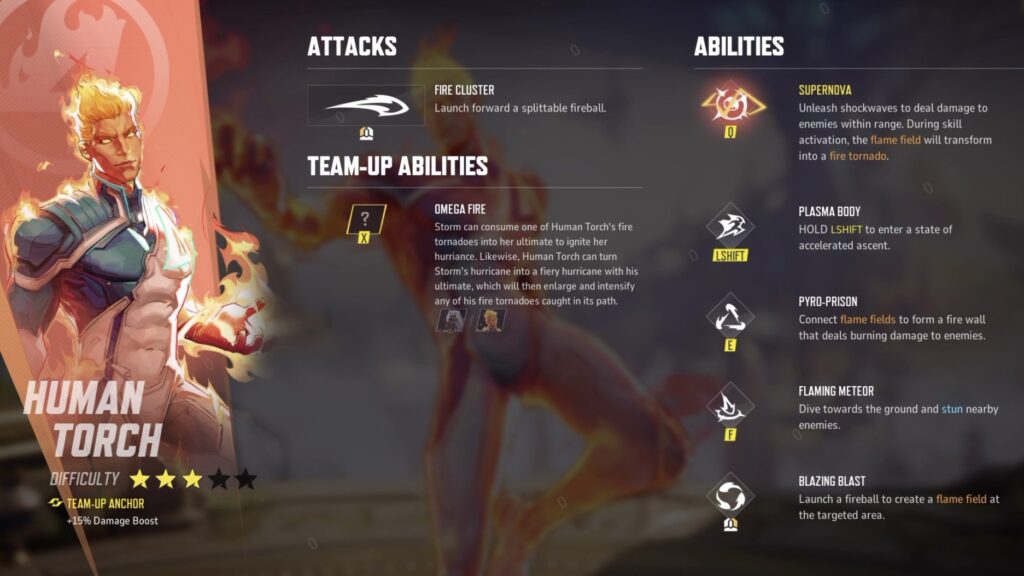
The official hero and announcement pages do not fully expose a simple text list of every ability name in the parsed view, so it is important not to overstate what is officially confirmed in article form. What we can confirm from official Marvel Rivals sources is that Human Torch fights with scorching flames, aerial mobility, and a mobility ability called Plasma Body that was specifically adjusted in April 2026.
From the official balance post, Plasma Body now works like this: on cast, Johnny immediately dashes 10 meters in the movement direction, enters Plasma Body state for 4 seconds, has 2 charges, takes 10 seconds to recharge each charge, and has a 4-second cooldown between consecutive casts.
That gives us a strong foundation for discussing Human Torch abilities Marvel Rivals in a responsible way.
What is Plasma Body and why does it matter?
Plasma Body is central to his current flow. Since the official balance post specifically says the developers wanted to boost burst mobility while making his movement more predictable to opponents, this ability is clearly one of the keys to both his strength and his counterplay.
What that means in real matches:
- you can reposition faster than many heroes
- you can commit more aggressively if one charge is still available
- enemies can read repeated movement patterns more easily now
- wasting both charges creates a clear punish window
What can we infer about his overall kit?
Based on the official presentation of “scorching flames,” strong mobility, and his reputation since release, the cleanest inference is that his kit is built around three pillars:
- flame-based ranged pressure
- aerial or fast mobility
- area denial around fights or objectives
That aligns with how players typically describe him and with why the developers chose mobility, not raw durability, as a tuning target in April 2026.
So if you are researching how to play Human Torch Marvel Rivals, think of him less like a traditional hitscan duelist and more like a momentum-based pressure pick.
How to play Human Torch Marvel Rivals well?
The best way to learn how to play Human Torch Marvel Rivals is to stop thinking only in terms of highlight plays. Johnny looks like a hero built for pure reckless aggression, but he gets much better when played with timing.
He is strongest when he enters a fight after pressure has already started. If you dive first into a full team that is ready and looking at you, you become easy focus fire. If you enter after your tank commits or after enemies burn cooldowns, you feel much stronger.
How should you start fights?
Start from a position of threat, not commitment.
That usually means:
- take a side angle first
- poke or pressure from range
- wait for enemy attention to shift
- use mobility to finish or collapse, not to announce yourself too early
This works especially well because Human Torch’s official identity is built around flames and movement, not around soaking damage.
When should you dive?
Dive when at least one of these is true:
- the enemy backline is split
- a support is already pressured
- an ally has forced cooldowns
- the fight is happening on an objective where your presence adds zone pressure
- you still have an exit option after the commit
One of the most important Human Torch tips is to treat your movement like a resource, not just a button you press on cooldown.
Is Human Torch good in Marvel Rivals right now?
The most honest answer to is Human Torch good Marvel Rivals is yes, but in a way that depends heavily on timing, map flow, and player discipline.
He has official developer attention as recently as April 2026, which suggests he is relevant enough to warrant targeted tuning. And the fact that the changes focused on mobility and predictability, rather than a total power rework, implies the developers view him as a meaningful part of the live balance conversation rather than an abandoned pick.
So yes, he is good. But he is not brainless.
What makes him strong?
His strengths are easiest to feel in these situations:
- clustered teamfights
- objective pressure
- side-angle harassment
- follow-up dives
- games where enemy aim pressure is inconsistent
When he can control the pace, he looks oppressive.
What keeps him balanced?
His current balance pressure points seem clear:
- he is easier to read when overusing mobility
- he can be punished when both Plasma Body charges are gone
- he likely suffers more into disciplined long-range focus than into messy brawls
That last point is partly inference, but it follows directly from the official note that his movement should be more predictable for opponents after the April 2026 change.
What is the best Human Torch build in Marvel Rivals?
Because Marvel Rivals build language can shift depending on patches, team-ups, and current systems, the best Human Torch build Marvel Rivals is better understood as a playstyle build rather than a single rigid item script.
You want your setup to support three goals:
- staying active in fights
- maximizing pressure windows
- avoiding dead commits
Best build mindset for Human Torch
A practical Human Torch build Marvel Rivals should prioritize:
- mobility uptime
- pressure consistency
- cooldown awareness
- survivability through repositioning, not greed
- teamfight entry timing
That means you should think less about “all-in damage at any cost” and more about “repeatable pressure that creates winnable engagements.”
What kind of team-ups help him?
Officially, Human Torch had at least one team-up history with Spider-Man called Ever-Burning Bond, which granted Human Torch a 5% damage boost as Team-Up Anchor and gave Spider-Man Inferno Blast. However, the January 13, 2026 balance post says this Human Torch–Spider-Man team-up was removed. Later, on July 23, 2025, an official patch introduced a Human Torch–Thing team-up called First Steps.
That means two useful takeaways for a Human Torch build Marvel Rivals discussion are:
- team-up value around Johnny has changed over time
- you should always check current patch status before assuming an older synergy still exists
What are the best Human Torch tips for ranked play?
A lot of strong Human Torch tips are actually simple discipline rules.
The hero looks flashy, so players often overplay him. The better version of Human Torch is the one who survives long enough to pressure more than once in a fight.
Best positioning tips
Try to follow these habits:
- do not hover in obvious sightlines for free
- angle from the side instead of the center
- keep one mobility charge in reserve when possible
- commit harder only after enemy attention breaks
- do not tunnel on one target if the whole enemy team can see you
These habits matter even more after the April 2026 Plasma Body changes, because predictable movement is exactly what the developers said they wanted opponents to be able to read better.
Best teamfight tips
In full fights, focus on:
- entering second, not first
- forcing space before chasing kills
- punishing grouped enemies
- leaving before your cooldowns fully disappear
- re-entering when the fight resets around a new angle
These are the kinds of Human Torch tips that make him feel consistent instead of coin-flippy.
Who counters Human Torch in Marvel Rivals?
The fairest answer to Human Torch counters Marvel Rivals is not a single list of hero names unless officially documented. What we can say confidently is that heroes or playstyles that punish predictable movement, hold long-range angles well, or quickly force focus fire into airborne targets are the kinds of threats Johnny dislikes most. That conclusion follows directly from the April 2026 official note about making his burst mobility stronger but more predictable for opponents.
So, instead of pretending there is one universal hard-counter list, it is better to define the counter profile.
What kinds of heroes counter him?
The strongest Human Torch counters Marvel Rivals usually fit one of these categories:
- precise long-range punishers
- heroes with reliable crowd control
- fast duelists who can stick to him after he commits
- coordinated teams that save cooldowns for his dive
The reason is simple: Johnny wants flow. Counters remove flow.
How do you beat Human Torch as an opponent?
If you are playing against him:
- force his movement early
- track both Plasma Body charges
- punish the second commit
- do not clump on obvious objective entries
- hold aim discipline instead of panic-scattering
Once his movement resources are gone, he becomes much less forgiving.
How does ExitLag help Human Torch players?
ExitLag for Human Torch Marvel Rivals
Human Torch is one of the last heroes you want to play on unstable routing. His value comes from movement timing, clean engagement windows, and precise follow-up. When your connection feels inconsistent, the hero gets worse fast.
That is why ExitLag makes sense for Human Torch Marvel Rivals players.
Why connection quality matters for Johnny Storm
Johnny’s gameplay depends on:
- responsive repositioning
- accurate timing on entries
- smoother fight transitions
- consistent registration during pressure windows
- reliable follow-through after mobility use
If your connection stutters during those moments, your biggest strengths turn into awkward overcommits.
What ExitLag improves for Human Torch players
ExitLag helps optimize routing and connection stability, which can reduce ping spikes and packet loss in online matches. For a hero like Human Torch, that matters because split-second movement and timing feel much better when the connection is stable.
That can help with:
- cleaner engages
- fewer input delays
- more reliable fight pacing
- smoother ranked sessions
- better consistency in high-pressure games
If you want to get more out of how to play Human Torch Marvel Rivals, stable performance is part of the answer, not just mechanics.
FAQ
Human Torch is Johnny Storm of the Fantastic Four. He officially joined Marvel Rivals on February 21, 2025 alongside The Thing as part of the Season 1.5 rollout.
The best way to approach how to play Human Torch Marvel Rivals is to use him as a mobile pressure hero. Take angles first, force movement, and dive after enemy attention shifts instead of committing too early. His official presentation and later Plasma Body changes support this mobility-heavy identity.
For Human Torch abilities Marvel Rivals, the clearest officially documented current detail is Plasma Body. The April 14, 2026 balance post says it now gives an immediate 10-meter dash on cast, lasts 4 seconds, has 2 charges, and recharges each charge in 10 seconds with a 4-second cooldown between consecutive casts.
The best Human Torch build Marvel Rivals is usually a mobility-and-pressure mindset rather than a reckless all-in setup. Build and play for repeatable pressure, safer repositioning, and smarter cooldown usage so you can impact fights more than once.
The most useful Human Torch tips are to keep one movement option in reserve, enter fights second instead of first, avoid obvious sightlines, and punish grouped enemies instead of forcing low-value solo dives.
The most reliable Human Torch counters Marvel Rivals are heroes or team styles that punish predictable movement, control long-range angles well, or save crowd control for his commit. That fits the official balance note about making his movement more predictable to opponents.
Yes, is Human Torch good Marvel Rivals is generally a yes. He is clearly relevant enough to receive targeted official balance changes, and his mobility plus flame pressure give him real value when piloted with discipline.
Conclusion
Human Torch Marvel Rivals is a strong pick for players who like speed, pressure, and explosive fight control. He officially arrived on February 21, 2025, and later received important mobility tuning in April 2026, which means Johnny Storm is still very much part of the live balance conversation.
The key to mastering Human Torch Marvel Rivals is not random aggression. It is disciplined aggression. Learn how to play Human Torch Marvel Rivals around timing, treat mobility as a resource, respect the heroes that can punish predictable movement, and build your playstyle around repeatable pressure instead of one-way dives. Once you do that, Human Torch abilities Marvel Rivals start to feel much more dangerous and much more consistent.
Want smoother movement, cleaner engages, and more reliable ranked matches with Johnny Storm? Try ExitLag and improve your Marvel Rivals connection for faster, more stable performance.
Got questions or want to connect with other players? Join the conversation at the ExitLag Forum!