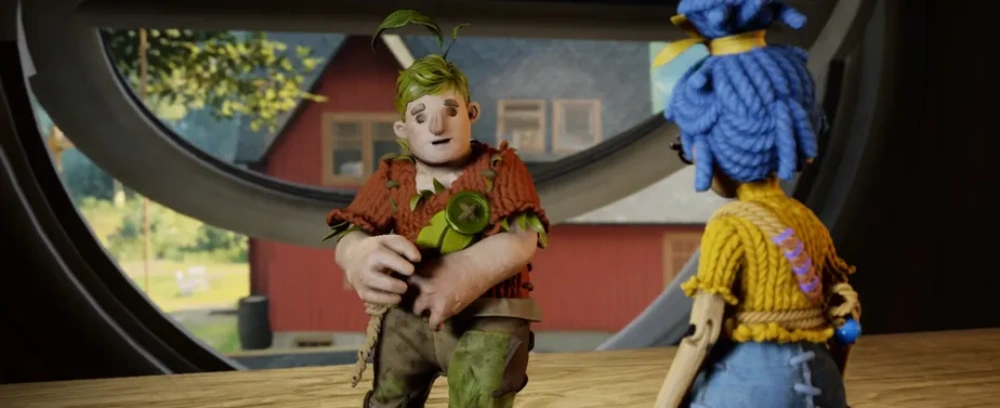
The It Takes Two Characters are the emotional core of one of the most celebrated cooperative games of the last decade. From the first moments of gameplay, everything revolves around the relationship between two people forced to work together.
Unlike traditional platformers or action games, It Takes Two builds its entire identity around cooperation, shared mechanics, and emotional storytelling.
Every level, puzzle, and boss fight exists to reinforce the bond between its characters.
The It Takes Two Characters are not just avatars. They are narrative tools, gameplay mechanics, and emotional anchors rolled into one unforgettable duo.
This is what makes the game stand out in a crowded market of co-op titles.
Who are the It Takes Two characters?
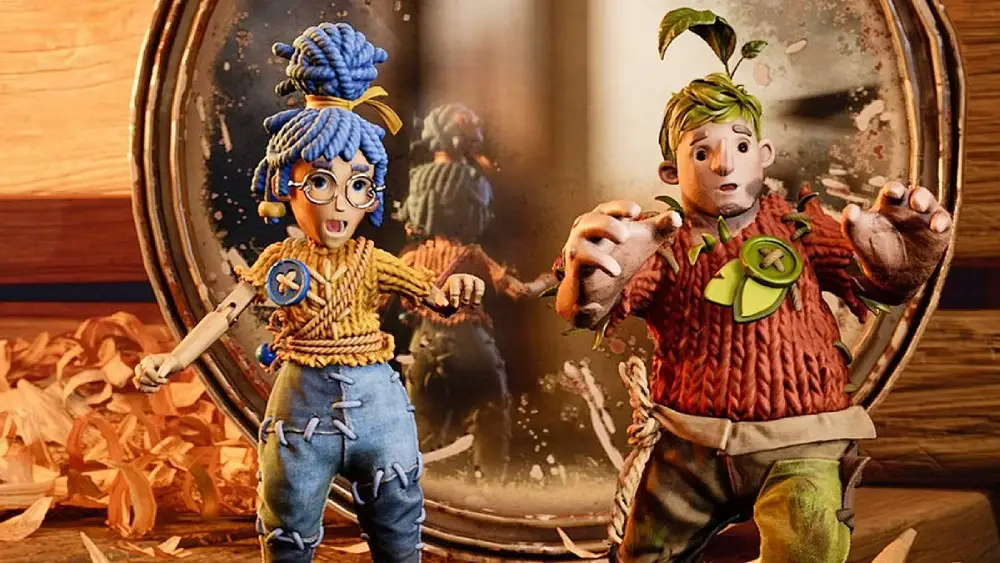
The It Takes Two Games Characters are Cody and May, a married couple on the brink of divorce. They are magically transformed into small dolls by their daughter, Rose, after she wishes for her parents to fix their relationship.
This transformation is the turning point of the story. It forces Cody and May to face their issues while navigating a fantastical world built from everyday household objects.
In simple terms, the game answers a clear question early on:
Who are the It Takes Two characters?
They are two flawed adults learning how to communicate again. This grounding in real emotional conflict is what makes the game resonate far beyond its colorful visuals.
It Takes Two character names and their roles
The It Takes Two Character Names are simple, but meaningful.
Cody is portrayed as emotional, creative, and sensitive. He often reacts impulsively and struggles with feeling unappreciated.
May, on the other hand, is logical, career-focused, and reserved. She values structure, planning, and control, sometimes at the cost of emotional openness.
Together, these differences create constant tension but they also create balance. Each level forces the characters to rely on one another’s strengths, reinforcing the idea that cooperation is not optional.
It Takes Two characters overview table
| Character | Role in the Story | Personality Traits | Gameplay Focus | Voice Actor |
| Cody | Emotion-driven partner struggling with feeling ignored | Emotional, creative, impulsive, sensitive | Flexible mechanics, creative problem-solving, adaptive abilities | Joseph Balderrama |
| May | Logic-driven partner focused on control and responsibility | Rational, structured, determined, emotionally guarded | Precision-based mechanics, timing, strategic execution | Annabelle Dowler |
Cody’s personality and gameplay identity
Cody represents imagination and emotional expression. This is reflected directly in his gameplay abilities.
He often receives mechanics related to:
- Manipulating natural elements
- Creative problem-solving
- Flexible movement options
His design reinforces vulnerability, both emotionally and mechanically.
May’s personality and gameplay identity
May embodies logic and precision. Her gameplay abilities usually emphasize:
- Accuracy and timing
- Structured puzzle-solving
- Strategic combat mechanics
This contrast between the two characters creates constant interaction and discussion between players.
Why the It Takes Two main characters are inseparable
The It Takes Two Main Characters are designed so that neither can progress alone. This is not a marketing slogan, it is a hard rule coded into the game.
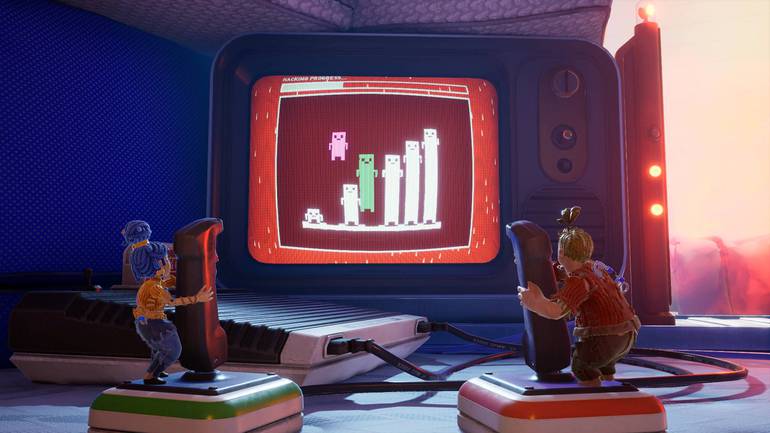
Every mechanic is split across both characters, every puzzle requires communication, every boss fight demands coordinated actions.
This design choice reinforces the core message of the story: relationships fail when communication fails.
By making separation impossible, the game forces players to experience cooperation on every level. This is why It Takes Two cannot be played solo with AI. Human interaction is part of the design.
How gameplay reinforces character development
One of the most impressive aspects of the It Takes Two Characters is how gameplay mirrors emotional growth. Early levels are chaotic, players struggle to sync movements and timing.
As the game progresses, cooperation becomes smoother. Players anticipate each other’s actions.
This mirrors Cody and May’s emotional journey.
They start disconnected and slowly relearn how to work together. Few games align mechanics and narrative this tightly.
It Takes Two characters voice actors and performances
The It Takes Two Character voice actors play a crucial role in delivering the game’s emotional weight. Cody is voiced by Joseph Balderrama and May is voiced by Annabelle Dowler.
Their performances are subtle and grounded. Instead of exaggerated cartoon voices, the actors deliver realistic dialogue filled with frustration, humor, and vulnerability.
This natural delivery makes the characters feel human, even when transformed into dolls. Voice acting is especially important in a co-op game.
Players are constantly hearing dialogue while solving puzzles.
Strong performances keep the experience engaging rather than repetitive.
Emotional storytelling through dialogue
The dialogue between the It Takes Two Games Characters evolves naturally. Early conversations are tense and defensive but later interactions show empathy, reflection, and growth.
The script avoids clichés, arguments feel authentic, and reconciliation feels earned. This is why the characters resonate with adult players as much as younger audiences.
Why It Takes Two characters stand out in co-op gaming
Most co-op games focus purely on mechanics. It Takes Two goes further. The It Takes Two Characters are not interchangeable skins, they are central to the experience.
Key reasons they stand out include:
- Deep emotional backstory
- Clear personality contrast
- Gameplay abilities tied to character traits
- Fully voiced and written dialogue
This approach sets a new standard for narrative-driven co-op games.
Character design and visual identity
The visual design of the characters reinforces their personalities. Cody appears softer, rounder, and more expressive and May looks sharper, more structured, and composed.
Even animations reflect this difference. Idle movements, reactions, and expressions all contribute to storytelling. Small details matter and It Takes Two uses them effectively.
How ExitLag improves the It Takes Two experience
While It Takes Two focuses on cooperation, performance still matters. Lag can break immersion and disrupt timing-sensitive mechanics.
ExitLag helps ensure a stable connection, especially when playing online co-op.
With ExitLag, players benefit from:
- Reduced latency during online sessions
- More stable connections between co-op partners
- Fewer interruptions during precision-based puzzles
For a game built entirely on synchronization, connection stability is critical. A smooth connection allows players to focus on communication and teamwork instead of technical issues.
Why players connect emotionally with the characters
The It Takes Two Characters feel real because their conflict is relatable. They are not heroes saving the world, eles are parents struggling with communication, responsibility, and change.
This grounded approach makes their journey emotionally impactful. Players don’t just control the characters, they experience their growth together.
This emotional connection is a major reason the game received widespread critical acclaim and multiple awards.
The lasting impact of It Takes Two characters
The It Takes Two Main Characters represent a shift in how co-op games can tell stories.
They prove that:
- Co-op games can be emotionally deep
- Gameplay and narrative can evolve together
- Characters can be as important as mechanics
Cody and May are now iconic figures in modern gaming. Their journey leaves a lasting impression long after the final level ends.
How level design highlights the It Takes Two game characters
Every major area in the game is built to reflect the emotional state of the It Takes Two Games Characters
Early levels feel cluttered and chaotic. Objects are oversized, paths are confusing, and cooperation feels awkward.
As Cody and May grow closer, levels become more fluid. Movement flows better, puzzles feel more intuitive, and timing becomes natural. This is not accidental design. It is narrative storytelling expressed through gameplay.
Environment as emotional metaphor
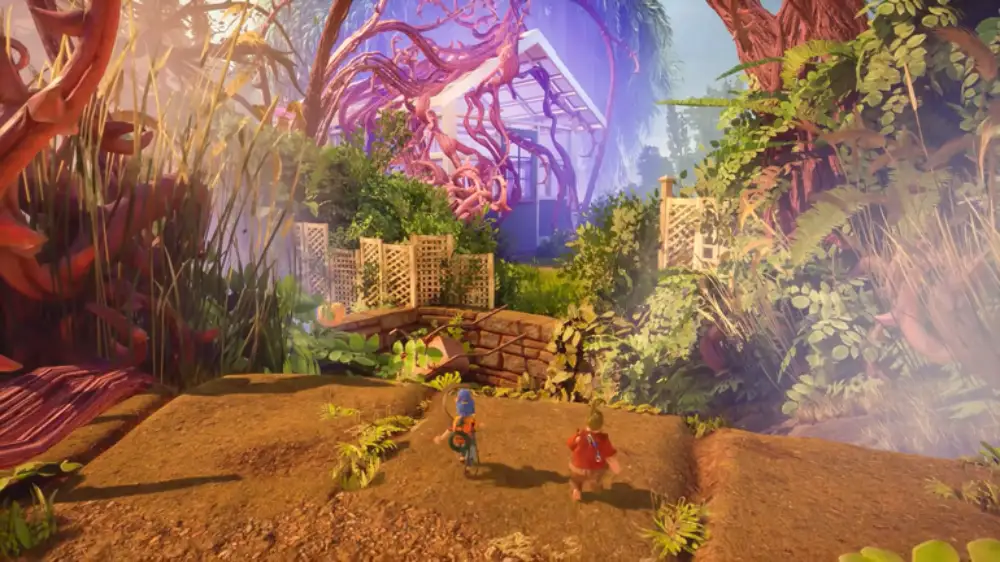
Each environment represents a stage in their relationship.
Key examples include:
- The Shed, symbolizing broken foundations
- The Garden, representing growth and care
- The Snow Globe, reflecting emotional coldness
- The Clock, focused on time, regret, and responsibility
These locations are not just visually creative. They directly connect to the struggles of the It Takes Two Main Characters.
Ability design and character contrast
One of the strongest elements of It Takes Two is how abilities are distributed.
Cody and May never receive the same powers.
Instead, their abilities always complement each other. This reinforces the idea that neither character is complete alone.
Examples of cooperative ability pairing
Throughout the game, players experience ability combinations such as:
- One character manipulating time while the other controls movement
- One character creating paths while the other activates mechanisms
- One character focusing on offense while the other handles defense
These mechanics constantly force communication. The It Takes Two Character names may be simple, but their gameplay identities are anything but.
Boss fights built around cooperation
Boss fights in It Takes Two are not about raw combat skill. They are about understanding roles.
Each boss encounter assigns distinct responsibilities to Cody and May, ignoring these roles leads to failure.
This reinforces the core message of the game:
progress requires trust and coordination. Boss fights are also narrative moments, they often represent emotional obstacles rather than traditional villains.
Character growth through failure and repetition
Failure is part of the learning process for the It Takes Two Characters.
Missed jumps, mistimed abilities, and failed puzzles are expected. The game encourages retrying without punishment. This design mirrors real, relationships miscommunication happens, learning comes from repetition and patience.
By allowing failure without frustration, the game keeps players engaged emotionally.
It Takes Two characters voice actors and emotional delivery
The It Takes Two Characters voice actors deserve special attention for how they handle emotional transitions.
Joseph Balderrama and Annabelle Dowler avoid exaggeration. Their performances feel natural and grounded. As the story progresses, subtle changes in tone become noticeable.
Early dialogue sounds defensive and sharp.
Later conversations soften, with pauses, humor, and empathy. This evolution makes the characters believable.
Strong voice acting ensures that players stay invested even during long play sessions.
Humor as a storytelling tool
Despite its emotional core, It Takes Two is often funny. The humor comes from awkward situations, playful banter, and exaggerated scenarios. This lightness prevents the story from becoming overwhelming.
The It Takes Two Game Characters joke, argue, and tease each other constantly. This balance between humor and seriousness keeps the pacing engaging.
It also reflects real relationships, where conflict and laughter coexist.
Why the It Takes Two main characters resonate with players
Many players see themselves in Cody and May. They are not perfect, they make mistakes and they avoid difficult conversations. This relatability is rare in games.
The It Takes Two Main Characters are written for adults, but accessible to all audiences. Their journey speaks to themes of communication, compromise, and growth.
This emotional honesty is one reason the game appeals to couples, friends, and families alike.
Replay value through character perspective
Replaying It Takes Two offers a new experience depending on which character you choose. Cody and May experience the same events differently, abilities change and responsibilities shift.
This encourages players to replay the game from the opposite perspective. It also reinforces empathy. Understanding the other role deepens appreciation for the cooperative design.
The It Takes Two Characters are not just two skins. They are two distinct gameplay experiences.
Visual storytelling and animation detail
Animation plays a huge role in character expression. Facial reactions, idle movements, and contextual animations add personality to every moment.
Small details include:
- Body language during arguments
- Hesitation before risky jumps
- Subtle gestures during quiet dialogue
These elements make the characters feel alive. The visual design supports the emotional journey without needing excessive dialogue.
How ExitLag supports smooth co-op gameplay
Co-op games rely heavily on timing and synchronization. Even minor lag can break immersion or cause frustration. ExitLag helps stabilize online sessions by optimizing network routes.
For It Takes Two, this means:
- Smoother cooperative actions
- Reduced input delay during puzzles
- More reliable synchronization between players
When gameplay depends on coordination, connection stability becomes essential. ExitLag allows players to focus on teamwork rather than technical issues.
The legacy of It Takes Two characters in gaming
The It Takes Two Characters have left a lasting mark on cooperative game design.
They proved that:
- Co-op games can tell emotionally mature stories
- Gameplay mechanics can reinforce narrative themes
- Characters can be central to mechanical design
Few games integrate story and mechanics this seamlessly. Cody and May are now reference points for future co-op titles.
Why It Takes Two characters matter beyond the game
The impact of the It Takes Two Characters extends beyond gameplay.
They sparked discussions about:
- Communication in relationships
- Shared responsibility
- Emotional growth through cooperation
Games rarely tackle these themes so directly. By embedding them into mechanics, It Takes Two turns play into reflection.
Final thoughts on the It Takes Two characters
The success of It Takes Two is inseparable from its characters. Cody and May are not heroes or villains they are people. Their flaws drive the story. Their cooperation drives the gameplay.
The It Takes Two Game Characters remind players that progress often requires understanding and teamwork. This is why the game continues to be celebrated long after release.
Got questions or want to connect with other players? Join the conversation at the ExitLag Forum!