The Madden 25 cover features Christian McCaffrey, the San Francisco 49ers running back who became the face of EA SPORTS Madden NFL 25 after a dominant 2023 season and a Super Bowl run with one of the NFL’s most explosive offenses.
Because the Madden 25 cover connects directly to how players experience the newest Madden cycle, it also matters for Ultimate Team, online play, and competitive preparation. If you are building your roster while following the cover conversation, this Madden Ultimate Team 2025 guide can help you understand how player items, upgrades, and team-building connect to the wider Madden NFL 25 experience.
Madden 25 cover discussions can be confusing because there are two different games called Madden NFL 25. The first was the 25th anniversary edition released in 2013, while the newer Madden NFL 25 was released in 2024. In the current context, when players search Madden 25 cover, they usually mean the 2024 game with Christian McCaffrey on the cover.
This guide explains who is on the Madden 25 cover, why Christian McCaffrey was selected, how the Madden 26 cover continued the running back trend with Saquon Barkley, and how to understand Madden covers across the franchise. You will also find a practical look at Madden covers by year, common cover-athlete myths, and how ExitLag can help optimize connection stability during online Madden matches.
Who is on the Madden 25 cover?
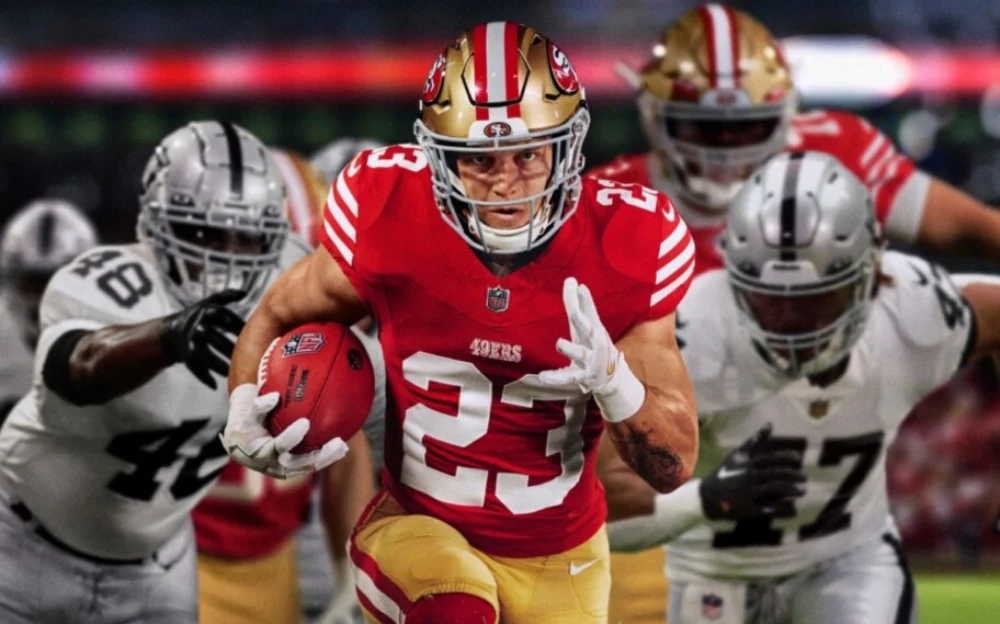
Christian McCaffrey is on the Madden 25 cover. He appears on both the Standard Edition and Deluxe Edition covers of EA SPORTS Madden NFL 25, representing a major return to running back-focused cover athletes after years of quarterbacks and franchise icons dominating the spotlight.
McCaffrey’s selection made sense because he was one of the NFL’s most complete offensive players. During the 2023 season, he led the league in scrimmage production, became a central figure in the 49ers’ offense, and helped San Francisco reach Super Bowl LVIII. His game translated naturally to Madden because he is dangerous as a runner, receiver, open-field playmaker, and red-zone weapon.
The Madden 25 cover also matters because it marks a modern running back being treated as the face of the franchise. For years, the NFL conversation often focused on quarterbacks, passing efficiency, and high-powered aerial attacks. McCaffrey’s cover reminded fans that elite running backs can still define an offense.
Why Christian McCaffrey was chosen
Christian McCaffrey was chosen because he matched the identity EA wanted for Madden NFL 25. He is explosive, versatile, recognizable, and highly effective in both real football and Madden gameplay. Players who use the 49ers know how much his speed, route running, catching, agility, and rushing ability can change a drive.
His selection also reflected a larger football trend. Modern running backs are not only handoff players. The best ones can line up wide, run routes, create mismatches, block, and turn small openings into huge gains. McCaffrey fits that mold better than almost anyone.
That versatility made him an ideal cover athlete. The Madden 25 cover is not only about name recognition. It is about representing the type of player who can impact the game from multiple positions.
Why Joe Burrow is not the Madden 25 cover athlete
Some older or inaccurate articles claimed Joe Burrow was the Madden 25 cover athlete, but that is not correct for EA SPORTS Madden NFL 25 released in 2024. Burrow may have appeared in speculation, predictions, or fan discussions, but the official cover athlete is Christian McCaffrey.
This distinction is important because Madden cover searches often mix rumors, mock covers, predictions, and real announcements. If a source says Burrow is on the Madden 25 cover, it is using outdated or incorrect information.
Madden 25 cover vs Madden NFL 25 from 2013
The biggest source of confusion is the title itself. Madden NFL 25 exists twice in franchise history. The 2013 version was named Madden NFL 25 because it celebrated the 25th anniversary of the series. The 2024 version is called Madden NFL 25 because it follows EA’s modern year-based naming cycle.
That means the phrase Madden 25 cover can refer to two different cover histories depending on context. In 2013, the main anniversary cover featured Barry Sanders, while the newer 2024 Madden NFL 25 cover features Christian McCaffrey.
This matters for search intent. Players looking for gameplay, Ultimate Team, current platforms, or recent updates almost always mean the 2024 game. Players looking for retro covers, anniversary editions, or older consoles may mean the 2013 release.
Madden NFL 25 from 2013
The 2013 Madden NFL 25 celebrated 25 years of the Madden franchise. Barry Sanders was selected through a fan vote and became the main cover athlete. Adrian Peterson was also associated with next-generation cover versions for the Xbox One and PlayStation 4 era.
That older game belongs to a very different Madden generation. It came before current-gen presentation, modern Ultimate Team systems, FieldSENSE, and the newest online modes. It is historically important, but it should not be confused with the newer Madden 25 cover.
Madden NFL 25 from 2024
The 2024 Madden NFL 25 is the current game most players mean when they search for Madden 25 cover content. It launched with Christian McCaffrey as the official cover athlete and brought updates across gameplay, Franchise, presentation, and Ultimate Team.
The newer cover reflects the modern Madden brand. It focuses on a current NFL superstar rather than a commemorative anniversary concept. That is why any updated guide should clearly explain which Madden NFL 25 it is discussing.
Why the Madden 25 cover matters
The Madden 25 cover matters because Madden covers are more than packaging. They are marketing statements, cultural snapshots, and yearly arguments about who represents the NFL at that moment. Every cover creates conversation among NFL fans, Madden players, fantasy football communities, and sports media.
For Christian McCaffrey, the cover was a recognition of elite production and star power. For the franchise, it was a way to highlight explosive offensive gameplay. For players, it also signaled which athlete EA wanted associated with the game’s identity.
Madden players often translate cover hype into gameplay choices. If the cover athlete is a quarterback, many players test passing mechanics first. If the cover athlete is a running back like McCaffrey, attention shifts toward run schemes, route concepts, screen plays, and open-field movement.
If you want to make that cover-athlete style more practical in matches, this best Madden 25 plays guide can help you connect the Madden 25 cover conversation to actual play-calling. McCaffrey’s value comes from versatility, and smart play selection is the best way to recreate that kind of impact in-game.
Covers shape player expectations
Madden covers create expectations before anyone even starts a match. A cover athlete tells fans what kind of football identity EA wants to emphasize. McCaffrey’s cover suggests speed, creativity, versatility, and offensive explosiveness.
That does not mean every game mode revolves around him, but it does influence perception. Fans expect running, receiving, and movement to feel important when a dynamic running back is on the front of the game.
Covers also create debate
Every Madden cover creates debate. Some fans wanted a quarterback. Others wanted a defensive star. Some expected a Super Bowl MVP, a rising rookie, or a player from their favorite team. That debate is part of Madden culture.
The best way to understand cover choices is to combine performance, popularity, timing, team success, and marketing value. McCaffrey checked all of those boxes.
Madden 26 cover: who followed Madden 25?
The Madden 26 cover features Saquon Barkley, the Philadelphia Eagles running back whose iconic reverse hurdle became one of the defining NFL highlights of the 2024 season. His selection continued a rare running back streak after Christian McCaffrey appeared on the Madden 25 cover.
That made the Madden 26 cover especially interesting. Instead of returning immediately to a quarterback, EA doubled down on running back star power. Barkley’s cover also came after a massive debut season with the Eagles, a Super Bowl victory, and a 99 Club announcement.
For Madden fans, this created a clear link between the two games. The Madden 25 cover celebrated McCaffrey’s all-around dominance. The Madden 26 cover celebrated Barkley’s explosiveness, highlight value, and championship story.
Why Saquon Barkley fit Madden 26
Saquon Barkley fit Madden 26 because his 2024 season gave EA an obvious visual and marketing moment. His reverse hurdle looked like something designed for a video game, which made it a natural cover image.
Cover athletes need more than stats. They need a story. Barkley had performance, team success, highlight-reel appeal, and a memorable visual identity. That combination made him a strong follow-up to McCaffrey.
What the back-to-back running back covers mean
Back-to-back running back covers suggest that EA wanted to highlight movement, physicality, open-field creativity, and explosive playmaking. For years, Madden marketing often leaned heavily on quarterbacks. McCaffrey and Barkley shifted the spotlight back toward elite rushing and hybrid offensive weapons.
This does not mean quarterbacks are less important in Madden. It means running backs had a major cultural moment again.
Madden covers by year: recent cover athletes
A full list of all Madden covers stretches across decades, but recent years show how EA’s cover strategy has changed. The franchise has moved between quarterbacks, legends, dual-athlete covers, and explosive skill-position players.
Here is a useful recent snapshot of Madden covers by year:
| Game | Release cycle | Cover athlete |
| Madden NFL 20 | 2019 | Patrick Mahomes |
| Madden NFL 21 | 2020 | Lamar Jackson |
| Madden NFL 22 | 2021 | Tom Brady and Patrick Mahomes |
| Madden NFL 23 | 2022 | John Madden |
| Madden NFL 24 | 2023 | Josh Allen |
| Madden NFL 25 | 2024 | Christian McCaffrey |
| Madden NFL 26 | 2025 | Saquon Barkley |
This recent run shows several patterns. Quarterbacks still dominate many modern covers, but EA also uses covers to honor legacy, celebrate the franchise’s namesake, and respond to unforgettable player seasons.
Why quarterbacks often appear on Madden covers
Quarterbacks often appear on Madden covers because they are usually the most visible players in the NFL. They touch the ball on almost every offensive snap, drive storylines, dominate MVP conversations, and attract national attention.
Players like Patrick Mahomes, Lamar Jackson, Tom Brady, and Josh Allen were logical choices because their play styles shaped how fans thought about modern football. They were not only stars. They were symbols of how the sport was changing.
Why running backs still matter
McCaffrey and Barkley proved that running backs still matter when they are versatile, explosive, and culturally visible. A modern running back cover athlete usually needs to be more than a traditional ball carrier.
They need to be a receiving threat, a highlight machine, a fantasy football icon, and a player casual fans recognize. McCaffrey and Barkley both reached that level.
All covers of Madden: what makes a cover iconic?
When fans discuss all covers of Madden, they usually do not remember every cover equally. Some covers become iconic because of the player. Others become iconic because of timing, design, controversy, or the so-called Madden Curse.
An iconic Madden cover usually has at least one of these traits:
- a legendary player;
- a historic season;
- a bold visual design;
- a major franchise change;
- a fan vote;
- a controversy;
- a memorable edition;
- a strong connection to gameplay.
The Madden 25 cover with Christian McCaffrey fits into this history because it highlights a running back at a time when that position had been heavily debated across the NFL. It also stands next to the Madden 26 cover as part of a short but notable running back era.
For players who want to understand how older entries shaped the series before the current Madden cycle, this Madden NFL 23 guide offers useful background. The John Madden cover in Madden NFL 23 was very different from the McCaffrey and Barkley covers because it focused on legacy, tribute, and the history of the franchise itself.
Cover athletes as franchise symbols
Each Madden cover athlete becomes a temporary symbol for the franchise. Even players who do not buy the game immediately see the cover in trailers, stores, social media posts, streams, and Ultimate Team promotions.
That makes the selection powerful. It turns one player into the face of the game’s entire cycle.
Design matters too
The athlete is important, but design also matters. A great cover needs energy, clarity, and a visual connection to the player’s style. McCaffrey’s cover works because it sells motion and versatility. Barkley’s Madden 26 cover works because it captures a specific impossible-looking football moment.
A cover can be accurate and still feel forgettable. The best covers feel like a snapshot of a season.
The Madden Curse: is it still real?
The Madden Curse is the long-running fan superstition that cover athletes suffer injuries, bad seasons, or unexpected setbacks after appearing on the cover. It became popular because several past cover stars had difficult seasons after their cover appearance.
However, the Madden Curse is not a proven rule. Football is a violent sport with high injury risk, and star players naturally face heavy workloads, strong defensive attention, and high expectations. Some cover athletes struggled afterward. Others continued performing at elite levels.
The Madden 25 cover revived the conversation because Christian McCaffrey dealt with injury issues after his cover season. Still, it is better to treat the curse as a fan myth rather than a factual prediction.
Why fans still talk about it
Fans still talk about the Madden Curse because sports culture loves patterns, superstitions, and dramatic narratives. If a cover athlete gets hurt, the curse becomes a headline. If they perform well, the story fades.
That selective memory keeps the myth alive. It is entertaining, but it should not replace real analysis.
Does the curse affect Madden 26?
The Madden 26 cover with Saquon Barkley also triggered curse jokes because he entered the cover cycle after a huge workload and championship season. That does not mean anything bad is guaranteed.
The more realistic concern is normal football risk. Running backs absorb contact, carry heavy workloads, and often face durability questions because of the position. That is football reality, not magic.
How Madden covers connect to gameplay
Madden covers often reflect gameplay themes, even when EA does not present them that way directly. A quarterback cover may highlight passing systems, pocket movement, or superstar abilities. A running back cover may draw attention to cuts, acceleration, tackles, jukes, catches, and open-field control.
The Madden 25 cover with McCaffrey naturally points players toward offensive versatility. To use him well, players need more than basic inside runs. They need screens, angle routes, motion, stretch runs, and creative play-calling.
Barkley’s Madden 26 cover does something similar. It emphasizes athletic movement, contact balance, and highlight creation. Both covers tell players that dynamic ball carriers can define the experience.
Ultimate Team impact
Cover athletes often become major parts of Ultimate Team content. They may receive special items, promotional cards, challenges, or boosted visibility. Even when they are not the only focus, they help shape the early identity of the game.
That is why cover news matters to MUT players. It can influence which players are promoted, which teams get attention, and what kind of offensive style feels popular early in the cycle.
Franchise and online play impact
In Franchise and online head-to-head, cover athletes often become popular picks. Players want to test the athlete on the box. If the cover athlete is strong in-game, their real team may become more common online.
With McCaffrey, that meant many players wanted to use the 49ers’ offense. His ability as both a runner and receiver made him one of the most dangerous pieces in Madden NFL 25.
Where to check official Madden information
The best place to check current Madden information is EA’s official Madden NFL website. Cover announcements, feature updates, patch notes, gameplay deep dives, and edition details can change from year to year, so official sources are essential.
You can use the official EA Madden NFL website to verify the current game, editions, news, and official updates. This matters for Madden covers because fan mockups, rumors, and prediction posts can look convincing before EA confirms the real athlete.
Official sources are especially important when a keyword like Madden 25 cover has two different historical meanings. Without checking the official release year, it is easy to mix Christian McCaffrey, Barry Sanders, Adrian Peterson, and unrelated predictions into the same article.
What should you verify?
Before trusting a Madden cover claim, verify:
- the exact game year;
- whether the source is official;
- whether it refers to Madden NFL 25 from 2013 or 2024;
- whether the player was a rumor or confirmed athlete;
- whether it discusses Standard, Deluxe, or alternate covers;
- whether the article was published before or after EA’s announcement.
These checks prevent common factual errors.
Why old articles become outdated
Madden articles become outdated quickly because the franchise releases annually. A prediction article from spring can look wrong after the official reveal. A cover rumor can remain in search results long after EA announces the real athlete.
That is why updated Madden SEO content should correct old claims clearly instead of repeating them.
Madden covers history and community references
Madden cover history is also preserved through community resources, historical lists, encyclopedic pages, sports media, and fan discussions. These sources help players compare cover athletes across decades and understand how the franchise evolved.
For a broad historical overview, the Madden NFL page on Wikipedia is useful because it lists games, platforms, release years, and many cover athletes across the franchise. It is not a replacement for current EA announcements, but it helps when researching all Madden covers or building a broader Madden covers by year section.
Community history is especially useful when comparing old and new cover choices. The 2013 Madden NFL 25 was an anniversary concept. Madden NFL 23 was a tribute to John Madden. Madden NFL 25 from 2024 returned to a current superstar model with McCaffrey.
How to use historical lists
Historical lists are best for context. They can show patterns, such as quarterback dominance, rare defensive cover athletes, special editions, and anniversary releases.
Use them to answer questions like:
- Which players appeared more than once?
- How often do running backs appear?
- When did John Madden appear on the cover?
- Which covers were special editions?
- Which covers were tied to fan votes?
This kind of context makes a cover article more useful than simply naming one athlete.
Why all Madden covers are hard to summarize
Summarizing all Madden covers can be difficult because some years had multiple editions, regional variations, alternate covers, console-specific covers, or special versions. A simple list may hide those details.
That is why a good guide should explain the main cover athlete first, then mention exceptions when they matter.
How ExitLag can help with Madden 25 online matches
The Madden 25 cover may start the conversation, but online performance decides how the game feels. Madden NFL 25 includes modes where timing, user control, route reactions, defensive adjustments, and play-calling speed matter. A lag spike during a throw, tackle, kick, or defensive switch can ruin a drive.
ExitLag can help optimize connection routes between your device and game servers. It does not guarantee wins, perfect ping, or a lag-free experience in every match. However, it can help reduce route instability, packet loss issues, and connection spikes in some situations.
This is especially useful for players who spend time in online head-to-head, Madden Ultimate Team, ranked-style modes, or competitive friendlies. In those matches, consistency matters more than one perfect highlight.
Why connection stability matters in Madden
Madden is not only a menu-based sports game. Real-time inputs matter. You need to time passes, adjust routes, user defenders, make tackles, kick accurately, and react to coverage changes.
Lag can affect:
- passing timing;
- defensive user control;
- kicking meters;
- route adjustments;
- tackling angles;
- menu responsiveness;
- online play calls;
- late-game drives.
A stable connection will not fix bad decisions, but it can help your decisions feel more reliable.
When should you test ExitLag?
Test ExitLag if you notice unstable ping, delayed inputs, disconnects, rubberbanding, packet loss, or inconsistent online match quality. Compare several games with and without optimized routing.
Look for stability rather than only the lowest ping number. A route with fewer spikes can feel better than a route that occasionally looks fast but becomes unreliable during key plays.
What the Madden 25 cover means for the franchise
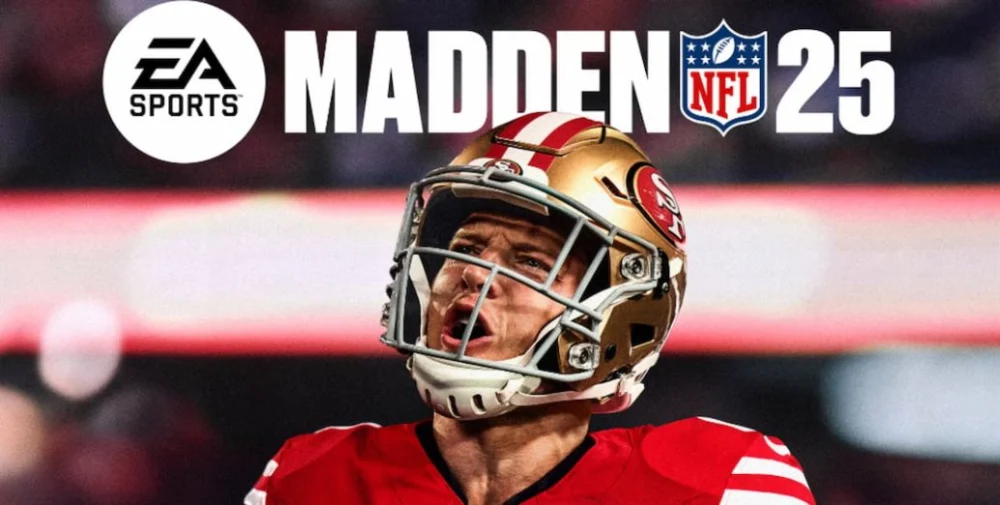
The Madden 25 cover represents more than Christian McCaffrey’s personal achievement. It also shows how EA can use cover athletes to reflect the current NFL. In this case, the cover celebrated a running back who functions like a full offensive system.
McCaffrey’s selection also created a bridge to Madden NFL 26. With Saquon Barkley following him, Madden briefly moved away from its quarterback-heavy cover pattern and highlighted running back excellence in consecutive releases.
That gives the franchise a clear visual story: McCaffrey for all-around versatility, Barkley for highlight-reel explosiveness, and both as reminders that running backs can still define football entertainment.
Why the cover choice aged differently
The Madden 25 cover aged with extra debate because of McCaffrey’s injury struggles after his cover season. Some fans used that to revive Madden Curse discussions. Others focused on the fact that he earned the honor based on what he did before the game launched.
Both points can exist at the same time. The cover was deserved when it was announced, and later events changed how fans talked about it.
Why cover debates never end
Madden cover debates never end because fans see the cover as a reward, prediction, marketing statement, and cultural ranking all at once. That makes every choice controversial.
Even a great pick leaves someone out. That is part of the fun.
FAQ
Christian McCaffrey is on the Madden 25 cover for EA SPORTS Madden NFL 25 released in 2024. He appears on the Standard and Deluxe Edition covers.
No. Joe Burrow is not the official Madden 25 cover athlete. Some older speculation or inaccurate articles mentioned him, but EA officially selected Christian McCaffrey.
There are two Madden NFL 25 games because the 2013 release celebrated the franchise’s 25th anniversary, while the 2024 release follows the modern yearly naming cycle.
Barry Sanders was the main cover athlete for the 2013 Madden NFL 25 anniversary edition. Adrian Peterson was also associated with next-generation cover versions.
Saquon Barkley is on the Madden 26 cover. EA selected him after a championship season with the Philadelphia Eagles and his famous reverse hurdle highlight.
You can find Madden covers by year through EA announcements, sports media archives, and historical pages such as the Madden NFL series page on Wikipedia.
No. Some Madden covers include multiple athletes, special editions, legends, regional variations, or tribute covers. Madden NFL 22 featured Tom Brady and Patrick Mahomes, while Madden NFL 23 honored John Madden.
No. The Madden Curse is a fan superstition, not a proven rule. Some cover athletes had injuries or down years afterward, while others continued performing well.
ExitLag can help optimize routes and may improve connection stability depending on your network, ISP, region, and server path. It does not guarantee perfect results, but it can reduce some route-related issues.
The Madden 25 cover belongs to Christian McCaffrey, and understanding that correction is essential for any updated Madden article. From McCaffrey to the Madden 26 cover with Saquon Barkley, recent Madden covers show how EA highlights the NFL’s biggest playmakers. Check official sources, compare all Madden covers carefully, and test ExitLag before your next online session to help optimize your route and play Madden with more stable performance.
All game images used in this article belong to their respective owners. They are used for informational and educational purposes only and do not imply endorsement or affiliation with the rights holders.
Got questions or want to connect with other players? Join the conversation at the ExitLag Forum!