
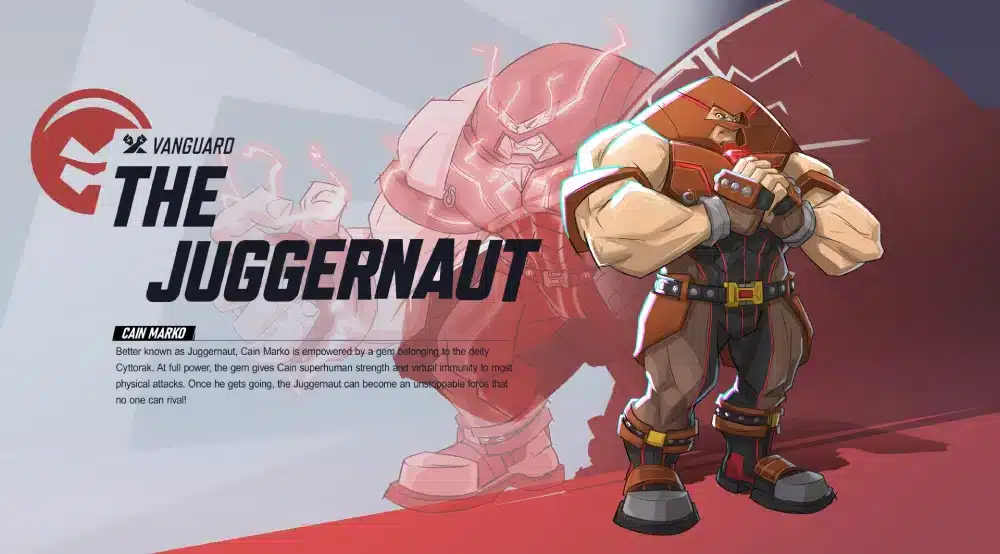
The arrival of new characters is one of the biggest reasons players continue following Marvel Rivals. Among the characters frequently discussed by Marvel fans, Juggernaut stands out because his incredible strength and unstoppable momentum could translate naturally into a Vanguard-style gameplay experience. For players searching for the Marvel Rivals hero: Juggernaut, however, there is an important distinction to make: Juggernaut is not currently listed as an official playable hero on the game's official roster.
That distinction matters because fan concepts and community discussions can sometimes circulate alongside official information. The Marvel Rivals roster continues to expand, with recent official updates adding characters such as Jubilee and The Hood, showing how frequently the game receives new content. Players can also explore our Marvel Rivals LFG guide to understand how team coordination affects matches.
So, what would the Marvel Rivals hero: Juggernaut potentially look like? In a hypothetical interpretation, Cain Marko would fit naturally into the Vanguard role because his traditional Marvel identity revolves around durability, overwhelming physical strength, and unstoppable forward momentum. This article explores how those characteristics could translate into gameplay, while clearly separating speculation from confirmed Marvel Rivals content.
These names are illustrative and are not confirmed Marvel Rivals abilities.
This is a conceptual comparison, not an official balance profile.
Marvel Rivals hero: Juggernaut and his potential role
Juggernaut is one of Marvel's most recognizable physical powerhouses. His classic identity comes from his connection to the mystical entity Cyttorak, which grants him extraordinary strength and durability. In a team-based shooter, those characteristics could create a character designed around initiating fights, disrupting enemy formations, and absorbing pressure.A possible Vanguard identity
If Juggernaut were introduced into Marvel Rivals, the Vanguard role would be an intuitive fit. Vanguards are designed to influence space and provide opportunities for teammates, making the archetype suitable for a character whose greatest advantage is imposing his presence on the battlefield. Rather than relying on precise long-range attacks, a hypothetical Juggernaut could specialize in close-range pressure. His gameplay could revolve around entering contested areas, forcing opponents away from objectives, and creating openings for Duelists. At the same time, his size and straightforward offensive identity could come with trade-offs. A character built around momentum could potentially become easier to predict when opponents understand his movement patterns.Why momentum could define his gameplay
Momentum is perhaps the most interesting mechanic that could distinguish Juggernaut from other Vanguards. Instead of simply walking toward opponents, he could theoretically become more threatening while moving continuously. A momentum-focused design might reward players who understand when to commit and when to disengage. Consequently, positioning would become just as important as raw durability. A hypothetical kit could revolve around:- High close-range survivability.
- Movement-based engagement tools.
- Crowd-control resistance during specific actions.
- Abilities that become more effective after maintaining momentum.
Juggernaut abilities and possible mechanics
Because Juggernaut is not currently an official playable character, there are no confirmed in-game abilities to document. Therefore, the following section describes a hypothetical kit, inspired by his established Marvel characteristics rather than presenting fan concepts as official gameplay.Abilities in Marvel Rivals
A potential Juggernaut kit would need to balance his enormous physical power with the fast-paced nature of Marvel Rivals. Simply giving him extreme health and damage could make the character frustrating to fight. Instead, his abilities could reward timing and commitment.| Potential ability | Possible gameplay function | Main purpose |
| Heavy Strike | Powerful short-range attack | Close-range pressure |
| Unstoppable Charge | Forward movement ability | Engage or reposition |
| Momentum Breaker | Impact attack after movement | Crowd control |
| Cyttorak's Might | Temporary defensive effect | Survive focused attacks |
| Juggernaut's Rush | High-impact ultimate concept | Team fight initiation |
How a charge ability could work
A charge would probably be the most recognizable mechanic for a hypothetical Juggernaut. The character could accelerate in a straight line and force opponents to react quickly. However, such an ability would need limitations. For example, changing direction during the charge could be difficult, giving experienced opponents a way to anticipate the attack. That creates an interesting skill curve. Beginners could use the charge simply to enter combat, while experienced players could learn to use environmental geometry, timing, and enemy positioning to make each engagement more effective. A well-designed charge could therefore become both a mobility tool and a psychological pressure mechanic.Defensive abilities and survivability
Juggernaut's durability is another obvious part of his identity. Nevertheless, unlimited resistance would not fit well into a competitive hero shooter. A better hypothetical approach would be temporary defensive windows. During these moments, Juggernaut could resist certain forms of disruption or reduce incoming damage. Players would then need to decide when to activate their defensive ability rather than simply keeping it active. This would create a straightforward decision cycle:- Identify the enemy formation.
- Choose an entry point.
- Commit to the engagement.
- Activate defensive protection at the appropriate moment.
- Create space for teammates.
- Retreat or continue based on the enemy response.
How to play a potential Juggernaut
If Juggernaut eventually becomes playable, understanding his hypothetical gameplay identity would be more important than simply memorizing abilities. His strongest potential would likely come from controlling space and creating pressure rather than chasing every elimination.Positioning would be essential
A large melee-oriented character would naturally attract enemy attention. Therefore, entering the fight without support could expose Juggernaut to concentrated damage. Instead, players could approach objectives from angles that limit the number of opponents able to attack simultaneously. This is where team awareness becomes important. A Juggernaut player should theoretically know where their Strategists are positioned and whether their Duelists are ready to capitalize on an engagement. Good positioning could turn his durability into a team advantage.Use momentum with purpose
A common mistake with a hypothetical charge-based character would be treating every movement ability as an invitation to attack. Instead, momentum should have a specific purpose. You could theoretically use a charge to:- Enter a contested objective.
- Separate an enemy from their teammates.
- Force opponents away from valuable positions.
- Create an opening for a Duelist.
- Escape a dangerous engagement.
Best Team Compositions for Juggernaut
Team composition would probably determine how effective Juggernaut feels. Because his hypothetical strengths would revolve around close-range pressure, teammates capable of following his engagements could provide significant synergy.Pairing Juggernaut with aggressive Duelists
A Duelist could potentially benefit from the space created by Juggernaut. When a Vanguard forces enemies to reposition, damage-focused teammates gain opportunities to attack exposed targets. For example, a hypothetical team could combine:- Juggernaut as the frontline Vanguard.
- A mobile Duelist for follow-up pressure.
- A second damage dealer for ranged coverage.
- Strategists focused on sustained healing and utility.
Combining frontline pressure with support
Strategists would also be important because a close-range Vanguard would likely absorb significant attention. A support-oriented composition could help Juggernaut remain active around objectives for longer periods. Furthermore, coordinated healing could allow him to survive long enough for teammates to rotate into the fight. That means the best theoretical composition would not necessarily be the team with the most damage. Instead, the focus would be on complementary roles.Connection quality and Juggernaut gameplay
Fast-paced hero shooters depend on consistent communication between the player's input and the game server. When connection instability appears, movement abilities can feel delayed, hit registration may become inconsistent, and important reactions can become harder to execute. This becomes particularly relevant for a hypothetical Juggernaut because his gameplay would likely depend heavily on timing.Why latency matters for movement
Imagine activating a charge while attempting to reach an objective. If network instability delays the server response, the ability may feel less responsive than expected. Similarly, sudden packet loss can create movement inconsistencies that make close-range combat more difficult. ExitLag's Marvel Rivals resources specifically address connection problems such as packet loss and high ping. Its guide explains that packet loss can affect movement and ability responsiveness, while route optimization is designed to improve connection stability.ExitLag and connection optimization
ExitLag is designed to optimize network routing for online games. Its technology analyzes connection paths and can select routes intended to provide a more stable connection. For Marvel Rivals players, this can be particularly relevant during chaotic team fights where multiple abilities and players are active simultaneously. However, connection optimization should not be confused with increasing your computer's hardware performance. Network routing and FPS are different aspects of gameplay. Players experiencing frame-rate problems can also read our FPS boost in Marvel Rivals guide for additional information about performance optimization.Potential Juggernaut gameplay strategy
If the character eventually enters Marvel Rivals, players would likely need to adapt their strategy according to the map, objective, and enemy composition.Playing around objectives
A hypothetical Juggernaut would probably be most useful when there is a clear area to control. Objectives naturally create situations where enemies have limited space to move. That could make Juggernaut's physical presence particularly valuable. Instead of chasing an opponent across the entire map, players could remain close to the objective and punish enemies attempting to enter. This would also reduce the risk of wasting movement abilities on targets that are not strategically important.Understanding when not to engage
Aggressive characters can be tempting to play as if every encounter should become a fight. However, controlled aggression would likely be more effective. A player could ask three questions before committing:- Are my teammates close enough to follow?
- Do I know where the enemy's major abilities are?
- Will this engagement help us control the objective?
Juggernaut compared with other Vanguards
Marvel Rivals already features multiple Vanguards with different approaches to frontline gameplay. Official balance updates have continued adjusting characters and introducing mechanics such as Regenerative Shields, demonstrating how the game's defensive systems evolve over time.What could make Juggernaut different
Juggernaut's theoretical identity would come from movement and physical pressure rather than purely defensive positioning. A shield-oriented Vanguard can protect teammates by blocking damage. A more mobile Vanguard can create opportunities through movement. Juggernaut could potentially sit somewhere between these concepts.| Gameplay characteristic | Hypothetical Juggernaut |
| Main range | Close |
| Primary strength | Pressure |
| Mobility | High during momentum |
| Defense | High |
| Team utility | Space creation |
| Difficulty | Medium |
| Main weakness | Predictable commitment |