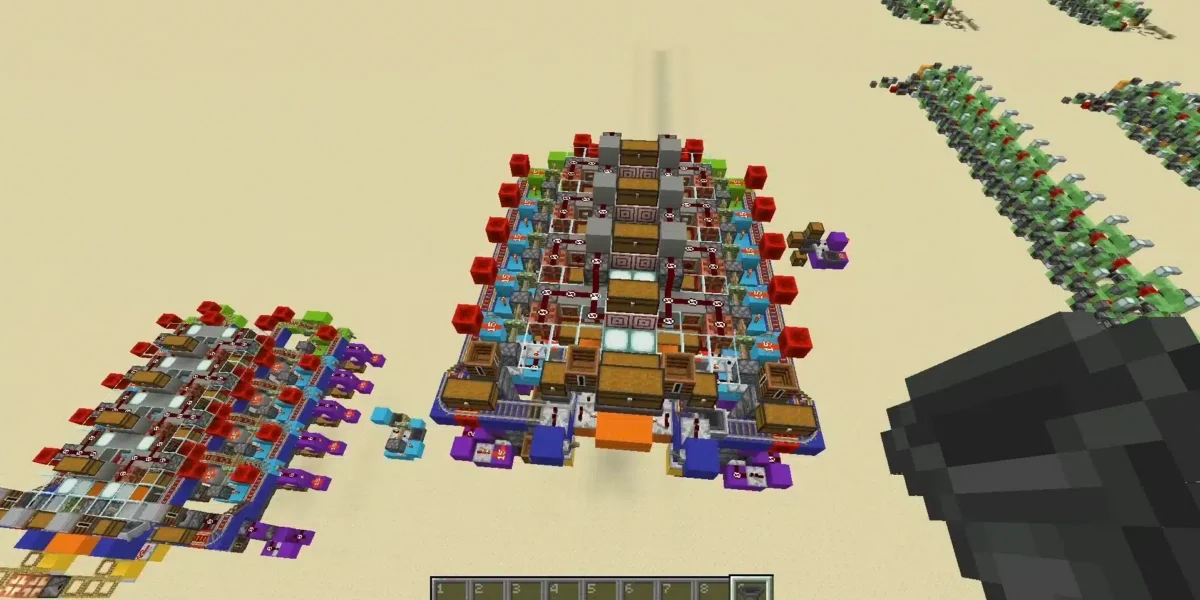
A Minecraft chicken is one of the easiest animals to turn into a long-term resource, even if you are still early in survival.
If you want steady food and simple materials, Minecraft chicken setups are beginner friendly, and Minecraft chicken farming scales fast once you understand the basics.
So, what is a Minecraft chicken in practical terms? A Minecraft chicken is a passive mob that lays eggs, can be bred for more chickens, and provides reliable drops like raw chicken and feathers.
In this guide, Minecraft chicken mechanics will feel simple, because you will learn breeding, egg handling, coop design, and farm layouts you can build without overcomplicating your base.
Minecraft chicken basics: where they spawn and what they drop
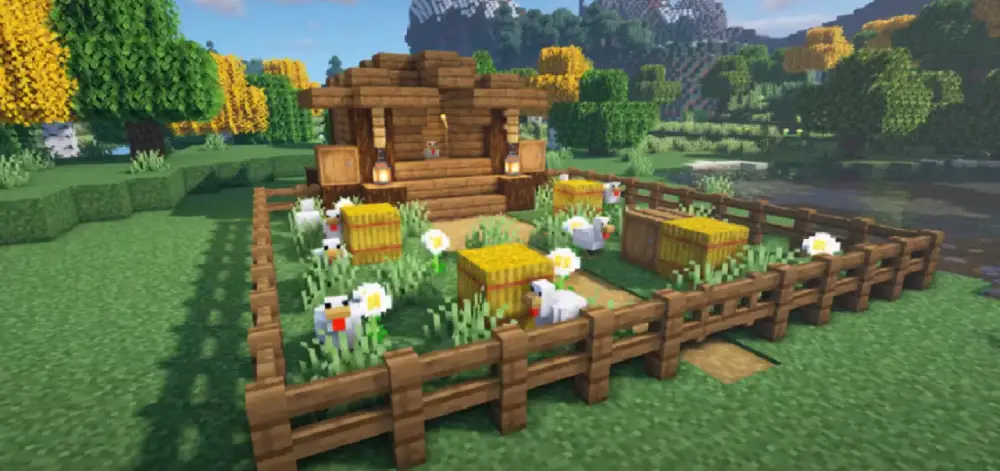
Chickens are one of the most common passive mobs in many overworld biomes, so they are often your first “real farm” animal. Even better, they do not require complex care to be useful.
Where to find chickens quickly
In most worlds, you will spot chickens wandering in open areas. If you are struggling to locate them, explore nearby plains-style regions, follow daylight routes, and keep your inventory light so you can bring animals home safely.
A quick tip that saves time is to bring seeds before you start searching. That way, when you spot a chicken, you can lead it immediately instead of running back.
Minecraft chicken drops and why they matter
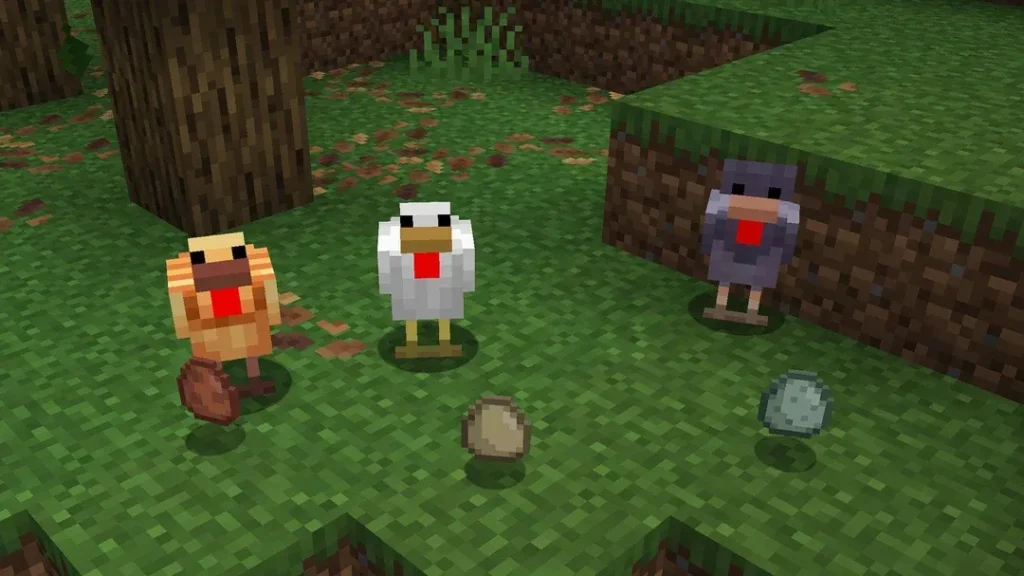
A Minecraft chicken can provide several practical resources:
- Raw chicken (food source, can be cooked);
- Feathers (useful for arrows and other crafting needs);
- Eggs (can be used for baking, and can hatch into chicks).
This is why chickens are a strong early pick for a starter farm. You get food progression and utility items without needing rare materials.
How to breed chickens Minecraft: fast growth with simple steps
Breeding is the fastest way to multiply your flock, and it is the foundation of any Minecraft chicken farm that produces consistent output.
What you need to breed chickens
To breed, you need seeds. Most seed types that feel “common” in early survival work well, which makes breeding accessible even before you have a fully developed farm.
Here is the basic idea: feed two adult chickens, watch the hearts, and a baby chicken spawns. After that, you repeat on a schedule.
A numbered routine for breeding without chaos
Before you rush into automation, build a reliable rhythm. Use this simple plan for how to breed chickens Minecraft efficiently:
- Build a small pen near your base, so you can breed quickly each day;
- Gather a stack of seeds from grass or crops before breeding sessions;
- Feed two adult chickens to trigger breeding, then step back to avoid crowding;
- Wait for chicks to grow, and expand the pen when you hit comfortable capacity;
- Separate “breeding adults” from “production chickens” once your flock gets large.
This approach prevents overcrowding, keeps your movement clean, and makes it easier to scale later.
Minecraft chicken farm layouts: from starter pen to automatic builds
A Minecraft chicken setup can be as simple as a fenced pen, or as advanced as a redstone-driven system that collects items while you do other tasks. The key is choosing the right stage for your world.
Starter pen for early survival
Start with a basic fenced area, because it is quick and reliable. Place it close enough that you will actually use it, and include a gate so you can step in and out without escaping mobs.
A clean starter pen works best when:
- You are still exploring and building tools;
- You want a small, steady food source;
- You are not ready to manage redstone systems yet.
This is the “minimum effective” Minecraft farm approach, and it is better than waiting for a perfect design.
Automatic chicken farm and collection basics
Once you want passive output, you can shift toward an automatic chicken farm concept that focuses on egg collection and item pickup. This is where planning helps, because you want a farm that does not become messy.
Here are common features in a Minecraft chicken farm that runs smoothly:
- A contained area for adult chickens to produce eggs;
- A collection method for eggs and drops;
- A controlled space that prevents chickens from escaping or stacking poorly.
As you scale, the goal is less clicking and less chasing items. You want your farm to feel like background income.
Chicken coop Minecraft: smart design that keeps chickens safe
A Minecraft chicken pen works, but a dedicated coop feels cleaner, looks better, and protects your flock from threats and accidents.
Coop size, safety, and quality of life
A good chicken coop Minecraft build is not about being fancy. It is about convenience and safety.
Include:
- Lighting to prevent hostile mob spawns;
- A roof to protect from accidental falls and to keep your space controlled;
- A clear entrance that does not cause chickens to escape.
If you are playing with friends, a coop also prevents “someone left the gate open” disasters.
Storage and workflow inside the coop
To make your coop feel smooth, build it around your routine. Put storage next to your coop, not across the base.
A simple workflow that works well:
- Chest for seeds;
- Chest for eggs;
- Chest for feathers and food.
This makes your Minecraft chicken resources easy to manage, and it keeps your base organized as the farm grows.
Blast your efficiency: eggs, hatching, and sustainable output
Eggs are the quiet power of chicken farms. They are easy to collect, and they give you long-term growth even when you are not breeding actively.
Egg collection and hatching basics
A Minecraft chicken lays eggs over time. When you throw eggs, you have a chance to hatch chicks. This creates a simple loop:
- Adults produce eggs;
- Eggs can become more chickens;
- More chickens produce more eggs.
This loop is why chickens scale well. You are not locked into constant breeding sessions if you do not want them.
Practical bullet list for “no-stress” egg farming
To keep your egg system simple, follow these habits:
- Collect eggs on a schedule, like every morning or every few days;
- Throw eggs inside a safe pen so chicks do not escape;
- Expand space before you expand population, so crowding stays manageable;
- Keep seeds nearby so breeding stays easy when you choose to do it.
This keeps your Minecraft chicken growth steady without turning farming into a chore.
Loot and uses: food, feathers, arrows, and more
Chickens are not just “food mobs.” A Minecraft chicken can support several core survival loops that matter long term.
Food value and cooking tips
Raw chicken becomes a stronger resource once you cook it. Cooked chicken is a reliable food item for exploration because it stacks well and supports longer trips.
If you want to build a steady food loop, think in batches:
- Collect for a few days;
- Cook a full stack;
- Store extras for long mining runs.
This makes your Minecraft chicken farm feel like a real supply chain, not random drops.
Feather value and combat progression
Feathers are a major reason players keep chickens even when they have other food sources. Feathers support arrow crafting, and arrows support progression in combat and exploration.
This also pairs well with other systems:
- Chickens plus crops for seeds;
- Feathers plus flint for arrows;
- Arrows plus bows for ranged fighting.
A Minecraft chicken farm is small, but its impact can be big when you think in connected loops.
Redstone chicken farm: when to build it and what to avoid
A redstone chicken farm can be useful, but it is easy to overbuild too early. The smartest move is building redstone systems only when you have the materials and the need.
Signs you are ready for a redstone build
You are ready when:
- Your flock is large enough to produce meaningful output;
- You are collecting more eggs than you want to throw manually;
- You want automated collection while you focus on building.
At that stage, redstone is not “extra.” It is a quality-of-life upgrade.
Common mistakes that break farms
A few mistakes cause most farm problems:
- Overcrowding, which makes movement and collection messy;
- Building too small, then trying to scale without redesign;
- Placing farms far from your normal routes, so they get ignored.
Keep your Minecraft chicken builds close to your daily path, because convenience is what keeps farms alive.
Minecraft chicken and multiplayer: why stable sessions matter
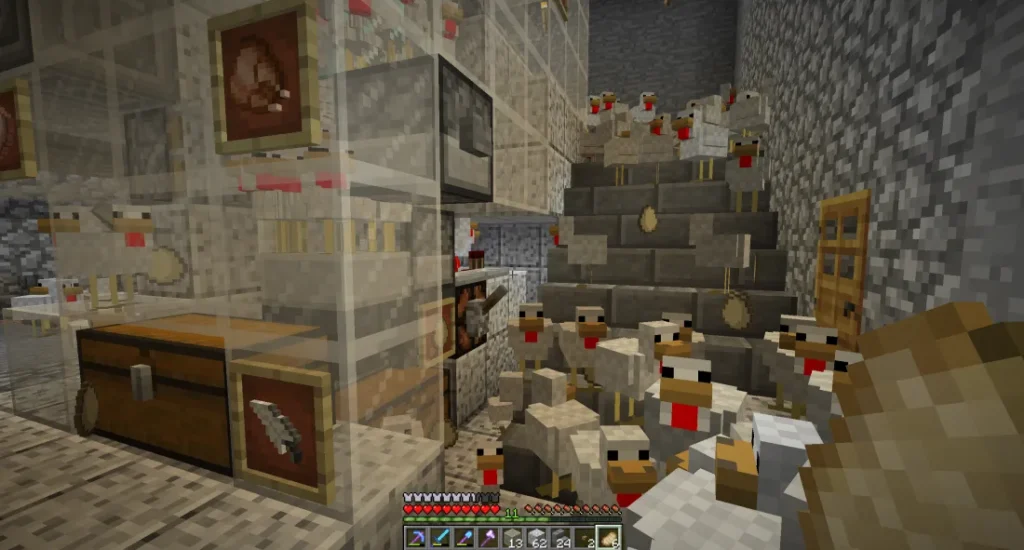
A Minecraft chicken farm is usually low stress, but multiplayer can add friction if your connection is unstable. That matters more than people expect, especially on servers with many players and moving entities.
Lag spikes can cause delayed interactions, desynced movement, and frustrating moments where your actions feel “late.” When you are managing farms, storage, and redstone, those delays can be annoying.
What instability looks like in real gameplay
In multiplayer worlds, unstable connections can lead to:
- Delayed opening of chests and crafting stations;
- Rubberbanding while moving through your base;
- Inconsistent interactions with animals, gates, and hoppers;
- Timing issues when building redstone-based farms.
If you notice this often, it is worth focusing on routing stability instead of only blaming the server.
How ExitLag helps, and what it is not
ExitLag is a route optimization tool designed to improve connection stability for online gaming. It works by using multiple routes and selecting the fastest and most stable path to the game server.
ExitLag is not a VPN. It does not aim to change your location or hide your IP. Its focus is improving routing quality to reduce issues like spikes and packet loss.
ExitLag supports PC and supports mobile when the game is supported. It does not work on consoles like PlayStation, Xbox, or Nintendo Switch.
FAQ
This section answers the most common questions about Minecraft chicken farming, breeding, and coop design.
For how to breed chickens Minecraft, feed two adult chickens with seeds, then repeat on a steady schedule. Separate breeding adults from the rest once your flock grows.
A fenced pen near your base is the best beginner Minecraft chicken farm. It is fast to build, easy to manage, and still provides eggs, food, and feathers.
A safe chicken coop Minecraft has lighting, a roof, and enough space to prevent crowding. Keep storage nearby so you actually use it.
No. Eggs have a chance to hatch when thrown, so you will not get a chick every time. However, collecting eggs over time makes hatching consistent.
An automatic chicken farm is worth it when you want passive collection and you have enough chickens to generate meaningful output. Start simple, then upgrade.
Ready to build a better farm with ExitLag?
A Minecraft chicken is one of the best starter animals because it gives you eggs, food, and feathers with minimal effort, and it scales from a simple pen into a serious automation setup.
If you want your farm sessions to feel consistent in multiplayer, Minecraft chicken management becomes more enjoyable when your connection is stable and your inputs feel responsive.
Try ExitLag to improve your route stability and make your Minecraft chicken farm time smoother today.
Got questions or want to connect with other players? Join the conversation at the ExitLag Forum!