A minecraft house blueprint is one of the most powerful tools you can use to improve your builds. Instead of placing blocks randomly and hoping the house turns out well, blueprints give you a clear structure to follow. They show you where every block goes, how tall each wall should be, and how the roof fits together.
For survival players, this matters even more. A good blueprint helps you build faster, waste fewer materials, and stay protected during the early nights. In creative mode, blueprints allow you to experiment with styles and proportions without rebuilding everything from scratch.
So, what exactly are minecraft house blueprints, who uses them, and when should you rely on them? Simply put, they are build plans used by beginners and advanced players alike, at any stage of the game, from the first wooden hut to large multi-floor bases. If you want consistency, efficiency, and better-looking results, blueprints are the answer.
What Are Minecraft House Blueprints?
Blueprint basics explained
Minecraft house blueprints are structured building plans that break a house into clear sections. Most blueprints include the foundation size, wall height, roof shape, and sometimes even interior layouts. Some are simple images, while others are full step-by-step guides.
A minecraft house blueprint usually focuses on practicality first. It shows how many blocks you need, which materials are required, and how the build fits together. This makes it easier to plan ahead, especially in survival mode where resources are limited.
Many players use blueprints to avoid common mistakes like uneven walls, oversized roofs, or cramped interiors. With a blueprint, every block has a purpose.
Traditional blueprints vs layer-by-layer builds
There are two main types of blueprints players use. The first is the traditional layout, which shows the final build as a whole. While useful, it can be confusing for beginners.
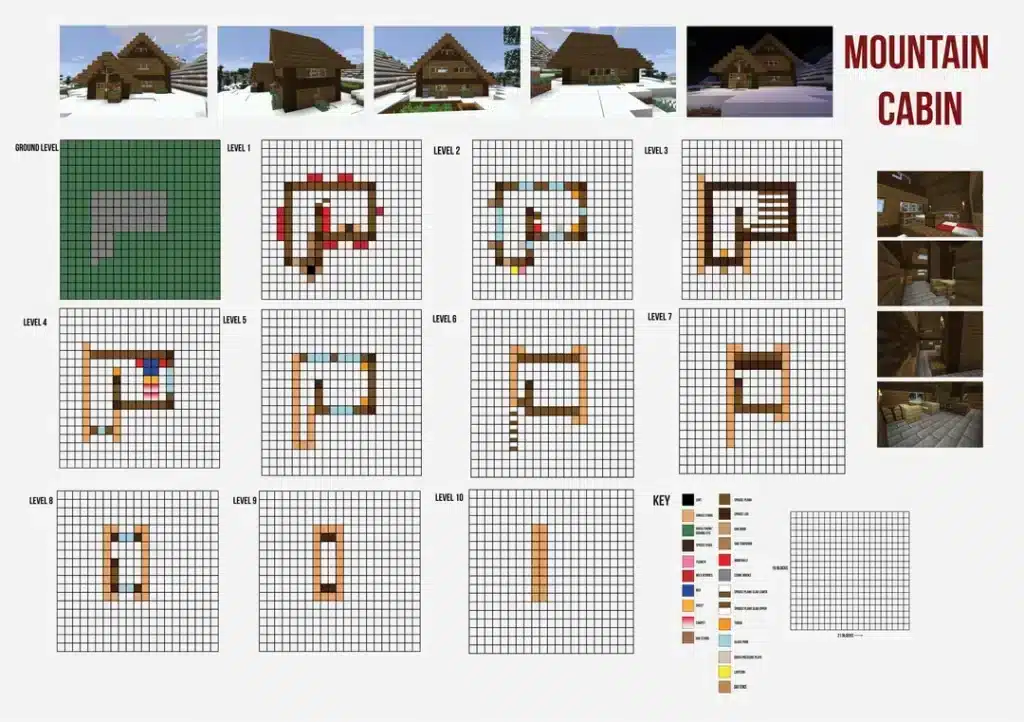
The second and more popular option is minecraft house blueprints layer by layer. These guides show each horizontal level separately. You finish one layer before moving to the next, making the building process much easier to follow.
Layer-by-layer blueprints reduce errors, speed up construction, and are perfect for both solo and multiplayer survival worlds.
Starter and Survival House Blueprints
Why starter blueprints matter in survival
In survival mode, your first house is about safety and efficiency. A solid minecraft survival house blueprint helps you survive the first nights without over-committing resources.
Starter blueprints are usually small, compact, and easy to defend. They often use basic materials like oak planks, cobblestone, and glass panes. The goal is not decoration, but survival.
With a clear blueprint, you can finish a starter house before nightfall, place essential items inside, and expand later without rebuilding everything.
Common features of survival house blueprints
Most minecraft survival house blueprints share similar characteristics:
- Small to medium footprint
- Simple roof designs
- Minimal windows for safety
- Space for a bed, crafting table, and chests
These blueprints are designed to grow with you. You can add a basement, second floor, or storage room later while keeping the original structure intact.
Minecraft House Blueprints Layer by Layer
How layer-by-layer building works
Layer-by-layer blueprints break the house into horizontal slices. You complete the foundation first, then move up one block level at a time. This approach keeps everything aligned and symmetrical.
A typical minecraft house blueprint layer by layer starts with a cobblestone or stone foundation. The next layers add walls, windows, and door frames. Final layers focus on the roof and decorative details.
This method is especially helpful on servers where lag or distractions can cause mistakes. Following one layer at a time keeps you focused and organized.
Benefits for beginners and advanced players
Beginners benefit from clear instructions and fewer errors. Advanced players benefit from speed and consistency. No matter your skill level, layer-by-layer blueprints save time and frustration.
They are also ideal for rebuilding the same house across different worlds or servers. Once you know the layers, you can reproduce the build almost from memory.
Mid-Game House Blueprints and Expansion
Moving beyond the starter house
As your world progresses, your needs change. You need more storage, better organization, and room for enchantments and farms. This is where larger blueprints for minecraft houses come in.
Mid-game blueprints often include multiple rooms, staircases, and separate functional areas. They still rely on the same blueprint logic but with more layers and details.
Using a blueprint at this stage helps you avoid chaotic expansions that ruin the original design.
Functional layouts and planning
Good mid-game blueprints plan space efficiently. Storage rooms are easy to access, crafting areas are centralized, and sleeping areas are protected. These designs improve gameplay flow and save time during daily tasks.
With a solid blueprint, you spend less time fixing mistakes and more time exploring, mining, or building farms.
How to Use Minecraft House Blueprints Effectively
Preparing your build area
Before you start building, always prepare the terrain. Flatten the ground, clear trees, and mark the foundation corners. This ensures your minecraft house blueprint fits perfectly.
Using temporary blocks to outline the base helps visualize the final size before committing materials.
Staying organized during construction
Follow the blueprint step by step. Complete each layer fully before moving on. Keep materials in nearby chests to avoid constant inventory trips.
If you are playing online, stable performance is essential. Precise block placement matters when following blueprints, especially on busy servers.
This is where ExitLag becomes useful. ExitLag optimizes your connection by stabilizing routing and reducing packet loss. With a smoother connection, your inputs register correctly, blocks place where intended, and chunk loading feels faster. While ExitLag works only on PC and Mobile, it is ideal for players building on multiplayer Minecraft servers where connection quality affects accuracy.
Why Minecraft House Blueprints Improve Every Playstyle
Whether you prefer survival, creative, or multiplayer worlds, blueprints improve consistency and results. They turn building from guesswork into a repeatable process.
A minecraft house blueprint helps you think like a designer. You plan ahead, manage resources better, and create structures that look intentional instead of improvised.
Detailed Layer-by-Layer Blueprint Examples
Understanding theory is important, but real progress comes from practical examples. In this section, we break down minecraft house blueprints layer by layer, showing how different house types are built from the ground up. These examples focus on survival efficiency, material balance, and long-term usability.
Starter House – Layer Breakdown
A starter house blueprint is designed to be built quickly, usually within the first in-game day. Its goal is protection, not decoration.
Layer structure example (7×9 build):
- Layer 1: Cobblestone foundation outlining the full footprint
- Layer 2: Oak plank walls with a centered door opening
- Layer 3: Window layer using glass panes
- Layer 4: Roof base using oak stairs
- Layer 5: Slab roof cap
This type of minecraft survival house blueprint uses minimal materials and keeps the interior compact, making it easy to defend and expand later.
Mid-Size Survival House Example
Mid-size blueprints are ideal once you have steady resources. These houses support storage rooms, staircases, and separate functional areas.
Typical mid-size house layers include:
- Foundation with mixed stone blocks
- Three to four wall layers for higher ceilings
- Interior floor separation
- Second-floor bedroom layer
- Full roof structure with overhangs
This structure allows smoother progression without forcing a complete rebuild.
Advanced Blueprint Case Studies
As your world grows, so do your building needs. Advanced blueprints for minecraft houses focus on organization, efficiency, and aesthetics.
Large Survival Houses and Functional Bases
Large survival bases are built in sections. Each section follows its own mini-blueprint while staying connected to the main structure.
Common blueprint sections include:
- Storage wing with item sorting
- Enchanting and brewing room
- Bedroom and respawn area
- Rooftop or underground farm access
Layer planning is critical here. Each section should align vertically to avoid wasted space and confusing layouts.
Modern and Themed House Blueprints
Modern blueprints require more precision than survival huts. They rely heavily on symmetry and block contrast.
Key modern design layers:
- Flat foundation with clean edges
- Tall glass wall layers
- Minimalist interior divisions
- Flat slab roofs or floating roof designs
These minecraft houses blueprints work best when followed exactly, as small mistakes can ruin the visual balance.
Visual Guides and Blueprint Tools
Blueprints come in different formats, and choosing the right one matters.
Using Blueprint Tools Effectively
Players commonly use:
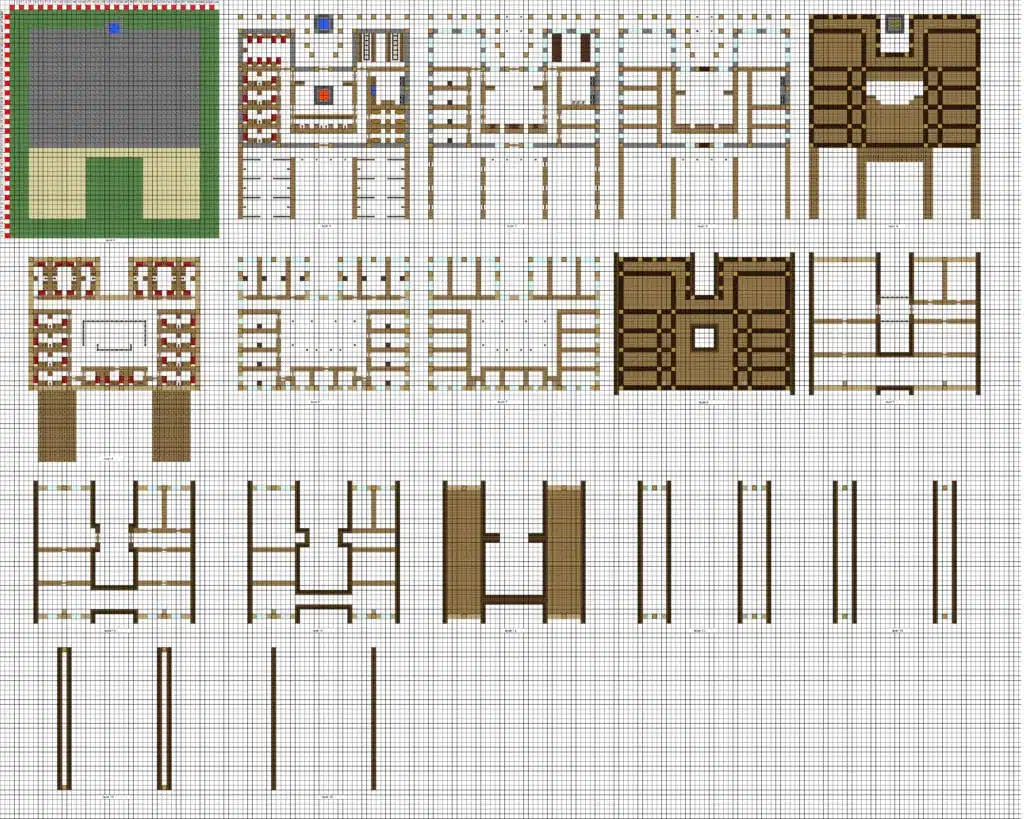
- 2D layer images
- World downloads for reference
- Schematic-style block guides
Each method supports minecraft house blueprints layer by layer, but world downloads are best for studying proportions before building in survival.
Translating Blueprints into In-Game Builds
To avoid mistakes:
- Mark the full foundation before building
- Complete one layer at a time
- Double-check symmetry on each level
- Add lighting during construction to avoid mob spawns
This workflow keeps builds accurate and stress-free.
Blueprint Comparison Table
Below is a quick comparison to help you choose the right blueprint style:
| Blueprint Type | Difficulty | Materials | Best For | Estimated Layers |
| Starter House | Easy | Wood, Stone | New players | 4–6 |
| Mid-Game House | Medium | Mixed blocks | Survival bases | 6–10 |
| Modern House | Hard | Quartz, Concrete | Aesthetic builds | 8–12 |
| Functional Base | Advanced | Multiple types | Long-term survival | 10+ |
Next-Level Blueprint Tips and Mistakes
How to Create Your Own Blueprints
Creating your own blueprint improves creativity and efficiency:
- Start with a clear footprint
- Decide wall height first
- Plan roof shape early
- Sketch layers before building
This process turns trial-and-error into intentional design.
Common Blueprint Mistakes to Avoid
- Skipping foundation measurements
- Overcomplicating roofs
- Ignoring interior spacing
- Mixing too many block types
Good blueprints are simple, consistent, and scalable.
How Blueprints Improve the Minecraft Experience
Using a minecraft house blueprint improves every playstyle. In survival, you save resources and time. In creative, you achieve cleaner designs. Also, in multiplayer, you build faster and more accurately.
Precision matters even more on online servers. Lag or unstable connections can cause misplaced blocks and broken symmetry. ExitLag helps by stabilizing your connection, reducing packet loss, and improving responsiveness on PC and Mobile. When you are following minecraft house blueprints layer by layer, consistent input accuracy makes a noticeable difference.
All game images used in this blog belong to Mojang Studios. They are used for informational/educational purposes only and do not imply endorsement or affiliation with the rights holders.
Got questions or want to connect with other players? Join the conversation at the ExitLag Forum!