
Minecraft terracotta is one of the most versatile decorative blocks available for builders who want color, durability, and design flexibility. Whether you are constructing detailed survival bases or massive creative projects, understanding how this block works can completely transform your builds.
In fact, minecraft terracotta stands out because it offers vibrant colors, strong blast resistance, and unique glazed patterns that no other block can replicate in quite the same way. Builders often choose it over wool or concrete thanks to its texture depth and survival-friendly properties.
So what exactly is minecraft terracotta? It is a solid block created by smelting clay blocks in a furnace. Unlike raw clay, terracotta is non-flammable, moderately blast-resistant, and can be dyed into 16 different colors. That makes it ideal for structured builds, detailed flooring, and long-lasting survival constructions.
Because it naturally generates in specific biomes and can also be crafted manually, players have multiple ways to collect and customize it. Let’s break down everything you need to know to master terracotta in your world.
Minecraft Terracotta Crafting Guide and Recipe
Before exploring decorative possibilities, you need to understand the terracotta minecraft recipe and the full crafting process. Fortunately, it is simple and accessible even in early survival gameplay.
Terracotta Minecraft Recipe Explained
To craft terracotta from scratch, follow this process:
- Collect clay balls from riverbeds, lakes, or swamps.
- Craft 4 clay balls into 1 clay block.
- Smelt the clay block in a furnace.
- Receive 1 terracotta block as the result.
Clay balls are commonly found underwater in shallow river biomes. Using a shovel speeds up collection dramatically.
Smelting requires fuel such as:
- Coal
- Charcoal
- Lava bucket
- Blaze rods
Each clay block smelted grants experience points, which makes it useful for early XP farming strategies.
How to Make Terracotta in Minecraft Step by Step
If you are new to survival mode, here is the exact breakdown for how to make terracotta in minecraft:
- Locate a river or swamp biome.
- Mine clay blocks with a shovel.
- Craft clay balls into clay blocks.
- Place clay blocks inside a furnace.
- Add fuel and wait for smelting to finish.
- Collect your finished terracotta blocks.
This method ensures unlimited access as long as clay is available nearby. It’s efficient, beginner-friendly, and scalable for larger builds.
How to Get Terracotta in Minecraft Naturally
Crafting is not your only option. Many players prefer exploring biomes to gather large quantities instantly. If you’re wondering how to get terracotta in minecraft without smelting, natural generation is the answer.
Where Terracotta Spawns in the Overworld
Terracotta naturally generates in the following locations:
- Badlands biome (largest source)
- Eroded Badlands
- Desert pyramids
- Desert villages
- Trail ruins structures
The Badlands biome contains massive layers of colored terracotta, making it the fastest farming method in the entire game.
Best Biomes for Farming Terracotta Fast
If efficiency is your goal, prioritize:
- Badlands for instant colored layers
- Swamps for clay farming
- River systems for bulk clay collection
Mining in Badlands gives you pre-colored terracotta, which saves dye resources and furnace time. However, clay farming gives you more flexibility for custom colors.
How to Dye Terracotta in Minecraft for Custom Builds
Customization is where terracotta truly shines. Learning how to dye terracotta in minecraft unlocks creative freedom for builders of every style.
How to Dye Terracotta in Minecraft Properly
To dye terracotta:
- Place 8 terracotta blocks in the crafting grid.
- Add 1 dye in the center.
- Collect 8 dyed terracotta blocks.
All 16 dye colors are supported, including red, blue, green, yellow, purple, and white.
One important detail: glazed terracotta cannot be dyed after it has been glazed. Dyeing must happen before smelting into glazed variants.
White Terracotta Minecraft and Other Color Variants
Among all options, white terracotta minecraft is particularly popular for modern builds and clean interior designs. It blends well with quartz, concrete, and smooth stone.
Here are common building uses for dyed terracotta:
- Mediterranean-style roofs
- Decorative flooring patterns
- Castle walls with layered tones
- Pixel art shading
- Rustic village builds
Compared to wool, terracotta has a more muted tone and stronger durability. Compared to concrete, it has a less saturated finish, making it ideal for realistic textures.
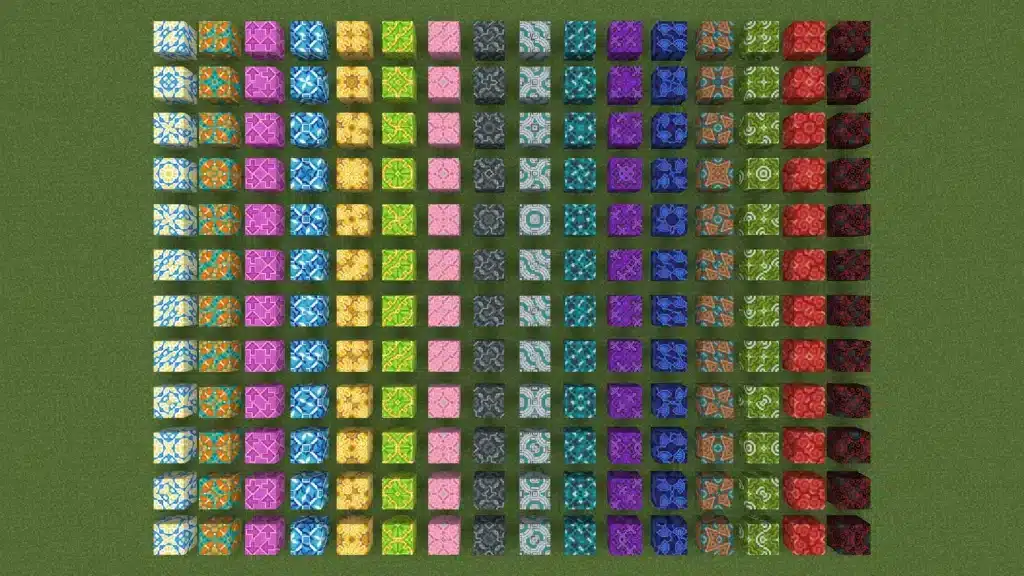
Glazed Terracotta Minecraft Patterns and Designs
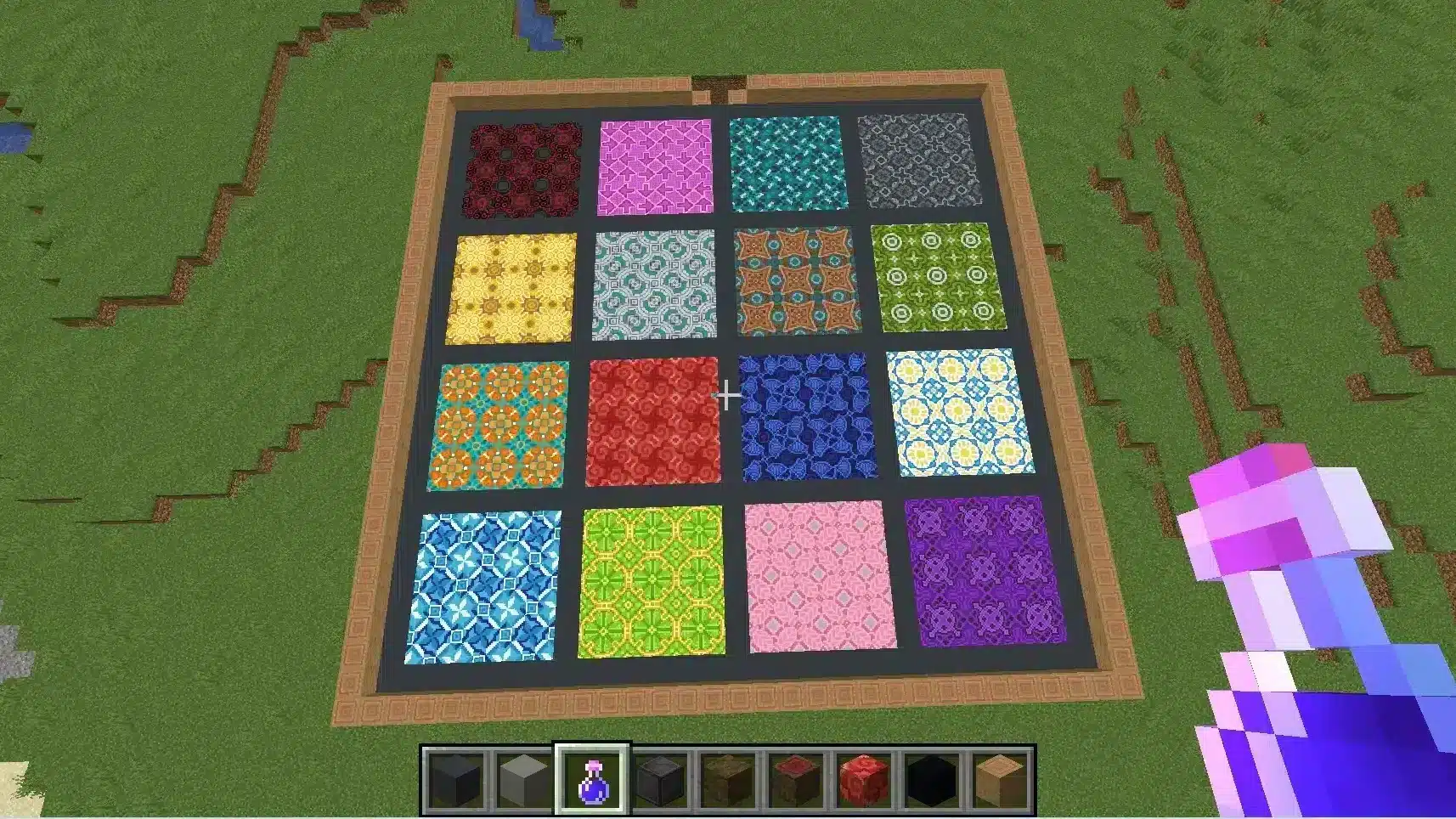
Once dyed, blocks can be transformed into glazed terracotta minecraft variants. These blocks create intricate patterns that depend on orientation.
How to Make Glazed Terracotta in Minecraft
If you want to know how to make glazed terracotta in minecraft, follow this simple method:
- Start with dyed terracotta.
- Place it inside a furnace.
- Smelt it to receive glazed terracotta.
Each color produces a unique pattern. Placement direction changes the design rotation, allowing complex floor mosaics.
Minecraft Glazed Terracotta Rotation Mechanics
The orientation mechanic works in four directions. The pattern rotates depending on the direction you face when placing the block.
This allows you to:
- Create symmetrical floors
- Design kaleidoscope ceilings
- Build temples with repeating motifs
- Construct decorative pathways
Because patterns interlock differently depending on placement order, experimentation is key.
Why Minecraft Terracotta Is Ideal for Multiplayer Builds
Large-scale creative servers often rely on minecraft terracotta because it offers visual depth without overwhelming color brightness. However, placing thousands of blocks in multiplayer environments can expose performance issues.
High ping can cause delayed placement, ghost blocks, and chunk loading problems. On competitive survival servers, that delay can ruin timing and building precision.
This is where ExitLag makes a difference. By optimizing routing paths and stabilizing your connection, ExitLag reduces packet loss and keeps block placement responsive. Whether you’re constructing glazed floor patterns or farming clay in a crowded multiplayer world, connection stability directly impacts your building efficiency.
When every block matters and timing affects your workflow, using optimized routing ensures smoother gameplay while working with minecraft terracotta.
Advanced Glazed Terracotta Minecraft Design Techniques
When working with glazed terracotta minecraft blocks, understanding orientation and symmetry becomes essential. Unlike standard terracotta, glazed variants create complex patterns that rotate depending on placement direction. This mechanic opens the door to advanced flooring systems and large-scale decorative builds.
Complete Glazed Terracotta Pattern Table
Below is a simplified comparison of popular minecraft glazed terracotta colors and their visual impact:
| Color | Pattern Style | Best Use Case | Visual Effect |
| White | Minimalist geometry | Modern builds | Clean symmetry |
| Blue | Spiral motif | Temple floors | Kaleidoscope look |
| Red | Bold geometric | Medieval halls | Strong contrast |
| Black | High contrast | PvP arenas | Dark dramatic tone |
| Cyan | Flowing curves | Ocean bases | Aquatic movement |
| Yellow | Radial pattern | Desert builds | Sunburst effect |
| Purple | Mystic design | Enchanted towers | Magical aesthetic |
| Green | Natural symmetry | Jungle builds | Organic pattern |
Each color produces a completely unique tile system. Rotating blocks properly can generate stunning 4×4 mosaics.
Pattern Rotation Strategy for Large Floors
Glazed terracotta rotates in four directions depending on player facing at placement. To control patterns effectively:
- Face the same direction when placing tiles.
- Build in 2×2 or 4×4 modules first.
- Test rotation before committing to large floors.
- Avoid mixing directions mid-row.
Mastering rotation allows you to fully control how to make glazed terracotta in minecraft work visually in temples, castles, or modern villas.
Terracotta Minecraft vs Concrete vs Wool
When choosing decorative materials, players often compare terracotta minecraft blocks to concrete and wool. Each block has advantages depending on survival priorities.
Durability and Blast Resistance Comparison
| Block Type | Hardness | Blast Resistance | Flammable | Best For |
| Terracotta | 1.25 | 4.2 | No | Survival builds |
| Concrete | 1.8 | 1.8 | No | Bright color designs |
| Wool | 0.8 | 0.8 | Yes | Interior decoration |
Terracotta offers stronger blast resistance than both wool and concrete, making it safer for creeper-prone bases.
When to Use Each Block in Survival Mode
- Use terracotta for durable exterior walls.
- Use concrete for vibrant color accents.
- Use wool for interior detailing.
- Use glazed terracotta only for decorative surfaces.
If your priority is long-term survival durability combined with muted tones, terracotta minecraft recipe outputs remain one of the best decorative solutions.
How to Farm Clay Efficiently for Terracotta Minecraft Recipe
Scaling builds requires efficient clay farming. Understanding renewable sources makes large projects sustainable.
Best Clay Farming Locations
Clay commonly generates in:
- River biomes
- Swamp biomes
- Lush caves
For faster farming:
- Use an Efficiency enchanted shovel.
- Equip Aqua Affinity for underwater mining.
- Use Night Vision potions for visibility.
Renewable Clay via Mud Conversion
In newer updates, clay became renewable. Players can convert mud into clay using dripstone mechanics, allowing infinite material production. This change makes how to get terracotta in minecraft far easier for mega-build projects.
With renewable clay, massive cities, arenas, and creative builds become far more realistic in survival worlds.
Technical Mechanics of Minecraft Terracotta
Understanding block mechanics helps optimize structural builds using minecraft terracotta.
Block Data and Properties
| Property | Value |
| Hardness | 1.25 |
| Blast Resistance | 4.2 |
| Stack Size | 64 |
| Tool | Pickaxe |
| Flammable | No |
Terracotta:
- Does not burn.
- Is not affected by gravity.
- Can be moved by pistons.
- Does not conduct redstone.
Glazed terracotta maintains similar durability but focuses entirely on decorative use.
Redstone Interactions and Limitations
Terracotta blocks cannot transmit redstone signals and are not transparent blocks. They function purely as structural materials.
Because of this, they are ideal for clean redstone casing where signal isolation is required.
Multiplayer Performance and Large Builds
Massive SMP builds using glazed patterns can expose performance weaknesses. High latency may cause delayed placement, incorrect rotation, or chunk rendering lag when working with patterned flooring.
ExitLag solves this by using Multipath Connection technology and real-time route optimization. Instead of relying on a single data path, it sends packets through multiple optimized routes, reducing ping spikes and stabilizing connections.
This is especially useful on:
- Creative plot servers
- Competitive SMP worlds
- Large public multiplayer hubs
With stable routing and packet delivery, placing minecraft terracotta blocks in high-traffic environments becomes significantly smoother and more precise.
Is Minecraft Terracotta Worth Using?
Modern Minecraft building trends emphasize texture layering over flat color saturation. Terracotta fits perfectly into this style thanks to its natural shading and subtle tones.
Benefits include:
- Durable against explosions
- Fully dyeable into 16 colors
- Renewable through clay conversion
- Unique glazed pattern versatility
From survival bases to competitive multiplayer builds, minecraft terracotta remains one of the most flexible decorative materials available.
All game images used in this blog belong to Mojang Studios. They are used for informational/educational purposes only and do not imply endorsement or affiliation with the rights holders.
Got questions or want to connect with other players? Join the conversation at the ExitLag Forum!