Phasmophobia is a cooperative horror investigation game where every contract revolves around one core objective: discovering what kind of ghost is haunting the location. While the atmosphere is terrifying, success depends far more on logic, observation, and teamwork than on bravery alone. That is exactly where a phasmophobia cheat sheet becomes essential.
During each investigation, players must collect paranormal evidence, interpret ghost behavior, and survive hunts long enough to correctly identify the entity. However, as difficulty increases, the margin for error becomes smaller. Ghosts become more aggressive, evidence may be limited, and hunts can trigger faster than expected. Having a reliable reference can mean the difference between a successful contract and a team wipe.
This phasmophobia cheat sheet is designed to help players of all skill levels quickly understand how ghost evidence works, how different ghost types are identified, and why cheat sheets are especially important for Nightmare, Insanity, and custom no-evidence runs. In simple terms, this guide explains what evidence exists, who it belongs to, and when ghost behavior matters more than tools.
Understanding Ghost Evidence in Phasmophobia
Ghost evidence is the foundation of every investigation. Each ghost type in Phasmophobia is associated with three specific pieces of evidence. Your goal is to discover those clues and match them to the correct ghost.
While beginner difficulties allow all three pieces of evidence to appear, higher difficulties may hide one or more. Because of that, understanding how evidence works is critical for both beginners and experienced investigators.
The Seven Evidence Types
There are seven core evidence types in Phasmophobia. Every ghost uses exactly three of these.
- EMF Level 5: Detected using the EMF Reader when paranormal interactions spike to level five.
- D.O.T.S Projector: A ghost silhouette briefly appears when passing through DOTS lights.
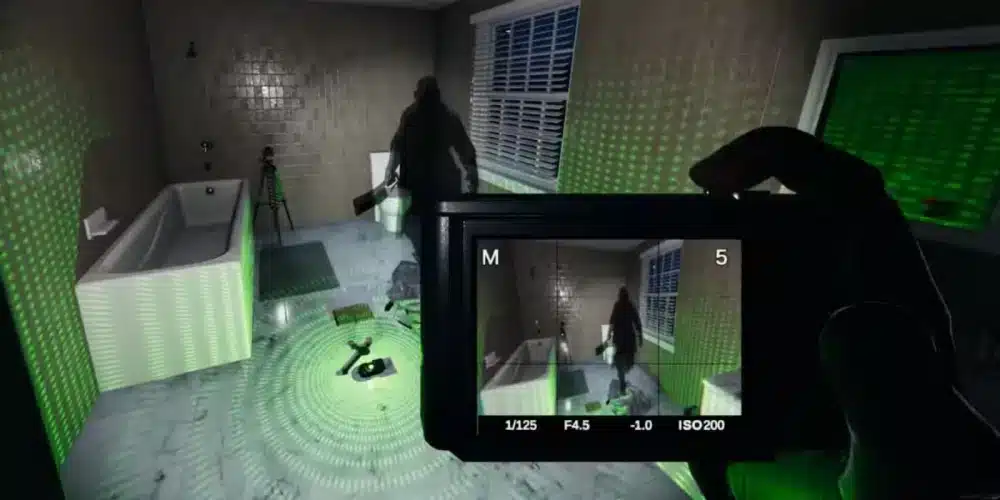
- Ghost Orb: Floating orbs visible only through a video camera, usually near the ghost room.
- Ultraviolet (UV): Fingerprints or footprints left on doors, windows, or floors.
- Freezing Temperatures: Temperatures drop below 0°C / 32°F, confirmed with a thermometer or breath.
- Ghost Writing: The ghost writes in a placed Ghost Writing Book.
- Spirit Box: The ghost answers questions when spoken to using the Spirit Box.
Each of these evidence types requires proper placement, patience, and sometimes the correct environmental conditions. Rushing tools or ignoring setup steps often leads to missed clues.
How Evidence Identifies Ghost Types
Every ghost is defined by a unique combination of three evidence types. When you collect evidence, you narrow down the list of possible ghosts in the journal.
On lower difficulties, this process is straightforward. However, on Nightmare or Insanity, one or even two pieces of evidence may never appear. In those cases, evidence alone is not enough, which is why players rely heavily on behavior-based identification.
This is where an unofficial phasmophobia cheat sheet becomes extremely valuable. Instead of guessing, players can use elimination logic combined with observed ghost traits to reach the correct conclusion.
Phasmophobia Ghost Types Cheat Sheet
A phasmophobia ghost types cheat sheet organizes all ghosts by their evidence combinations, making identification faster and more reliable. This section focuses on how players use evidence tables to narrow down suspects efficiently.
Ghost Evidence Overview
Every ghost has exactly three evidence types. For example:
- Spirit: EMF Level 5, Spirit Box, Ghost Writing
- Wraith: EMF Level 5, Spirit Box, D.O.T.S Projector
- Phantom: Spirit Box, Fingerprints, D.O.T.S Projector
- Demon: Fingerprints, Ghost Writing, Freezing Temperatures
By logging discovered evidence in the journal, players can quickly remove incompatible ghosts from the list. This process is the backbone of every phasmophobia ghosts cheat sheet used by experienced teams.
The key advantage of using a cheat sheet is speed. Instead of memorizing dozens of combinations, players can cross-reference evidence instantly, allowing more time to prepare for hunts or complete optional objectives.
Behavioral Traits That Matter
When evidence becomes unreliable, ghost behavior becomes the deciding factor. Many ghosts have unique traits that do not appear in the journal.
Examples include:
- Banshee: Targets one specific player and may emit a unique scream through the parabolic microphone.
- Mimic: Produces ghost orbs even when orbs are not listed as evidence.
- Deogen: Moves extremely slowly when close to players but is impossible to hide from.
- Thaye: Becomes slower and less aggressive as the investigation progresses.
Recognizing these patterns is essential for higher difficulties. A strong phasmophobia ghost cheat sheet always includes behavioral notes alongside evidence.
What Is a No Evidence Cheat Sheet?
A phasmophobia no evidence cheat sheet is designed for custom difficulty settings where all evidence is disabled. In these runs, players must identify the ghost using hunts, speed, sound, interaction frequency, and special abilities.
This mode is popular among advanced players because it transforms Phasmophobia into a pure deduction challenge. Tools still matter, but observation and teamwork become far more important.
Why No Evidence Runs Are So Difficult
Without evidence, players cannot rely on EMF readers, thermometers, or cameras to guide them. Instead, they must:
- Track ghost speed during hunts
- Monitor sanity drain behavior
- Observe interaction frequency
- Listen for unique audio cues
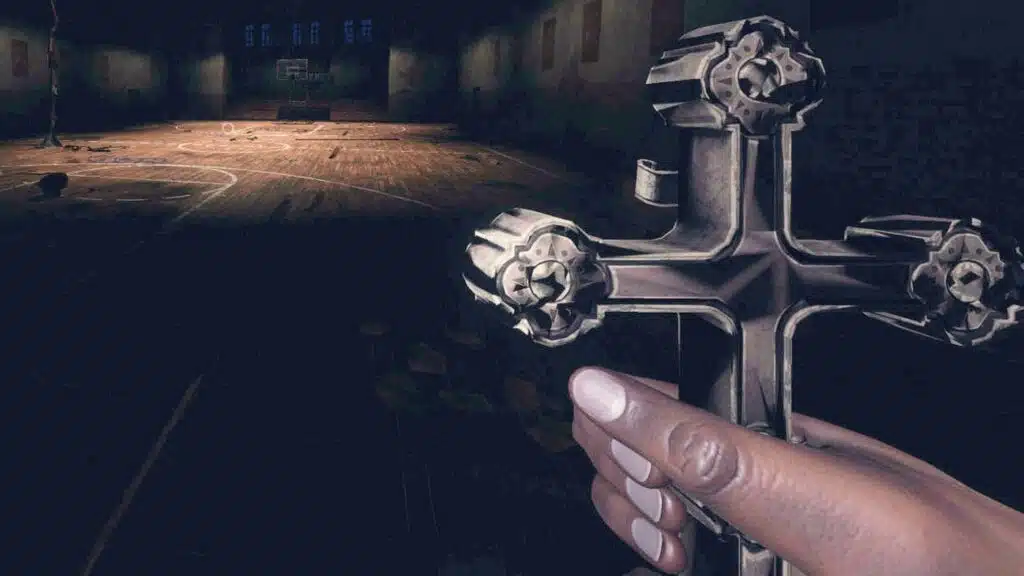
- Test ghost reactions to smudge sticks, crucifixes, and line of sight
Because of this complexity, cheat sheets are not optional – they are essential.
Behavioral Clues Used in No Evidence Identification
Common no-evidence identification methods include:
- Hunt Speed Testing: Certain ghosts are faster or slower based on conditions like sanity, line of sight, or proximity.
- Sound Cues: Unique vocalizations or breathing patterns reveal specific ghosts.
- Hunt Rules: Some ghosts hunt earlier or ignore standard protections.
- Environmental Reactions: Lights, doors, electronics, and player proximity all provide clues.
A properly structured cheat sheet phasmophobia players use during no-evidence runs turns chaos into a systematic process.
Pro Tips for Faster Ghost Identification
Efficient investigations are not about luck. They are about consistency, preparation, and communication.
Smart Equipment Prioritization
To gather evidence faster:
- Start with thermometer and EMF reader to locate the ghost room quickly
- Set up DOTS and cameras early
- Place writing books immediately
- Turn off lights to improve Spirit Box and Ghost Orb visibility
Delaying setup often leads to unnecessary hunts before enough data is collected.
Staying Alive While Gathering Clues
Survival is just as important as identification:
- Always locate hiding spots early
- Track sanity levels constantly
- Use smudge sticks strategically, not reactively
- Avoid greed when hunts become frequent
Good investigators know when to leave and when to push for one last clue.
Phasmophobia No Evidence Cheat Sheet for Advanced Players
Playing without evidence completely changes how investigations work. In custom difficulty settings where zero evidence is enabled, traditional tools like EMF readers, thermometers, and writing books lose their importance. Instead, players must rely on logic, timing, and ghost behavior. A phasmophobia no evidence cheat sheet becomes mandatory rather than optional.
In no-evidence mode, ghosts still follow their unique rules. They keep their hunt speeds, special abilities, sanity thresholds, and interaction patterns. The difference is that players must actively test these traits instead of waiting for confirmation through tools.
How No Evidence Mode Works
When evidence is disabled:
- The journal will never confirm evidence
- Ghosts still behave exactly as designed
- Hunts become the main source of information
- Team coordination is far more important
Nightmare difficulty hides one piece of evidence, while Insanity hides two. Custom no-evidence runs hide everything. This progression forces players to transition from tool-based investigation to behavior-based deduction.
Core Identification Pillars Without Evidence
Successful no-evidence identification relies on five main pillars:
- Hunt speed: Every ghost has a base movement speed
- Line-of-sight acceleration: Some ghosts speed up when they see players
- Sound patterns: Breathing, footsteps, and vocalizations vary
- Sanity thresholds: Certain ghosts hunt earlier or later
- Interaction frequency: How often objects are touched or thrown
Understanding these pillars allows experienced players to narrow down ghost types even in the most restrictive conditions.
Phasmophobia Ghost Speed & Hunt Behavior Cheat Sheet
Ghost speed is one of the most reliable identification tools in the game. While many ghosts share similar evidence, very few share identical hunt behavior. This is why a speed-focused phasmophobia ghosts cheat sheet is critical during advanced runs.
Ghost Speed Modifiers Explained
Ghosts do not all move at the same speed. Some are slow unless certain conditions are met, while others scale aggressively based on sanity or line of sight.
Key modifiers include:
- Base speed: Default movement speed during hunts
- Line-of-sight scaling: Speed increases when chasing players
- Environmental scaling: Temperature, breaker status, or room conditions
- Sanity scaling: Speed increases as average sanity drops
Testing speed requires controlled hunts, clear hallways, and consistent player positioning.
Ghost Speed & Behavior Table
| Ghost | Hunt Speed | Special Speed Behavior | Key No-Evidence Tell |
| Revenant | Very slow / extremely fast | Speed doubles with line of sight | Sudden sprint bursts |
| Deogen | Slow near player | Always knows player location | Heavy breathing |
| Thaye | Very fast early | Slows over time | Aging mechanic |
| Hantu | Faster in cold | Slower in warm rooms | Breaker dependency |
| Moroi | Sanity-scaled | Faster at low sanity | Curse behavior |
| Raiju | Faster near electronics | Slows without devices | Electronic attraction |
| Twins | Alternating speeds | Decoy hunt variation | Inconsistent hunt speed |
This table alone can eliminate multiple ghost types during no-evidence investigations.
Phasmophobia Ghost Traits Cheat Sheet (Behavior Only)
When speed alone is not enough, unique ghost abilities provide confirmation. A reliable phasmophobia ghost cheat sheet always includes these behavior-only traits.
Unique Ghost Abilities You Can Test
Some abilities are completely exclusive:
- Banshee: Emits a scream detectable via parabolic microphone
- Oni: More visible during hunts, less misty appearance
- Shade: Rarely hunts or interacts near players
- Yokai: Becomes aggressive when players talk nearby
- Goryo: DOTS visible only through video cameras
Testing these safely requires preparation, smudge sticks, and controlled sanity levels.
Common Misidentifications to Avoid
Even experienced players make mistakes:
- Mimic: Fake ghost orbs can cause false conclusions
- Spirit vs Demon: Smudge timing must be measured carefully
- Phantom: Appears invisible in photos, not videos
- Poltergeist: Multi-throw explosions can be subtle
Avoid rushing conclusions until multiple behaviors align.
Unofficial Phasmophobia Cheat Sheet – Multiplayer Logic
An unofficial phasmophobia cheat sheet often focuses on multiplayer coordination rather than solo logic. Phasmophobia is designed around teamwork, especially in higher difficulties.
Role-Based Investigation Strategy
Optimized teams assign roles:
- Evidence runner: Sets up equipment early
- Sanity manager: Tracks pills and thresholds
- Behavior observer: Watches hunt patterns
- Hunt tester: Triggers and times hunts safely
This structure prevents overlap and missed information.
Communication Tips for No Evidence Runs
Clear communication is essential:
- Call out hunt speed verbally
- Count footsteps together
- Confirm door touches immediately
- Coordinate smudge usage
Poor communication leads to incorrect identifications even with correct observations.
ExitLag for Phasmophobia Multiplayer Performance
In Phasmophobia multiplayer, lag is more than an inconvenience – it can get players killed. Desynced hunts, delayed door interactions, and voice chat interruptions can ruin otherwise perfect investigations.
ExitLag improves Phasmophobia performance by optimizing routing between your PC and game servers. With real-time traffic optimization and multi-path connections, ExitLag reduces latency, packet loss, and connection instability during co-op sessions.
For teams running Nightmare, Insanity, or no-evidence contracts, a stable connection ensures accurate hunt timing, smooth voice communication, and reliable player positioning. ExitLag is available for PC only and is built specifically for gamers who take performance seriously.
Complete Cheat Sheet Phasmophobia Players Should Bookmark
Mastering Phasmophobia requires knowing when to rely on each type of cheat sheet.
When to Use Each Cheat Sheet Type
- Evidence cheat sheet for early investigations
- Behavior cheat sheet when evidence is limited
- No-evidence cheat sheet for custom runs
- Speed and hunt tables for final confirmation
Turning Fear into Logic
Fear causes mistakes. Knowledge creates control. By using structured cheat sheets, players replace panic with deduction and turn even the most dangerous contracts into solvable puzzles.
All game images used in this blog belong to Kinetic Games. They are used for informational/educational purposes only and do not imply endorsement or affiliation with the rights holders.
Got questions or want to connect with other players? Join the conversation at the ExitLag Forum!