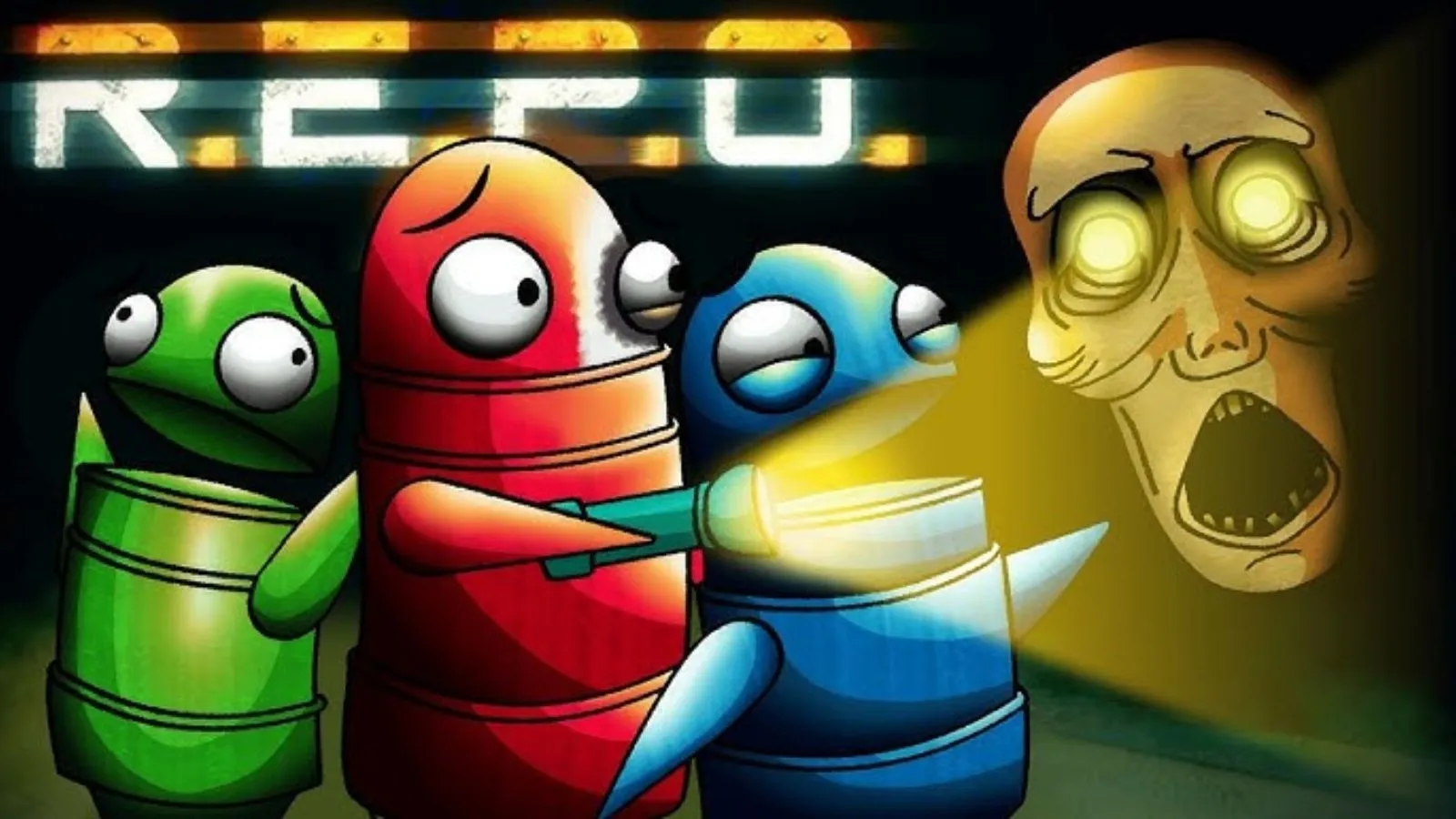

R.E.P.O. throws six players into dark, cramped facilities filled with valuables and things that want you dead. Learning the full roster of Repo Monsters is the difference between a clean extraction and a total party wipe.
This guide breaks down every creature currently active in the game, how each one detects you, and the fastest way to either avoid it or put it down for good. Repo Monsters range from nearly harmless stragglers to encounters that can end a run in seconds if your team panics.
So how do you actually kill monsters in Repo? Most enemies fall to a mix of gravity slams, ranged weapons, and the tranquilizer gun, though some are simply not worth fighting at all. Certain monsters are built to be avoided rather than engaged, and knowing which is which saves your team time, health, and expensive gear.
Whether you are chasing a repo monsters guide because you just got wrecked by something new, or you want the full rundown of every repo new monsters addition, this article covers detection types, attack patterns, and practical counters for the entire bestiary. Let’s get into it.
Understanding Repo Monsters And How Detection Works

Before you can fight or flee, you need to understand how each creature actually finds you. R.E.P.O. splits its enemies into distinct detection categories, and this single fact changes everything about how you should move through a level.
Some monsters hunt by sound, others by sight, and a handful track you regardless of what you do. Furthermore, danger level in the game is not always tied to detection type, so a “low tier” enemy can still end your run if handled carelessly.
Sound-Based Hunters
Several of the most common Monsters In Repo rely entirely on audio cues to find their targets. This includes footsteps, voice chat proximity, and the noise generated by carrying heavy items.
- Crouch-walking drastically reduces your noise footprint near sound hunters.
- Dropping items gently instead of throwing them avoids sudden noise spikes.
- Voice chat volume can alert nearby enemies, so many squads mute proximity chat during tense extractions.
- Sprinting is almost always louder than walking, even indoors.
Sight-Based And Omniscient Hunters
Other creatures rely on line of sight, meaning breaking eye contact or hiding behind cover is often enough to reset their aggression. However, a small number of the newer additions ignore stealth entirely and always know your position on the map.
Consequently, these tracking-type enemies force a different strategy: instead of hiding, you need to out-position them using furniture, corners, and their own movement speed against them.
All Repo Monsters Currently In The Game
The current roster sits at 29 confirmed creatures split across three danger levels. Indeed, the most recent Monster Update added ten brand new enemies, nearly doubling what was previously available.
Here is the breakdown of the current cast of All Repo Monsters organized by rough threat category.
| Danger Level | Example Monsters | General Threat |
|---|---|---|
| Level 1 (Low) | Gnome, Rugrat, Peeper, Bella, Tick | Mostly avoidable with awareness, low direct damage |
| Level 2 (Medium) | Huntsman, Clown, Headman, Gambit, Headgrab | Requires active counterplay, moderate to high damage |
| Level 3 (High) | Reaper, Trudge, Loom, Apex Predator, Upscream | Can wipe a team quickly if mishandled |
The Original Roster
The launch monsters remain some of the most frequently encountered threats in the game today. Players still run into these constantly, so knowing their patterns cold is essential.
- Huntsman: Blind but has excellent hearing, fires a shotgun blast toward noise sources.
- Reaper: Deaf but reacts to the sound of held items, attacks with blade arms at close range.
- Peeper: Locks onto players who make eye contact until vision is broken.
- Clown: Fires a laser and performs a kicking attack that can be dodged with timing.
- Chef: Throws knives from a distance and closes in with a cleaver if approached.
New Repo Monsters From The Latest Update
The Monster Update introduced ten fresh enemies that changed how veteran players approach every run. These new Repo Monsters bring mechanics the original cast never had, from omniscient tracking to grab combos.
- Loom: Always knows the player’s exact location and creates a shockwave clap dealing roughly 100 damage on approach. It moves slowly, so distance and obstacles are the best counter.
- Elsa: Starts with the highest health pool in the game and transforms into a more dangerous form if left alone too long.
- Birthday Boy: Spawns balloons across the map as part of its core mechanic, punishing players who pop them carelessly.
- Gambit: Grabs players and relies on chance-based outcomes rather than guaranteed damage, making communication critical.
- Headgrab: Bites repeatedly once it spots a target and can wear a downed teammate’s head to become faster.
- Heart Hugger: Pulls players toward a floating heart with a gas cloud before delivering a multi-hit slap combo.
- Tick: Latches onto a player and drains health over time until removed or killed.
- Bella: Gives three audible warnings before charging, rewarding teams who learn her sequence.
- Cleanup Crew: Works in groups and cleans up the environment aggressively around intruders.
- Oogly: A newer addition with unpredictable movement patterns that punishes players who stand still too long.
How To Kill Monsters In Repo Efficiently
This is the question every new squad asks after their first few wipes. The honest answer is that not every enemy should be fought, but the ones that can be killed usually fall to a small set of reliable tactics.
Understanding how to kill monsters in Repo starts with recognizing that gravity, ranged weapons, and stuns each work differently depending on the target.
Which Weapons Actually Work
Melee items deal solid damage but require precise timing and positioning to land safely. Ranged tools, on the other hand, let your team soften targets from a distance before anyone gets close.
- Gravity-based tools: Picking up an enemy and slamming it into the floor or a wall is often an instant kill against lighter monsters.
- Tranq gun: Stuns most enemies briefly, opening a window for a grab-and-slam combo or a group beatdown.
- Firearms: Reliable against enemies like Gambit, which can be dropped with just a couple of well-placed shots.
- Melee weapons: Effective but risky, since many attacks require you to be within an enemy’s own strike range.
When You Should Just Run Instead
Not every fight is worth having. High HP enemies such as Trudge or Elsa in her enraged state can burn through consumables and health packs without dying quickly enough to justify the fight.
Therefore, experienced teams treat combat as optional. If a monster orb is not guaranteed and the risk of a downed teammate is high, disengaging is almost always the smarter call.
Is It Worth Fighting Every Monster In Repo?
Not really. Most creatures drop a monster orb worth a few thousand dollars, but the item damage and health risk involved in a fight can outweigh that reward on harder difficulties.
A general rule many squads follow: if the kill takes less than three item swings or one tranq-and-slam combo, take it. If it takes longer, retreat and let the extraction continue without the distraction.
What Is The Most Dangerous Monster Right Now?
Community consensus points to Loom and Apex Predator as the two hardest current threats. Loom’s omniscient tracking removes the option to hide, while Apex Predator hits extremely hard in close quarters.
However, both share a common weakness: they are slower than the average player. Consequently, kiting them around obstacles remains the most consistent survival strategy for either encounter.
Common Mistakes Repo Players Make
- Fighting everything on sight: New players try to kill every creature they see for the orb payout. Fix: assess health risk first, since a downed teammate costs more time than the reward is worth.
- Ignoring detection type: Sneaking loudly past a sound-based hunter or staring directly at a sight-based one gets squads killed constantly. Fix: learn each monster’s detection method before entering a level.
- Splitting up near high danger zones: Solo players get isolated and picked off by ambush-style enemies like Headgrab. Fix: stay within shouting distance of at least one teammate during active hauls.
- Wasting the tranq gun early: Some players stun the first low-threat enemy they see and have nothing left for a real emergency. Fix: save stuns for Level 2 and Level 3 encounters.
- Standing still out of panic: Freezing up near an aggressive monster almost guarantees a hit. Fix: always have an exit route planned before engaging or even walking near a threat.
Pro Tips: Surviving Repo Monsters
- Learn audio cues on purpose: Many monsters telegraph their attacks with distinct sounds. Recognizing these early gives your team a full second or two of reaction time, which is often the difference between a graze and a down.
- Use furniture as a shield: Slow enemies like Loom and Trudge can be kited endlessly around tables, shelves, and crates. This works because their pathing cannot cut corners as efficiently as a player can.
- Coordinate grab-and-slam kills: A tranq stun followed immediately by a gravity slam kills most low and mid tier threats in one combo. This is efficient because it minimizes the time your team spends exposed near the target.
- Keep a health item in reserve at all times: Even a cheap healing item can turn a near-wipe into a clean escape. This works because most monster damage comes in bursts rather than sustained ticks, so one heal often covers the gap.
- Communicate monster type over voice immediately: Calling out “Peeper” or “Huntsman” the moment you see one lets your whole squad adjust movement instantly. This works because reaction speed as a group beats individual awareness every time.
Staying Connected While You Hunt Repo Monsters
R.E.P.O. is a co-op experience, and nothing ruins a clean extraction faster than a teammate freezing or rubber-banding right as a monster closes in. Connection issues during a tense encounter can turn a survivable fight into a wipe.
This is where ExitLag comes in. ExitLag is not a VPN, it is a game connection optimizer that scans multiple network routes in real time and picks the fastest, most stable path to the game’s servers.
It does not encrypt your traffic, does not mask your IP, and does not touch anything outside the games you choose to optimize. ExitLag currently supports over 4,000 titles across PC and Mobile, with more than 1,500 servers spread across 190-plus countries, and it is trusted by over 30 million players worldwide.
For a game like R.E.P.O. where split-second reactions decide whether you dodge a Loom shockwave or eat a Reaper blade, a stable connection matters. Features worth knowing about include:
- Real-time Optimization: Actively reduces delay and packet loss so your inputs land when you expect them to.
- Multipath Technology: Routes your connection through multiple paths simultaneously, so a single bad hop does not tank your whole session.
- PC Boost: Frees up RAM and background processes, which helps keep frame times consistent during chaotic multi-monster encounters.
- Traffic Shaper: Prioritizes your game traffic over background downloads or updates running on the same network.
ExitLag does not modify game files, inject code, or interact with anti-cheat systems in any way, and it should never be run alongside a VPN. If your squad keeps losing runs to lag spikes instead of actual monster mechanics, grabbing the ExitLag Download is a reasonable first step before your next expedition.
Whichever creature gave your team the most trouble this week, remember that most Repo Monsters have a clear pattern once you know what to look for. Master the detection types, save your resources for the fights that matter, and your extractions will start feeling a lot less chaotic.
All game images used in this blog post belong to Semiwork. They are used for informational and educational purposes only and do not imply endorsement or affiliation with the rights holders.
Got questions or want to connect with other players? Join the conversation at the ExitLag Forum!