

Rocket League servers are essential for every online match, from Casual and Competitive playlists to Tournaments and Private Matches. When they work properly, you can queue fast, play smoothly, and focus on aerials, rotations, kickoffs, and saves without thinking about your connection.
However, Rocket League servers can sometimes feel unstable. You may see matchmaking failures, long queue times, high ping, packet loss, or the message error while communicating with Rocket League servers. In those moments, the first step is understanding whether the issue comes from Psyonix and Epic’s services, your region, your local setup, or your internet route.
Rocket League servers can also be affected by maintenance, outages, high traffic, platform issues, or connection problems on the player side. That is why checking the official Rocket League servers status should always come before changing advanced settings.
Are Rocket League servers down right now?
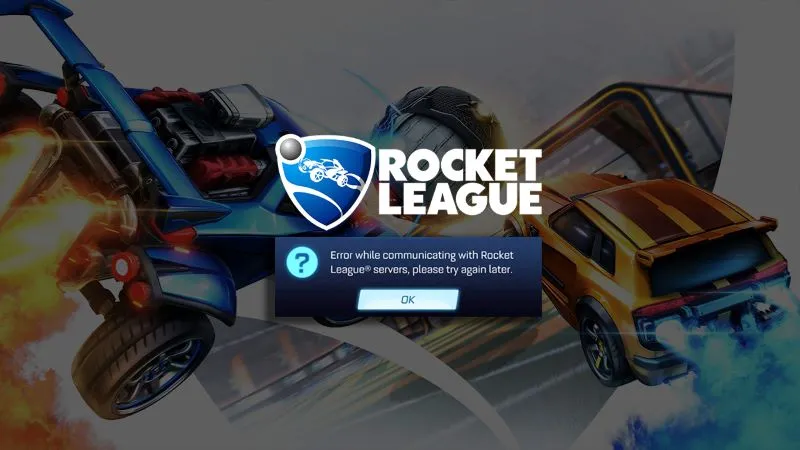
The fastest way to answer are Rocket League servers down is to check official status sources instead of guessing from your own connection. Rocket League can have global outages, regional issues, or temporary matchmaking problems that affect many players at once.
Epic’s official support page for Rocket League live issues tells players to check Rocket League Status on X, Rocket League Blogs, and the Epic Games Server Status page for the most up-to-date information.
That matters because not every connection error means the whole game is offline. Sometimes only matchmaking is affected. Sometimes login works, but tournaments fail. Sometimes your friend can play because they are using a different region or platform.
How to check Rocket League servers status
To check Rocket League servers status, start with official sources.
Use this order:
- Check the Epic Games Public Status page.
- Check Rocket League Status on X.
- Check Rocket League official community posts.
- Restart the game and test again.
- Compare reports from friends in your region.
- Check third-party outage trackers only as extra confirmation.
Epic’s public status page lists incidents and resolutions by date. For example, it showed a Rocket League Matchmaking Outage on May 12, 2026, later marked as resolved when players could queue normally again.
This is why official pages are more reliable than random posts. A single player report can be local. A status page incident usually confirms a wider service issue.
How to tell if it is a server issue or your connection
If you are asking are the Rocket League servers down, look for patterns.
It is probably a server-side issue if:
- Many players report the same error at the same time.
- The official status page shows an incident.
- Matchmaking fails for multiple platforms.
- Your internet works normally outside Rocket League.
- Restarting the game does not help.
- Friends in different homes have the same problem.
It is probably your connection or route if:
- Only you are affected.
- Your ping spikes during matches.
- You rubberband while others play normally.
- Your region is set incorrectly.
- Wi-Fi is unstable.
- Other online games also lag.
- Rocket League status pages show no incident.
This distinction saves time. If the servers are down, you wait for a fix. If your route is unstable, tools like ExitLag and local troubleshooting can help.
What are Rocket League servers?
Rocket League servers are the online infrastructure that connects players, hosts matches, manages matchmaking, and supports online features. They allow players from different platforms and regions to play together in real time.
Because Rocket League is a high-speed game, server responsiveness matters a lot. A small delay can change a kickoff, a 50/50, a save, or an aerial challenge. Even if your mechanics are strong, unstable connectivity can make your car feel delayed or inconsistent.
Rocket League also uses regional server selection. Epic’s support page says players should choose the closest region because farther regions can lead to lag and packet loss, while the Recommended option generally selects the closest region with the best connectivity.
Why Rocket League needs stable servers
Rocket League is extremely sensitive to timing. Every touch depends on fast communication between your device and the server.
Stable Rocket League servers help with:
- Kickoff timing.
- Ball prediction.
- Aerial control.
- Boost pad collection.
- Demo interactions.
- 50/50 challenges.
- Shot accuracy.
- Defensive saves.
- Ranked consistency.
- Tournament performance.
When servers or routes become unstable, the game can feel wrong even if your FPS is fine. You may hit the ball on your screen but miss on the server. You may grab boost late. You may see your car snap back after a challenge.
This is why server and connection quality matter more in Rocket League than in slower online games.
Why Rocket League server regions matter
Rocket League allows players to choose matchmaking regions. Epic’s support page lists available regions such as US-East, US-Central, US-West, Europe, Asia, Middle East, Oceania, South Africa, South America, and India.
Choosing the wrong region can cause:
- Higher ping.
- More packet loss.
- Delayed inputs.
- Poor matchmaking quality.
- Rubberbanding.
- Inconsistent ball reads.
For Casual and Competitive matches, Epic’s instructions are simple: select Play, choose Casual or Competitive, select the Regions button, and choose your preferred region or Recommended.
For most players, Recommended is the safest option. If you manually select a faraway region, expect more delay.
Why are Rocket League servers down or not working?
Rocket League servers may go down because of scheduled maintenance, unexpected outages, matchmaking problems, backend issues, platform service problems, or heavy traffic after updates and events. Some issues are global, while others only affect specific regions or features.
However, the phrase “servers down” is often used too broadly. A player may say Rocket League is down when the real issue is DNS, cache, Wi-Fi, router instability, region settings, or packet loss.
Epic’s official troubleshooting page lists multiple connection messages, including “You are currently not connected to the Rocket League Servers,” “Not Logged in to Rocket League Servers,” “No servers online,” “Unknown error while communicating with Rocket League Servers,” and Error 71.
Common server-side causes
Server-side causes are problems players cannot fully fix on their own.
Common examples include:
| Cause | What happens | What you should do |
| Scheduled maintenance | Online features may be paused | Wait for completion |
| Matchmaking outage | You cannot queue properly | Check status page |
| Login outage | Game cannot authenticate you | Wait and retry later |
| Platform issue | Epic, PlayStation, Xbox, Steam, or Switch services fail | Check platform status |
| Update deployment | Servers may restart or behave inconsistently | Update and wait |
| Regional incident | One server region performs poorly | Try Recommended or another nearby region |
If the issue is confirmed officially, avoid changing too many settings. You do not want to create new problems while the actual outage is outside your control.
Common player-side causes
Player-side causes are issues you can troubleshoot.
Common examples include:
- Weak Wi-Fi.
- Router instability.
- Wrong region.
- Outdated game version.
- Corrupted cache.
- DNS problems.
- Firewall conflicts.
- Windows clock sync issues.
- ISP routing problems.
- Packet loss between you and the server.
Epic’s official PC troubleshooting steps include checking Epic Games Status, checking your region, restarting your router, deleting the Rocket League cache, using a wired connection, disconnecting other devices, synchronizing the Windows clock, and using Google Public DNS.
That list is useful because it starts with the simplest and most common fixes before advanced troubleshooting.
How do you fix the error while communicating with Rocket League servers?
The error while communicating with Rocket League servers usually means your game client cannot properly connect, authenticate, or exchange data with Rocket League online services. It can happen during launch, matchmaking, login, or playlist access.
This error does not always mean Rocket League is down. It can appear during real outages, but it can also appear when your local connection, cache, clock, DNS, or route is causing problems.
Start with the least risky fixes first. Do not reinstall the game before checking status, region, router, and cache.
Basic fixes to try first
Use this quick checklist:
- Close Rocket League.
- Restart the game.
- Check Epic Games Status.
- Check your platform status.
- Confirm your game is updated.
- Restart your PC or console.
- Restart your router.
- Switch from Wi-Fi to Ethernet if possible.
- Check your selected matchmaking region.
- Test another online game.
If the error remains, move to connection-specific troubleshooting.
Try:
- Disconnecting other devices from the network.
- Avoiding downloads while playing.
- Using the Recommended region.
- Checking whether your firewall blocks Rocket League.
- Synchronizing your Windows clock.
- Clearing the Rocket League cache.
- Testing Google Public DNS.
These steps match the general direction of Epic’s official Rocket League connection troubleshooting recommendations.
Advanced fixes for persistent errors
If the basic steps do not solve the error while communicating with Rocket League servers, the problem may involve routing or deeper network instability.
Try these advanced steps:
| Fix | Best for |
| Wired connection | Reducing Wi-Fi instability |
| DNS change | Resolving DNS-related connection problems |
| Cache deletion | Fixing corrupted local Rocket League data |
| Firewall exception | Allowing Rocket League traffic |
| Clock sync | Fixing authentication timing conflicts |
| Region adjustment | Reducing ping and packet loss |
| ExitLag route optimization | Improving unstable routes to game servers |
Do not apply all advanced fixes randomly. Test one or two changes at a time so you know what helped.
If official servers are operational and only your connection keeps failing, route optimization becomes more relevant.
How do you reduce lag on Rocket League servers?
To reduce lag on Rocket League servers, you need to improve both local stability and route quality. Local stability includes your device, router, cable, and background traffic. Route quality includes the path your data takes from your connection to the game server.
A low ping number is good, but stable ping is even more important. ExitLag’s Rocket League high-ping guide explains that stable ping is critical for predictable gameplay, and that sudden jumps from values like 30ms to 150ms indicate unstable routes.
In Rocket League, inconsistent ping can feel worse than slightly higher but stable ping. Predictability matters for mechanics.
Local fixes for lag and packet loss
Start with local fixes before blaming servers.
Use this checklist:
- Use Ethernet instead of Wi-Fi.
- Restart your router weekly.
- Close downloads and streams.
- Stop cloud backups while playing.
- Reduce the number of active devices.
- Keep the game updated.
- Use the correct region.
- Avoid VPNs not made for gaming.
- Check NAT and firewall settings.
- Restart your device before ranked sessions.
For consoles, also check platform network tests. For PC, check background apps, overlays, and firewall permissions.
If your local network is overloaded, no server region will feel good. Fix the home network first.
Matchmaking region and ping tips
The best region is usually the closest one. Epic’s support page states that choosing regions farther away may lead to lag and packet loss, and that Recommended generally chooses the closest region with the best connectivity.
For better results:
- Use Recommended if you are unsure.
- Do not queue multiple far regions at once.
- Choose your actual region for ranked.
- Avoid distant regions for tournaments.
- Test regions during off-peak times.
- Watch ping after kickoff and during challenges.
A region that looks playable in the menu may still feel bad in game if the route is unstable. That is where route testing and optimization can help.
How does ExitLag help with Rocket League servers?
ExitLag helps with Rocket League servers by optimizing the network route between your connection and the game. It is designed to reduce routing instability, ping spikes, and packet loss when the problem comes from the path your data takes to the server.
This section matters because Rocket League is not only about raw speed. It is about consistency. A delayed dodge, late jump, or unstable kickoff can change the match. If your connection route is overloaded, your gameplay can suffer even when official servers are online.
ExitLag’s own Rocket League lag guide describes features such as route selection, lower and more stable ping, reduced packet loss, and automatic or manual route options for Rocket League.
When ExitLag can help
ExitLag can help when:
- Rocket League servers are online.
- Your ping is unstable.
- You have packet loss.
- Your route to the server is congested.
- Your ISP path is inconsistent.
- You experience rubberbanding.
- Your matches feel delayed.
- You play ranked or tournaments often.
ExitLag cannot fix a full official outage. If Rocket League servers are completely offline, no routing tool can force matchmaking to work. However, if the servers are online and your path to them is bad, ExitLag can help stabilize the connection.
This distinction is important. Server outages require waiting. Routing issues can often be improved.
How to use ExitLag for Rocket League
A simple setup process looks like this:
- Download and install ExitLag.
- Log in to your account.
- Search for Rocket League in the app.
- Select automatic route optimization or choose a route manually.
- Apply the route.
- Launch Rocket League normally.
- Monitor ping and gameplay stability.
ExitLag’s Rocket League guide also describes using its network tools to test ping to specific game servers and choose the best route based on latency results.
For players who grind ranked, this is useful because consistency matters across long sessions. Stable routing can help you focus on mechanics instead of fighting connection spikes.
What should you do if Rocket League matchmaking fails?

If Rocket League matchmaking fails, first check whether there is a service incident. Matchmaking failures are often tied to server-side problems, but they can also happen when your region, connection, or game version is wrong.
The key is to avoid panic troubleshooting. Start with status, then region, then local connection.
A matchmaking problem may show up as:
- Endless queue.
- Failed to join match.
- No servers online.
- Tournament queue problems.
- Party connection failure.
- Playlist unavailable.
- Login or matchmaking error.
Quick matchmaking checklist
Use this order:
- Check Epic Games Public Status.
- Check Rocket League Status on X.
- Restart Rocket League.
- Update the game.
- Check your region.
- Switch to Recommended region.
- Restart router.
- Use Ethernet.
- Test another playlist.
- Try again after a few minutes.
If many players report the same problem, wait for official updates. If only you are affected, continue troubleshooting your network.
Region-specific matchmaking problems
Sometimes Rocket League servers status looks normal globally, but one region feels worse than another. This can happen because of regional traffic, ISP routing, temporary data center issues, or distance.
Try these steps:
- Switch to Recommended.
- Test a nearby region.
- Avoid faraway regions for ranked.
- Check if friends in the same region have issues.
- Test at another time of day.
- Use ExitLag if routing is unstable.
Do not force a far region just to find matches faster. A quicker queue with high ping may create a worse experience than waiting slightly longer in the correct region.
FAQ
Rocket League connection problems can be confusing because the same error may come from official servers, local internet issues, platform services, or routing problems. These answers cover the most common questions players ask when online features stop working.
To check if Rocket League servers are down today, use the Epic Games Public Status page, Rocket League Status on X, and official Rocket League community updates. Epic recommends these sources for the most up-to-date Rocket League issue information.
Do not rely only on your own error message. If many players report the same issue and the status page confirms an incident, it is likely a server-side problem.
Not always. If you cannot queue, the servers may be down, but the issue can also come from your region, connection, cache, outdated game version, or platform service.
Check official status first. Then restart the game, confirm updates, test your region, and restart your router.
The error while communicating with Rocket League servers means your game is failing to connect or exchange data properly with online services. Epic lists similar messages in its Rocket League connection troubleshooting page, including “Unknown error while communicating with Rocket League Servers.”
It can be caused by outages, local connection issues, cache problems, DNS settings, firewall issues, or unstable routing.
Start by checking Epic Games Status. Then restart Rocket League, update the game, restart your router, use a wired connection, check your region, delete Rocket League cache, sync your Windows clock, and test DNS settings if needed.
These steps follow the same general order Epic recommends for Rocket League connection troubleshooting.
The best region is usually the one closest to your physical location. Epic says choosing farther regions may cause lag and packet loss, while Recommended generally picks the closest region with the best connectivity.
For ranked matches, avoid faraway regions unless you have a specific reason to test them.
No. If Rocket League servers are fully offline, ExitLag cannot bypass that outage. You need to wait for Epic or Psyonix to resolve the issue.
However, if the servers are online and your route is unstable, ExitLag can help reduce ping spikes, packet loss, and routing problems.
You can lag even when the servers are online because of Wi-Fi issues, ISP congestion, poor routing, packet loss, wrong region selection, background downloads, or local network overload.
This is why checking only server status is not enough. You also need to test your own connection path.
High ping itself does not get you banned. ExitLag’s Rocket League high-ping guide states that Psyonix does not penalize players just for connection issues.
However, unstable ping can still hurt your performance and make matches feel inconsistent.
Conclusion
Rocket League servers are the foundation of every online match. When they are stable, you can focus on mechanics, teamwork, and ranked progress. When they fail, you may see matchmaking errors, disconnects, packet loss, or the frustrating error while communicating with Rocket League servers message.
The smartest fix is to diagnose the problem in order. First, check official status. Then verify your region, restart the game, update your system, use a wired connection, clear cache if needed, and test whether your route is unstable.
If Rocket League servers are online but your connection still feels delayed, try ExitLag. It can help optimize your route, reduce connection instability, and keep your Rocket League matches smoother so you can focus on winning kickoffs, hitting clean aerials, and climbing the ranks.
Got questions or want to connect with other players? Join the conversation at the ExitLag Forum!