Most people use weak passwords because they assume their accounts are not interesting enough to target. Attackers do not think that way. They run automated tools against millions of accounts simultaneously, looking for any that crack easily. Good Password Ideas are not a luxury, they are a necessity.
Password Ideas that actually work share common traits: they are long, unique, unpredictable, and never reused across multiple accounts. A password that protects your email should never appear on any other platform.
The best password is one you do not need to memorize yourself. That is not a paradox. It is the core principle behind modern password security, which relies on password managers to generate and store credentials so you only need to remember one strong master password.
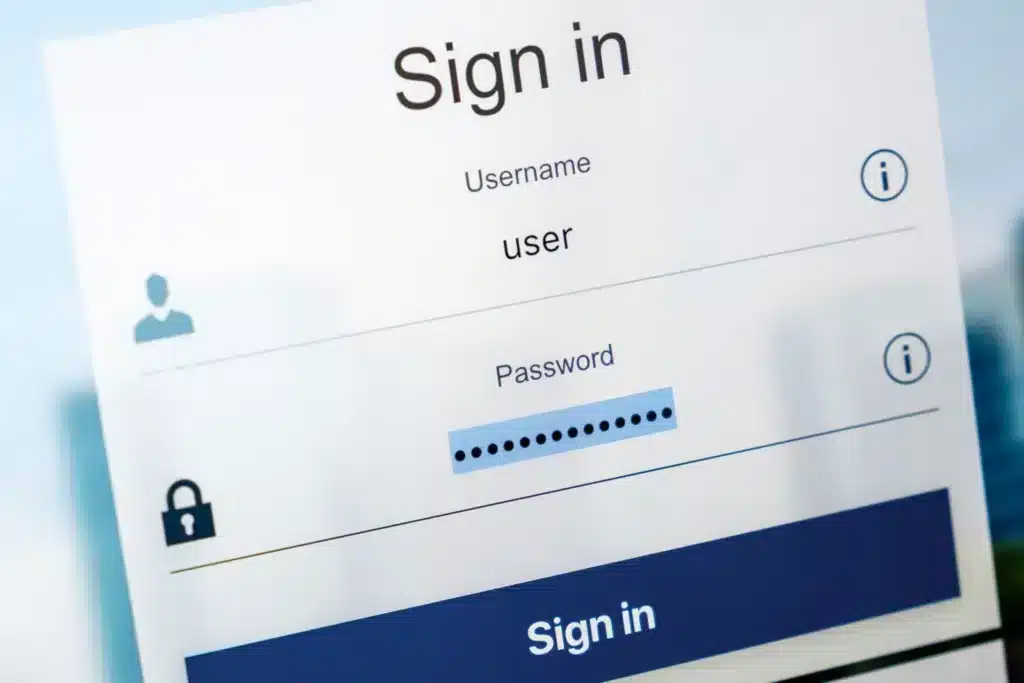
What Makes a Password Truly Secure?
Length Is More Important Than Complexity
Security research consistently shows that length matters more than complexity. A 16-character password made of random words is far stronger than an 8-character mix of symbols, numbers, and letters.
Here is why: automated cracking tools work by attempting combinations. Every additional character exponentially multiplies the number of combinations an attacker must try.
Password strength by length (approximate cracking time with standard hardware):
- 8 characters: hours to days
- 12 characters: months to years
- 16 characters: thousands of years
- 20+ characters: effectively uncrackable with current technology
The Passphrase Approach: Strong and Memorable
A passphrase is a sequence of four or more unrelated words strung together. It is both long and surprisingly easy to remember.
Examples of strong passphrases:
- Coffee-Satellite-Umbrella-Marble
- Purple-Fence-Kitchen-Orbit
- Lamp-Cactus-November-Glacier
These look simple but are extremely resistant to brute-force attacks due to their length and unpredictability. Adding a number or symbol makes them even stronger without sacrificing memorability.
Creative Password Ideas That Are Actually Secure
Method 1: The Random Word Combination
Pick four or more completely unrelated words and combine them with a separator. The key is randomness. Do not pick words that are related to each other or to your personal life.
What to avoid:
- Words related to your name, birthday, or location
- Sequences like “summer2026” or “password123”
- Words in obvious order (like colors or numbers in a sequence)
What to use:
- Words from different categories: one animal, one object, one place, one verb
- Separators that are not just dots or hyphens: try @, #, *, or !
- Intentional misspellings of one word for added complexity
Method 2: The Sentence Abbreviation Technique
Take a sentence that means something to you and use only the first letter of each word, plus some numbers and symbols.
Example sentence: “My dog Max turned 5 years old in November”
Result: MdMt5yoiN!
This is 10 characters, relatively strong, and completely non-dictionary. Combine this technique with extra characters to reach 16+.
Method 3: Password Manager Generation
The most secure Password Ideas involve no creative effort at all because you let a password manager generate a fully random string:
xK9!mP2@qL7#nT4$vR
This is virtually impossible to crack or guess. You never need to remember it because the password manager stores it for every site you visit.
Password Ideas: What to Avoid Completely
Passwords That Are Instantly Crackable
The following patterns are tested immediately by automated cracking tools:
- Common words: password, welcome, letmein, qwerty
- Name plus year: john2024, maria1985
- Sports teams plus number: chelsea99, lakers23
- Keyboard patterns: 123456, qwertyuiop, asdfgh
- Repeated characters: aaaa1111, abc123abc
Using any of these, even as a base with minor modifications, does not provide meaningful protection.
Strong Password Ideas Comparison
| Method | Example Strength | Memorability | Recommended Use |
|---|---|---|---|
| Short random string | Weak to moderate | Hard | Avoid |
| Name plus number | Very weak | Easy | Never use |
| Passphrase (4 words) | Very strong | Moderate | Primary accounts |
| Sentence abbreviation | Strong | Easy | When manager unavailable |
| Manager-generated random | Extremely strong | Impossible (not needed) | All accounts |
How to Manage All Your Strong Passwords
Creating unique, complex passwords for every account is only practical if you use a password manager. Trying to memorize dozens of unique 20-character strings is not realistic for most people.
A password manager:
- Stores all your credentials encrypted behind one master password
- Auto-fills login forms across browsers and apps
- Alerts you to reused or compromised passwords
- Generates new secure passwords instantly when you create an account
You only need one truly strong master password. Everything else the manager handles automatically.
Pro Tips: Password Ideas That Actually Protect You
- Use a different password for every account without exception: If one site is breached and you reuse passwords, attackers immediately try your credentials on every major platform. Unique passwords contain the damage to one account.
- Enable two-factor authentication on your password manager: Your password manager holds the keys to everything. Protect it with biometrics or an authenticator app in addition to the master password.
- Check if your passwords have been exposed in data breaches: Services like Have I Been Pwned let you check your email and passwords against known breach databases. Check regularly.
- Never share passwords over chat or email: Even encrypted messengers can be compromised. If you must share access, use a secure password manager’s built-in sharing feature.
Common Mistakes With Password Ideas
- Reusing the same password across multiple sites: A single breach exposes every account sharing that password. Fix: Use a password manager to maintain unique passwords for every service without effort.
- Using personal information in passwords: Attackers research targets before attempting access. Your name, birthday, pet name, and city are easy to find publicly. Fix: Use completely random or unrelated words and phrases with no personal connection.
- Writing passwords in plain text files or notes apps: Unencrypted notes are vulnerable to device theft and malware. Fix: Store all credentials in a dedicated password manager with strong encryption.
- Creating a strong password and then never changing it: Long-lived passwords accumulate risk as systems are breached over time. Fix: Change passwords for critical accounts periodically and immediately after any breach notification.

Protect All Your Passwords With ExitLag and Norton 360 For Gamers
Strong Password Ideas are essential, but you also need active protection for the credentials you create.
ExitLag gives you a complete security layer around your accounts. Norton 360 For Gamers includes a built-in Password Manager for storing and generating strong credentials, dark web monitoring that alerts you when your data appears in breach databases, and real-time protection against credential-stealing malware.
ExitLag optimizes your gaming connection by routing traffic through the fastest, most stable paths across 1,500+ servers in 190+ countries. It supports 4,000+ titles and does not interfere with anti-cheat systems. Together with Norton, it delivers both peak performance and comprehensive security for your gaming setup.
Strong ExitLag protection starts with great Password Ideas and extends to every layer of your digital life.
All images used in this blog post belong to their respective owners and are used for informational and educational purposes only. They do not imply endorsement or affiliation with the rights holders.
Got questions or want to connect with other players? Join the conversation at the ExitLag Forum!