Tower defense games are easy to start and hard to master, which is why they stay popular even when other genres come and go.
If you have tried a few maps and felt stuck, Tower defense games often punish small mistakes that are hard to notice, like upgrading too early or ignoring path control.
So, what are Tower defense games in simple terms? Tower defense games are strategy titles where you place defensive units along a route to stop waves of enemies before they reach your base.
This guide is built to help you enjoy Tower defense games more, because it explains the core loop, the smartest upgrade habits, and the setup tweaks that make your sessions feel smoother.
Tower defense games basics: what makes the genre addictive
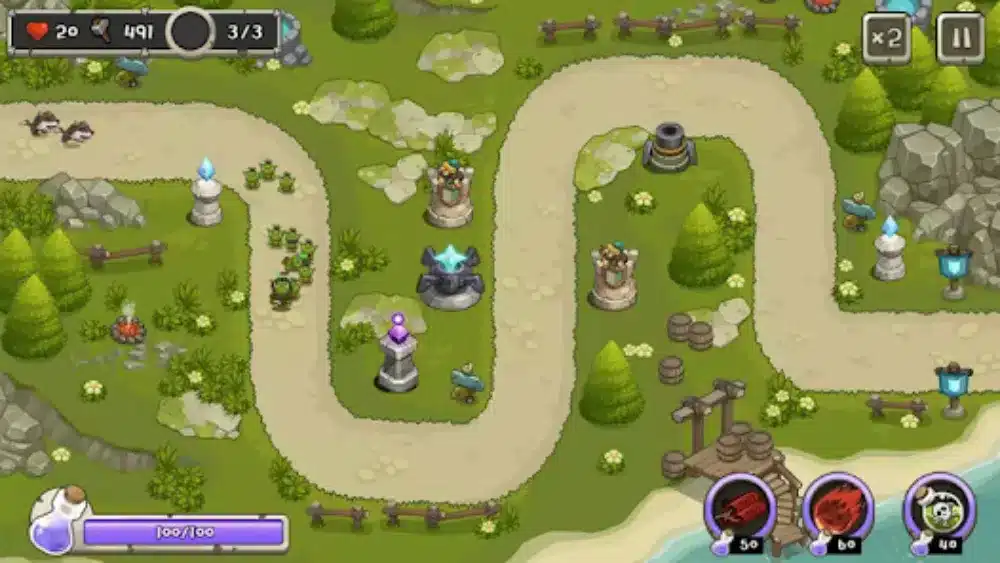
Tower defense games work because they give you fast feedback. You place a tower, a wave hits, and you instantly learn whether your plan makes sense.
At the same time, the genre stays deep because every map quietly asks three questions: where do you spend, when do you upgrade, and how do you control the path.
The core loop: build, test, adjust
Most Tower defense games follow the same rhythm. First you scout the path, then you build a starter core, then you react to the wave types.
As a result, good players do not “set and forget.” Instead, they treat every wave as information.
Here is a quick list of the decisions that usually matter most:
- Where your first damage tower goes;
- Where your first slow or stun goes;
- When you switch from building to upgrading;
- When you prepare for armor, flying units, or bosses.
The stats that decide your outcomes
Even if your game hides the numbers, the same mechanics show up in most TD games.
Important stats usually include:
- Damage per second and burst damage;
- Range and targeting rules;
- Splash radius or chain effects;
- Slow, stun, or armor shred;
- Upgrade scaling and cost efficiency.
If you learn these basics, Tower defense games stop feeling random and start feeling readable.
Best Tower Defense games goals: pick your style before you pick a game
Before you chase the best Tower Defense games lists, decide what you actually enjoy. Otherwise, you will bounce between titles that are “good” but not good for you.
This matters because Tower defense games can be slow and thoughtful or fast and chaotic, and the same person rarely loves both equally.
Classic lane defense vs multi-lane pressure
Some games give you one clean lane with strong choke points, while others attack from multiple angles so you must split attention.
Classic lane defense rewards:
- Clean placement;
- Efficient upgrades;
- Predictable pathing control.
Multi-lane pressure rewards:
- Fast decision-making;
- Flexible builds;
- Strong map awareness.
Roguelite TD vs sandbox builders
Many modern Tower defense games add meta progression, random upgrades, or roguelite runs, while others focus on pure planning.
To choose faster, use this quick preference list:
- If you like variety, look for roguelite perks and randomized upgrades;
- If you like mastery, pick a game with stable maps and deep upgrade trees;
- If you like creativity, choose sandbox builders with custom paths;
- If you like competition, pick ranked modes or co-op variants.
This is how you find the best Tower Defense games for your taste, not just for someone else’s tier list.
strategy Tower Defense fundamentals: placement, economy, and tempo
A strong strategy Tower Defense plan is not about building more. It is about building smarter so your gold turns into control.
In other words, Tower defense games reward tempo. If you spend too late, you fall behind. If you spend too early, you waste efficiency.
Choke points, pathing, and tower synergy
Start by reading the path. Find turns, tight gaps, and long straight lines. Those spaces are where your towers get the most time on target.
Good placement habits:
- Put slows near turns to maximize time in range;
- Put splash where multiple lanes overlap;
- Put single-target damage where bosses must pass;
- Build around tower synergy, not around one “best” tower.
If you do this, Tower defense games feel less stressful because your defenses work together.
Economy management and upgrade timing
Next, manage money like a resource, not like a score. The goal is to survive now while preparing for later wave types.
Here is a simple routine you can use in most Tower defense games:
- Buy the cheapest reliable damage to clear early waves;
- Add one control tool, like slow, before you add luxury damage;
- Upgrade only when the upgrade beats a new tower in value;
- Save before known spike waves, like flyers or armor waves;
- Build a second damage lane only when leaks become frequent;
- Improve targeting and coverage before you chase big numbers;
- Spend the last third of your budget on scaling, not on panic.
This routine works because it protects your economy and your tempo at the same time.
Tower Defense PC setup: controls, visibility, and comfort

If you play on Tower Defense PC, your setup impacts your decision speed. Even in calm games, small friction adds up across long runs.
A clean setup also makes Tower defense games easier to learn, because you notice patterns instead of fighting the interface.
Hotkeys, camera control, and UI clarity
First, make your controls predictable. Set hotkeys for build, upgrade, sell, and pause if your game supports it.
Helpful quality-of-life tweaks:
- Reduce UI clutter so paths are easy to read;
- Keep the camera zoom at a level where you can see key lanes;
- Use consistent hotkeys so upgrades become muscle memory.
Meanwhile, if your game allows it, enable outlines or high-contrast effects so enemy types are easier to identify.
Comfort and posture for long sessions
Many Tower defense games turn into long sessions, especially roguelite runs and survival modes.
A practical comfort checklist:
- Keep your screen at eye level to reduce neck strain;
- Use a mouse sensitivity that feels stable, not twitchy;
- Take short breaks between runs so your decisions stay sharp.
Comfort is not a luxury in strategy games. It directly affects patience, and patience affects wins.
Tower defense games evaluation: how to judge a TD game quickly
Not every title that looks good in a screenshot plays well. So, it helps to know what to look for when you test a new game.
Use this section like a filter. It will save you time, and it will help you find Tower defense games that match your style.
Depth signals: what separates great from average
A great Rocket League ranking system style ladder is not the goal here, but the idea is similar: depth comes from repeatable choices that still feel meaningful.
Strong depth signals include:
- Multiple viable build paths, not one forced meta;
- Clear counterplay to flying, armor, and bosses;
- Real tradeoffs in upgrades, not just “more damage”;
- Meaningful economy management decisions.
When these are present, Tower defense games stay fun longer because you keep learning.
What to check before you commit
Before the table, remember this: the best test is whether you understand why you lost. If a game feels unfair or unclear, it becomes frustrating fast.
| What to evaluate | Good sign | Warning sign |
| Readability | Enemy types are obvious quickly | You die without knowing why |
| Build variety | Several towers and paths are viable | One tower dominates everything |
| Difficulty curve | Smooth ramp with learnable spikes | Random spikes with no prep time |
| Progression | Rewards skill and planning | Forces grinding over learning |
| Map design | Meaningful turns and choices | Flat paths with no strategy |
This table helps you choose Tower defense games that respect your time.
Tower defense games feel smoother online with ExitLag: play with stability
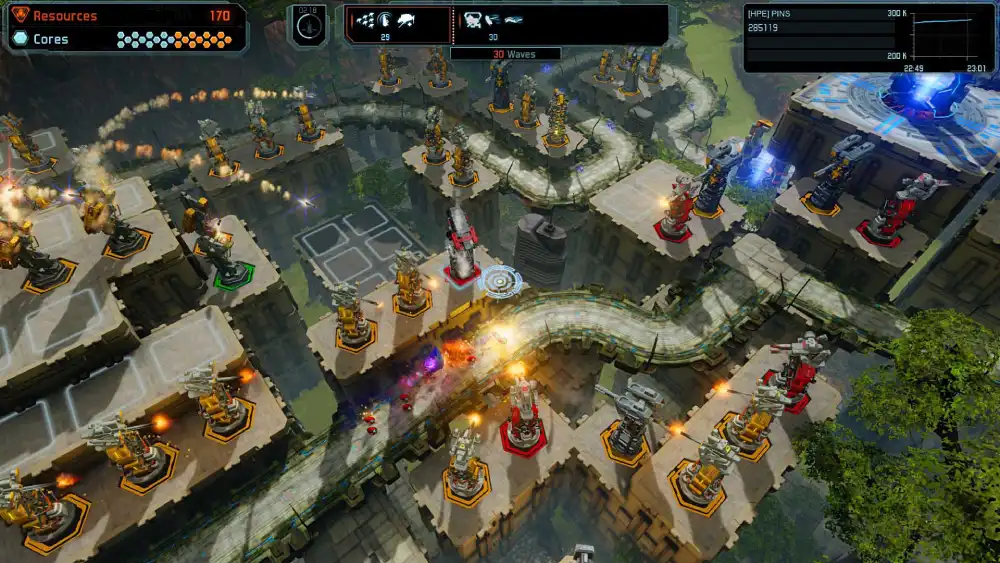
Even when Tower defense games are not “twitch shooters,” online modes still rely on stable timing, especially in co-op waves, ranked runs, or shared lobbies.
When your connection is unstable, your inputs can feel delayed, and your decisions can land a second too late, which is enough to lose a defense.
What lag looks like in online TD sessions
Online instability in Tower defense games often shows up in subtle ways:
- Delayed tower placement or upgrades;
- Stutters during heavy wave moments;
- Desync where enemies appear out of sync;
- Late ability triggers on hero units or support tools.
Therefore, if your runs feel inconsistent only in online play, the issue might be connection stability, not your build.
How ExitLag helps and what it is not
ExitLag is designed to improve route stability for online gaming by testing multiple paths and selecting a more stable route.
ExitLag is not a VPN. It does not aim to change your location or hide your IP. Its focus is improving routing quality for gaming on PC and supported mobile titles.
If you play online TD modes often, improving routing can help Tower defense games feel more consistent, especially when packet loss or jitter creates frustrating timing problems.
FAQ
Tower defense games focus on path control and wave planning. You win by placement and timing, not by constant unit micromanagement.
The best Tower Defense games for beginners have clear enemy types, strong tutorials, and multiple viable towers so you can learn without a strict meta.
In most TD games, placement decides your efficiency, and upgrades decide your scaling. You need both, but placement usually matters first.
A strategy Tower Defense player improves by learning spike waves, mastering choke points, and building around tower synergy instead of copying one build.
Tower Defense PC can be easier to learn because hotkeys and screen space make path reading and fast upgrades more comfortable.
Ready to level up Tower defense games with ExitLag?
Tower defense games get more fun when you understand tempo, control the path, and build upgrades that match the wave threats instead of panicking mid-run.
If your online sessions feel shaky, Tower defense games can also improve when your connection stays steady, because your upgrades and placements land exactly when you intend.
Try ExitLag to help your sessions feel smoother, and enjoy Tower defense games with more consistent timing and fewer frustrating spikes.
Got questions or want to connect with other players? Join the conversation at the ExitLag Forum!