
The ufl game is preparing to enter the football gaming market with a bold promise: fair competition without pay-to-win mechanics. As players grow increasingly frustrated with monetization-heavy sports titles, UFL positions itself as a skill-first alternative built for competitive balance.
At first, many players approach the ufl game with caution. Competing against established franchises like FIFA and eFootball is no small task. However, early information suggests that Strikerz Inc is focused on changing how a modern soccer game should feel, play, and reward its community. And before we continue, know that to know more about all the relevant content about gaming, you just have to check our blog.
From now on, this guide explores what the ufl game is, how its mechanics work, and why it could reshape expectations around sports simulation titles in 2026.
What is the ufl game?

The ufl game is a free-to-play football title developed by Strikerz Inc. Built using Unreal Engine technology, it aims to deliver realistic movement, responsive controls, and competitive online play without forcing players into spending for advantages.
First of all, UFL separates itself through its fair-to-play philosophy. Matches are designed to be decided by skill, positioning, and tactical awareness rather than player ratings boosted through microtransactions.
As a soccer game, UFL targets both casual fans and competitive players by offering accessible controls paired with deep mechanics. This balance is central to its identity as a modern sports simulation.
Check also: What to Expect from UFL Game Mechanics and Gameplay
The core philosophy behind ufl gameplay
Gameplay philosophy is the foundation of any football title. In the case of the ufl game, developers emphasize balance over spectacle.
Rather than exaggerating animations or relying on scripted moments, UFL focuses on player input and responsiveness. This approach rewards:
- Precise passing and timing
- Defensive positioning
- Tactical awareness during transitions
As a result, matches feel more consistent and less dependent on random outcomes. This philosophy aligns closely with competitive expectations in modern online games.
Gameplay features that define the ufl game
Several gameplay features help define how UFL plays compared to other soccer titles.
Player movement is designed to feel fluid without sacrificing control. Acceleration, turning, and ball handling are tuned to reward anticipation rather than reaction alone.
Passing mechanics emphasize accuracy and positioning. Poor angles and rushed decisions are punished, while smart buildup play is encouraged.
Defensive systems focus on timing instead of automated assistance. Players must manually position defenders, making successful tackles more satisfying and skill-based.
These gameplay features collectively reinforce UFL’s competitive identity.
How ufl compares to traditional sports simulation games
Compared to established sports simulation titles, the ufl game takes a more restrained approach.
FIFA often leans into flashy mechanics and card-based progression. eFootball prioritizes realism but still relies on monetized progression systems. UFL, by contrast, removes performance-based spending entirely.
This difference shifts player focus away from grinding or purchasing upgrades and toward mastering mechanics. Over time, this design may foster a healthier competitive environment.
You may also like: UFL Release Date: Latest Updates and Announcements
Club creation and progression systems
Beyond matches, the ufl game includes systems for building and managing a club. Players can customize teams, develop lineups, and progress through competitive structures.
Customization focuses on identity rather than advantage. Visual elements, cosmetics, and club branding allow expression without impacting gameplay balance.
Progression is tied to performance, consistency, and participation. This structure reinforces the idea that dedication, not spending, drives success.
Competitive focus and online structure
Online competition is a central pillar of the ufl game. Ranked modes, seasonal structures, and global matchmaking are designed to support long-term engagement.
Balanced matchmaking aims to pair players of similar skill levels, reducing frustration and improving match quality. This is essential for a fair soccer game environment.
Stable online performance will be critical. Low latency and consistent connections ensure that gameplay features behave as intended during competitive matches.
Why fair competition matters in the ufl game
Fair competition is more than a marketing phrase for UFL. It shapes every system, from progression to gameplay tuning.
Players tired of artificial advantages often disengage from competitive modes. By removing pay-to-win mechanics, UFL seeks to rebuild trust between developers and players.
In the long term, this approach could strengthen the game’s esports potential and community longevity.
You may also like: Lag spikes: how to reduce lag in online game for a smoother experience
Preparing for competitive play in ufl

As launch approaches, players interested in competitive play should focus on fundamentals.
Understanding positioning, passing lanes, and defensive timing will matter more than memorizing exploits. Practicing decision-making under pressure will be key.
For online matches, connection stability is just as important as mechanics. Competitive sports simulation games demand precise inputs, where even small delays can affect outcomes.
ExitLag and competitive performance in ufl
When playing the ufl game online, connection quality directly impacts gameplay responsiveness. Lag spikes or packet loss can disrupt passing accuracy and defensive timing.
ExitLag helps stabilize connections by optimizing routing to game servers. By reducing latency and packet loss, it allows players to experience gameplay features as intended.
In conclusion, ufl game mechanics and gameplay are built around fairness, skill, and competitive integrity. With the right preparation and a stable connection, players can fully engage with what UFL aims to offer in 2026.
How ufl gameplay feels during real matches
The true test of any sports simulation happens during real matches, especially online. In the ufl game, match flow is designed to feel consistent, responsive, and heavily influenced by player decisions rather than scripted outcomes.
At first, players will notice that tempo control plays a major role. Slower build-up is rewarded, while rushed plays often lead to lost possession. This creates a more tactical rhythm compared to traditional soccer game titles.
Defensive pressure is also more manual. Players must commit to tackles, anticipate passes, and manage positioning carefully. This reinforces UFL’s focus on skill-based outcomes rather than automated assistance.
Check also: Lagging Define: Understanding and Resolving Lag Issues
AI behavior and match realism in ufl football
AI behavior is central to immersion in ufl football. Teammates and opponents are designed to react dynamically instead of following rigid patterns.
Off-the-ball movement adapts to play style. Attacking players search for space, while defenders adjust lines based on pressure and ball position. This creates matches that feel less predictable and more organic.
Goalkeepers also play a bigger role. Positioning, reflexes, and angle coverage influence outcomes, making shot selection more important than simply powering attempts on goal.
Game modes expected in the ufl game
Variety is essential for long-term engagement. The ufl game is expected to launch with multiple modes catering to different playstyles.
Players can expect:
- Competitive ranked modes focused on skill progression
- Casual matches for relaxed play without pressure
- Long-term club progression modes
These modes allow players to engage with the sports simulation at their own pace, whether casually or competitively.
Read this: Ping Test: learn how to do it and interpret the results properly
Club progression and customization systems
Club progression in the ufl game is built around identity rather than advantage. Customization options allow players to express style without affecting match balance.
Visual customization includes kits, badges, and stadium elements. Progression systems reward consistency, match performance, and participation instead of spending.
This structure supports fair competition while still offering long-term goals.
Competitive balance and fair-to-play structure
Fair competition remains the defining pillar of UFL. Unlike other soccer game titles, progression does not translate into gameplay advantages.
Matchmaking systems aim to pair players with similar skill levels. This reduces frustration and encourages learning rather than exploitation.
As a result, competitive integrity remains intact across seasons and ranking tiers.
Crossplay and platform considerations
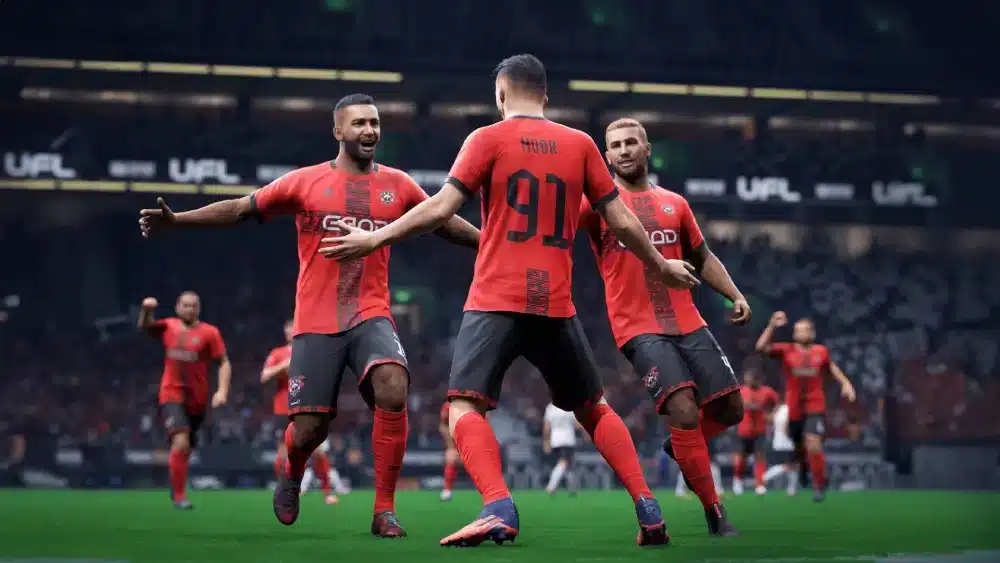
Crossplay is expected to be a major feature of the ufl game. Allowing players from different platforms to compete expands the player base and improves matchmaking quality.
However, crossplay also demands strong network stability. Input delay or desynchronization can undermine gameplay features if connections are unstable.
This makes optimization essential for competitive matches.
Check this: Ping for Gaming: what’s slowing your sessions and how to prevent
UFL gameplay overview by category
| Category | How it works in the UFL game |
| Gameplay style | Skill-based football with emphasis on positioning, timing, and player decision-making |
| Core gameplay features | Manual defending, precision passing, fluid movement, reduced scripting |
| AI behavior | Dynamic off-the-ball movement, adaptive defensive lines, realistic goalkeeper positioning |
| Competitive focus | Fair-to-play structure with no pay-to-win mechanics |
| Club progression | Performance-based progression without gameplay advantages |
| Customization | Visual-only customization (kits, badges, club identity) |
| Matchmaking | Skill-based matchmaking designed for competitive balance |
| Crossplay support | Expected between PC, PlayStation 5, and Xbox Series X |
| Sports simulation approach | Balanced realism, avoiding arcade extremes and heavy automation |
| Monetization model | Free-to-play with cosmetic-only purchases |
Frequently asked questions (FAQ)
Yes. The ufl game follows a free-to-play model. Any monetization is expected to focus on cosmetic elements, not gameplay advantages, preserving competitive balance.
No. One of the core design goals of the ufl game is removing pay-to-win systems entirely. Match outcomes depend on skill, tactics, and decision-making.
UFL is being designed with competitive play in mind. Ranked modes, seasonal structures, and balanced matchmaking suggest strong esports potential.
The ufl game is confirmed for PlayStation 5, Xbox Series X|S, and PC. Crossplay support is expected to allow players across platforms to compete together.
Read also: Ping ms for Gaming: reduce the lag, enhance your experience
In conclusion
The ufl game represents a shift in how football games approach competition, progression, and fairness. By focusing on gameplay features, balanced AI, and fair-to-play systems, it challenges long-standing norms in the sports simulation genre.
For players preparing to compete online, stability is just as important as mechanics. Lag, packet loss, or high latency can disrupt passing and defensive timing.
In the end, ufl game success will depend on mastery, consistency, and a reliable connection—the foundation of fair and competitive football gaming. That is where ExitLag becomes essential. By optimizing routing and reducing connection issues, ExitLag ensures that competitive matches reflect skill rather than network limitations. Download ExitLag now!
Got questions or want to connect with other players? Join the conversation at the ExitLag Forum!