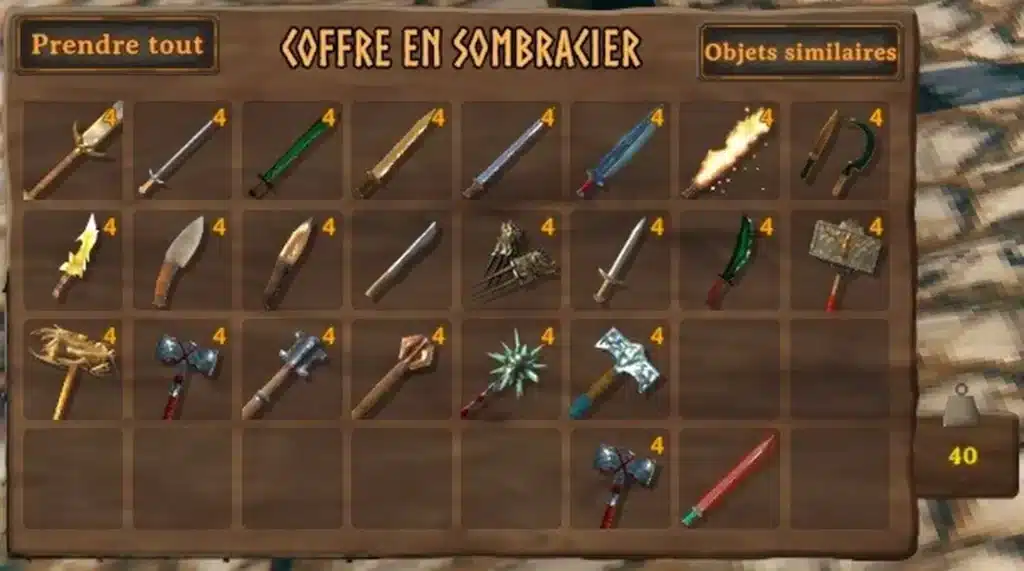
Valheim weapons are more than simple damage upgrades. Every biome introduces enemies with different resistances, attack patterns, and positioning challenges, so the weapon that dominates one region may feel much less effective in another. Building a strong arsenal means understanding damage types, stamina use, reach, shields, ranged options, and the equipment available at each stage of progression.
Ranged combat deserves particular attention because a bow remains useful through almost the entire game. Players who want to improve before committing resources to stronger bows can follow our guide on how to farm Bow skill efficiently in Valheim. Improving that skill gives Valheim weapons built around archery a more meaningful place alongside your melee loadout instead of treating the bow only as a hunting tool.
The best Valheim weapons also depend on what you intend to fight. Blunt damage is extremely valuable in certain early and midgame encounters, while pierce, slash, frost, spirit, elemental magic, and later Ashlands weapon effects open different strategies as progression continues.
There is therefore no universal weapon that automatically replaces every other choice. A good Viking carries tools for different situations, pairs them with suitable Valheim armor, and changes tactics when enemy resistances make a favorite weapon less efficient.
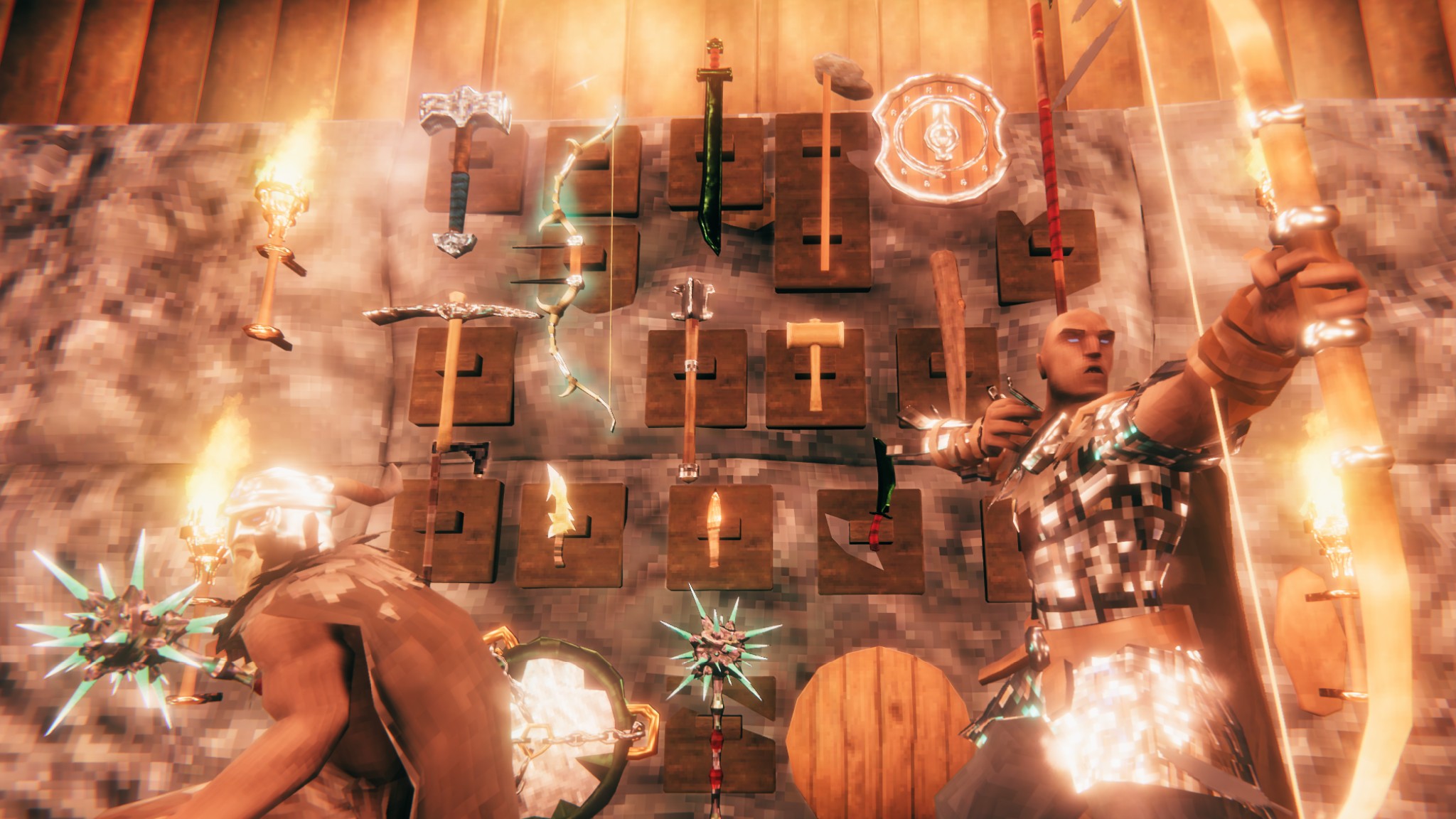
What are the best Valheim weapons for each biome?
The best weapon for each biome is usually one that combines accessible crafting materials with a useful damage type for the enemies you are about to face. Upgrading everything is expensive, so it makes sense to prioritize a few dependable options rather than consume valuable ore on every recipe as soon as it appears.
Progression also matters. Some older Valheim weapons remain useful well beyond the biome where they are first crafted. Frostner is a classic example, while bows remain valuable even after melee weapons gain substantially more damage.
Meadows and Black Forest weapons
The Meadows begin with very limited equipment, but that does not mean every early weapon is disposable.
A flint spear provides solid early pierce damage and can be thrown with its secondary attack. Knives are fast and benefit greatly from attacking unaware targets. Meanwhile, the Crude Bow lets you hunt deer and fight enemies without entering melee range.
Once you reach the Black Forest and begin producing bronze, the arsenal becomes much broader. Useful choices include:
- Bronze Mace;
- Bronze Sword;
- Bronze Atgeir;
- Bronze Axe;
- Finewood Bow.
The Bronze Axe has obvious utility because it is also required for harvesting certain wood, but using it as your only melee option can restrict your damage choices.
The Bronze Mace is particularly valuable against skeletons because of their weakness to blunt damage. Players searching for Iron Mace Valheim recommendations later in progression will find that the same basic idea begins here: clubs and maces become excellent situational tools when an enemy is vulnerable to blunt damage.
The Bronze Atgeir offers a very different approach. Its long reach helps control spacing, while the spinning secondary attack can stagger enemies around the player. That makes it particularly useful when several Greydwarfs close the distance at once.
Swamp and Mountain weapons
The Swamp is where weapon damage types start becoming much harder to ignore.
Iron gives access to several major upgrades, including the Iron Mace, Iron Sword, Iron Atgeir, Battleaxe, Huntsman Bow, and stronger shields. Among those choices, the Iron Mace is especially valuable because blunt damage performs well against several major Swamp threats and is a strong choice for Bonemass.
That is why Iron Mace Valheim searches are so common among players entering this stage. It is not automatically the best weapon against everything in the biome, but its matchup against important enemies makes the investment easy to justify.
A bow should remain in your inventory as well. Even melee-focused players benefit from being able to pull enemies individually, eliminate distant threats, and begin encounters on favorable terms.
The Mountains then introduce silver equipment and one of Valheim's most recognizable weapons: Frostner.
Frostner combines blunt, frost, and spirit damage. More importantly, its frost effect can slow affected enemies, giving the weapon defensive utility in addition to raw damage.
Players preparing to transition from the Swamp into the Mountains should also reconsider their Valheim armor. Better defense, frost protection, food, meads, and weapon upgrades work together. A powerful weapon cannot compensate for entering a dangerous biome without adequate preparation.
The Mistlands later changes combat much more dramatically by adding Eitr and magic. Our complete guide to the Valheim Mistlands explains the biome and its progression in greater detail.
Plains, Mistlands, and Ashlands weapons
The Plains introduce black metal gear and some excellent late-midgame options.
The Blackmetal Sword is a straightforward slash weapon, while the Blackmetal Atgeir continues the polearm progression with strong reach and crowd control. The Blackmetal Knife suits faster playstyles, and the Porcupine combines blunt and pierce damage.
At this stage, your choice should increasingly reflect how you actually fight rather than simply which item displays a larger damage number.
Mistlands expands the possibilities significantly. Notable Valheim weapons include:
- Mistwalker;
- Krom;
- Himminafl;
- Skoll and Hati;
- Demolisher;
- Spinesnap;
- Arbalest;
- Staff of Embers;
- Staff of Frost;
- Staff of Protection;
- Dead Raiser.
Magic builds also change equipment priorities because Eitr becomes a resource that must be supported through food and gear. Traditional Valheim armours focused entirely on physical defense are no longer the only option once spellcasting becomes viable.
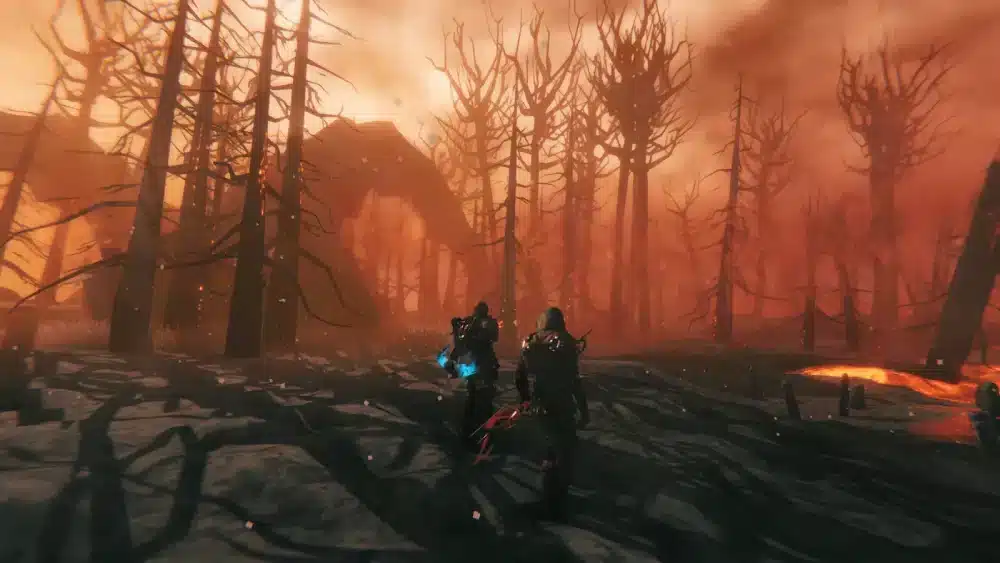
Ashlands pushes the system further. Real Ashlands-tier equipment includes weapons such as Nidhögg, Slayer, Berserkir Axes, Flametal Mace, Splitnir, Ash Fang, and Ripper, alongside additional magical options.
Many Flametal weapons can also be enhanced through the biome's gemstone system, adding specialized effects and making the endgame arsenal much more flexible than a simple linear damage ladder.
What secondary weapon should you use with an atgeir in Valheim?
An atgeir is excellent at controlling space, but relying exclusively on pierce damage creates weaknesses. The best secondary weapon depends on your biome and on which enemies resist your polearm.
This is why searches for secondary weapons for atgeir Valheim do not have a single universal answer. Your backup weapon should ideally cover a damage type or combat situation that the atgeir handles poorly.
A bow is also highly recommended regardless of your melee pairing. Atgeirs provide reach, but they still require you to remain relatively close to enemies. A bow gives you a completely different engagement distance.
Use a mace to cover blunt damage
A mace is one of the easiest companions to recommend for an atgeir.
Atgeirs deal pierce damage, while clubs and maces primarily provide blunt damage. Carrying both therefore gives you more flexibility when facing enemies with different resistances.
During the Swamp stage, for example, combining an Iron Atgeir with an Iron Mace lets you switch between crowd control and blunt damage without rebuilding your entire loadout.
This is another reason Iron Mace Valheim builds remain relevant even for players who prefer polearms. The mace does not need to replace the atgeir. It can exist specifically to handle targets where pierce is inefficient.
The same philosophy applies later with Frostner. Its mixture of damage and slowing utility makes it an excellent complement to weapons built around a different combat role.
For a closer look at why the weapon remains relevant for so long, see our complete Frostner guide for Valheim.
Pair your atgeir with ranged and one-handed options
When considering secondary weapons for atgeir Valheim, a bow should be near the top of the list because it solves a problem no second melee weapon completely addresses: distance.
Flying enemies, dangerous ranged targets, and situations where approaching directly is risky are all easier to handle when you have a bow available.
A sword or mace with a shield also makes a useful backup set.
Atgeirs are two-handed weapons, so equipping one means giving up the defensive benefits of a shield. Switching to a one-handed weapon and shield can therefore change your entire approach when a fight demands more reliable blocking or parrying.
A practical inventory might include:
- atgeir for reach and crowd control;
- mace or sword for alternative damage;
- shield for defensive engagements;
- bow for ranged combat.
You do not need every weapon class at all times. Inventory space and weight matter, so choose equipment based on where you are going.
In the Black Forest, secondary weapons for atgeir Valheim may simply mean carrying a Bronze Mace. In later biomes, the answer can include elemental, magical, or high-tier one-handed options.
How do damage types affect Valheim weapons?
Damage type is one of the most important reasons that simplistic weapon tier lists can be misleading.
Valheim enemies can be weak, neutral, resistant, or very resistant to different forms of damage. As a result, a supposedly lower-tier weapon can outperform a stronger one when its damage type is better suited to the target.
This is also why experienced players often keep several Valheim weapons available rather than upgrading only one category throughout an entire playthrough.
Slash, pierce, and blunt damage
The three fundamental physical damage categories are slash, pierce, and blunt.
Swords and many axes primarily specialize in slash. Spears, atgeirs, bows, and several other weapons emphasize pierce. Clubs and maces are the main source of blunt damage.
No category is universally superior.
Blunt damage is famous for its effectiveness against skeletons and is particularly useful during the Swamp progression. That gives the Iron Mace Valheim combination a clear role rather than making the weapon simply another iron-tier option.
Pierce damage can be extremely effective against some enemies but poor against others. This is exactly why atgeir users benefit from carrying an alternative.
Slash weapons tend to offer dependable general-purpose performance, making swords appealing to players who prefer straightforward melee combat.
When evaluating Valheim armor and weapons together, also consider mobility and stamina. Heavy equipment can increase protection while reducing movement speed, so a weapon's theoretical damage matters less if you repeatedly run out of stamina or cannot reposition effectively.
Elemental, spirit, poison, and magic damage
Later Valheim weapons introduce additional damage types and effects.
Frost can slow enemies and is one reason Frostner remains so useful beyond the Mountains. Spirit damage is particularly valuable against enemies that are vulnerable to it, while fire and poison create different matchup considerations.
Mistlands adds Eitr-based combat and allows players to use magical weapons rather than relying exclusively on stamina-based melee or ranged attacks.
Ashlands then expands elemental build choices through gemstone-enhanced weapons. Players can tailor certain high-tier weapons toward different additional effects rather than simply crafting one fixed final version.
Valheim's official game website is the best place to follow the game's overall development as it approaches its full 1.0 release. The combat system has already changed considerably through major updates, so rankings written years ago should not automatically be treated as current.
The key principle remains simple: do not evaluate Valheim weapons only by the largest visible damage number. Damage type, attack speed, stamina consumption, reach, enemy resistance, and secondary attacks can matter just as much.
Which Valheim armor works best with different weapons?
Armor affects far more than how many hits you can survive. Different equipment choices can influence mobility, Eitr regeneration, resistances, and the overall rhythm of a build.
For that reason, Valheim weapons and Valheim armor should be planned together.
A heavily protected melee fighter and a mobile archer can both be effective, but they solve combat differently. Copying one piece of a build without considering the rest can leave you with conflicting bonuses or unnecessary movement penalties.
Heavy armor for close-range melee
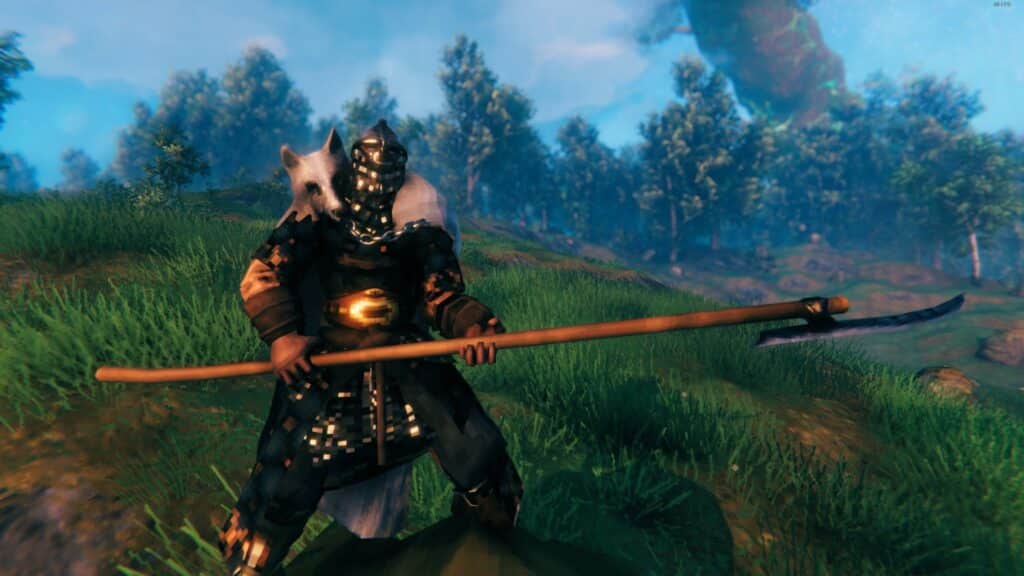
Players who spend most fights close to enemies often value the additional protection of heavy Valheim armours.
As progression advances, heavy sets include options associated with bronze, iron, wolf, padded, carapace, and later Ashlands equipment. Exact choices still depend on the biome and materials available.
Heavy armor pairs naturally with:
- swords and shields;
- maces;
- axes;
- other close-range builds where taking occasional hits is likely.
However, defense should not encourage careless play.
Blocking, parrying, dodging, stamina management, food, resistances, and positioning remain important even with powerful armor. Higher armor does not turn every enemy attack into something you can safely ignore.
A one-handed mace and shield can provide a particularly forgiving setup for players progressing through difficult areas. That is another context where the Iron Mace Valheim pairing makes sense in the Swamp.
Light, mobility, and magic builds
Not every player wants maximum armor value.
Some Valheim armours trade raw protection for bonuses that support specific playstyles. Troll armor favors stealth early on, Root equipment has useful specialized properties, and Fenris gear is popular with players who value movement.
Mistlands magic introduces another major category. Eitr-focused equipment is designed around spellcasting and supports a playstyle that differs substantially from a conventional shield-and-sword Viking.
A player using the Staff of Embers, Staff of Frost, or other Eitr weapons needs to consider Eitr food and regeneration instead of evaluating the build solely by physical armor.
Hybrid approaches are possible as well. You might sacrifice part of a set bonus or some maximum defense to gain a resistance or utility effect that is more valuable for a particular area.
This flexibility is why there is no single list of Valheim armours that can be ranked correctly for every build.
How can ExitLag help with Valheim multiplayer combat?
ExitLag cannot make Valheim weapons deal more damage, increase armor values, improve FPS caused by hardware limitations, or change enemy resistances. Its role is related to network routing when playing online.
In multiplayer, data must travel between players and the server or host. Depending on the ISP, physical location, network congestion, and route being used, that connection can sometimes experience latency variation or packet loss.
Route optimization can be useful when the problem is actually located somewhere along that network path.
Connection routing during co-op sessions
Valheim combat requires timing for attacks, blocks, parries, dodges, and movement.
When a multiplayer connection is unstable, those interactions may feel less consistent. ExitLag analyzes available network paths for supported traffic and can help select a more stable route when the default route is inefficient.
Results vary according to the network and destination.
ExitLag does not guarantee lower latency, and it cannot compensate for every type of multiplayer issue. However, players experiencing routing-related instability can test whether an alternative route improves connection consistency.
This applies regardless of whether your character uses an atgeir, Frostner, magic, or another combination of Valheim weapons.
Problems ExitLag cannot solve
It is equally important to identify issues that are not caused by network routing.
ExitLag cannot fix:
- low FPS caused by CPU or GPU performance;
- insufficient system memory;
- broken or outdated mods;
- corrupted game files;
- server-side bugs;
- an overloaded host computer;
- incorrect weapon choices;
- low character skills;
- missing crafting recipes;
- game balance decisions.
If a problem appears in single-player as well as multiplayer, it is less likely to be caused by the route to another server.
If online combat alone shows latency spikes or unstable network behavior, route optimization becomes more relevant.
What should players know before Valheim 1.0 and the Deep North?
As of August 2026, Ashlands remains the current major endgame biome, but that is about to change.
Iron Gate has officially scheduled Valheim 1.0 for September 9, 2026. The update will introduce the Deep North and new enemies, crafting content, and weapons while taking the game out of Early Access.
That timing is important for any Valheim weapons guide because today's endgame recommendations may change once Deep North progression becomes available.
Ashlands is the current endgame benchmark
Until the Deep North arrives, Ashlands equipment represents the highest major biome progression currently available.
Players entering Ashlands should prepare more than a single favorite weapon. Crowd pressure, environmental threats, ranged enemies, and dangerous melee encounters make flexibility valuable.
Useful categories include:
- upgraded Mistlands equipment for the initial transition;
- Flametal melee weapons;
- ranged options;
- Ashlands magic;
- a shield where appropriate;
- multiple damage types.
Your Valheim armor also matters considerably. Ashlands is designed as a late-game biome, and arriving with under-upgraded gear can make its already demanding encounters substantially harder.
Players asking about secondary weapons for atgeir Valheim should also note that Himminafl is currently the highest regular atgeir progression before the upcoming Deep North changes the available endgame. Its polearm crowd-control role remains useful, but having a different damage option in your inventory is still recommended.
Deep North weapons are not final recommendations yet
Iron Gate has confirmed that the Deep North and new craftable weapons are coming with Valheim 1.0, but this article does not rank unreleased equipment as though final balance data were already available.
The update is scheduled for September 9, 2026.
Players can follow official Valheim news and development updates as launch approaches. Once 1.0 is live, weapon comparisons will need to account for the actual Deep North recipes, damage values, enemy resistances, and balance changes present in the release build.
Until then, claims that a specific unreleased Deep North weapon is definitively the “best weapon in Valheim” should be treated cautiously.
That is especially important because major Valheim updates can change more than equipment progression. Combat mechanics themselves have evolved over time, including changes introduced through updates such as Call to Arms.
FAQ about Valheim weapons
Choosing Valheim weapons is ultimately about matching equipment to enemies, biome progression, and personal combat style. Instead of looking for one weapon to use forever, build a small arsenal that covers different damage types and engagement ranges.
The following answers address some of the most common weapon questions.
What is the best weapon in Valheim?
There is no single best weapon in every situation.
Frostner is exceptionally versatile and remains relevant well after the Mountains. Mistwalker is another strong late-game choice, while Ashlands introduces powerful Flametal weapons and gemstone variants.
The best option still depends on enemy resistances, skill level, biome, stamina, and playstyle.
Is Frostner still worth crafting?
Yes. Frostner remains one of the most useful Valheim weapons because it combines several damage types with a slowing frost effect.
It is particularly valuable against suitable enemies and can remain useful even after players unlock later crafting tiers.
Is the atgeir a good weapon in Valheim?
Yes. Atgeirs provide excellent reach and a powerful spinning secondary attack for controlling nearby enemies.
Their main limitation is dependence on pierce damage and the inability to equip a shield while the two-handed weapon is active. This is why players researching secondary weapons for atgeir Valheim should consider a mace, sword-and-shield setup, or bow as a backup.
What is the best secondary weapon for an atgeir?
A mace is one of the most practical choices because it adds blunt damage to a loadout already focused on pierce.
A bow is also extremely useful because it adds true ranged combat. Depending on the biome, carrying both may be worthwhile if inventory space allows it.
Should I upgrade weapons or armor first in Valheim?
There is no universal rule.
If enemies take too long to kill but you can reliably avoid or block their attacks, improving your weapon may make the biggest difference. If ordinary attacks are nearly killing you, better Valheim armor may be the more urgent investment.
Food, shields, resistances, and upgrades should also be considered before spending rare materials.
Is the Iron Mace worth making?
Yes, especially for Swamp progression.
The weapon's blunt damage gives it excellent utility against important enemies in that stage of the game. The popularity of Iron Mace Valheim recommendations comes from those favorable matchups rather than the mace being universally stronger than every iron weapon.
What are the best Valheim armours for melee builds?
Heavy sets generally offer the straightforward protection that close-range builds need, but the best choice depends on progression.
Light and specialized Valheim armours can be better for players who prioritize movement, resistances, stealth, or magic. Armor value should therefore be considered alongside its bonuses and penalties.
Are Ashlands weapons currently the strongest weapons?
Ashlands contains the current highest major biome tier before Valheim 1.0, but “strongest” remains situational.
Nidhögg, Slayer, Berserkir Axes, Flametal Mace, Splitnir, Ash Fang, Ripper, and Ashlands magic all serve different combat roles. Gemstone upgrades add another layer of specialization.
Deep North weapons are expected with Valheim 1.0 on September 9, 2026, so current endgame rankings will need to be reassessed after release.
Does weapon skill matter in Valheim?
Yes. Valheim has individual skills associated with weapon categories, and repeated use improves the relevant skill.
That means constantly changing weapon classes can leave several skills less developed, although carrying an alternative damage type is still valuable. A good approach is to specialize in one main category while keeping one or two practical backups.
Choosing Valheim weapons becomes much easier once you stop looking for a single permanent winner. Match your primary weapon to your preferred combat style, carry an alternative damage type, keep a ranged option available, and build armor, food, and stamina around the encounters ahead. As Valheim 1.0 approaches, keep an eye on the Deep North changes, and if multiplayer routing problems are making co-op combat inconsistent, test ExitLag to see whether a more stable network path helps your connection while using your favorite Valheim weapons.
All game images used in this article belong to their respective owners. They are used for informational and educational purposes only and do not imply endorsement or affiliation with the rights holders.