Your aim is one of the most important skills in Valorant, but many players underestimate how much their crosshair settings can affect performance. A poorly configured crosshair may reduce visibility, disrupt focus, and make precise shots more difficult during competitive matches.
Because of this, players constantly search for the ideal Valorant crosshair setup to improve consistency and reaction time. Whether you are a beginner or an experienced ranked player, choosing the right crosshair can significantly impact your gameplay experience.
Valorant crosshair refers to the customizable aiming reticle used in Valorant. Players can adjust size, color, outlines, opacity, movement behavior, and advanced settings to create a crosshair that matches their playstyle and improves target visibility.
Fortunately, Valorant offers one of the most advanced crosshair customization systems among competitive shooters.
Valorant crosshair basics every player should know
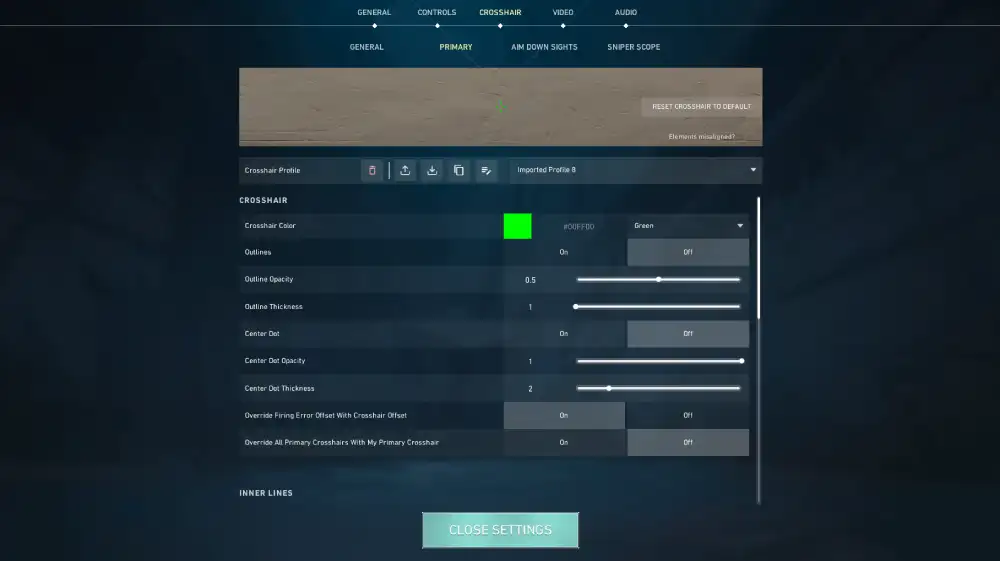
Before experimenting with advanced settings, it is important to understand how crosshairs affect gameplay.
Different crosshair styles may improve comfort, precision, or visual clarity depending on personal preference and monitor setup.
Why crosshair customization matters
Crosshairs help players maintain accurate positioning during gunfights.
A good custom crosshair Valorant setup can improve:
- Target visibility;
- Headshot consistency;
- Focus during recoil control;
- Crosshair placement;
- Reaction speed.
Meanwhile, poor visibility or distracting animations may negatively affect aim performance.
Most common crosshair styles
Players usually prefer one of several popular crosshair categories.
The most common styles include:
| Crosshair Style | Main Purpose |
| Small Dot | Precision aiming |
| Static Cross | Stable visibility |
| Dynamic Crosshair | Movement feedback |
| Minimal Lines | Competitive clarity |
| Large Crosshair | Beginner visibility |
Each style offers different advantages depending on player preference and gameplay habits.
Best Valorant crosshair settings for competitive play
Choosing the ideal Valorant crosshair settings depends on visibility, comfort, and consistency.
Professional players often prefer smaller, cleaner crosshairs that reduce screen distraction.
Recommended competitive settings
Many players searching for the best Valorant crosshair typically prioritize simplicity.
Popular competitive settings often include:
- Small center gap;
- Thin lines;
- Static behavior;
- Bright colors;
- Minimal outlines.
These settings improve target tracking while reducing unnecessary visual clutter.
Best crosshair colors for visibility
Color selection is equally important for maintaining visibility across different maps and lighting conditions.
Popular colors usually include:
- Cyan;
- Green;
- White;
- Yellow.
Bright colors help improve contrast against Valorant’s environments and agent abilities.
Additionally, many players avoid red crosshairs because enemy outlines already appear red by default.
Valorant crosshair codes explained
Valorant allows players to share crosshair setups through importable codes.
This feature made professional crosshair sharing extremely popular throughout the community.
How Valorant crosshair codes work
Valorant crosshair codes contain all crosshair configuration data inside a single sharable string.
These codes include settings such as:
- Line thickness;
- Center gap;
- Opacity;
- Color;
- Outlines;
- Movement behavior.
As a result, players can instantly copy professional or streamer crosshairs without manually recreating every setting.
How to import crosshair Valorant codes
Learning how to import crosshair Valorant settings is very simple.
Players usually need to:
- Open Valorant settings;
- Access the crosshair tab;
- Select the import option;
- Paste the crosshair code;
- Save the configuration.
After importing, players can still modify individual settings if desired.
How to create the best custom crosshair Valorant setup
There is no universal crosshair that works perfectly for every player. The ideal setup depends heavily on personal preference and playstyle.
However, several principles usually help create more effective crosshairs.
Keep your crosshair clean and visible
Many players make the mistake of creating overly large or distracting crosshairs.
A good custom crosshair Valorant setup should remain:
- Easy to see;
- Small enough for precision;
- Consistent during movement;
- Comfortable during long sessions.
Minimalist crosshairs are especially popular among competitive players because they improve focus during aim duels.
Test settings gradually
Players should avoid constantly changing crosshairs every few matches.
Instead, it is better to:
- Test one setup consistently;
- Practice aim routines;
- Adjust gradually;
- Monitor comfort over time.
Frequent changes may hurt muscle memory development and overall consistency.
Best Valorant crosshair setups used by pro players
Professional players often influence crosshair trends throughout the community.
Many players search for pro settings hoping to improve their own gameplay.
Why pro crosshairs became popular
Professional crosshairs are usually optimized for:
- Competitive visibility;
- Minimal distractions;
- Precision aiming;
- Fast target acquisition.
However, copying a professional setup does not automatically improve performance.
Players still need practice, positioning, and mechanical consistency to climb ranked matches.
Examples of popular pro crosshair preferences
Many professional players prefer:
- Small cyan crosshairs;
- Static center dots;
- Minimal outlines;
- Thin line designs.
Meanwhile, some aggressive duelists choose slightly larger crosshairs for improved visibility during fast movement.
Common Crosshair Mistakes Players Make

Many players spend hours searching for the perfect Valorant crosshair configuration, hoping it will instantly improve their aim. However, while crosshair settings are important, poor customization choices can actually create unnecessary disadvantages during competitive matches.
A good crosshair should help you focus on enemies quickly and maintain precise aim during stressful situations. If the design becomes distracting or inconsistent, your reaction time and accuracy may suffer without you even noticing.
Additionally, many players constantly copy new Valorant crosshair codes from streamers and professional players without giving themselves enough time to adapt properly.
Overcomplicated Crosshair Designs
One of the most common mistakes involves creating overly complex crosshairs filled with excessive visual information. Although flashy designs may initially look interesting, they often reduce clarity during real gunfights.
Some common problems include:
- Large animated lines;
- Excessive outlines;
- Distracting movement errors;
- Oversized center gaps;
- Poor color visibility;
- Thick crosshair borders;
- Excessive opacity effects.
These settings may make enemy tracking much harder, especially during fast-paced fights where visual clarity becomes critical.
For example, movement error indicators constantly expand and contract while walking or shooting. While some beginners believe this helps recoil control, many experienced players disable these animations because they create unnecessary distractions during aim duels.
Similarly, oversized gaps can make head-level alignment less precise, particularly at longer distances. This is one reason many professional players prefer minimalist custom crosshair Valorant setups with thin lines and small center spacing.
Color choice is another important factor. A poorly chosen crosshair color may blend into the environment or become difficult to track during ability-heavy fights. Many players testing Valorant crosshair settings eventually switch to brighter colors like cyan, green, or white for improved visibility.
Constantly Changing Settings
Another extremely common mistake is changing crosshair settings too frequently. Many players searching for the best Valorant crosshair constantly switch between professional setups after every bad match or losing streak.
However, frequent changes often hurt consistency much more than players realize.
Developing strong aim requires building:
- Muscle memory;
- Crosshair placement habits;
- Flick accuracy;
- Recoil control;
- Visual familiarity;
- Reaction consistency.
When players constantly import new Valorant crosshair codes, their brain repeatedly needs to adjust to different visual references, sizes, and aiming perceptions.
As a result, aim consistency may actually become worse over time.
Instead of changing settings every few matches, players should test one setup consistently for several days before making small adjustments. This allows enough time to properly evaluate whether the crosshair genuinely improves comfort and visibility.
Additionally, many professional players use relatively simple and stable crosshair setups for months or even years. Consistency often matters far more than endlessly searching for a “perfect” crosshair configuration.
Ultimately, the ideal custom crosshair Valorant setup is not necessarily the one used by a professional player or popular streamer. The best option is the one that feels comfortable, remains highly visible, and helps you maintain confidence during competitive matches.
Connection stability and aiming consistency
Although crosshair settings affect visibility and precision, stable connectivity also plays a huge role in competitive performance.
Even the best aim setup struggles under unstable online conditions.
How lag affects aiming
Connection instability may cause:
- Delayed hit registration;
- Desync issues;
- Input delay;
- Rubberbanding;
- Inconsistent gunfights.
These issues become especially frustrating during ranked matches.
How ExitLag helps Valorant players
ExitLag helps optimize online routing paths between players and Valorant servers.
ExitLag works through:
- Multi-route optimization;
- Packet loss reduction;
- Stable route selection;
- Lower ping fluctuations;
- Improved connection consistency.
As a result, many competitive players use routing optimization tools to maintain smoother online performance.
FAQ
The best Valorant crosshair depends on personal preference, but most competitive players prefer small and clean designs.
Valorant crosshair codes allow players to instantly share and import complete crosshair configurations.
Players can paste shared codes directly inside the crosshair settings menu using the import option.
Cyan, green, and white are among the most popular choices because they remain highly visible during matches.
Good Valorant crosshair settings improve visibility and consistency, but practice and mechanics still remain essential.
Improve your Valorant gameplay with ExitLag

Choosing the right Valorant crosshair can significantly improve visibility, precision, and overall aiming consistency during competitive matches.
Whether you are testing Valorant crosshair codes, creating a custom crosshair Valorant setup, or searching for the best Valorant crosshair used by professional players, stable gameplay conditions remain equally important.
Valorant crosshair optimization works best when combined with smooth and stable online performance. Try ExitLag today and improve your competitive gaming experience.
Got questions or want to connect with other players? Join the conversation at the ExitLag Forum!