
When was Valorant officially released is a straightforward question with a multilayered answer. The game did not arrive in a single moment. It built toward its launch through months of closed beta access, strategic announcements, and regional rollouts before hitting the global audience all at once.
Valorant was officially released on June 2, 2020, as a free-to-play PC game developed and published by Riot Games. The launch version ran on Unreal Engine 4 and included 11 agents, four maps, and a competitive ranked mode that followed shortly after release.
Understanding when Valorant was made and how it evolved requires tracing the game from its earliest internal development in 2013 through its expansion to consoles and its ongoing competitive esports ecosystem. This is the complete history.
When Was Valorant Made? The Full Development and Release Timeline
The question of when Valorant was made reaches back further than most players realize. The game's development began years before any public announcement was made.
From Concept to Announcement
Development on what would become Valorant started in early 2013 inside a small R&D team at Riot Games. The team was exploring how tactical shooters could work as live-service games, combining precise gunplay with regularly updated content and a competitive ecosystem built from day one.
Riot did not publicly acknowledge this project for years. The first public signal came during the company's 10th anniversary celebration on October 15, 2019, when they announced "Project A" alongside early gameplay footage. The response from the gaming community was immediate and enthusiastic.
Key milestones in the game's development and release:
- Early 2013: Internal development begins at Riot Games under a small R&D team.
- October 15, 2019: Project A announced at Riot's 10th anniversary event with early footage.
- March 2, 2020: Official title VALORANT revealed with a full gameplay trailer featuring agent Phoenix on Haven.
- April 7, 2020: Closed beta launches in North America, Europe, Russia, Turkey, and CIS regions with Twitch drop access.
- May 28, 2020: Beta servers shut down for maintenance and final preparations.
- June 2, 2020: Global launch. Valorant goes live for PC worldwide.
- June 2024: Console beta launches on PlayStation 5 and Xbox Series X/S.
- August 2, 2024: Valorant officially launches on PS5 and Xbox Series X/S.
The Closed Beta: A Marketing and Testing Masterpiece
The closed beta that ran from April 7 to May 28, 2020 was not just a technical test. It was one of the most effective launch strategies in gaming history.
Riot tied beta access to Twitch drops, meaning players had to watch partnered streamers to receive a chance at a key. At its peak, Valorant had over 1.7 million concurrent Twitch viewers during the beta period. That figure approached League of Legends World Championship numbers, and the game had not even officially launched yet.
The beta served several purposes simultaneously:
- Stress-tested server infrastructure before the global release
- Gathered community feedback on balance, agent feel, and map design
- Built an audience of invested players ready to compete on day one
- Demonstrated that tactical shooters could attract massive mainstream streaming audiences
When Was Valorant Officially Released on PC?
Valorant launched globally for PC on June 2, 2020. The release version, known as Episode 1: Ignition, included:
- 11 playable agents, with Reyna added as a launch-day addition
- Four maps: Bind, Haven, Split, and the newly revealed Ascent
- Unrated (casual) mode available immediately
- Competitive ranked mode unlocked shortly after launch
The game launched in most major regions simultaneously, though the servers were region-specific. Riot had prepared data centers across North America, Europe, Asia, and additional regions to keep ping low for players worldwide.
When Was Valorant Released on Console?
The console version of Valorant arrived significantly later than the PC release, reflecting Riot's decision to prioritize the PC competitive experience first.
Console Launch Timeline
| Platform | Beta Start | Official Launch |
| PC (Windows) | April 7, 2020 | June 2, 2020 |
| PlayStation 5 | June 14, 2024 | August 2, 2024 |
| Xbox Series X/S | June 14, 2024 | August 2, 2024 |
The console version introduced several changes to accommodate controller play:
- Focus Mode: A built-in mechanic that reduces sensitivity when aiming without traditional ADS (Aim Down Sights), preserving the precision feel that makes the game work.
- Separate matchmaking pools: PC and console players do not compete against each other, preserving competitive integrity across input methods.
- Cross-progression: Skins, unlocks, and cosmetics carry over between platforms when using the same Riot account.
Is Cross-Play Available Between PC and Console?
No. Riot made a deliberate decision to keep PC and console players in separate matchmaking pools. The input difference between mouse-and-keyboard and controller creates an inherent imbalance that would undermine the competitive integrity that Valorant's design is built around.
Cross-progression is fully supported, meaning your cosmetic investments and account history transfer seamlessly between platforms.
What Genre Is Valorant? Understanding the Game's Design
When was Valorant made and what it is are closely connected. Understanding the genre helps explain why certain design decisions were made during development.
Valorant Is a Free-to-Play 5v5 Tactical Hero Shooter
Each element of that description reflects a deliberate design choice:
- Free-to-play: No purchase barrier to entry, with cosmetics as the sole revenue source.
- 5v5: Two teams of five compete in every match. No larger modes, no smaller modes as the primary format.
- Tactical: Players have one life per round. Economy matters. Map control and positioning determine outcomes as much as aim.
- Hero shooter elements: Each agent has unique abilities, but abilities function as utility tools, not substitutes for gunplay.
- First-person: The game is experienced entirely from the player's perspective.
How Riot Designed Gunplay as the Foundation
Riot's vice president of IP explicitly addressed the hero shooter comparison at launch, stating that Valorant is a tactical shooter where "map control and gunplay are key" and abilities are "more about utility" than direct combat value.
This philosophy explains several core systems:
- Bullets slow players down dramatically when moving, rewarding players who stop to shoot.
- First-bullet accuracy is very high when standing still and fully crouching.
- Abilities deal limited damage in most cases, with kills coming predominantly from gunfire.
- Shields and weapon economy create strategic layers around every round.
How Has Valorant Evolved Since Its Release?
The game that exists today is significantly more developed than the version that launched in June 2020. Riot has expanded every system over time.
Major Evolution Milestones
Since launch, Valorant has seen continuous expansion:
- New agents released every few months, growing the roster well beyond the original 11
- Multiple new maps added across each competitive episode
- Unreal Engine 5 upgrade delivered with Patch 11.02 in July 2025, significantly improving visual fidelity
- Console expansion in August 2024 opened the game to PlayStation and Xbox audiences
- Valorant Mobile development confirmed, with regional beta access in early 2026 and global rollout expected
The Esports Ecosystem That Grew Around the Game
One of Riot's most deliberate decisions was building an organized esports structure around Valorant from the beginning. The Valorant Champions Tour (VCT) launched in 2021 and runs three global leagues: Americas, EMEA, and Pacific.
The circuit culminates annually at Valorant Champions, the world championship event. The 2026 edition is scheduled to take place in Shanghai, China. Total prize money distributed through the VCT has grown substantially every year since the system launched.
Pro Tips: Getting the Most Out of Valorant Across Its History
- Learn the maps in release order to understand design evolution: Earlier maps like Bind and Haven feature simpler geometry and clearer tactical logic. Learning them first builds fundamentals before tackling the more complex layouts of newer maps.
- Try each agent role type to find your fit: The game launched with Duelists, Controllers, Initiators, and Sentinels. Trying one agent from each category early helps you understand which role suits your natural playstyle before committing to a main.
- Take advantage of cross-progression if you switch platforms: Your Valorant account history, skins, and progression carry across PC and console. Log in with the same Riot account on any platform and your investment follows you.
- Watch old Valorant Champions VODs to study the meta evolution: The game's competitive meta has shifted significantly with each new agent and map. Watching early VCT events alongside current play shows how much the strategic landscape has changed since launch.
Common Mistakes About Valorant's Release and Genre
- Assuming the beta release date is the launch date: Some players cite April 7, 2020 as when Valorant came out because that is when they first played it. The official global launch was June 2, 2020. Fix: Use June 2, 2020 as the official reference date when discussing Valorant's release.
- Treating Valorant like an ability-first hero shooter: New players sometimes try to win rounds purely through ability use without developing their aim. In Valorant, abilities support gunplay rather than replacing it. Fix: Invest practice time in aim training before focusing heavily on agent-specific ability usage.
- Not using cross-progression when switching platforms: Players who move from PC to console sometimes create new accounts and lose their cosmetic investments. Fix: Always log in with the same Riot account on any new platform to preserve your existing skins, agents, and account history.

Play Valorant with a Stable Connection on Any Platform Using ExitLag
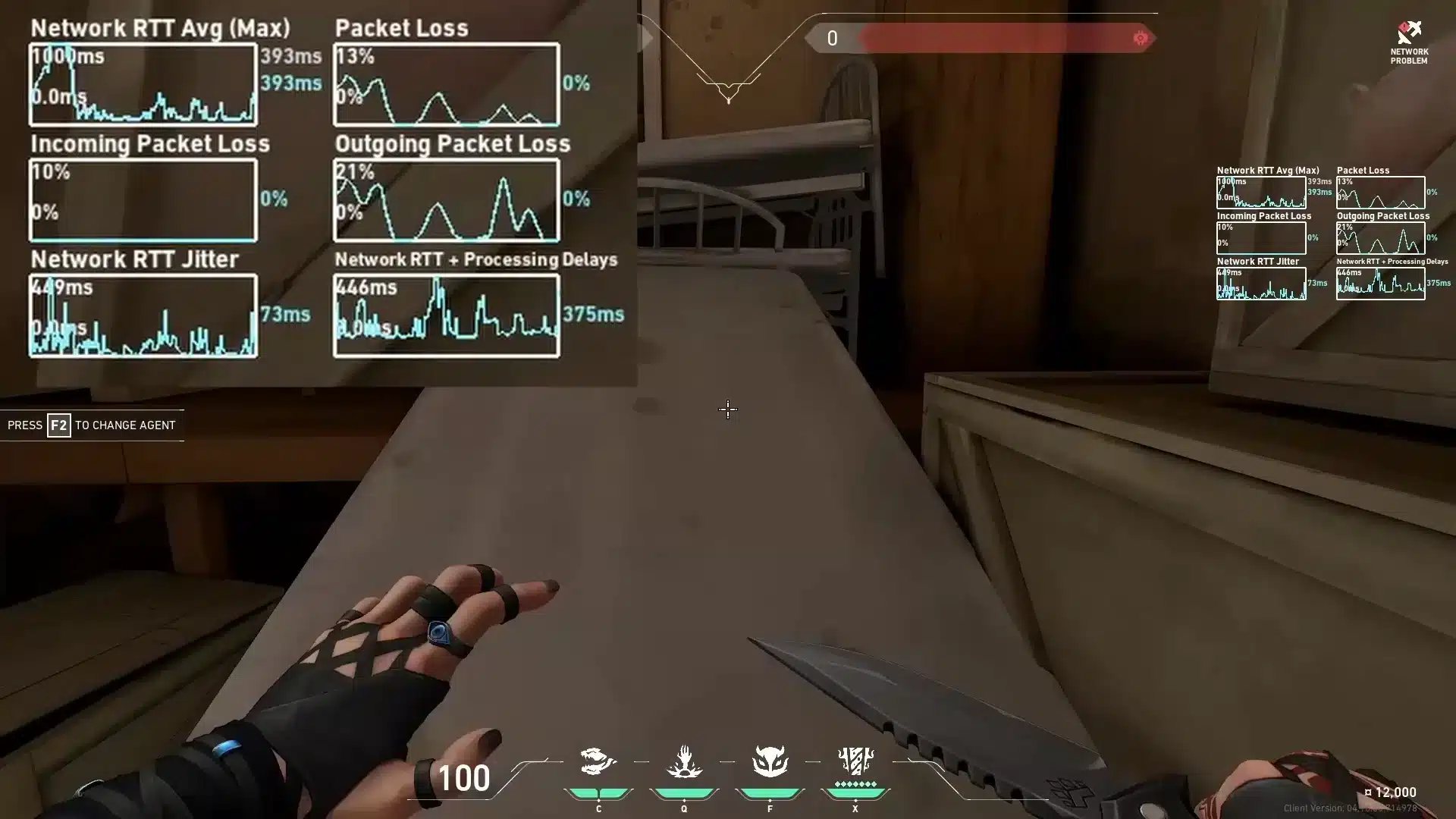
Valorant is now available on PC, PlayStation, and Xbox, and every version of the game depends on a stable, low-latency connection to Riot's servers. Whether you are on a Windows PC or a console, high ping and packet loss create peeker's disadvantage and shot registration problems that your skill alone cannot overcome.
ExitLag is a connection optimizer used by over 30 million players across 4,000+ game titles, including Valorant on PC. It analyzes multiple network routes in real time and routes your game traffic through the fastest, most stable path to Riot's servers.
Features that directly benefit Valorant players:
- Real-Time Optimization: Continuously selects the lowest-latency route to Valorant's servers, reducing the delay between your input and what the server registers.
- Multipath Technology: Sends game data through multiple simultaneous routes so a single path failure never reaches your match as a missed shot or ability activation.
- Traffic Shaper: Prioritizes Valorant traffic over all background applications so updates, syncs, and other software cannot spike your ping during a competitive round.
- Multi-Internet: Supports up to four simultaneous internet connections, ensuring no single connection drop ever ends a ranked session.
Download ExitLag and try it free today.
All images used in this blog post belong to their respective owners and are used for informational and educational purposes only. They do not imply endorsement or affiliation with the rights holders.