

If you keep asking why is my ping so high, you are not imagining things. High latency can ruin online matches even when your PC or console is strong, your FPS is stable, and your mechanics are good. Delayed shots, rubberbanding, stutters, and “I swear I clicked first” moments are classic symptoms of ping issues and connection prrubberb
The same problem shows up across games, even if the symptoms look different. Battle royales and mobile shooters are especially unforgiving when latency spikes hit mid-fight. If you want a concrete example of what “high ping” looks like in the wild, see Free Fire high ping causes and fixes.
When players search why is my ping so high, they usually want a real answer, not random tips like “restart your router and pray.” In most cases, the problem is a mix of routing, congestion, server distance, and local traffic. A proper high ping fix requires real network troubleshooting and a strategy to reduce latency instead of only masking symptoms.
So if you are still wondering why is my ping so high, this guide will break it down in plain English: what ping is, why it spikes suddenly, what causes it in games, what basic fixes help, what does not help, and how to address the real cause when the issue is outside your home network.
What does ping mean in online games?
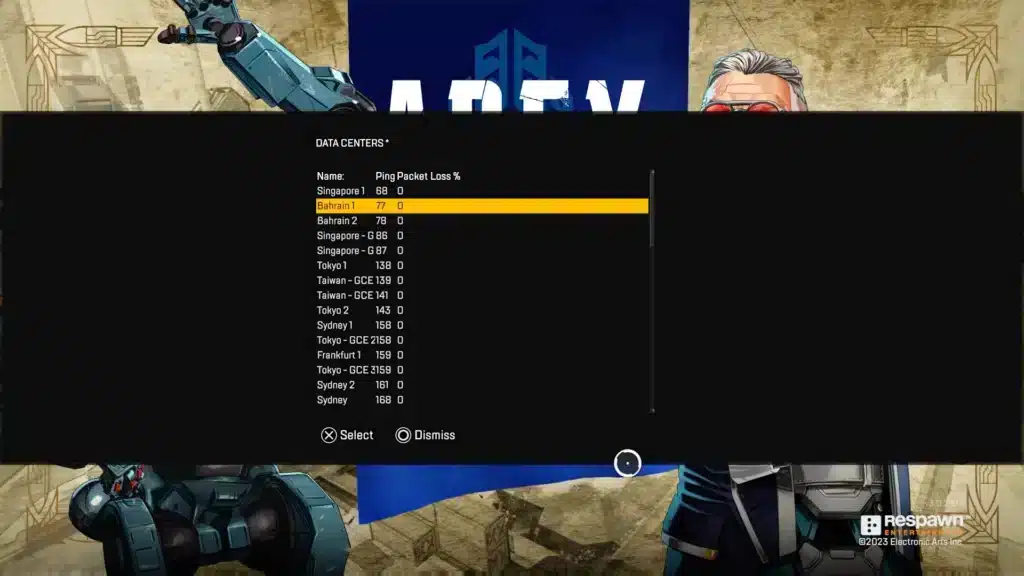
Ping is the time it takes for data to travel from your device to the game server and back. It is usually measured in milliseconds (ms). The lower the number, the faster the response.
If you want the simplest technical framing, ping is basically a reachability/round-trip check—gaming just turns that delay into something you feel. The core idea comes from the underlying network tool the term is named after. Here’s a quick reference on the ping networking utility and what it measures.
That matters because online games constantly exchange information:
- your movement,
- your shots,
- enemy positions,
- hit registration,
- abilities,
- server events.
If this round-trip takes too long, the game feels delayed.
In simple terms:
- Low ping = more responsive gameplay
- High ping = delayed actions and worse timing
This is why players dealing with ping issues often feel like the game is “off” even if visuals look normal.
Why ping affects gameplay so much
A lot of players focus only on FPS, but online performance depends on both rendering and network response.
High ping can cause:
- Delayed firing and hit registration
- Late movement updates
- Rubberbanding
- Input delay feeling
- Desync in PvP fights
- Missed timing windows
That’s why “my ping is high” is often shorthand for “my connection is unstable.” In practice, jitter can be the bigger culprit because it makes timing inconsistent even when your average ping looks fine. For a focused example, use this VALORANT jitter troubleshooting guide to see what that instability looks like and how to address it.
What is considered high ping?
There is no single perfect number for every game, but these ranges are a useful starting point:
| Ping range | General experience |
| 0–30 ms | Excellent |
| 31–60 ms | Very good |
| 61–90 ms | Playable, may feel delayed in competitive games |
| 91–130 ms | Noticeable delay |
| 131+ ms | High latency, likely disruptive |
Some games tolerate higher ping better than others. Tactical shooters and fast PvP games are much less forgiving.
Why is my ping so high all of a sudden?
If your connection was fine before and suddenly got worse, the cause usually feels invisible because it often happens outside your device. That is why players get frustrated: nothing “changed” locally, but the game feels bad.
If you are asking why is my ping so high all of a sudden, the most common reasons are:
- ISP routing changes
- Regional congestion
- Peak-hour traffic
- Background downloads/uploads
- Wi-Fi instability
- Server-side distance mismatch
These are common connection problems that can appear even when your internet plan speed looks good.
Before the technical breakdown, here is the key point: sudden ping spikes are usually not random. They are caused by a path or load change somewhere in the network route.
ISP routing changes and congestion
Your ISP decides how your traffic travels across networks. Those routes are optimized for cost and load balancing, not necessarily for gaming performance.
So even if your internet speed test looks normal, your game traffic may now be taking:
- a longer route,
- a busier route,
- or a less stable route.
This is one of the most common answers to why is my ping so high when everything “worked yesterday.”
Common triggers include:
- Peak evening internet usage
- Regional congestion
- Routing detours
- ISP maintenance or rerouting
- Interconnection bottlenecks
This is where advanced network troubleshooting becomes important, because a router restart at home will not fix a bad route several hops away.
Background traffic and hidden bandwidth usage
Another major cause of ping issues is background traffic. Many players underestimate how much bandwidth (especially upload bandwidth) is being used while they play.
Typical hidden causes:
- OS updates
- Cloud sync/backups
- Streaming apps
- Browser uploads
- Game launcher updates
- Other devices on the same network
Even small uploads can increase latency and make your connection feel unstable.
Quick check:
- Close launchers
- Pause downloads
- Stop cloud sync
- Ask others at home if someone is streaming/uploading
- Re-test in game
These steps are basic, but they are still a real high ping fix in many households.
Why is my ping so high in online games but not on speed tests?
This is one of the most common frustrations in gaming. Your speed test may show “great internet,” but your game still lags.
That happens because speed tests measure bandwidth and a limited route to the test server, not the full real-time path quality to your game server. Gaming performance depends on more than download/upload speed.
If you are asking why is my ping so high in games specifically, the likely cause is route quality, not raw speed.
Distance to game servers and server selection
Physical distance matters. The farther your data must travel, the higher your latency will usually be.
Games may place you on distant servers because of:
- Matchmaking priorities
- Low local population
- Limited regional servers
- Temporary server load balancing
This can create serious ping issues even if your home connection is otherwise fine.
Signs of server-distance-related latency:
- Higher ping at certain times only
- Normal ping in one game, bad in another
- Ping changes depending on region/server
- Stable but consistently high latency (not spiky)
To reduce latency, always check:
- server region settings,
- matchmaking region preferences,
- and whether the game is auto-selecting distant servers.
Long routes, many hops, and unstable paths
Your data does not travel in a straight line. It passes through many networks (“hops”) before reaching the game server.
Problems can happen when the route includes:
- Too many hops
- Congested intermediary networks
- Poor interconnection points
- Unstable peering routes
This is why network troubleshooting for gaming often focuses on route quality instead of only local Wi-Fi checks.
Packet loss and jitter can feel like high ping
Sometimes players think ping is the only issue, but the real problem is:
- packet loss (missing data),
- jitter (unstable latency variation),
- or both.
This creates:
- Stuttering
- Teleporting players
- Rubberbanding
- Desync
So if you keep asking why is my ping so high, also check whether your issue is actually a broader set of connection problems, not just average latency.
What is the difference between high ping, lag, packet loss, and jitter?
Players often use these terms as if they mean the same thing. They do not. And mixing them up leads to bad fixes.
Understanding the difference helps you choose the right high ping fix and better network troubleshooting steps.
Before the subsections, here is the simple version:
- Ping = delay
- Lag = what you feel
- Packet loss = missing data
- Jitter = unstable ping variation
What high ping really means
High ping means high latency. Your action reaches the server later than expected, and the response returns later too.
What it feels like:
- Late shots
- Delayed ability use
- Sluggish movement response
- Timing feels “off”
This is the most direct answer to why is my ping so high: your round-trip time is too long.
Why “lag” is broader than ping
Lag is the general feeling of poor online responsiveness. It can be caused by high ping, but also by packet loss or jitter.
That means a player can say “I’m lagging” even if ping looks decent on paper.
What you feel vs what is happening
| Issue | What it is | What players feel | Common cause | Typical solution |
| High ping | High latency | Delayed actions | Distance / bad routing | Route optimization + region selection |
| Packet loss | Missing packets | Teleporting / desync | Unstable path / congestion | Stability improvements + route quality |
| Jitter | Ping fluctuation | Stutter / inconsistency | Congestion / unstable routing | Traffic control + route stabilization |
| General lag | Overall poor feel | “Game feels bad” | Any of the above | Proper diagnosis first |
This is why good network troubleshooting matters: the right fix depends on the right diagnosis.
How do I fix high ping? Step-by-step troubleshooting that actually helps
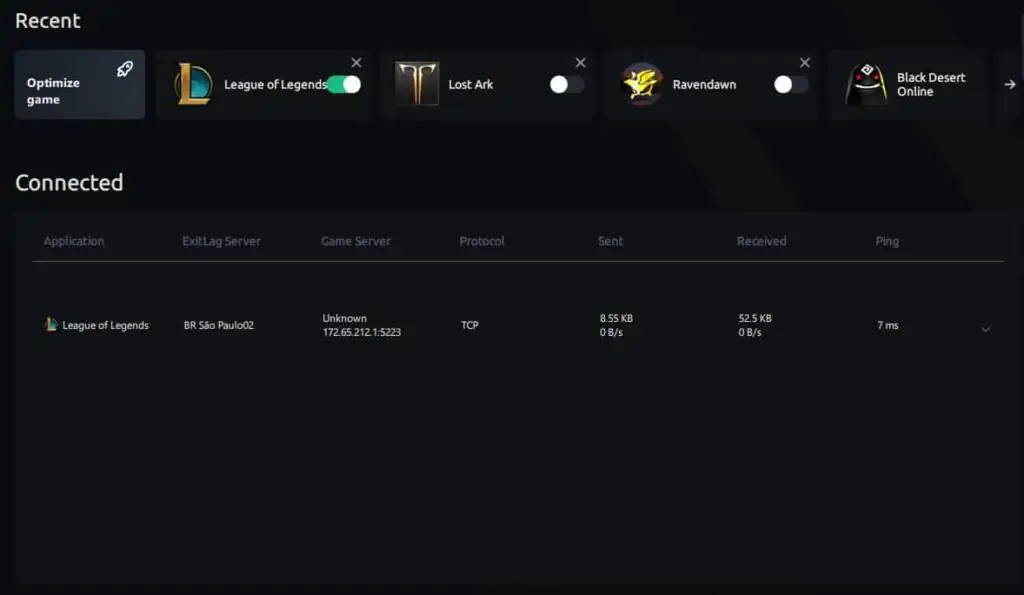
If you want a practical high ping fix, start with local checks first, then move to route-related fixes. This order matters because you should eliminate easy causes before assuming it is your ISP path.
If you are still asking why is my ping so high, use this checklist in sequence.
Start with local network troubleshooting first
These steps help remove avoidable home-network issues:
- Use Ethernet instead of Wi-Fi
- Close background apps and launchers
- Pause updates and cloud sync
- Restart modem/router (helps local issues only)
- Check if other devices are saturating the network
- Set the correct game server region
- Test during a non-peak hour
These are foundational network troubleshooting steps and often the easiest way to reduce latency.
Wi-Fi vs Ethernet: why it matters so much
Wi-Fi is convenient, but it adds variables:
- interference,
- signal quality,
- distance from router,
- shared airspace,
- device congestion.
For competitive play, Ethernet is still the most reliable baseline.
If switching to cable lowers your ping or removes stutter, your main issue may be local wireless instability, not the game server itself.
Check for peak-hour congestion patterns
If your ping gets worse mostly at night, the pattern matters.
That often points to:
- ISP congestion
- neighborhood load
- routing bottlenecks under heavy traffic
This is a classic reason people ask why is my ping so high “only at certain times.”
Track this for 3-5 days:
- time of day,
- game,
- server region,
- average ping,
- spikes.
This makes your network troubleshooting smarter and helps you spot repeatable connection problems.
Advanced fix: optimize the route, not just the router
When local checks are done and ping is still high, the problem is often the route between your ISP and the game server.
That is where route optimization tools become relevant. A proper high ping fix at this stage is not about DNS tricks or random settings. It is about improving the path your data takes.
This is also the point where many players stop asking why is my ping so high and start solving the actual cause.
Why don’t basic fixes like DNS changes or VPNs solve high ping?
A lot of advice online sounds useful but does not actually address gaming latency. Some of these tweaks may help in specific cases, but they are often not real answers to persistent ping issues.
If you are still searching why is my ping so high, this section can save you time.
Why restarting the router only helps sometimes
Restarting the router can fix:
- local memory glitches,
- temporary modem issues,
- DHCP hiccups,
- short-lived home network problems.
But it does not fix:
- bad ISP routing,
- congested external hops,
- distant server allocation,
- regional peering issues.
So yes, restart your router once. But if the problem keeps returning, it is not a complete high ping fix.
Why DNS changes rarely reduce gaming ping
DNS helps resolve domain names to IP addresses. That matters when connecting initially, but it usually does not control the real-time route once the session is active.
So DNS changes may:
- make some websites load faster,
- slightly improve initial lookup,
- do almost nothing for in-match latency.
This is one of the most misunderstood parts of network troubleshooting.
Why VPNs often make connection problems worse for gaming
VPNs are built for privacy and location masking, not gaming performance. They can add:
- encryption overhead,
- extra hops,
- longer routes,
- more instability.
In some cases, a VPN can help if it accidentally provides a better path. But in many cases, it increases latency.
If your goal is to reduce latency, a generic VPN is usually not the best tool for a reliable high ping fix.
How does ExitLag help reduce high ping in online games?
ExitLag is designed as a route optimization solution for gaming, not a privacy VPN. That distinction matters because persistent ping issues are often route problems, not bandwidth problems.
If you keep asking why is my ping so high even after basic checks, ExitLag can help by improving the path your game traffic takes in supported scenarios.
What ExitLag does differently
Instead of relying only on your ISP’s default path, ExitLag focuses on route quality and stability. That can help when your default route is:
- longer than necessary,
- congested,
- unstable,
- or inconsistent.
ExitLag is commonly used to support a high ping fix by helping:
- optimize routes,
- stabilize path quality,
- and reduce route-related connection problems.
What problems ExitLag can help with
In supported scenarios, ExitLag may help with:
- High latency from inefficient routing
- Ping spikes
- Jitter
- Route instability
- Packet loss related to path quality
This makes it useful when your local setup is already fine, but the external path is not.
What ExitLag does not replace
ExitLag is not a replacement for:
- Good Wi-Fi/Ethernet setup
- Closing background downloads
- Choosing the correct region
- Hardware troubleshooting
- ISP outage diagnosis
Think of it as a route-focused layer in your network troubleshooting process, not a magic button for every problem.
When to consider ExitLag
Consider it when:
- ping spikes persist after local fixes,
- multiple games show routing-related latency,
- performance changes by time of day,
- your ISP path seems inconsistent,
- you want a more reliable way to reduce latency in online sessions.
Why is my ping so high in specific games like Roblox, Fortnite, or Valorant?
Different games expose latency in different ways. So even if the cause is similar (routing, congestion, server distance), the symptoms feel different depending on the game.
That is why one player asks why is my ping so high in Roblox, another in Fortnite, and another in VALORANT—even though the root issue may be the same.
Roblox and sandbox/platform games
In Roblox, high ping often shows up as:
- delayed movement updates,
- weird physics behavior,
- interaction delay,
- server desync in multiplayer experiences.
Roblox sessions can also feel worse on unstable Wi-Fi because many experiences are sensitive to packet loss and jitter.
Fortnite and fast PvP battle royale games
In Fortnite, ping issues become obvious through:
- delayed building/editing,
- inconsistent hit registration,
- movement desync,
- poor timing in fights.
Since Fortnite is fast-paced, even moderate latency can feel much worse than it would in a slower game.
Hero shooters can feel even worse under the same conditions because fights are ability-dense and the game is constantly syncing positions and effects. When latency climbs, you notice it as delayed abilities, missed windows, and messy engagements. If you need a game-specific baseline, check how to fix high ping in Overwatch 2.
Tactical shooters like VALORANT
In tactical shooters, latency is exposed brutally because timing is everything.
High ping can cause:
- peeker’s disadvantage feeling,
- delayed shots,
- inconsistent trades,
- frustrating aim outcomes.
This is why players in shooters are often the most aggressive about network troubleshooting and route optimization.
What are the best long-term habits to reduce latency and avoid future ping spikes?
If you want fewer future moments of “why is my ping so high again?”, build a stable routine instead of relying on emergency fixes.
A good high ping fix strategy is not one-time only. It is a set of habits.
Build a low-latency gaming setup routine
Use this routine before sessions:
- Prefer Ethernet whenever possible
- Close launchers and background apps
- Pause downloads and sync tools
- Confirm correct server region
- Avoid crowded Wi-Fi channels (if on Wi-Fi)
- Reboot router/modem only when needed (not constantly)
- Test at different times if issues persist
These habits improve your baseline and make connection problems easier to diagnose.
Track patterns instead of guessing
A simple log helps a lot. Write down:
- Game
- Time
- Region
- Average ping
- Spike behavior
- Wi-Fi or Ethernet
- Whether others were using the network
This turns random frustration into useful network troubleshooting data.
Keep expectations realistic
You cannot fully eliminate latency in online games. Distance still matters. Server load still matters. But you can absolutely improve stability and reduce latency enough to make gameplay feel much better.
The goal is not perfection. The goal is consistent responsiveness
FAQ
Because fast internet speed (download/upload) is not the same as low latency. High ping is often caused by routing, congestion, server distance, or unstable paths—not low bandwidth. That is why a speed test can look good while you still have ping issues.
Start with the basics: close background apps, pause updates, use Ethernet, and check your game’s server region. These steps are the quickest high ping fix options before deeper network troubleshooting.
Speed and latency get mixed up constantly, so it helps to have one plain-language reference you can share with friends or teammates. It reinforces the same point this guide makes: bandwidth is not the same thing as responsiveness. For a quick explainer, see why ping gets high and how to lower it.
Yes. Wi-Fi interference, weak signal strength, shared networks, and device congestion can all increase latency or create jitter. Switching to Ethernet is one of the most effective ways to reduce latency.
This usually points to peak-hour congestion, either on your local network or your ISP route. If the problem appears mostly during evening hours, it is often a routing/load issue rather than a hardware failure.
Usually not. DNS may improve name resolution speed, but it usually does not change the real-time path your game traffic takes. Persistent ping issues usually require route-focused network troubleshooting.
ExitLag can help in supported scenarios by optimizing routing and improving route stability, which may help with latency spikes, jitter, and route-related connection problems. It does not replace local setup fixes like Ethernet, closing downloads, or correct region selection.
Final thoughts
If you have been asking why is my ping so high, the most important takeaway is this: the cause is often not your gaming skill, not your hardware, and not even your raw internet speed. Most persistent ping issues come from routing quality, congestion, server distance, or local traffic conflicts. A real high ping fix starts with solid network troubleshooting, then moves to route optimization when the problem is outside your home setup.
Want a more reliable way to reduce latency and improve gaming stability in supported scenarios? Start with the basic fixes in this guide, then try ExitLag if your connection problems persist and your ISP routing is the real bottleneck.
Got questions or want to connect with other players? Join the conversation at the ExitLag Forum!