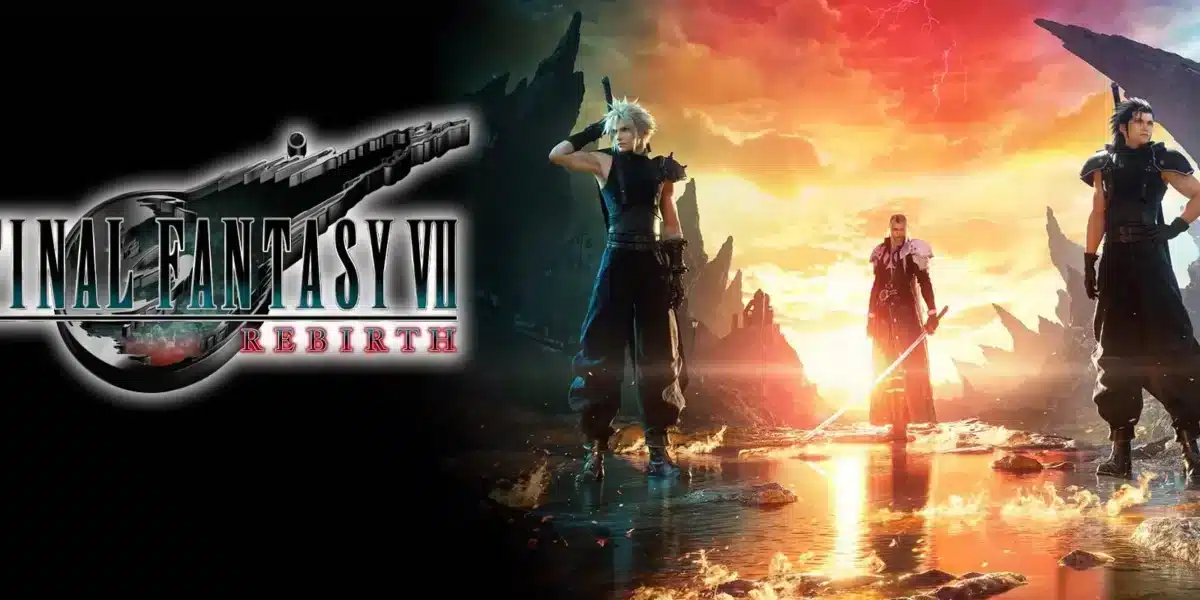

Aerith Gainsborough is a central character in Final Fantasy VII, revered not just for her role in the story but for her emotional resonance and symbolic depth. As the last living member of the Cetra, an ancient race closely connected to the Planet’s life force, she serves as a bridge between the mystical and the human. Her fate has made her one of the most impactful characters in gaming.
She’s introduced as a flower seller in the slums of Midgar but quickly becomes one of the most important figures in the party’s quest against Sephiroth. For fans looking to explore more about her world, we recommend you to check more about the Final Fantasy VII universe for a broader understanding of Aerith’s impact.
Aerith Gainsborough: background and personality
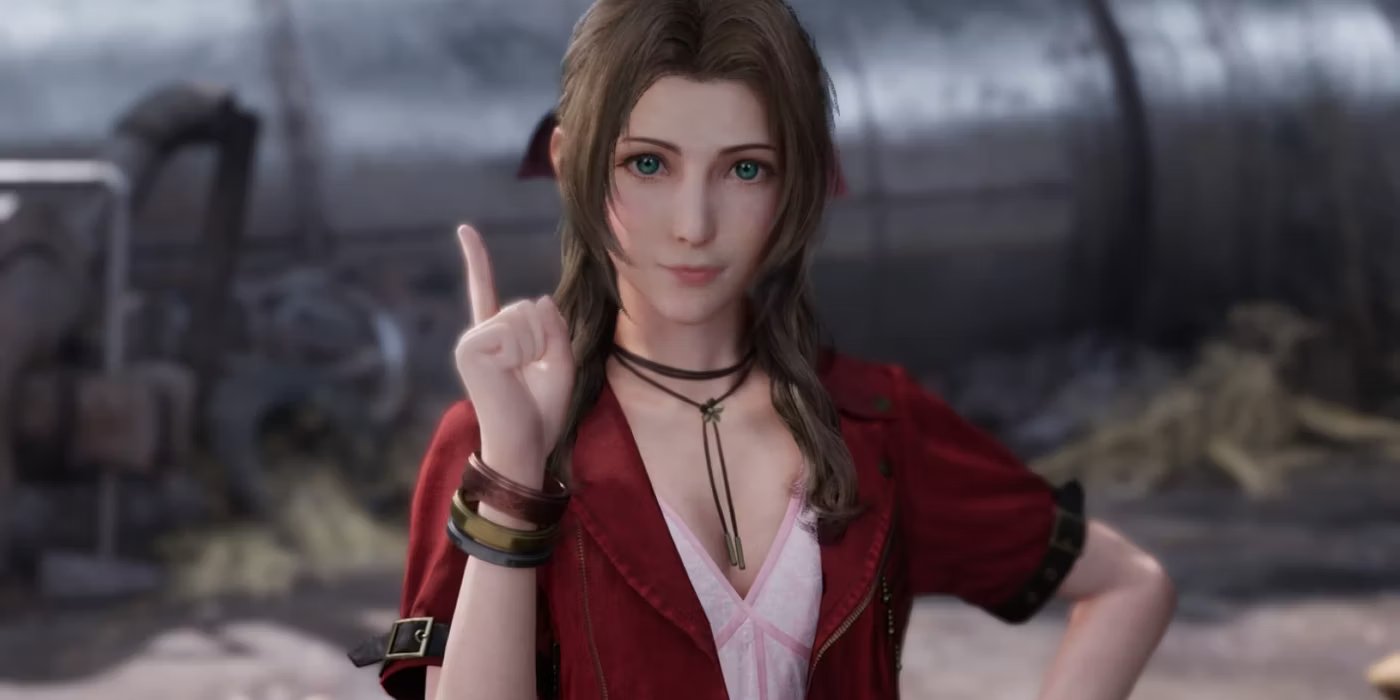
Born to Ifalna, a Cetra, and Professor Gast, a former Shinra scientist, Aerith’s life has been marked by danger since childhood. After Shinra assassinated her mother, Aerith was adopted by Elmyra and grew up hiding her true identity. Despite being hunted for her abilities, she developed a hopeful and playful personality.
Aerith is often depicted as soft-spoken and gentle, but those close to her know she has a strong will. She is funny, sarcastic, and never afraid to challenge others—even Cloud. These layers make her one of the most well-developed characters in the game.
Her relationship with Cloud begins with mystery but blossoms into something emotionally charged. The triangle between Aerith, Cloud, and Tifa brings complexity and heartbreak to the narrative. In the same way, her bond with Zack Fair from Crisis Core reveals another side of her vulnerability and strength.
Fun Fact: Aerith’s name is an anagram of “Earth,” emphasizing her role as a protector of the Planet.
And if you like JRPG games, you may like to check out other games to play.
How is Aerith Portrayed across the Final Fantasy franchise?
Final Fantasy VII (1997)
In the original game, Aerith joins early and becomes indispensable for her healing powers and magic. Her use of Limit Breaks like Healing Wind and Great Gospel make her a lifesaver in combat. As a support character, she balances the physical prowess of Cloud and Tifa.
Final Fantasy VII Remake (2020)
In Final Fantasy VII Remake, Aerith Gainsborough Final Fantasy fans noticed a significant evolution in her portrayal. She’s more proactive, wise, and mysterious. The game adds layers to her interactions with the mysterious Whispers—entities that enforce fate—suggesting she knows more than she lets on.
Her behavior in the remake often hints at foreknowledge of her own fate, creating tension and new fan theories. The remake doesn’t just revive Aerith—it redefines her.
Crisis core and beyond
Crisis Core: Final Fantasy VII explores Aerith Gainsborough’s relationship with Zack. Their innocence and chemistry provide emotional context to the tragedy that follows. Zack’s death and Aerith’s mourning explain much of her guarded behavior in FFVII.
Aerith also appears in:
- Kingdom Hearts – As a guardian figure in Radiant Garden
- Dissidia Final Fantasy – A supportive NPC with lore insights
- Theatrhythm – Playable in rhythm-based battles
- Final Fantasy Tactics (as an Easter egg character)
Her presence in spinoffs reflects her enduring legacy.
The death of Aerith Gainsborough: impact and symbolism
Why did Aerith die in FFVII?
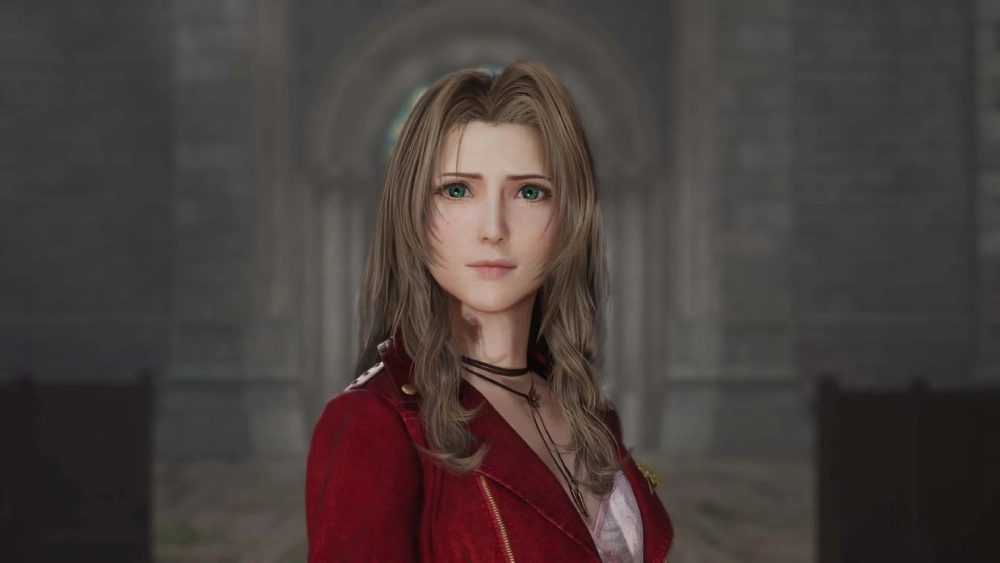
Aerith dies at the Forgotten Capital, stabbed by Sephiroth while praying to summon Holy. Her death is not in vain—her prayer activates the only magic powerful enough to counter Meteor. It is a moment that altered gaming forever.
Impact on the gaming industry
Aerith’s death shocked players in 1997. No one expected a main character—especially one so central—to die permanently. It challenged storytelling conventions in gaming and proved that video games could deliver mature, emotional narratives.
The Aerith Gainsborough death moment has since appeared in retrospectives, documentaries, and game design studies. It’s considered one of the most powerful storytelling moments in video game history.
Quote from IGN: “Aerith’s death was the moment we realized video games could make us cry.”
And, if you are anxious for news of Final Fantasy, you should watch the following video:
FINAL FANTASY VII REBIRTH – Release Date Announce Trailer
Fan theories and symbolism
- Theory 1: Aerith knew her fate and accepted it
- Theory 2: Cloud could have saved her, and the game hints at it
- Theory 3: The remake’s divergence implies her death could be undone
Aerith Gainsborough death also symbolizes rebirth and purification. Her spirit merges with the Lifestream, playing a role in saving the Planet even after death.
Aerith in pop culture: cosplay, fan art, and legacy

Aerith Gainsborough cosplay
One of the most popular characters in cosplay communities, Aerith Gainsborough cosplay is celebrated for its classic pink dress, red jacket, and staff. Cosplayers often embody her duality—softness and resilience—at events like Comic-Con and Japan Expo.
Fan art and online tributes
Searches for “FF7 Aerith art” yield thousands of tributes. Some reimagine her in modern attire; others place her in gothic or celestial settings. Her floral motifs (especially lilies and forget-me-nots) have become symbols of memory and purity in fan communities.
Aerith character analysis in academia
Some academic texts have explored Aerith character analysis through feminist and mythological lenses. She fits the archetype of the “dying heroine” found in classical literature but subverts it by remaining spiritually active after death.
Did you know? In Japanese folklore, spirits of sacrificial maidens often become guardians of nature—mirroring Aerith’s fate.
Gameplay tips: using Aerith Strategically
In remake: magic build guide
Aerith excels at long-range magical combat. She is best equipped with staffs that boost her Magic Attack. Players should prioritize materia like:
- Arcane Ward (doubles spell cast)
- Magnify + Healing combo
- Prayer (for group healing)
Her Limit Break Planet’s Protection grants invincibility to the party, ideal for boss fights.
In crisis core: support strategy
While not a playable character, Aerith’s missions and side quests in Crisis Core unlock powerful upgrades for Zack. Completing her flower wagon questlines also reveals more about her personality and emotional depth.
Frequently Asked Questions (FAQ)
Who is Aerith Gainsborough in Final Fantasy VII?
Aerith is a core protagonist in Final Fantasy VII, known as the last Cetra. Her connection to the Lifestream and ultimate sacrifice make her a spiritual and emotional heart of the game.
Why did Aerith die in FFVII?
She was killed while summoning Holy to save the Planet. Her death, though tragic, was necessary to activate the spell that would stop Meteor.
What is Aerith’s role in Final Fantasy VII Remake?
She appears more powerful, wise, and possibly aware of her fate. The Whispers indicate that she plays a key role in preserving or rewriting destiny.
Is Aerith in Crisis Core and other games?
Yes, she’s central in Crisis Core and appears in Kingdom Hearts, Dissidia, and other spinoffs. Her legacy extends across multiple Final Fantasy titles.
How is Aerith portrayed in the fandom (cosplay, fan art)?
Fans celebrate Aerith with emotional artwork, detailed cosplays, and memorial tributes. She remains one of the most adored characters in gaming history.
Aerith Gainsborough’s timeless legacy
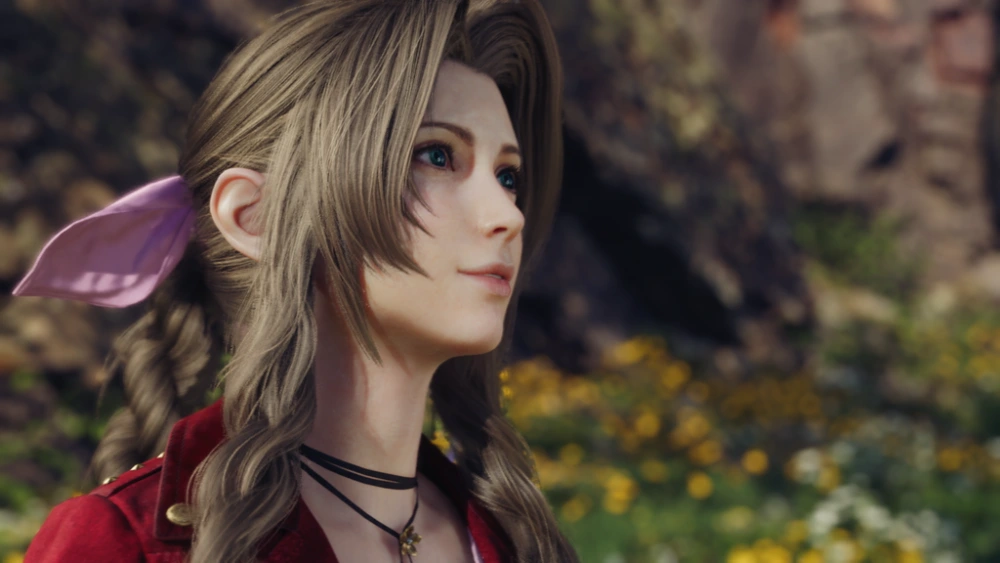
Aerith Gainsborough is more than a character—she’s a symbol of beauty, courage, and sacrifice. From her humble beginnings in Midgar to her heartbreaking death and spiritual transcendence, she has left a lasting impact on gaming. Her journey captures the essence of what makes Final Fantasy VII such an enduring narrative: a world where love, loss, and resistance intertwine.
More than two decades after her debut, Aerith continues to inspire players with her unwavering resolve and gentle wisdom. Her presence in the remake reinforces her importance, not only as a healer or supporting character, but as a driving force behind the emotional heartbeat of the story. She teaches us that true strength lies in compassion and that even the smallest gestures—like selling flowers in a slum—can carry great meaning.
For fans, Aerith is not just a memory; she’s a legacy. Her influence lives on in cosplay, music, art, and above all, in the hearts of those who’ve walked alongside her in one of gaming’s most unforgettable journeys.
If you need to improve your connection, you should click here!
Aerith and the role of nature and spirituality in Final Fantasy VII
In Final Fantasy VII, nature is not just a backdrop—it’s a living entity. The Planet, as it’s referred to throughout the game, has a life force called the Lifestream, which connects all living things. Aerith Gainsborough, as the last of the Cetra, is the only character capable of directly communicating with this energy. Her relationship with the Planet is not just symbolic; it’s active, urgent, and essential to the narrative’s spiritual foundation.
Aerith’s ability to hear the voice of the Planet sets her apart from everyone else. Where characters like Cloud, Barret, and Tifa are motivated by personal vengeance or justice, Aerith operates on a higher plane—one of protection, healing, and communion with something greater than herself. This connection makes her both powerful and vulnerable.
As she walks through the Forgotten Capital, praying for Holy, she’s not simply casting a spell—she’s offering herself in full communion with the Planet’s will.
This spiritual quality also transforms the game’s larger ecological themes. Shinra’s industrial exploitation of Mako energy (essentially the Lifestream itself) directly threatens the Planet’s survival. Aerith’s heritage and death bring a human face to the environmental destruction the game criticizes. She doesn’t fight with brute strength but with empathy, and in doing so, she embodies the natural world’s silent resistance.
The church in Sector 5, where she grows flowers against all odds, becomes a powerful symbol of this resistance. Even in the polluted slums, Aerith nurtures life. Her character encourages players to slow down, to notice beauty in small things, and to consider the cost of human ambition on the world around us. Few characters in video games have carried such a potent ecological and spiritual weight.
In the end, Aerith is not just a healer of bodies but a healer of the world—a guardian of balance in a universe tilting toward destruction. Her connection to nature is not aesthetic; it is philosophical, ethical, and existential. And that’s why her presence in Final Fantasy VII continues to inspire discussions not only about character development, but about the deeper meanings that games can hold.
You can join the Final Fantasy community in reddit by clicking here.
Comparing Aerith to other Final Fantasy heroines

Throughout the Final Fantasy franchise, there have been many powerful and beloved heroines: Terra Branford, Yuna, Lightning, and Tifa Lockhart, to name just a few. However, Aerith Gainsborough occupies a unique space among them—not just because of her death, but because of the kind of strength she represents.
Whereas characters like Lightning (FFXIII) are depicted as warriors hardened by conflict, Aerith’s strength lies in her openness and her refusal to become cynical despite immense personal loss. She isn’t defined by revenge or trauma but by her capacity to care. Her power emerges through softness, not in spite of it—a radical portrayal in a genre that often equates female strength with physical combat.
Compared to Tifa, who is more grounded and introspective, Aerith is spontaneous, expressive, and driven by intuition. Both characters love Cloud in different ways, and instead of being pitted against each other, they highlight two complementary visions of femininity. Their coexistence challenges the trope of women as romantic rivals and instead portrays them as equally vital parts of the story.
In contrast to Yuna from Final Fantasy X, who also walks a path of self-sacrifice, Aerith’s journey is quieter but no less profound. While Yuna prepares consciously for her death as part of a religious ritual, Aerith walks alone into her fate, trusting only the Planet and herself. This act of solitary courage, rooted not in duty but in love, sets her apart.
Even Terra from FFVI, another character with mysterious powers and a tragic past, follows a more traditional “chosen one” arc. Aerith, though essential to the Planet’s survival, never carries herself as a savior. She doesn’t demand obedience or admiration—she simply listens, gives, and moves forward.
Ultimately, what makes Aerith Gainsborough distinct is her refusal to be simplified. She is both playful and profound, vulnerable and unshakable, a girl from the slums and a conduit of ancient power. Her presence reshaped the role of female characters in JRPGs—not just by dying, but by living fully in every scene until her final moment.
ExitLag: play Final Fantasy without Lag
Lag can ruin emotional cutscenes, boss fights, and exploration. That’s where ExitLag comes in. With game-specific routing for Final Fantasy VII Remake, Crisis Core Reunion, and others, ExitLag ensures:
- Lower ping
- Reduced packet loss
- Real-time connection optimization
Click here to try ExitLag for free and play Final Fantasy the way it was meant to be—seamlessly and emotionally.
Got questions or want to connect with other players? Join the conversation at the ExitLag Forum!