Deadpool is no longer just a fan-requested addition to the roster. Deadpool Marvel Rivals launched with Season 6: Night at the Museum on January 16, 2026, bringing an unusual gameplay concept to the hero shooter: one character who can fill every core team role. That means he can enter a match as a frontline protector, a damage-focused threat, or a support-minded teammate, depending on what the composition needs.
Deadpool’s arrival also adds another major mutant character to the playable roster. Players comparing him with X-Men-related heroes can review this overview of mutants in Marvel Rivals for broader context on the characters and connections represented in the game.
That flexibility is what makes Deadpool Marvel Rivals more than a typical hero release. Rather than locking players into one identity, his design asks them to read the map, assess their allies, and choose the version of Wade Wilson that suits the next fight. His kit keeps the character’s familiar flavor: katanas, dual pistols, rapid recovery, loud personality, and a deliberately ridiculous plush shield.
The result is a character with a high learning ceiling. A new Deadpool Marvel Rivals player may be tempted to treat every role like a brawler. However, the strongest choice is not always the most aggressive one. A good Deadpool player understands when to create space, when to hunt isolated targets, and when to protect teammates who need healing or cover.
Searches for Marvel Rivals Deadpool, Marvel Rivals tanks, Marvel Rivals Deadpool strategist, Deadpool powers, and Deadpool unicorn show why players want a clear guide. There is a lot to learn: role swapping, weapon choices, in-match upgrades, Team-Up interactions, and the basic question of which version of Deadpool suits your style. This guide separates the essentials from the hype, so you can enter a match with a plan.
Is Deadpool in Marvel Rivals? Release date, Season 6, and basic facts
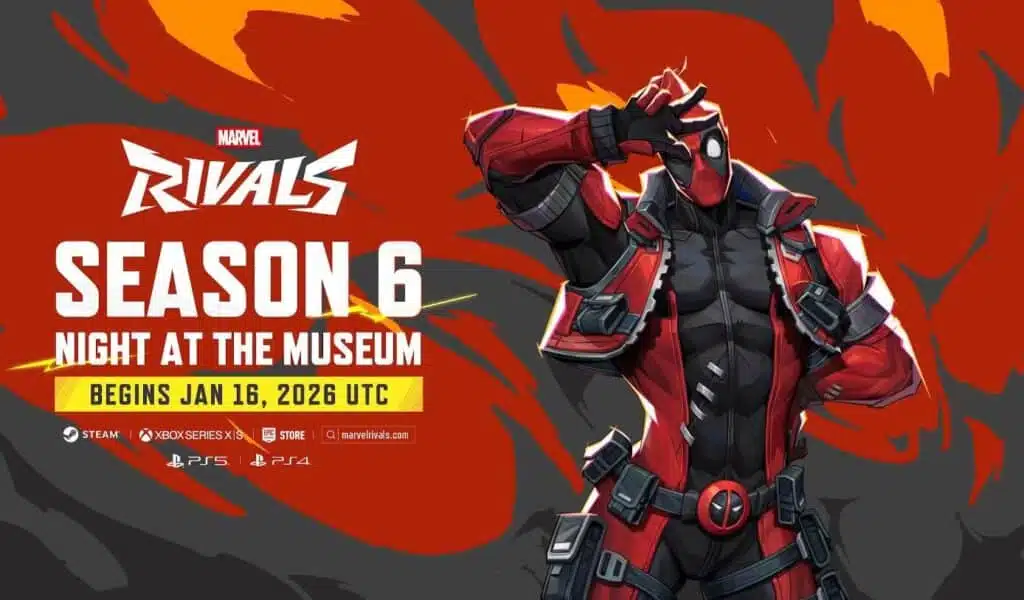
Yes. Deadpool arrived as a playable hero at the start of Season 6: Night at the Museum, which went live on January 16, 2026. The Deadpool Marvel Rivals release was a full seasonal update, not a temporary event or a limited test. As a result, the character became part of the regular roster rather than a short-term novelty.
For players returning after a break, the most important detail is that Deadpool does not work like a standard single-role pick. He is a triple-role hero. In Quick Match and Competitive modes, each team can have only one Deadpool at a time, which limits mirror-heavy lineups while still allowing both teams to use him.
When did Deadpool come out in Marvel Rivals?
The Deadpool Marvel Rivals release date was January 16, 2026, alongside Season 6: Night at the Museum. The season introduced the hero, a new Battle Pass, the Whac-A-Jeff event, Hero Proficiency changes, accessories, and photo mode in Times Square. The Museum of Contemplation convoy map followed later in the season.
That timeline matters because older articles and early videos may describe Deadpool as “upcoming” or speculate about his class. Those sources are now outdated. The live version is built around three role choices: Vanguard, Duelist, and Strategist. Therefore, a guide that presents him only as one of the Marvel Rivals tanks misses the point of his design.
What made Season 6 different?
Season 6 put player flexibility at the center of Deadpool’s release. His role can be selected at spawn, allowing you to adapt to the team’s needs instead of forcing an awkward composition. That is especially valuable when teammates have already locked damage heroes or when a team needs a sturdier front line.
The season also made Deadpool a Team-Up Anchor with Jeff the Land Shark through Mr. Pool’s Interdimensional Toy Box. The exact bonus changes with Deadpool’s role: Vanguard gains extra health, Duelist gains additional damage, and Strategist gains extra healing. In other words, Marvel Rivals Deadpool is not only a solo pick; he can also influence the value of a team composition.
Players looking up Deadpool powers, Deadpool unicorn, Marvel Rivals Deadpool strategist, and Marvel Rivals tanks should remember one rule: ability numbers and balance details can change with patches. Learn the function of each tool first. Then, review the current in-game Hero page or patch notes before copying a build from an older guide.
How does Deadpool work in Marvel Rivals?
Deadpool’s central mechanic is role-based flexibility. He is not simply a Duelist who can occasionally shield an ally, or a Vanguard who happens to carry pistols. Each role changes his battlefield job and parts of his toolkit. That is why the character can feel overwhelming at first.
The Deadpool Marvel Rivals playstyle starts with one question: what does your team need right now? Are you struggling to reach an objective? Are your backline allies under constant pressure? Does your team already have enough healing but lack finishing damage? Choose the role that answers that problem.
A successful Deadpool Marvel Rivals match begins with that decision, not with a flashy dive. The best players do not select a role because it looks strongest in a highlight clip. Instead, they adapt before the match begins and reassess the choice after a lost fight or a major composition change.
The three roles: Vanguard, Duelist, and Strategist
Vanguard Deadpool is designed to contest space and help the team survive pressure. Duelist Deadpool shifts toward damage, mobility, and finishing exposed opponents. Strategist Deadpool brings more utility to the team, including healing-oriented interactions that help allies remain active during extended fights.
This makes Marvel Rivals Deadpool unusually adaptable. Still, flexibility is not permission to switch roles without a reason. Pick Vanguard when your team needs room to play. Pick Duelist when your team has support and needs picks. Pick Strategist when sustained fights are being lost because allies cannot stay healthy or stabilize after an engagement.
The Deadpool Marvel Rivals role system also rewards communication. Let your team know what you are choosing and why. A quick message such as “I’ll go Vanguard for point pressure” can make the next fight more coordinated before it even begins.
Role selection defines Deadpool’s responsibility, but accurate ranged pressure remains important when using his dual pistols. This guide to Marvel Rivals crosshair settings explains how to adjust the reticle for clearer tracking and more comfortable aiming during fast encounters.
Weapons, recovery, and in-match upgrades
The character’s identity comes from his two familiar weapon styles: dual pistols for ranged pressure and katanas for close-range plays. His healing factor supports the aggressive fantasy, but it should not be treated as an invitation to ignore cover, cooldowns, or enemy focus fire.
Deadpool also uses in-match skill upgrades. This system rewards players who pay attention to which abilities are improving and how those improvements change their next engagement. Rather than memorizing one combo, practice a small decision tree:
- Use pistols to pressure safely before committing.
- Use katanas when the target is vulnerable or isolated.
- Retreat before your recovery becomes your only survival plan.
- Choose upgrades that reinforce the role your team actually needs.
- Reassess your role at the next spawn when the match changes.
This is where Deadpool powers become more than a list of buttons. The strongest players connect weapons, mobility, sustain, and upgrades to a clear objective. That creates pressure without turning Deadpool into an easy elimination.
When researching Deadpool unicorn, Marvel Rivals tanks, Marvel Rivals Deadpool strategist, and Marvel Rivals Deadpool, do not assume every ability behaves the same in every role. His weapon form and selected class can change how a familiar input is used. Read the in-game descriptions before trying a new role in Competitive.
Is Deadpool a Vanguard, Duelist, or Strategist?
The short answer is all three. The useful answer is that the “best” version changes with the map, game mode, teammates, opponents, and your own comfort level. Deadpool is strongest when he fills a genuine gap. He is weaker when he duplicates a role the team already has while leaving another need unanswered.
Before locking a role, look at the composition. If your team has no one to hold an angle or contest an objective, Vanguard is often the practical answer. If enemies are escaping with low health and your team needs decisive pressure, Duelist can help. If your allies are constantly forced out of fights, Strategist may have more impact than another damage pick.
A strong Deadpool Marvel Rivals player does not need to master all three roles immediately. Start with the version that matches your usual style. Then, expand into the other roles once you understand how each one changes your responsibility during a fight.
Vanguard Deadpool: space control and the Magical Unicorn Shield
Vanguard Deadpool belongs with the frontline heroes who absorb attention, contest objectives, and give teammates room to operate. Compared with other Marvel Rivals tanks, he is less about a conventional shield-first identity and more about disruption, mobility, and forcing enemies to react.
His memorable defensive tool is the Magical Unicorn Shield, the reason Deadpool unicorn became such a common search. It places a plush-themed protective barrier that can create a brief window to cross a dangerous lane, hold an objective, or protect an ally during a push. Treat it as a timing tool, not a decoration.
Use Vanguard Deadpool well by following these habits:
- Take space only when teammates can use it.
- Put the shield between danger and an important ally or route.
- Pressure enemies without chasing beyond your team’s range.
- Save an escape option for the moment opponents commit cooldowns.
- Coordinate with Jeff when the Team-Up bonus is available.
In a Deadpool Marvel Rivals lineup, Vanguard is a good fit for players who enjoy initiating fights but still want a more active, mobile style than some traditional Marvel Rivals tanks provide.
Players considering the Strategist role should also understand how Deadpool differs from characters built entirely around support. This overview of Marvel Rivals healers provides useful context on healing styles, team sustain, and the responsibilities associated with dedicated Strategists.
Duelist and Strategist Deadpool: damage or team sustain
Duelist Deadpool focuses on converting movement, katana pressure, and pistol damage into eliminations. He is most effective when he arrives after an enemy has used key defensive tools, when a target is separated, or when the team has already created an opening. Diving first into a full enemy line is usually a fast way to waste his potential.
Strategist Deadpool changes the equation. The Marvel Rivals Deadpool strategist version can contribute to team survival while still carrying Deadpool’s aggressive identity. His kit reinforces a close-to-the-action support style rather than a passive backline healer.
The choice between these two roles comes down to your team’s problem:
| Team situation | Better Deadpool choice | Why |
| The team has healing but cannot finish targets | Duelist | Adds focused damage and chase potential |
| Allies lose long fights through low sustain | Strategist | Adds healing-oriented utility |
| The enemy backline is exposed | Duelist | Can punish isolated targets |
| The frontline collapses before a push begins | Strategist or Vanguard | Adds stabilization or protection |
| You need a flexible brawler near the objective | Vanguard | Helps contest space and survive focus |
That distinction prevents the common mistake of treating Deadpool Marvel Rivals as a permanent damage pick. Deadpool’s strength is not that he does everything at once. It is that he can become the right answer before the next fight starts.
If you came here through Deadpool powers, Deadpool unicorn, Marvel Rivals Deadpool strategist, or Marvel Rivals tanks searches, start in Quick Match. Try the same map with more than one role. You will learn more from comparing the roles directly than from memorizing a single highlight-reel combo.
What are Deadpool’s powers in Marvel Rivals?
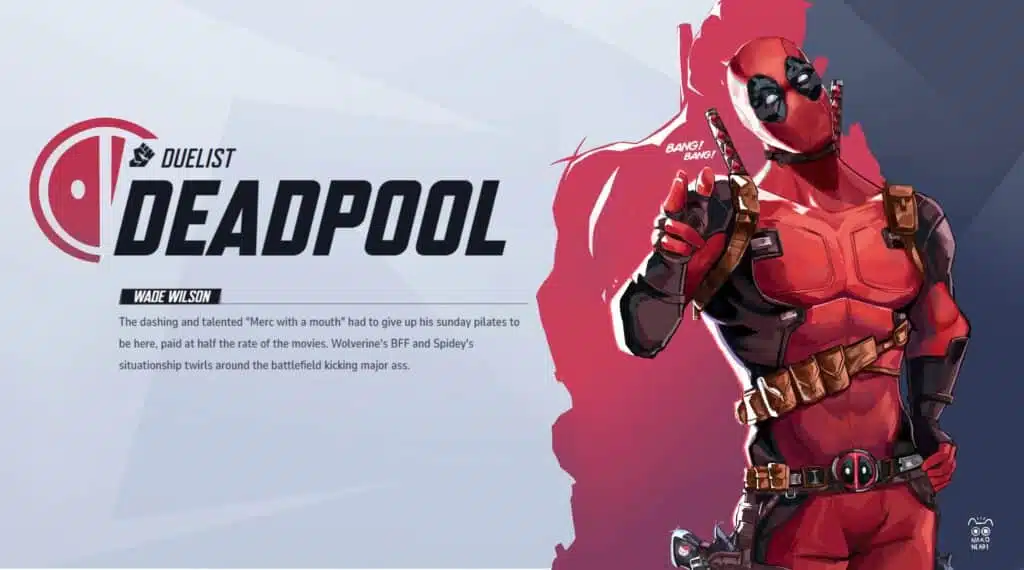
Deadpool’s kit blends ranged attacks, melee pressure, recovery, mobility, and role-specific utility. The exact values, cooldowns, and upgrade interactions can change as the game is balanced. However, the structure is consistent: pistols help him apply pressure at range, katanas let him threaten opponents up close, and his role determines whether he is primarily protecting, eliminating, or sustaining.
This is also why he demands more awareness than a hero with one narrow job. You need to track your position, your weapon choice, your team’s health, and the enemy’s ability usage. The character can feel chaotic, but his best moments are deliberate.
Balance adjustments can change cooldowns, damage values, and role interactions after a guide is published. The official Marvel Rivals website is the most reliable place to check current hero information, announcements, and patch-related updates before entering Competitive matches.
For Deadpool Marvel Rivals players, the key is sequencing. You cannot rely on regeneration or mobility alone. A good engage starts before the dash, with safe pressure, enemy cooldown tracking, and enough nearby support to turn your opening into a full team advantage.
Core tools that define Deadpool’s playstyle
Several ideas define the practical use of Deadpool powers:
- Dual pistols give him safer pressure before he enters close range.
- Katanas create a threat window when an opponent is vulnerable.
- Healing factor helps him recover, but does not make reckless positioning safe.
- Mobility tools help him approach, reposition, and escape.
- Skill upgrades let him develop a stronger version of the role he selected.
The key is sequencing. Poke first when you do not have an advantage. Commit when your team has created one. Leave when the enemy turns multiple cooldowns toward you. This pattern works whether you are playing a damage-first Duelist or a frontline Vanguard.
A Deadpool Marvel Rivals round becomes much easier when you stop thinking about the character as random chaos. Every action should have a purpose: claim space, pressure a target, protect a teammate, secure an elimination, or safely reset.
How the unicorn shield and Team-Up affect fights
The Magical Unicorn Shield is not a joke item in practical terms. The Deadpool unicorn tool can create a temporary layer of protection in a game where sightlines and timing decide fights. Use it to deny pressure, support a rotation, or help teammates survive a burst window.
Deadpool’s Team-Up with Jeff also changes the value of coordinated play. When Deadpool is the anchor, the bonus is role dependent. That gives an extra reason to discuss the composition with your team instead of picking based only on personal preference.
A few quick reminders will help:
- Do not waste protective tools after the team has already disengaged.
- Do not use melee pressure when your supports cannot reach you.
- Do not save every cooldown for a perfect play that never comes.
- Do use the shield to turn a dangerous crossing into a manageable one.
- Do switch role when a repeated problem is costing your team fights.
The terms Marvel Rivals Deadpool, Marvel Rivals tanks, Marvel Rivals Deadpool strategist, and Deadpool powers can lead to very different guides. The unifying principle is simple: Deadpool succeeds through adaptation, not autopilot aggression.
Seasonal activities can introduce additional objectives and limited-time rewards beyond the standard match rotation. Check the official Marvel Rivals events page to see which activities are currently available and whether they offer a reason to adjust your usual play schedule.
How ExitLag helps make Deadpool matches feel more responsive
Deadpool’s role options reward timing. Vanguard needs to place protection before damage arrives. Duelist needs to recognize a vulnerable target and close the distance at the right moment. Strategist needs to heal, reposition, and respond to changing pressure. When your connection has unstable routing, packet loss, or sudden latency spikes, those decisions can feel delayed even when your mechanical timing is correct.
ExitLag is a connection optimization tool for online gaming. It is designed to optimize the route between your device and the game server, helping reduce delay and packet loss caused by inefficient or unstable routing. It cannot fix a server outage, a game bug, poor hardware performance, or a bad team composition. Still, it can be useful when the main problem is a network path that becomes inconsistent during play.
Why stable routing matters for Deadpool
A lag spike can make a close-range fight feel unreliable. You may dash later than expected, see an enemy position update abruptly, or miss the small timing window that separates a successful push from a lost objective. These problems are especially noticeable with a character who shifts between pressure, protection, and support.
For Deadpool Marvel Rivals, connection stability can support better execution in several ways:
- More consistent timing when entering melee range.
- Fewer disruptive packet-loss moments during a push.
- Smoother reactions when activating defensive utility.
- More reliable coordination with teammates in fast fights.
- Less frustration when a match becomes crowded around an objective.
ExitLag is most relevant if you notice unstable ping, rubberbanding, repeated packet-loss warnings, or worse performance during peak hours. First, close downloads, test a wired connection when possible, and check whether the problem affects other online games. Then compare a few matches with route optimization enabled.
How to use ExitLag before playing Marvel Rivals
A practical test is more useful than guessing. Set up ExitLag, select Marvel Rivals, apply the available route optimization, and then play several similar matches. Compare consistency, not only the lowest ping number you see.
Use this simple checklist:
- Close downloads, streams, and background updates.
- Restart your router if the connection has been unstable.
- Launch ExitLag and select Marvel Rivals.
- Apply route optimization before launching the game.
- Test the same role and mode across multiple matches.
- Watch for lower spikes, less rubberbanding, and smoother ability timing.
For Marvel Rivals Deadpool, a stable connection will not replace positioning, aim, or game knowledge. It can, however, help ensure that your inputs reach the server through a more reliable route. That lets you judge your gameplay by your decisions instead of by a sudden routing problem.
FAQ
Deadpool’s triple-role design creates reasonable questions, especially for players who have seen older launch coverage or only watched one version of the character in a video. Use these answers as a quick reference, then test the role that matches your preferred style.
Deadpool launched on January 16, 2026, at the start of Season 6: Night at the Museum. He is a permanent roster character, not a limited-time event hero. In Quick Match and Competitive modes, each side can field only one Deadpool.
That is why “release date” articles should now be treated as historical context. The more useful question is which role will help your team in the next game: Vanguard, Duelist, or Strategist.
He can be all three. Vanguard Deadpool is the tank-oriented option, Duelist Deadpool is the damage-oriented option, and Strategist Deadpool contributes more support and healing utility. The role is chosen to match team needs rather than a single fixed identity.
Deadpool Marvel Rivals is at its best when you adapt to the composition. Choose Vanguard when space is the issue, Duelist when the team needs finishing damage, and Strategist when allies need more sustain. Then pair that flexibility with a stable connection: download ExitLag, optimize your route before the next match, and give every Deadpool decision the responsiveness it deserves.
Got questions or want to connect with other players? Join the conversation at the ExitLag Forum!