Few games punish bad decisions like Escape from Tarkov. It’s not just a shooter. It’s a stress test for your aim, your patience, your planning, and your ability to stay calm when everything goes wrong.
That “everything” includes your connection and routing. In a high-stakes game where one stutter can decide a fight, it helps to understand what actually causes inconsistent raids and what you can control. This Getting to the core Tarkov guide breaks down the biggest friction points and what to fix first for a smoother, more reliable experience.
In Escape from Tarkov, survival isn’t a bonus. It’s the entire game. You either extract with your gear and loot, or you lose what you brought and what you found. That one rule is why every footstep matters and every fight feels personal.
This guide breaks down the core systems, the mindset, and the practical habits that help you survive longer, earn more rubles, and improve consistency in raids. You’ll also see how to stabilize your connection so your performance doesn’t fall apart when the stakes are highest.
Quick glossary (so the rest of this guide is faster)
- PMC: Your main character (progress, skills, quests, gear risk).
- Scav: A “free” run with random gear (lower risk, great for learning).
- Raid: A timed match on a map where you loot, fight, and extract.
- Extract: Leaving the raid alive (the win condition).
- Hideout: Your base upgrades (crafting, healing, economy boosts).
- Flea Market: Player economy access (level-gated).
- Wipe: Progress reset that refreshes economy and early-game balance.
And yes, you’ll see these terms constantly in EfT discussions.
What is Escape from Tarkov and why is it so punishing?
Escape from Tarkov is a hardcore tactical shooter with RPG progression and a survival economy layered on top. The “hardcore” part is not marketing. It’s structural.
First, the game uses high-stakes loss.
Second, it combines PvP and PvE threats.
Third, it forces you to manage risk like a resource.
That’s why Tarkov gameplay feels different from almost every other FPS. You are not chasing kills. You are managing exposure.
Before we get tactical, here’s the core truth:
- Your job is to extract, not to “win fights.”
- Fights are a tool to extract, not the goal.
- Loot is useless if you die holding it.
That mindset alone improves results.
Raid flow, in one clean loop
- Spawn and identify your safest route.
- Decide your objective (quest, loot, PvP, or mix).
- Take only the fights you can finish cleanly.
- Reset when you’re hurt, heavy, or unsure.
- Extract before greed becomes the reason you die.
A clean loop is easier to follow when your kit supports the loop instead of fighting it. Rather than building “cool” loadouts that collapse under pressure, use a simple structure that matches your raid goal and risk budget. This Escape from Tarkov best gear guide lays out practical kit choices that keep you mobile, lethal, and replaceable—exactly what consistency requires.
If you want consistency, you need repeatable rules. This is the start of your ruleset.
The “risk budget” concept that good players follow
Think of every raid as a budget:
- Time budget: more time = more loot and more danger.
- Noise budget: shots and sprinting attract attention.
- HP budget: damage reduces your options fast.
- Mental budget: panic makes you slow and sloppy.
When one budget is low, you extract. That’s discipline. And discipline is the real skill gap.
Understanding the core systems (the stuff that quietly kills you)
Escape from Tarkov rewards mechanics, but it punishes ignorance harder than bad aim. So let’s hit the fundamentals that decide most raids.
1) Ammo matters more than the gun
In many shooters, the gun is the star. In Tarkov, ammo is the real weapon.
A cheap rifle with good ammo can outperform a premium build shooting weak rounds. That’s why new players get stuck: they spend money on “cool guns,” then lose because they can’t penetrate armor.
Use this rule:
- If you can’t afford good ammo, avoid fair fights.
- If you have good ammo, you can take cleaner fights.
Here’s a simple ammo decision table you can use while learning:
| Goal | What to prioritize | What to avoid |
| Kill armored PMCs | Penetration | Low-pen budget rounds |
| Kill Scavs fast | Flesh damage | Overpaying for pen you don’t need |
| Mixed raids | Balanced ammo | “Whatever is cheapest” |
2) Weight and stamina decide your survival more than you think
Overweight loadouts create three problems:
- You move slower.
- You recover stamina slower.
- You sound louder.
So even if you feel “safe” in heavy gear, you become easier to track and easier to punish. This is why many veterans prefer controlled mobility.
If you want a practical approach, use a mobility-first rule for learning:
- Mid-tier armor is fine.
- Too heavy is a trap.
- Survival comes from positioning.
That’s one of the most reliable Escape from Tarkov tips for newer players.
3) Sound is information, but it’s also bait
Sound wins fights. It also creates fights.
If you sprint everywhere, you are announcing your route. If you loot loudly and long, you are inviting a third-party push.
A clean habit:
- Move fast only when you must.
- Otherwise, move quietly and intentionally.
- Stop and listen more than you think you should.
This will instantly improve your raid outcomes in EfT.
What are the best Escape from Tarkov tips for beginners?
If you’re newer, your biggest enemy isn’t “better aim.” It’s uncertainty. The game feels brutal because you don’t know where danger comes from yet.
So your first mission is not to get rich.
Your first mission is to reduce unknowns.
Below is a beginner plan that works, because it is simple and repeatable.
The 7 beginner rules that reduce deaths fast
- Pick one map and commit for a week.
- Learn two safe extracts and one emergency extract.
- Run Scav whenever it’s available to learn routes.
- Avoid “coin-flip” fights (fair fights are bad fights).
- Don’t re-peek the same angle twice.
- Extract earlier than you want to.
- Upgrade your hideout basics before you chase big PvP.
These rules are boring. They are also effective.
A simple “learning loadout” philosophy
New players usually do one of two things:
- Bring nothing and learn nothing (because they can’t fight).
- Bring everything and lose everything (because they panic).
Instead, bring “just enough” to take advantage of your good moments.
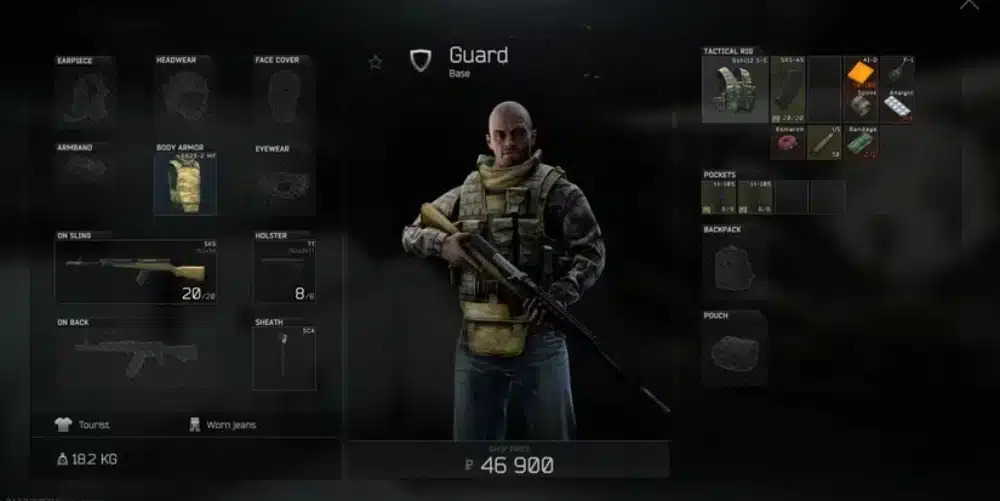
Beginner loadout baseline:
- A reliable mid-tier weapon you can replace.
- Enough meds to fix a mistake.
- Ammo you trust.
- A backpack that makes extraction worth it.
Your gear should support learning, not punish you for it.
Map learning: the fastest method
Don’t try to memorize everything. Memorize patterns.
Here’s what you should lock first:
- Spawn zones (where fights happen early).
- High-traffic paths (where you get third-partied).
- “Noise magnets” (hot loot spots).
- Safe rotations (how to change plans mid-raid).
This is the hidden foundation of strong Tarkov gameplay.
To speed this up, study maps with intent, not curiosity. You’re looking for spawn clusters, choke points, and the simplest “escape routes” that work even when your original plan fails. A reference like Escape from Tarkov maps overview helps you learn the layout logic faster—so you spend less time guessing and more time extracting.
When is the next Tarkov wipe?
A Tarkov wipe is a periodic reset that refreshes progression, trader levels, quests, and the economy. Wipes reshape the entire meta because they force everyone back into early-game scarcity.
Wipe discussions get noisy fast, so it helps to anchor your expectations to official channels first. For announcements, editions, updates, and anything tied directly to the game’s lifecycle, start with the official Escape from Tarkov website—then use community chatter as “maybe,” not as fact.
That’s why wipe season feels so different:
- Gear is weaker across the board.
- Early quests become crowded and dangerous.
- Ammo scarcity changes fight outcomes.
- Basic meds and armor suddenly matter again.
Even if you don’t know the exact date, you can prepare with habits that always pay off.
Why wipe timing matters for your strategy
Wipes change priorities.
Before wipe, many players:
- chase PvP,
- run high-tier kits,
- and take riskier fights.
After wipe, players:
- prioritize quests,
- farm early barter items,
- and avoid unnecessary fights.
So your plan should shift too.
Below is a wipe-prep checklist that works regardless of timing.
Wipe prep checklist (low effort, high value)
- Build one “early wipe” route on your main map.
- Learn the barter items your hideout needs first.
- Practice extracting with mediocre gear.
- Get comfortable with budget meds and limited ammo.
- Decide one weapon platform you’ll run early.
This matters because early wipe is a race for stability, not a race for kills.
Early wipe loot priorities
If you want to progress fast after a Tarkov wipe, focus on items that unlock momentum:
- Hideout essentials (crafting and healing speed).
- Quest items (avoid getting stuck).
- Barter items for reliable armor and rigs.
- Ammo components if crafting is available.
This is one of the most underrated Escape from Tarkov tips because it prevents the “stuck at level 10 forever” problem.
How can you improve Escape from Tarkov performance and reduce lag?
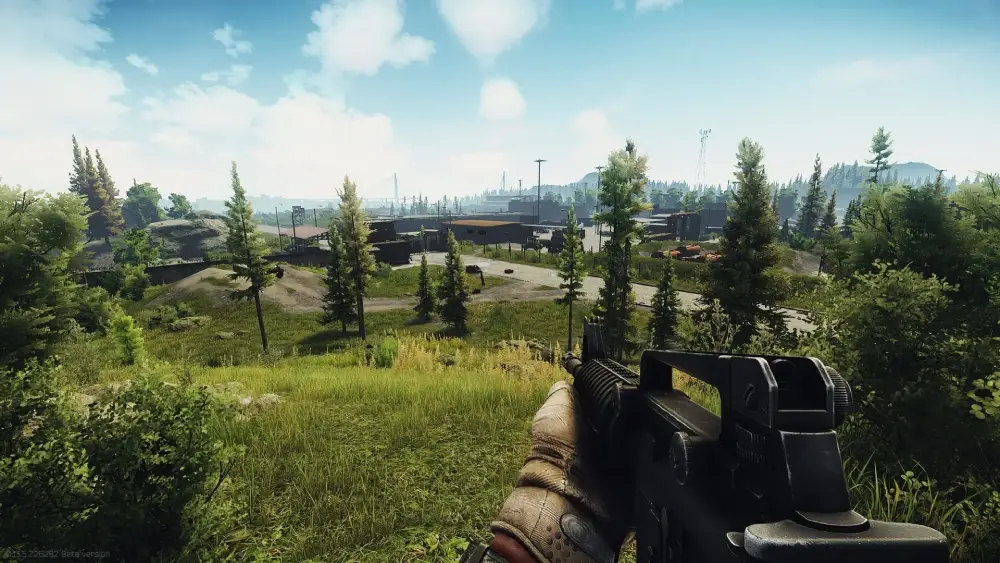
In a game where one desync moment can delete a full kit, performance is not “nice to have.” It’s survival.
You need two things:
- Stable FPS (so your aim feels consistent).
- Stable network (so your fights are real, not delayed).
Let’s hit both, quickly and clearly.
Before you change a dozen settings, confirm the basics: server selection, connectivity expectations, and how the game handles common network issues. Battlestate’s official Tarkov connection troubleshooting page is a solid quick-check reference—especially when you’re trying to separate local instability from server-side behavior.
The FPS side: settings that actually matter
Start with the settings that reduce variance. You want consistency more than max visuals.
Recommended baseline settings (general):
- Shadows: low (big FPS gain)
- Anti-aliasing: moderate (don’t overpay in FPS)
- V-Sync: off (lower input latency)
- Textures: based on VRAM (don’t exceed your GPU)
- Background apps: closed (reduce spikes)
Now the important part: measure one change at a time. Otherwise you don’t know what helped.
FPS checklist you can follow before every session
- Restart game client if performance drifts.
- Close overlays you don’t need.
- Keep drivers updated (but avoid beta drivers).
- Use an SSD/NVMe (stutter reduction matters).
- Cap FPS if your system fluctuates wildly.
Stable performance improves your decision-making because you stop “fighting your PC.”
The network side: why stability changes your K/D and survival rate
When your route to the server is unstable, you get:
- hit registration that feels inconsistent,
- delayed peeks,
- rubber-banding,
- and those “I was behind cover” deaths.
In EfT, that’s not a small issue. It’s raid-ending.
This is why many players use ExitLag.
How ExitLag helps in Escape from Tarkov
ExitLag optimizes routing by selecting more stable paths to game servers and reducing packet loss and jitter. Practically, that means:
- fewer random spikes,
- smoother gunfights,
- more reliable peeks,
- and more consistent matchmaking stability.
If you’re playing seriously, network consistency is part of your “build,” just like ammo and armor.
Loadouts that match your goals (not your ego)
Good kits are not expensive kits. Good kits are kits that do a job.
Below is a clean loadout framework you can use.
Beginner loadout (learn fights, don’t fear loss)
- Weapon: affordable platform you can replace
- Armor: light-to-mid tier for mobility
- Helmet: optional, depending on budget
- Meds: painkiller + basic healing + bleed control
- Ammo: prioritize effectiveness over style
Mid-game loadout (quests + controlled PvP)
- Weapon: modded enough for recoil control
- Armor: reliable protection without killing stamina
- Backpack: big enough to matter, not big enough to bait greed
- Grenades: one or two for resets and pushes
- Meds: stronger heals to recover from one mistake
Endgame loadout (specialize)
Endgame kits should match your identity:
- Aggressive: protection + close-range consistency
- Stealth: mobility + sound discipline
- Long-range: visibility control + clean rotations
If you want to improve, avoid random kits. Repetition teaches you faster than variety.
That’s a core principle of Tarkov gameplay mastery.
Maps: where to learn, where to profit, where to fight
Maps shape your death rate more than your aim.
If you spawn into chaos every raid, you learn panic.
If you spawn into structure, you learn control.
Here’s a practical map table you can use while choosing your focus:
| Map type | What it teaches | Best used for |
| Small and violent | Fast decision-making | Close fights, quick learning |
| Medium and mixed | Rotations and quest flow | Balanced progression |
| Large and complex | Patience and planning | Long raids, profit runs |
Your goal is to choose one “home map” and build confidence there first.
Then you expand.
That approach makes Escape from Tarkov feel less random and more learnable.
Common mistakes that keep players broke and frustrated
If you’re dying a lot, you’re probably repeating one of these patterns.
Mistake 1: Over-looting
If your backpack is full and your raid is already “good,” you extract.
Staying longer is a choice.
And most of the time, it’s a greedy choice.
Mistake 2: Fighting because you feel obligated
You don’t have to fight every noise.
You don’t have to “prove” anything.
You fight when it gives you an advantage.
This is one of the simplest Escape from Tarkov tips and one of the hardest to follow.
Mistake 3: Ignoring hydration and energy
These systems quietly destroy your performance:
- less stamina
- worse endurance
- worse recovery decisions
Carry something simple. Don’t gamble on “I’ll find food.”
Mistake 4: Bad ammo choices
This one is brutal: you can land shots and still lose because you can’t penetrate.
Make ammo a priority in your budgeting.
It’s the most “invisible” power in the game.
Practical raid templates you can copy (so you stop improvising badly)
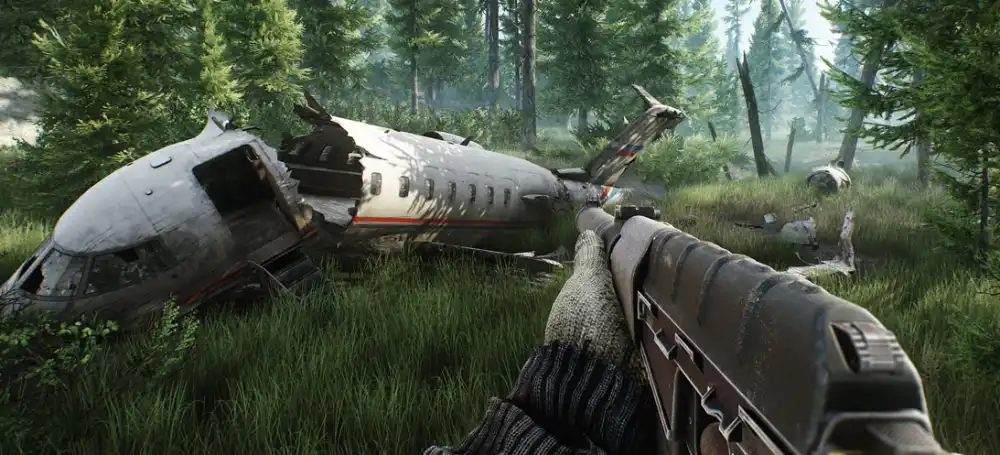
Improvisation is great when you have experience.
Before that, templates are better.
Here are three raid templates:
Template A: “Quest first” raid
- Route: safer path to objective
- Loot: only what’s on the way
- Fight: only if forced
- Extract: early, even if it feels “too soon”
Template B: “Profit run” raid
- Route: loot loop with low exposure
- Loot: prioritize value per slot
- Fight: avoid unless it protects your route
- Extract: once your bag is “efficiently full”
Template C: “PvP practice” raid
- Route: go where fights happen
- Loot: minimal, you’re here to learn
- Fight: take clean engagements
- Extract: when you’ve learned enough or your kit is compromised
Use templates until your instincts become reliable.
That’s how you build confidence in Escape from Tarkov without burning out.
FAQ
No. Escape from Tarkov is distributed through Battlestate Games’ launcher, not Steam.
Survive raids, complete objectives, collect loot, and extract alive to progress your character and economy.
Depending on your access and mode availability, PvE or offline-style practice can be used for learning mechanics, routes, and gun handling without the same PvP pressure.
Yes, offline practice is useful for training, but it typically doesn’t provide permanent progression rewards.
How does ExitLag help?
It helps stabilize your route to servers, reducing spikes and packet loss so your fights feel consistent and your inputs match what happens in-game.
Escape from Tarkov rewards players who build systems, not players who chase adrenaline every raid. Learn one map, repeat a few smart raid templates, prioritize ammo and discipline, and treat every death like data. When wipe season hits, that structure becomes your advantage, because your fundamentals won’t reset with the economy. Escape from Tarkov is brutal, but it’s also one of the most satisfying shooters to master when your performance is stable and your decisions are clean.
If you want more consistent raids and fewer deaths caused by spikes and desync, try ExitLag to stabilize your connection, then bookmark this guide and subscribe for more wipe prep, loadouts, and survival strategies.
Got questions or want to connect with other players? Join the conversation at the ExitLag Forum!