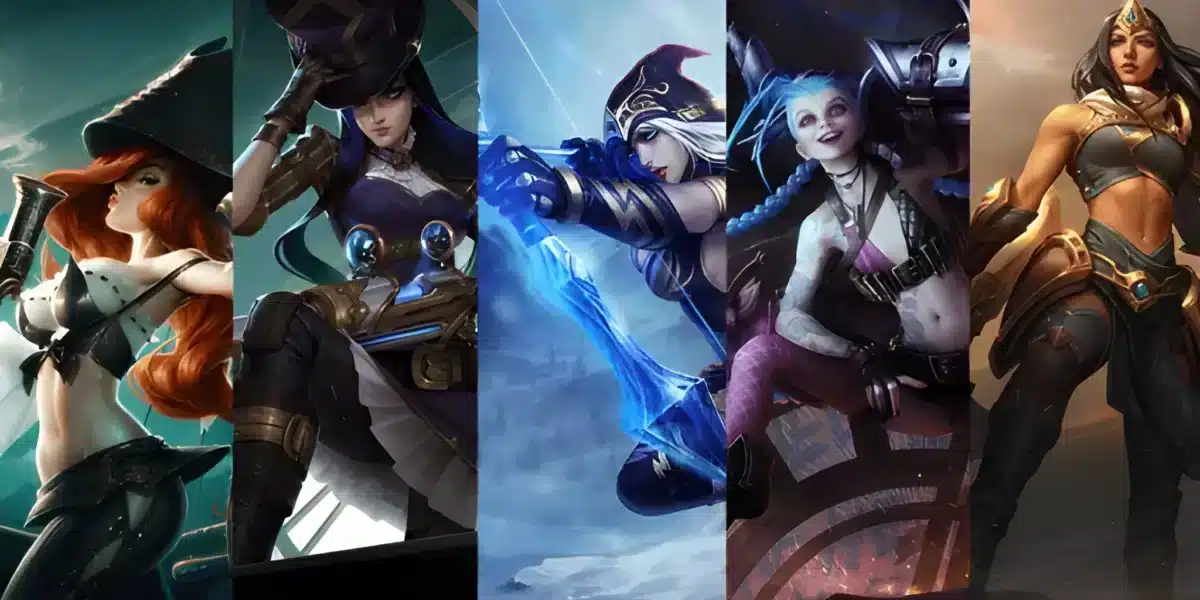
League of Legends dead characters and dying rumors have been part of the community conversation since the game’s earliest days. With over 170 champions each carrying their own lore, the question of which characters have died, which are undead, and which are rumored to be leaving the game is a recurring topic that confuses new and returning players alike.
The question of which LoL characters are dead has two separate answers depending on context: characters who have died within the lore of Runeterra, and the separate community concern about whether older or less-played champions might be “retired” or removed from the game.
Understanding both conversations requires separating in-universe narrative deaths from game development decisions, since Riot has handled both in ways that sometimes overlap and sometimes diverge completely.

Which Characters Are Considered Dead or Retired in League of Legends?
Champions Who Are Dead in LoL Lore
Several champions in League of Legends are definitively dead within the narrative of Runeterra. Their deaths are documented in official lore, comic series, or short stories available on the Universe site.
Senna: Senna was killed by Thresh, the Shadow Isles warden, who captured her soul inside his lantern. She existed as a trapped soul for years before Lucian found a way to free her through the Ruination events. She is alive again after being resurrected. Her death was temporary but definitively occurred within the lore.
Viego’s wife, Isolde: The Ruined King’s obsession with his dead queen is the origin of the Ruination that corrupted the Shadow Isles. Isolde died of poisoning, and Viego’s attempt to use the Blessed Isles’ healing waters to revive her triggered the Ruination catastrophe that created the Black Mist.
Jarvan I through III: The Demacian royal line carries documented deaths in Demacia’s history. Jarvan III, the current king’s father in the lore timeline, is deceased. His son Jarvan IV is the playable champion.
Champions of the Shadow Isles: Every champion from the Shadow Isles is technically dead. They exist in various states of undeath tied to the Black Mist:
- Thresh: A dead warden who collects souls
- Hecarim: A dead commander of the Spectral Riders
- Kalista: A dead spirit of vengeance
- Yorick: Not technically Shadow Isles but a gravedigger connected to undead forces
- Mordekaiser: The undying Lord of Death himself
Elise: In some interpretations of the lore, the human Elise effectively no longer exists, having surrendered her humanity to the Spider God Vilemaw entirely.
Champions Who Cannot Die
Several champions occupy unusual existences that make conventional death inapplicable:
- Aurelion Sol: A star-creating cosmic dragon of immense power who predates Runeterra itself
- Bard: A cosmic entity that exists beyond mortal understanding
- Kindred: The personification of death itself, embodied by Lamb and Wolf
- Zilean: A time mage who exists outside the normal flow of time
- Aatrox: An ancient darkin bound to his sword who cannot permanently die as long as his blade exists
The Ruination: The Largest Death Event in LoL Lore
The Ruination was the most significant death event in League of Legends narrative history. During the Ruined King event, a massive wave of Black Mist threatened to consume all of Runeterra. Multiple champions across regions were affected:
- Viego was defeated and his hold over the Ruination was broken
- Lucian freed Senna from Thresh’s lantern
- Olaf, Draven, and many others participated in combating the spread of the mist
The Ruination event was designed so that no champion permanently died from it, preserving Riot’s ability to continue using all characters.
Are Any LoL Champions Actually Being Removed from the Game?
This is where the “dead and dying” conversation takes a different turn. The question of whether a champion might be retired from the playable roster is not a lore question but a development question.
Riot Games has never permanently removed a playable champion from League of Legends. Every champion released since the game’s launch in 2009 remains playable in 2026. This includes very old champions with outdated kits, low pick rates, and minimal community interest.
What Riot does instead of removing champions:
- Visual and Gameplay Updates (VGUs): Complete reworks that modernize a champion’s visuals and redesign their kit. Recent examples include Skarner’s complete overhaul. These update the champion rather than removing them.
- Minor updates: Smaller changes to specific abilities without a full rework
- Art and Sustainability Updates (ASUs): Visual refreshes that modernize character models without changing gameplay
Champions frequently described as “dying” by the community are usually low-win-rate or low-pick-rate champions that players believe Riot has abandoned. In reality, the barrier for complete removal is so high that no champion has ever crossed it.
Champions Frequently Rumored to Be “Dead” in Community Discussions
The community commonly describes certain champions as neglected, ignored, or in gameplay “limbo.” These are not actual deaths in either the lore or development sense, but reflect frustration with perceived lack of attention:
- Champions with very old models awaiting VGUs
- Champions whose kits were designed for a different meta that no longer exists
- Champions in the lowest win rate tiers whose last balance changes were many patches ago
These champions are alive in the game and continue to receive patches when their statistics deviate significantly from balance targets.
What Does “LOL” Mean in Gaming and Online Chats?
The keyword in this article cluster asks a related but different question: what does “lol” mean in gaming conversation beyond the game name itself.
LOL as internet slang stands for “Laughing Out Loud.” It originated in the early days of online communication as a way to indicate something is funny without using full sentences. In gaming contexts specifically:
- Used after a particularly funny death or play
- Expressed when an opponent does something unexpected
- Written in post-game chat to indicate amusement about match events
- Sometimes used sarcastically to indicate disbelief
The overlap between “lol” as internet slang and “LoL” as the abbreviation for League of Legends creates occasional confusion in gaming conversations. Context usually makes the intended meaning clear: “lol that fight was chaotic” uses the slang, while “my LoL rank dropped” refers to the game.
LoL Lore: Champions With the Most Complex Death Relationships
Some champions have death at the center of their entire character identity in ways that make the question especially interesting.
Kindred (Lamb and Wolf): Death itself personified. Every champion who dies in Runeterra receives a visit from Kindred. They do not kill champions, they escort them to the afterlife. Kindred’s lore explores what death means in a world with magic capable of undeath and resurrection.
Yorick: A gravedigger on the Shadow Isles who has postponed his own death through ritual. He maintains control of spectral tools that allow him to fight the undead forces that destroyed his home.
Karthus: A mage who was so entranced by death that he transformed himself into an undead lich to become part of the Shadow Isles. Unlike Thresh or Hecarim, Karthus actively chose undeath as a philosophical position.
Sion: A Noxian warrior who died in battle and was later resurrected by Noxus as an undead weapon of war. He exists in a state of controlled fury that barely masks the horror of his condition.
| Champion | Death Status | Notes |
| Thresh | Died, now undead warden | Collects souls of the dead |
| Hecarim | Died in the Ruination | Shadow Isles commander |
| Sion | Died in battle, resurrected | Controlled undead weapon |
| Karthus | Chose undeath | Voluntary lich transformation |
| Senna | Died, freed from Thresh | Returned through Lucian’s effort |
| Viego | Alive, defeated | Ruined King without his queen |
| Kindred | Never alive in mortal sense | Personification of death |
Pro Tips: Navigating League of Legends Lore Deaths
- Use the official Universe timeline to understand the chronological order of champion stories: Many champion deaths and resurrections happen in relation to each other and the Ruination event. The Universe timeline puts these in the correct sequence so individual stories make more sense.
- Distinguish between lore deaths and gameplay “removal” concerns: When community posts describe a champion as “dead,” check whether they mean lore death or community frustration about pick rate and Riot attention. These are entirely separate conversations.
- Read the short stories associated with Shadow Isles champions together: The stories of Thresh, Kalista, Hecarim, and the other Shadow Isles inhabitants are deeply interconnected. Reading them as a collection rather than individually reveals the full picture of what the Ruination was and how it affected each character.
- Follow Riot’s champion roadmap posts for actual development news: When wondering whether a champion is receiving a rework or update, the official champion roadmap posts published on the League of Legends site are the authoritative source rather than community speculation.
Common Mistakes About LoL Dead Characters
- Assuming low pick rate means a champion is being removed: Every champion ever released remains in the game. Low pick rate reflects community preference, not removal risk. Fix: Verify removal concerns against actual Riot official announcements before treating community speculation as fact.
- Confusing “dead in lore” with “removed from the game”: A champion being dead in the narrative of Runeterra has no relation to whether they are still playable. Fix: Treat lore deaths as story content and gameplay availability as a separate question about Riot’s development decisions.
- Treating old lore sources as current canon: The 2014 lore reboot changed many champion backstories significantly. Guides and wiki articles that reference the Institute of War, Summoners, and Fields of Justice are describing the pre-reboot lore that is no longer official. Fix: Use the official Universe site at universe.leagueoflegends.com for all current official lore.

Play League of Legends with a Stable Connection Using ExitLag
Understanding which League of Legends dead characters are lore deaths versus community rumors is one part of your LoL knowledge. Keeping your own ranked games free from the frustration of connection problems is another.
ExitLag is a connection optimizer used by over 30 million players across 4,000+ game titles including League of Legends. It analyzes multiple network routes in real time and selects the fastest, most stable path between your device and Riot’s servers.
Features that benefit all LoL players:
- Real-Time Optimization: Continuously selects the lowest-latency route to League of Legends servers, reducing input delay across every game mode.
- Multipath Technology: Routes game data through multiple simultaneous paths so a single connection failure never interrupts a ranked match.
- Traffic Shaper: Prioritizes LoL traffic over background applications so nothing else interferes with your connection during gameplay.
- Multi-Internet: Supports up to four simultaneous connections, eliminating disconnections from sessions at critical moments.
Download ExitLag and play League of Legends without connection issues.
All champion names, images, and trademarks used in this blog post belong to Riot Games. They are used for informational and educational purposes only and do not imply endorsement or affiliation with the rights holders.
Got questions or want to connect with other players? Join the conversation at the ExitLag Forum!