Team synergy has become one of the defining mechanics in Marvel Rivals, transforming traditional hero shooters into experiences where cooperation is just as important as individual skill. Instead of relying solely on aim and positioning, players can unlock powerful cooperative abilities that completely change how fights unfold.
Whether you’re climbing the ranked ladder or simply enjoying casual matches, Marvel Rivals team ups are among the strongest mechanics available. Learning how these unique hero combinations work can dramatically improve your team’s effectiveness, creating devastating offensive plays, lifesaving defensive options, and creative tactical opportunities that aren’t possible with individual heroes alone.
If you’re wondering what Marvel Rivals team ups are, they are special abilities activated when specific heroes are paired together. Each Team-Up grants unique bonuses or entirely new skills, rewarding players for building coordinated team compositions. Since Season 2 introduced multiple balance adjustments, understanding these mechanics has become even more valuable for players who want to stay competitive.
Unlike traditional hero shooters where team composition mostly revolves around class balance, Marvel Rivals encourages players to think beyond roles. Choosing heroes with complementary Team-Up abilities can provide powerful crowd control, increased mobility, stronger survivability, or explosive burst damage that shifts the momentum of an entire match.
As new heroes continue joining the roster, Team-Ups are evolving alongside the game. Some combinations become stronger after updates, while others receive balance adjustments to maintain competitive fairness. This dynamic system ensures that the meta remains fresh throughout each season.
Marvel Rivals team ups explained
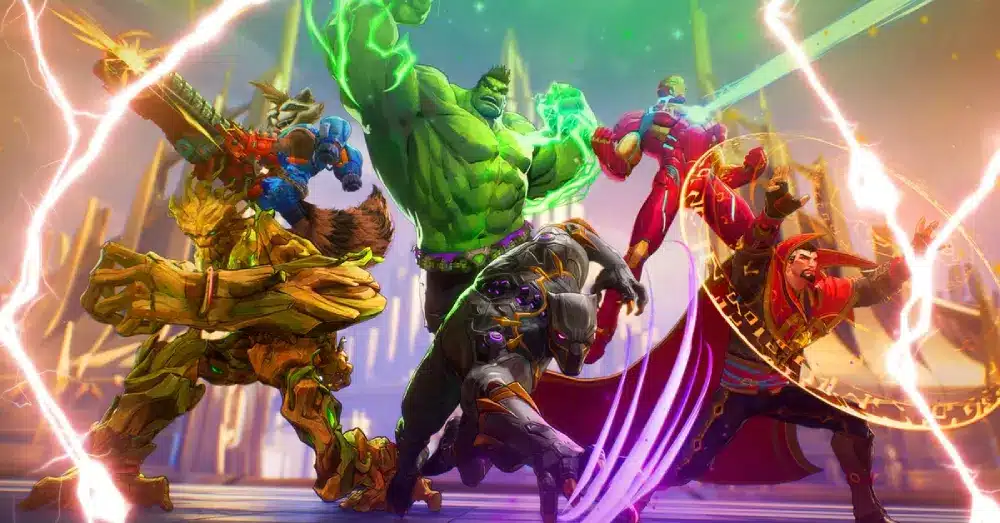
Team-Up abilities are exclusive cooperative mechanics that activate when compatible heroes appear on the same team. Rather than functioning as passive bonuses, these abilities often introduce entirely new gameplay options that encourage communication and coordinated execution.
Some Team-Ups enhance existing abilities, while others grant completely new attacks unavailable anywhere else in the game.
For many players, mastering Team-Ups represents the difference between simply playing Marvel Rivals and fully understanding its competitive depth.
How Team-Up abilities work
Every Team-Up revolves around one or more heroes interacting through a unique partnership.
When the required heroes are selected together, one character typically acts as the Anchor, providing a special ability that another teammate can activate or benefit from during combat.
Depending on the specific combination, Team-Ups may provide:
- Offensive burst damage
- Defensive protection
- Healing support
- Increased mobility
- Area denial
- Crowd control
- Environmental advantages
Unlike Ultimate abilities, Team-Ups remain available throughout matches whenever their activation conditions are met, making them valuable resources that reward timing and teamwork.
This design encourages players to constantly communicate with teammates rather than acting independently.
Anchor heroes and partner heroes
Season 2 continues using the Anchor system introduced during earlier updates.
Anchor heroes essentially “host” the Team-Up ability, allowing specific partners to access unique skills unavailable in their standard kits.
For example, one hero may generate protective energy fields while another gains enhanced movement through that same partnership.
This creates several interesting gameplay decisions:
- Should your team prioritize raw damage?
- Would defensive Team-Ups better suit the objective?
- Is mobility more valuable on the current map?
- Which heroes maximize each other’s strengths?
Instead of focusing exclusively on mechanical skill, Marvel Rivals rewards strategic drafting before matches even begin.
Marvel Rivals season 2 team-ups and major changes
Season 2 significantly reshaped the Team-Up system by introducing new partnerships, removing certain combinations, and adjusting several existing abilities to improve competitive balance.
These changes had a major impact on ranked play, encouraging players to rethink previously established strategies.
The developers focused on making Team-Ups more meaningful without allowing any single combination to dominate the meta.
Several heroes received adjustments designed to create healthier interactions across all skill levels.
New Team-Ups introduced in Season 2
One of the biggest highlights of Season 2 is the arrival of several marvel rivals new team ups that expand strategic possibilities across multiple team compositions.
These additions emphasize flexibility rather than forcing players into a small pool of mandatory heroes.
The newest combinations include synergies that reward:
- Better frontline coordination
- Enhanced vertical mobility
- Faster objective control
- Improved area denial
- More reliable crowd control
Instead of simply increasing damage numbers, many new Team-Ups create opportunities for coordinated plays that require communication and timing.
This philosophy makes teamwork feel rewarding without making solo performance irrelevant.
Updated Team-Up mechanics
Beyond introducing fresh combinations, the developers also refined several existing mechanics.
Season 2 focused on improving:
- Ability responsiveness
- Activation consistency
- Visual clarity
- Cooldown balance
- Hero interaction timing
These improvements help players better recognize when Team-Ups are available, reducing confusion during fast-paced battles.
Cleaner visual effects also make coordinated attacks easier to execute under pressure.
All Marvel Rivals team ups currently available
Although new heroes continue expanding the roster, Team-Ups generally fall into several strategic categories.
Understanding these categories helps players quickly recognize which combinations best suit their preferred playstyle.
Offensive Team-Ups
Aggressive combinations focus on maximizing burst damage and eliminating priority targets before they can respond.
These Team-Ups typically excel during:
- Objective pushes
- Team fights
- Ultimate combinations
- Flanking strategies
Teams built around offensive synergy often rely on fast engagements followed by immediate elimination of enemy supports.
Defensive Team-Ups
Not every victory comes from dealing the most damage.
Some Team-Ups prioritize survivability through shields, protection, healing, or damage reduction.
These combinations shine during:
- Payload defense
- Objective control
- Overtime situations
- Long engagements
Defensive synergies allow teams to withstand pressure while gradually wearing opponents down.
Utility-focused Team-Ups
Perhaps the most underrated category includes utility-oriented partnerships.
Rather than directly affecting health or damage, these combinations provide advantages like:
- Improved mobility
- Enemy displacement
- Vision control
- Environmental interaction
- Crowd control
Although less flashy than offensive abilities, utility Team-Ups frequently decide close competitive matches through superior positioning.
Why Team-Ups define the current competitive meta
As more players gain experience with Marvel Rivals, coordinated Team-Ups have become increasingly important at higher skill levels.
Professional teams rarely draft heroes based solely on individual strength.
Instead, they evaluate how each hero contributes to multiple cooperative interactions throughout an entire match.
This creates fascinating strategic depth.
A hero considered average individually may become exceptionally powerful when paired with the right teammate.
Likewise, one of the strongest standalone characters can lose significant value if they don’t contribute meaningful Team-Up potential.
This constant balancing act keeps the competitive meta evolving after every major update.
Rather than chasing isolated hero buffs, experienced players study synergy networks between the entire roster.
That broader understanding often separates top-ranked players from everyone else.
Another important factor is flexibility.
Strong teams rarely lock themselves into a single strategy.
Instead, they understand several team ups Marvel Rivals offers and adapt their compositions according to the opposing lineup, map objectives, and match tempo.
Learning multiple Team-Ups also prepares players for future hero releases.
Since developers continue expanding the roster, today’s strongest combinations may eventually be replaced by even more powerful synergies introduced in upcoming seasons.
For that reason, mastering the underlying Team-Up system is ultimately more valuable than memorizing only a handful of meta combinations.
By understanding how marvel rival team ups function at a strategic level, you’ll be prepared for every balance update and every new hero that joins Marvel Rivals.
Best Team Ups Marvel Rivals for Every Playstyle
Choosing the right Team-Up can completely change the outcome of a match. While every combination has its strengths, some stand out because of their versatility, reliability, and ability to influence objective-based gameplay.
The best team ups Marvel Rivals are those that provide consistent value regardless of the map or game mode. They combine powerful abilities with relatively simple execution, making them effective for both experienced players and newcomers.
Rather than focusing only on raw damage, the strongest Team-Ups often improve positioning, survivability, or crowd control, allowing an entire squad to capitalize on coordinated attacks.
Best offensive Team-Ups
Aggressive players benefit most from Team-Ups that create opportunities to eliminate opponents before they can react.
These combinations excel at:
- Bursting down high-priority targets
- Initiating team fights
- Securing objectives quickly
- Punishing isolated enemies
- Creating chain eliminations
High-damage Team-Ups are especially effective in coordinated teams where communication allows abilities to be chained together for maximum impact.
Best defensive Team-Ups
Defense wins just as many matches as offense.
Several new team ups Marvel Rivals introduced during Season 2 emphasize protection instead of aggression, allowing teams to survive longer during contested objectives.
Strong defensive Team-Ups typically provide:
- Temporary shields
- Damage mitigation
- Healing support
- Escape opportunities
- Zone control
These combinations shine during overtime situations where staying alive is often more important than securing eliminations.
Best utility Team-Ups
Utility-focused Team-Ups may not appear flashy, but they consistently influence competitive matches.
Examples include combinations that improve:
- Mobility
- Vertical movement
- Crowd control
- Vision
- Map traversal
Teams capable of rotating quickly between objectives often gain an advantage long before direct combat begins.
Marvel Rivals new Team Ups and the evolving Season 2 meta
One of the biggest reasons the competitive landscape shifted in Season 2 is the introduction of additional Team-Up combinations and the refinement of existing partnerships.
Instead of creating obvious “must-pick” heroes, the developers expanded strategic diversity by encouraging different styles of teamwork.
Several Marvel Rivals season 2 team-ups now reward:
- Faster rotations
- Better frontline coordination
- More flexible team compositions
- Improved support interactions
- Stronger objective control
This makes drafting far more interesting than simply selecting the heroes with the highest individual damage output.
Which Team-Ups became stronger?
Season 2 improved several combinations by making their activation more reliable.
The most noticeable improvements include:
- Faster ability responsiveness
- Cleaner visual effects
- Better cooldown management
- Improved interaction consistency
- Easier execution during chaotic fights
These adjustments reward skilled coordination without making Team-Ups feel mandatory for casual players.
Which Team-Ups became weaker?
To maintain competitive balance, several previously dominant combinations received adjustments.
These balance changes generally reduced:
- Burst damage
- Cooldown efficiency
- Ability duration
- Area coverage
- Chain potential
Rather than eliminating these Team-Ups, the developers simply made them require better timing and coordination.
Tips for building stronger Team-Up compositions
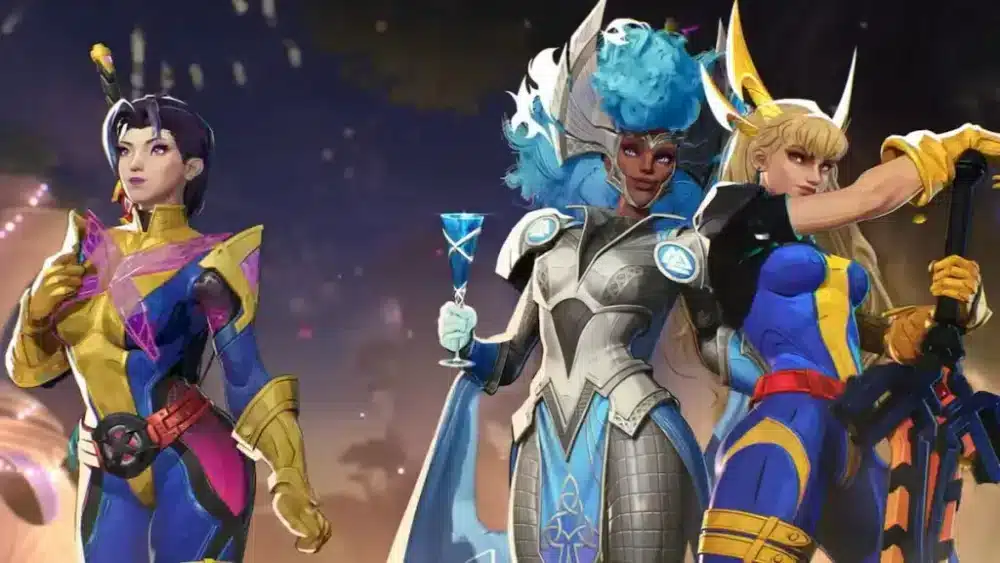
Understanding individual Team-Ups is only part of becoming a better player.
The real challenge lies in constructing an entire lineup where multiple heroes complement one another.
Consider the following principles when selecting your team.
Build around your Anchor hero
Anchor heroes often define the pace of your composition.
Ask yourself:
- Which Team-Up abilities does this hero unlock?
- Do your teammates benefit from those abilities?
- Does your strategy rely on offense or defense?
- Can your composition adapt if opponents counter your plan?
Building around synergy instead of popularity usually produces stronger teams.
Balance your composition
Even the strongest Team-Up won’t compensate for poor team balance.
A successful lineup should include:
- Reliable frontline pressure
- Sustained damage output
- Defensive utility
- Objective control
- Mobility options
Teams that cover every role generally outperform lineups focused exclusively on damage.
All Marvel Rivals Team Ups overview
| Team-Up Category | Primary Strength | Best For |
| Offensive | Burst damage | Eliminating key targets |
| Defensive | Survivability | Holding objectives |
| Support | Healing and buffs | Long engagements |
| Mobility | Faster rotations | Objective-based maps |
| Crowd Control | Enemy disruption | Team fights |
| Utility | Positioning and flexibility | Competitive play |
Each category contributes differently depending on your team’s strategy.
The strongest squads understand when to shift between aggressive and defensive playstyles rather than relying on a single approach throughout an entire match.
Common mistakes players make with Team-Ups
Many players understand the mechanics but fail to maximize their effectiveness.
Some of the most common mistakes include:
- Choosing heroes without considering Team-Up compatibility.
- Activating abilities independently instead of coordinating with teammates.
- Ignoring objective control while chasing eliminations.
- Overcommitting after successfully triggering a Team-Up.
- Forgetting that positioning is often more valuable than raw damage.
Avoiding these habits can significantly improve your consistency in ranked matches.
Why connection quality matters in Marvel Rivals
Even perfectly coordinated Team-Ups lose effectiveness if latency interrupts your timing.
Marvel Rivals relies heavily on responsive controls, accurate ability activation, and synchronized teamwork. A sudden lag spike or packet loss can cause abilities to miss, delay critical cooldowns, or disrupt coordinated attacks during decisive moments.
That’s where ExitLag becomes a valuable companion for competitive players.
ExitLag improves your online experience through intelligent route optimization, reducing ping while stabilizing your connection between your device and the game servers. Its proprietary technologies—including Multipath Connection, Real-Time Optimization, Traffic Shaper, and FPS Boost—help deliver smoother gameplay with fewer interruptions.
Whether you’re climbing ranked, practicing with friends, or mastering marvel rivals team ups, ExitLag helps keep your connection stable so your coordinated strategies perform exactly as intended.
Frequently Asked Questions
Team-Ups are special cooperative abilities that activate when compatible heroes are on the same team, granting unique skills or bonuses unavailable to individual heroes.
Each Team-Up requires specific hero combinations. One hero typically serves as the Anchor, allowing partner heroes to access exclusive abilities or enhanced effects during combat.
The strongest Team-Ups depend on your strategy, but combinations that improve crowd control, survivability, mobility, and coordinated burst damage consistently perform well across competitive play.
Season 2 introduced new Team-Up combinations, adjusted several existing abilities, improved activation consistency, refined visual effects, and rebalanced dominant synergies to create a healthier competitive meta.
No. Individual skill remains important, but coordinated Team-Ups provide significant advantages that become increasingly valuable at higher competitive ranks.
Learn multiple hero combinations, communicate with teammates, position carefully before engagements, and practice timing so abilities complement one another instead of overlapping unnecessarily.
All game images used in this blog belong to NetEase Games and Marvel Games. They are used for informational/educational purposes only and do not imply endorsement or affiliation with the rights holders.
Got questions or want to connect with other players? Join the conversation at the ExitLag Forum!